



Forget nuclear program – Iran might have found a more lethal weapon than nuclear. While closing the Strait of Hormuz to everyone appeared to be a brilliant plan, Tehran soon discovered such strategy also hurts friendly countries. So the Iranian regime began to modify its newly found economic weapon. Recently, some tankers stuck at the Strait of Hormuz are being selected by Iran for passage.
After weeks at anchor with missiles and drones passing overhead, it could finally sail safely out through the Strait of Hormuz and into the open ocean – escorted by the Iranian Navy. But first it would need to change its registration and raise the flag of Pakistan, according to a company executive, speaking on condition of anonymity in order to discuss sensitive conversations.
The company wasn’t able to take up the offer, which came from the government of Pakistan. Iran agreed to allow 20 Pakistani vessels to transit through the strait, but the country only had a few flagged ships in the Gulf. Islamabad began reaching out to some of the world’s biggest commodity traders to see if they had vessels that could transit Hormuz while temporarily sailing under a Pakistani flag.
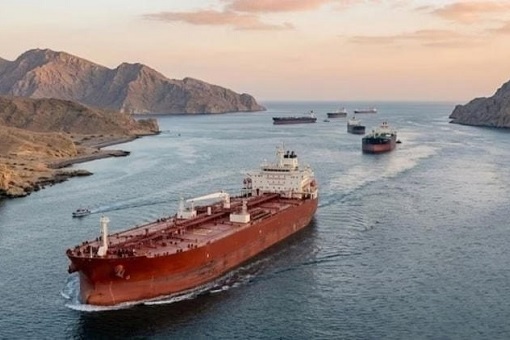
One of the people said that Pakistan was looking for the biggest ships it could find within the region, including oil supertankers capable of carrying 2 million barrels each. Arranging their passage would be a way to show the success of diplomatic efforts to bring the conflict to an end. At least two large oil trading houses have received the offer.
The arrangement shows how Iran’s Islamic Revolutionary Guard Corps (IRGC) is exerting considerable control over shipping through the Strait of Hormuz, the critical maritime chokepoint through which a fifth of the world’s oil and liquefied natural gas normally transits. The IRGC is already extracting tolls from vessels passing through, and giving preferential treatment to ships from countries it deems to be friendly, while threatening to attack those from countries it sees as aggressors.
Iran’s National Security Committee has approved a bill that would impose fees on Strait of Hormuz, the semi-official Fars news agency reported, citing a member of the committee. The contours of a more formal system are now emerging, based on the accounts of multiple people with knowledge of the situation, speaking on condition of anonymity as they aren’t authorized to talk to the media.

Ship operators have to contact an intermediary company linked to the IRGC, and provide information about their vessel’s ownership, flag, the cargo manifest, destination, crew list, and data from its automated identification system, or AIS – a transponder that ships use to record and broadcast their position.
The intermediary then passes the file onto the IRGC Navy’s Hormozgan Provincial Command for background checks on the ship to make sure that it has no links to Israel or the U.S., or other states that Iran considers to be enemies.
If a vessel makes the cut then discussions over the toll begin. The people said that the Iranians have a ranking system of one to five for nations, with ships from countries that are seen as friendly more likely to get better terms. For oil tankers, the starting price in the negotiations is typically around US$1 per barrel of oil, paid in yuan, or stablecoins – cryptocurrencies pegged to the value of hard currency.
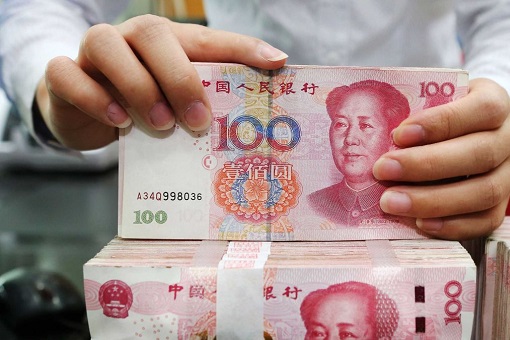
A very large crude carrier, or VLCC, typically has a capacity of around 2 million barrels. Meaning operators of such tankers have to pay a whopping US$2 million to Tehran for a safe passage. Once the toll is paid, the IRGC issues a permit code and route instructions.
Ships are expected to raise the flag of the nation that negotiated the passage agreements, and in some instances, to change their official registration to that country. As it approaches the Strait of Hormuz, the ship broadcasts its passcode over its very high frequency radio, and is met by a patrol boat that escorts it through the passage, close to the coast between a group of islands that has already been dubbed the “Iranian tollbooth” by people in the industry.
Vessel tracking data shows that ship transits through the Strait of Hormuz have increased slightly over the past week, albeit to a fraction of pre-war levels. The legal basis for Iran’s imposition of a toll isn’t clear. Countries typically have territorial boundaries extending 12 nautical miles – around 14 miles, or 22 kilometers – from their coastlines, in which they are allowed to inspect vessels.
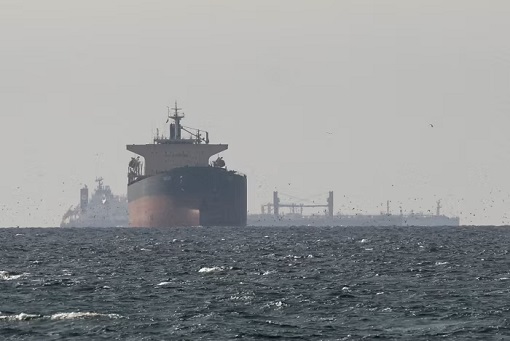
Iran wrote in a letter this month to the International Maritime Organization – the world’s shipping watchdog – that ships associated with non-hostile sates are able to receive safe passage through Hormuz. It added that it was restricting those it considered hostile.
“As the coastal state bordering the Strait, the Islamic Republic of Iran, in full conformity with established principles and rules of international law, has restricted the passage of vessels belonging to or associated with the aggressors,” – it said in the letter.
“The Iranian justification is that this is an exercise of their rights to self-defense, and therefore they need to check the vessels. And in checking these vessels you need to pay a fee,” – Jason Chuah, professor of commercial and maritime law at City University London, said. “Now from the perspective of most international law commentators, this is not legal.”
Ship owners and operators face difficult legal questions over whether they should pay tolls, which rules, sanctions and conventions may be applied to them by the US and Iran, and what might be covered by their insurance.
“I think that the Iranian war has thrown up a lot of challenges and questions for international law, perhaps partly because both sides seem to have been engaged in activities which are, to put it mildly, highly controversial under international law or under established rules,” – Chuah said.
But Washington has vowed to not let the situation become the status quo. Secretary of State Marco Rubio said – “The Iranians are threatening to set up a permanent system in the Strait of Hormuz where they get to decide who goes through international waters. That will never be allowed to happen. The rest of the world should take note. They have more at stake there than we do. Very little of our energy comes through there. The rest of the world gets a lot more”.
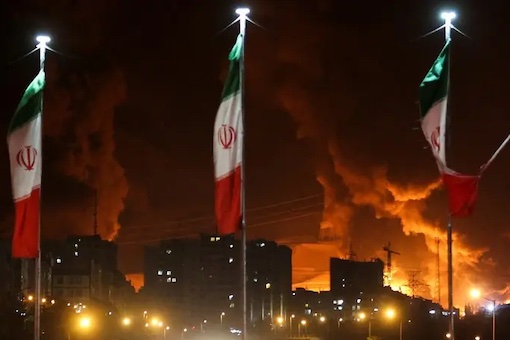
Insurance costs have spiked dramatically for ships that want to cross the Straits of Hormuz. Several vessels have been hit by projectiles while at anchorage in the Persian Gulf or in the strait. On March 31, a Kuwaiti oil tanker was struck by at least one drone near Dubai, causing a fire and damage to the hull. The U.S. promises of naval escorts – as yet unfulfilled – and state-backed insurance have not reassured ship owners enough that they’re willing to risk their crews.
Negotiating access with the IRGC may not be seen as a safe option either. Notwithstanding the physical risks and the cost of insurance, making deals with the IRGC, which is subject to sanctions by the US, European Union and the UK, puts ships at risk of violating sanctions or anti-money laundering rules, experts said.
U.S. President Donald Trump said that he wants to end the US’s war with Iran within two or three weeks, whether or not the Strait of Hormuz is reopened. After his comments, Israel and the U.S. continued to strike Iran, which fired missiles and drones at targets across the region, with one projectile hitting an oil tanker in Qatari waters. On Wednesday morning, Trump said that a ceasefire would only be possible if the strait was opened.

The existence of an Iranian-backed safe passage deal doesn’t mean that the dangers to shipping have reduced, according to Basil Germond, chair in international security at Lancaster University and a visiting fellow at the UK’s Royal Navy Strategic Studies Centre. “For this approach to work, Tehran needs to maintain its capability to credibly threaten commercial shipping in the Strait and the Gulf,” he said. “To be credible, Tehran needs to attack tankers from time to time.”
Other Articles That May Interest You …
- U.A.E. Readies To Join Iran War – Wants To Force Hormuz Open
- Seizing Iran Islands – How U.S. Marines Plan To Reopen Strait Of Hormuz
- Shutting Hormuz Backfires – Now Trump Wants To Seize Kharg Island
- Ships Pretend To Be Chinese To Cross Strait Of Hormuz
- Energy Security – Why China Can Withstand $100 Oil Prices More Easily
- Strategic Error – How Iran’s Retaliatory Strikes At Gulf States Backfires
- Live By The Sword, Die By The Sword – How Ayatollah Khamenei Was Killed
- Gone In 25 Minutes – How Trump Tricked Tehran Twice Before Obliterated Iran’s 3 Nuclear Sites With MOPs
- Iran’s “Axis Of Resistance” Missing In Action – Why Tehran Became Isolated & Alone In WAR Against Israel
- Paying The Price For Hamas Attacks – How Trump Misled Iran Before Israel Sends 200 Jets To Attack
- Psychological Warfare – How Mossad Cracked Hezbollah Secret Network With Low-Tech Pager & Walkie-Talkie “Walking Bombs”

|
|
April 3rd, 2026 by financetwitter
|


|

|

|

|

|

|




















Comments
Add your comment now.
Leave a Reply