



You don’t actually have to win your match to reach the knockout stage at the FIFA World Cup. At a time when Asian soccer giant South Korea failed to make it, a tiny island with the same population as Maldives but few people knew existed stunningly made it through – without winning a single match. It made history by becoming the smallest nation to reach the knockout stage at the World Cup.
The Cinderella story of the 2026 World Cup is about how this small island nation – Cape Verde – played their way to the Round of 32 by remaining undefeated through three group stage draws. It’s a wonder of soccer that a 0-0 draw between teams ranked 59th and 64th in the FIFA world rankings could set off celebrations. A country with about 500,000 population, Cape Verde is a true underdog’s underdog.
Their fairy tales started with their 0-0 draw against Spain, where 40-year-old goalkeeper Vozinha became an overnight hero, followed by a 2-2 draw with two-time World Cup winners Uruguay. They secured another 0-0 draw with the oil kingdom Saudi Arabia to clinch second place in Group H – ahead of Uruguay and Saudi. That was all they needed to do.
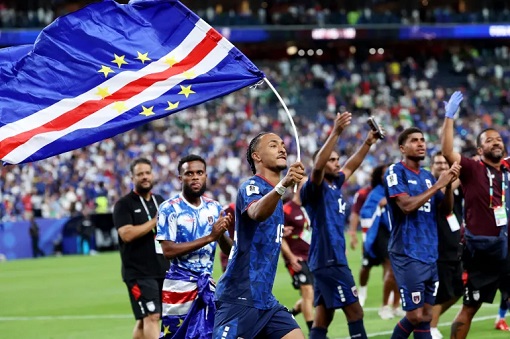
After their match ended, Cape Verde’s players huddled around a phone to make sure Spain saw off their 1-0 win over Uruguay. Only after watching the final moments of Uruguay’s loss – a result that confirmed Cape Verde finished as Group H runners-up – could they officially start their celebration. “Tears of pride and joy all around the stands,” – said BBC Radio 5 Live commentator Rob Law in Houston.
Their unexpected journey will continue with an elimination match against Lionel Messi and Argentina. “I don’t think any of us dreamed of this,” – Vozinha said after Friday’s match. “But we know we have a lot of quality. Qualifying for the next round today is extremely rewarding for us. It’s a dream for any player to play against Argentina and against Messi.”
But how did a nation of just 525,000 inhabitants, who qualified ahead of five-time African champions Cameroon, make it this far? Eight years ago, the island nation of Cape Verde unearthed a player they hoped would help them make history. He was a tough, burly defender, the sort of competitor they would need if they were going to go toe-to-toe with soccer’s mightiest superpowers in the World Cup.
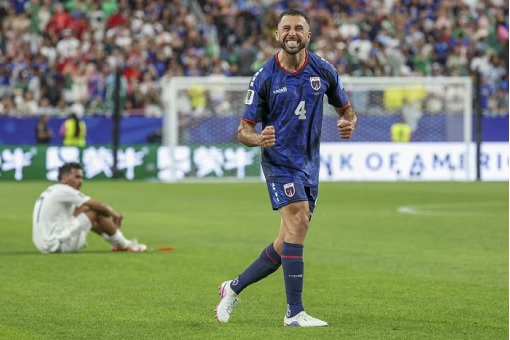
There was just one problem – they couldn’t reach him. The team had messaged Roberto “Pico” Lopes on LinkedIn when it learned that Lopes’s father was from Cape Verde. But Lopes – who was born in Ireland, had worked as a banker in Dublin, and was playing for Shamrock Rovers – didn’t read Portuguese. He ignored the message until Cape Verde tried again months later.
“I never thought this would be the route to international football,” – Lopes said. As it turns out, finding a World Cup player on LinkedIn was just the start of one of the World Cup’s most improbable stories. On Friday night in Houston, Cape Verde became the smallest nation in the World Cup’s 96-year history to reach the knockout rounds.
“The team was very eager to show this to the whole world,” – said Cape Verde’s coach, known as Bubista. “We have shown that we are a small country, but that we fight for the things that we want to achieve.”
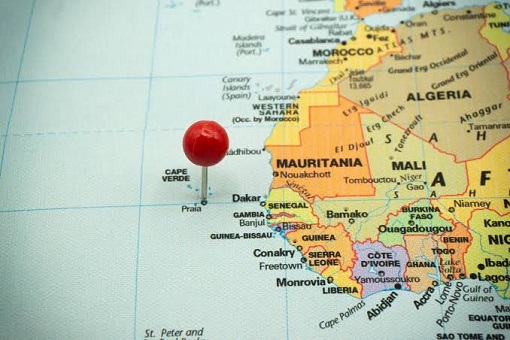
When the team – nicknamed the “Blue Sharks” – first touched down in America, they looked likely to be returning home almost immediately. Cape Verde is made of a chain of islands off of the African coast that comprise about 1,500 square miles, and they’d never before appeared at a World Cup. No country this tiny – by area or population – had ever played a single knockout match in the tournament.
The teams they were slated to play against, on the other hand, were soccer giants with standing appointments in the deep rounds of the World Cup. Cape Verde’s first two opponents were former champions Uruguay and Spain – with a population nearly 100 times larger than Cape Verde’s. Its gross domestic product (GDP) is estimated at roughly US$3.45 billion only.
Forget winning. Cape Verde’s chances of so much as salvaging draws out of those two matches was about as likely as landing a World Cup gig on the internet – a paltry 2.7%, according to pregame betting odds. But that’s when the Blue Sharks started pulling off one miracle after another. First, they shocked the world when held the defending European champion Spain to a scoreless draw.
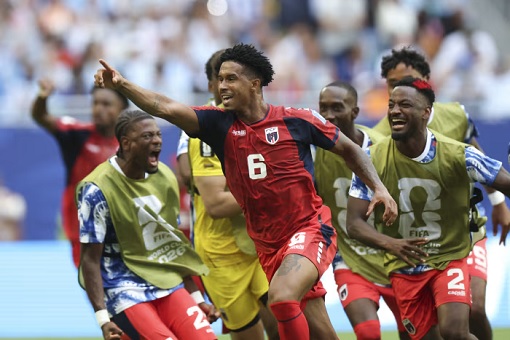
Then, they banged a pair of goals past Uruguay in a 2-2 thriller. And on Friday, in the biggest game one of the World Cup’s tiniest nations had ever played, Cape Verde applied relentless pressure to Saudi Arabia to secure another draw. If you can’t beat them, force them to goalless draws, which award 1 point to each team instead of getting nothing by losing.
The magic of Cape Verde lies in just how many of the Blue Sharks arrived from faraway shores. Fifteen of the 26 players on Cape Verde’s roster were born away from the chain of islands off of Africa’s west coast – in Portugal, France, the Netherlands, Ireland and the U.S. – earning their places in the squad through family lineage.
Once they put on the uniforms of their ancestral homeland, though, this motley group of far-flung footballers turned into the World Cup’s biggest surprise. Facing Spain, the hero was Vozinha, a 40-year-old goalkeeper whose career had taken him to clubs in Cyprus and Moldova. A man who only began playing professional soccer at age 25 made seven saves to keep a clean sheet against La Roja.
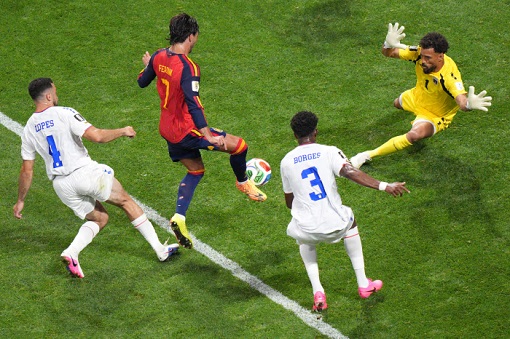
And the most important goal in Cape Verde history – the equalizer against Uruguay – came from Hélio Varela. He is in many ways the perfect representative of the globe-trotting Sharks, having been born nearly 2,000 miles from Cape Verde in Portugal and plying his trade professionally for Maccabi Tel Aviv. It was like assembling a team at the United Nations.
Heck, the players on their 26-man roster were employed by 26 different club teams in 14 different countries last season. Seven played in Portugal, which makes sense since the country was a Portuguese colony until 1975, and the country’s official language remains Portuguese. Of the 2,970 total minutes their players have recorded in the World Cup, only 256 were played by guys employed by one of the top 100 clubs in the world.
Vozinha is a free agent after playing in the Portuguese second division last year, and Duarte, Friday’s man of the match, plays for Ludogorets Razgrad in Bulgaria. Other key contributors play in the UAE (Al Bataeh’s Diney), Ireland (Shamrock Rovers’ Pico), Turkey (Idgir’s Ryan Mendes), Netherlands (PEC Zwolle’s Jamiro Monteiro) and Israel (Maccabi Tel Aviv’s Hélio Varela).
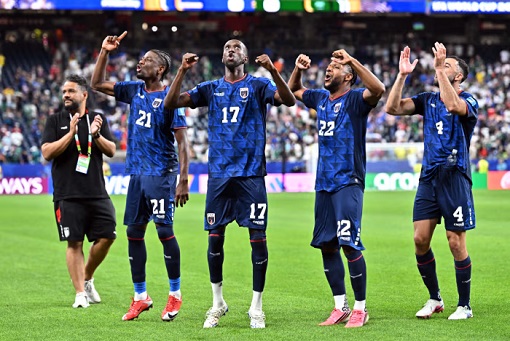
Cape Verde won its independence from Portugal in 1975 and didn’t join FIFA until 1986. But the quality of the national team has steadily improved for most of 20 years, and while a number of players on the roster weren’t born in the country, there is also pride in the diaspora. Much credit for Cape Verde’s performances must go to coach Bubista, a former international himself who has been in charge since January 2020.
A stable coaching set-up has allowed the 56-year-old former centre-back to build a compact and well-drilled side with an organised defence, technical midfielders and gifted forwards who upset Ghana and drew with Egypt during a run to the quarter-finals at Afcon 2023, having only made their tournament debut 10 years earlier.
Against Messi and Argentina, Cape Verde must win – not draw, let alone lose – to keep their dream alive. However, even if they lose, the world knows about Cape Verde now. For Saudi, who had hoped to return to the knockout stages for the first time since the kingdom reached the round of 16 in 1994, they have to go home after six consecutive group-stage eliminations.

Other Articles That May Interest You …
- Bloomberg – How MACC Partners With Corporate Mafia To Seize Control Of Companies
- Proof Of Cheating – Palmero Returns To Spain, Loan Deal Terminated
- Laughing Stock – FIFA Rejects FAM’s Ridiculous “Grandfather Story” Appeal
- Mahathir Hinted Johor Royalty Behind FAM-FIFA Fraud Scandal
- Disgrace – FIFA Exposes How FAM Cheats With Fake Birth Certs
- Sore Losers Get Jealous!! – Western Swimmers Accused Chinese Of Cheating At Paris Olympics After Losing Dominance
- Taylor Swift’s S$500 Million Economic Impact – How Singapore Cleverly Got An Exclusive Deal For The Pop Star
- 10 Secret Messages From “Ola Bola” – To Make Malaysian Football Great Again
- From Football Star To Hotel Tycoon – Cristiano Ronaldo Diversifies
- Iran The Cheater – Women’s Football Team Are Mostly MEN
- 2014 FIFA World Cup – Here’re 8 High-Tech Concepts You May Not Know

|
|
June 28th, 2026 by financetwitter
|


|

|

|

|

|

|




















Comments
Add your comment now.
Leave a Reply