



Oil prices shot up and U.S. stock market fell after U.S. President Donald Trump said on Wednesday (June 10) that Iran has taken too long to negotiate a peace deal and will now have to “pay the price.”However, very few took Trump’s threat seriously. After all, the Commander-in-Chief had said both parties have been close to a peace deal 37 times in social media posts.
Trump’s statement came just a day after he said that a deal could be reached in “two or three days” and that the critical Strait of Hormuz would reopen “immediately” after such a deal. Some said either Trump is delusional, trying to calm the financial markets or being played by the Iranian regime. Of course, if he keeps repeating about a “good deal”, sooner or later, a deal will be made.
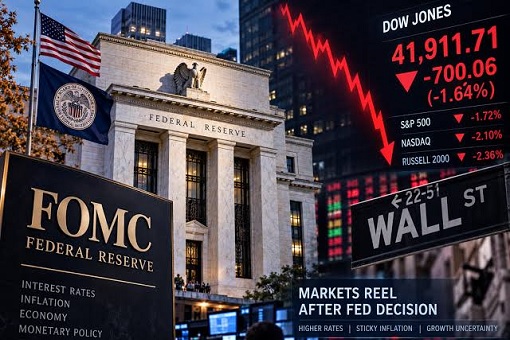
Just when everyone thought Trump was bluffing again, the U.S. suddenly began a fresh wave of attacks on Iran on the same Wednesday. The Dow Jones Industrial Average fell by 953.33 points. The major stock indexes dropped after the U.S. president pledged more Iran attacks, saying that “we’re going to be attacking them very hard”. Both WTI and Brent Crude oil rose above US$90 a barrel.
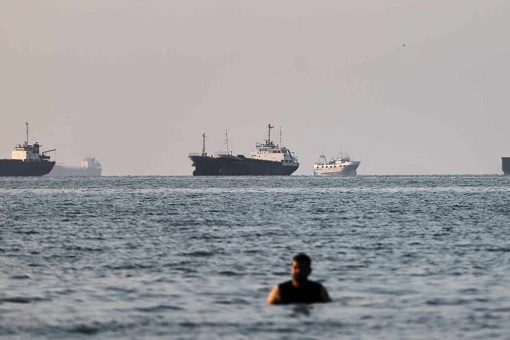
The latest clashes show the Iran War is far from over. In fact, the recent days of hostilities showed how close the two foes are to crossing each other’s red lines – potentially triggering a dangerous escalation. But on Wednesday, Trump lost his patience. The attack came hours after Trump said Iran was “playing us for suckers” because it hadn’t accepted U.S. terms for a nuclear deal.
The Pentagon said the attacks was an act of coercive diplomacy designed to force Iranian concessions at the negotiating table. “If we need to negotiate with bombs, we’ll negotiate with bombs. And we’re very good at it. Nobody better in the world,” – Defense Secretary Pete Hegseth said on Wednesday afternoon. U.S. military forces launched attacks on dozens of targets, including air defenses and radar sites near the Strait of Hormuz.
The assault is the latest exchange of fire between Tehran and Washington this week, which the U.S. military described as “additional self-defense strikes” in response to Iran’s “unwarranted and continued aggression.” Earlier, Iran struck directly at Israel, triggering an escalatory spiral that President Trump struggled to rein in.
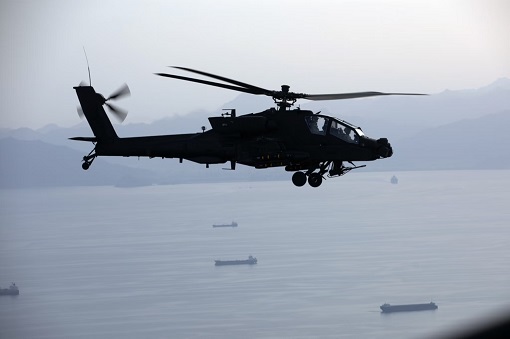
On Tuesday, the U.S. military launched three waves of attacks against Iranian radar sites, air defenses and ground control stations after an Iranian drone a day earlier downed a U.S. Apache helicopter in the Strait of Hormuz. But Iranian officials tried to portray the downing as an accident, then launched missile and drone strikes on U.S. allies in the Gulf and Jordan in response to the American attacks.
Before Wednesday’s new fresh of U.S. attacks, the three days of fighting marked the most serious escalation in the conflict since Trump declared a ceasefire in the U.S. and Israeli bombing campaign against Iran in April, ending nearly 40 days of strikes that began on February 28. It followed a series of skirmishes centred on U.S. efforts to enforce its blockade of Iranian ports and Iran’s blockade to keep shipping through the Strait of Hormuz shut.
The military standoff around the strategic waterway – the transit point for much of the world’s oil and a key lifeline for Gulf Arab states – has brought U.S. military aircraft flying near Iranian drones and speedboats, creating a high risk of conflict. Despite the fact that neither side wants to continue the war, which enters its 100 days, both sides are prepared to continue it at the same time in order not to look weak.
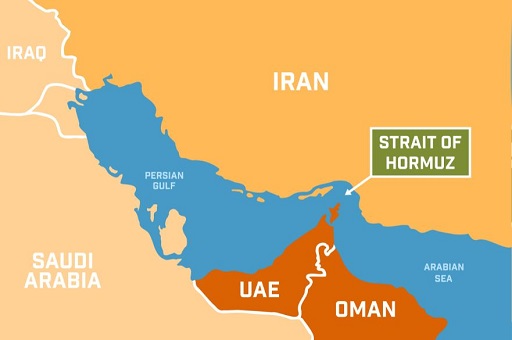
The U.S. Apache helicopter that crashed while on patrol off the coast of Oman on Monday evening was likely hit by an Iranian drone, U.S. officials said. Iranian officials said Tehran didn’t deliberately target the helicopter, though it has been firing drones at commercial vessels that are coordinating with the U.S. to transit the waterway.
The incident came very close to the threshold for escalation articulated by Trump in private conversations with aides, in which he said he would consider ending the ceasefire with Iran if Tehran kills American troops. Fortunately, the helicopter’s two crew members were rescued by a sea drone, after hours in the water – a first-of-its-kind mission.
The incident demonstrates the risks of Iran’s defense doctrine in which the IRGC (Islamic Revolutionary Guard Corps), the paramilitary group responsible for protecting the Iranian regime and enforcing the chokehold on the strait, delegates a high degree of freedom of action to commanders on the ground who can then operate without orders from Tehran in an approach known as the “Mosaic” defense strategy.
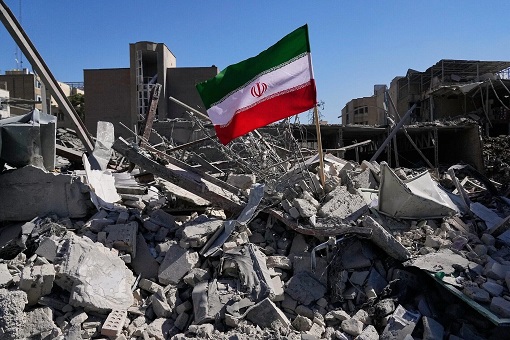
Interestingly, Iran’s regime, having emerged from the initial war militarily and economically damaged, revealed some limits in the past few days. As much as Tehran wishes to reassert deterrence with the U.S. and Israel, it cannot afford to return to full-scale war. Even hard-line leaders within Iran’s political power structure understood the risk of miscalculation and unwanted escalation.
It’s not a coincidence that Tehran was first to publicly announce an end to the exchange with Israel and avoided crowing about the downing of the Apache as it had previously when other American aircraft were shot down. It also has avoided highly sensitive targets like Israeli population centers and Saudi Arabia, and has used relatively limited volleys of missiles and drones to make its point.
Even Iran’s missile attack on Israel appeared calibrated to avoid a wider escalation in the conflict. “I think that, yes, there was a kind of risk taken by the Iranians, but it doesn’t seem that Iran really wanted to be engaged in a full-scale confrontation with Israel,” – said Raz Zimmt, director of the Iran research program at Israel’s Institute for National Security Studies.
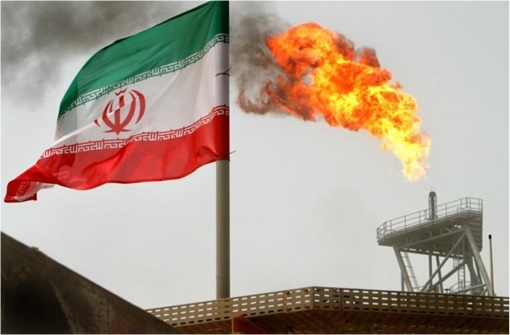
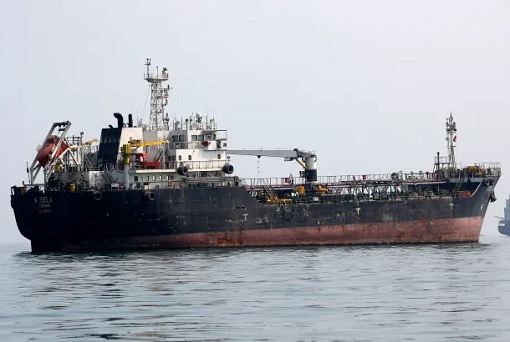
While Tehran is trying very hard not to accidentally kill American soldiers and personnel during the ceasefire, the U.S. has sought to pressure Iran into a deal by imposing a naval blockade on its ports and vessels. According to analysts at JPMorgan Chase, “more oil” may be going through Hormuz than is publicly visible. Some 2 million barrels per day might be getting out on tankers that have switched off their transponders.
It’s not a coincidence that the fresh wave of attacks on Iran on Wednesday happened when Trump said on the same day that the U.S. military has secretly helped 200 commercial ships and more than 100 million barrels of oil through the Strait of Hormuz. He credited the clandestine exports with keeping oil prices around US$90 per barrel instead of surging above US$200.
However, ship traffic through Hormuz is still well below pre-war levels. About 20% of global petroleum supplies, or 20 million barrels per day, passed through Hormuz before the U.S. and Israel attacked Iran on February 28. The effective closure of Hormuz has led to the loss of more than 1 billion barrels of oil, the largest supply disruption in history.
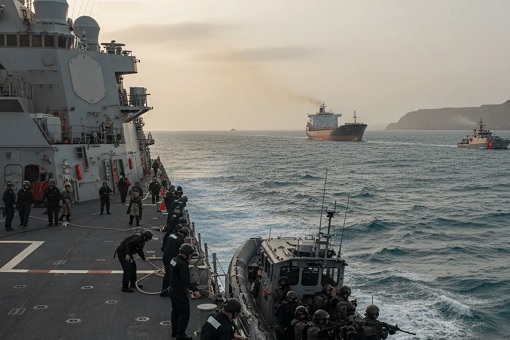
In May, Trump announced and then abruptly halted a mission called “Project Freedom” that sought to escort tankers stranded in the Persian Gulf. U.S. officials subsequently hinted that the Navy was quietly assisting ships through Hormuz but did not disclose the scale of the operation. U.S. Central Command had indicated the military was protecting ships from attack.
Clashes between U.S. and Iran last week began when Tehran launched drones toward “civilian mariners that were rightfully transiting regional waters.” Iran’s drone attacks on American Apache helicopter provides a good reason or excuse for the U.S. to weaken Iran’s control of the strait, which the U.S. military described as “additional self-defense strikes” in response to Iran’s “unwarranted and continued aggression.”
While Trump is using military pressure to force Iran to cede to his terms, an escalating fight between Israel and Hezbollah, an Iranian proxy in Lebanon, further threatens peace talks. Worse, whenever Israel thinks Trump is about to make a bad deal, it will bomb Hezbollah in Lebanon. Likewise, whenever Tehran wants to disrupt the negotiation without resuming the war, it would order its proxy to attack Israel, who in turn would retaliate.

Another critical sticking point is the sequencing of an agreement. Iran wants billions in economic relief, through the lifting of sanctions and unfreezing of assets held abroad, before entering serious negotiations about limiting its nuclear program. Washington disagrees and wants to see Iran commit to some nuclear-work rollback in an initial framework deal rather than providing Tehran with funds up front.
Other Articles That May Interest You …
- The Real Reasons Behind U.S. Warning Strikes On Iran
- No More Safe Havens – Israel’s Airstrike In Qatar Sends New Message To Countries Harbouring Hamas Terrorist
- Paying The Price For Hamas Attacks – How Trump Misled Iran Before Israel Sends 200 Jets To Attack
- Ran Out Of Luck And Place To Hide – Here’s How Israel Trainee Squad Accidentally Killed Hamas Mastermind Sinwar
- Live By The Sword, Die By The Sword – Anwar Madly Angry After BFF Hamas Terrorist Leader Haniyeh Assassinated
- Playing A Dangerous Game – Here’s Why Facebook Removes News Of PM Anwar Meeting With Hamas Terrorists
- Hamas Is Game Over – How The Terror Group Miscalculated, Betrayed, Abandoned And Made More Mistakes
- Careful What You Wish For – U.S. May Slap Economic Sanction On Malaysia For Supporting & Training Hamas Terrorists
- Human Shields – How Hamas Cleverly Wins Propaganda War, But Was Stunned By “Fire Power” Unleashed By Israel
- Told You So!! – Congrats To Anwar For Radicalizing School Kids As Potential Hamas Terrorists Playing With Guns
- An Eye For An Eye!!! – No One Can Stop Israel From Reducing Gaza To Rubble And Erase Hamas Terrorists

|
|
June 11th, 2026 by financetwitter
|


|

|

|

|

|

|

















Comments
Add your comment now.
Leave a Reply