



President Donald Trump has said a deal to end fighting between the U.S. and Iran is scheduled to be signed on Sunday (June 14), despite Iran casting doubt on the timing. On Saturday, Pakistan, a key mediator, also said the deal was “likely expected” to be finalized within 24 hours and they were “preparing for the electronic signing“. Perhaps a deal would be signed. Perhaps it would not.
Washington is using economic benefits as carrot. Iran has reportedly demanded the release of US$12 billion in frozen funds in exchange for reopening of the Strait of Hormuz, which Trump has started crowing day and night. The U.S. claims Iran’s sanctions relief is based on compliance, but Tehran has rubbished it. Iran’s nuclear program, however, will be in the second phase of negotiations.
While Trump said that “at the appropriate time, when all is calm, we will go in and get the Nuclear Dust”, Iran argued that it has only agreed to dilute its stockpile of highly enriched uranium – meaning Tehran will only weaken the near weapons-grade reserve. This also means Iran could – quietly – resume its nuclear weapon program at a later stage, even if it says it would not.
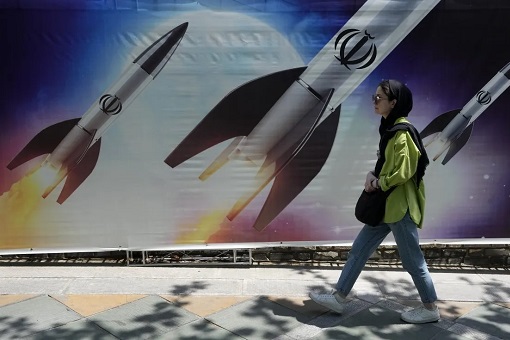
The so-called deal is actually a MOU (Memorandum of Understanding) that would extend the ceasefire for 60 days, including in Lebanon, during which time nuclear negotiations would be held. Iran would be given temporary sanctions waivers to allow it to sell oil for 60 days. That would generate precious revenue for Tehran. The reopening of the Strait of Hormuz would see the lifting of U.S. blockade on Iran ports.
However, on Sunday, Israel carried out an air strike on the southern suburbs of Beirut known as Dahieh, a Hezbollah stronghold in the Lebanese capital, in an apparent attempt to disrupt or disapprove Trump’s deal. It’s unclear what Trump would do if Israel continues to bomb Lebanon after Washington and Tehran sign the MOU. But there’s one man in Iran who’s giving Trump more headache than Israel.
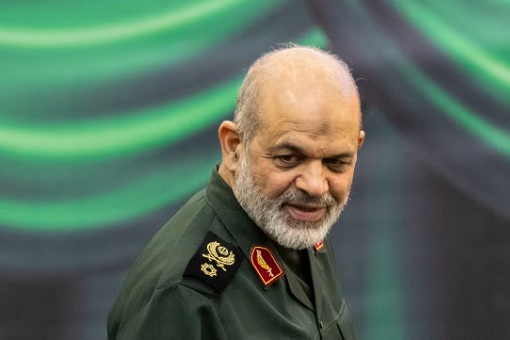
Ahmad Vahidi, commander in chief of the Islamic Revolutionary Guard Corps (IRGC), gave the order to fire ballistic missiles at Israel on June 7 – the first time in months in a show of power by the regime’s feared paramilitary force. More moderate voices in the Iranian leadership wanted to hold off on the strikes for fear of jeopardizing a deal with the U.S. that could save Iran’s economy.

Vahidi won the argument that striking Israel hard could stop attacks on Hezbollah in Beirut. He successfully persuaded Iran’s top security council to back the strikes and set off the first exchanges of fire between Iran and Israel since the ceasefire on April 8. The Israeli Air Force retaliated on June 8 by striking military targets in western and central Iran using air-launched ballistic missiles.
Vahidi has emerged as a key power broker in Iran who is pushing a hard line at the negotiating table with Washington, giving Trump a run for his money. That explains why Iran pushed back on the timing after Trump and mediators signaled on Saturday that they were on the brink of a preliminary deal with Tehran, with a signing possible as soon as Sunday.
As Trump badly wants a deal and trumpets that the two sides were close enough that he would call off further strikes, Iran warns that it hadn’t yet signed off on the draft agreement. And Vahidi is seen as the most influential and strongest voice among hard-liners pushing for Tehran to hold out until its demands are met.
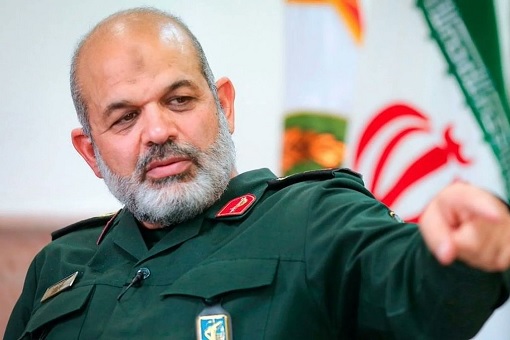
For months, Vahidi, an enigmatic commander whose predecessor was killed on the first day of the war, has tussled with more public-facing, political figures in the Iranian leadership. Each time, he has come out on top. In Iran, the IRGC and those close to it have stood as the biggest obstacle to an agreement.
The 67-year-old Vahidi, who is sanctioned by the U.S. for helping oversee a crackdown on protests over women’s rights in 2022 and wanted by Interpol for a deadly attack on Jews in Argentina, insists that Iran must re-establish military deterrence to increase its leverage at the negotiating table. Vahidi’s position at the top of the regime’s most powerful armed force means his perspective is now shaping Iran’s stance in negotiations to end the war.
His forces are in charge of imposing Iran’s stranglehold on the Strait of Hormuz, the regime’s strongest card in negotiations. Throughout the war, Vahidi has frequently overruled Iranian Foreign Minister Abbas Araghchi and President Masoud Pezeshkian. Both have pushed for a swift, preliminary deal with the U.S. to avoid an economic implosion under pressure from the U.S. blockade of Iran’s oil industry.
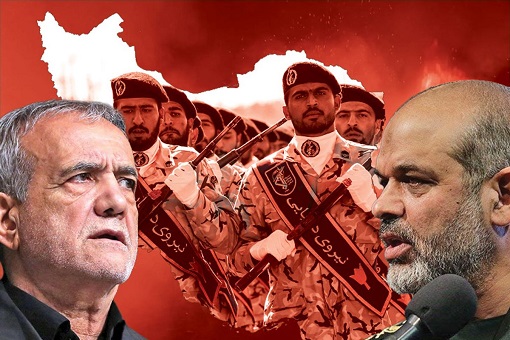
Mr Vahidi, by contrast, has given priority to re-establishing Iran’s deterrence and defending Hezbollah, the Lebanese militant group backed by Tehran. It was Vahidi who hitched the fighting in Lebanon to the war in Iran, making a deal with the U.S. dependent on Israel’s ending its conflict with Hezbollah, according to Arab mediators.
Vahidi, a founding member of the Revolutionary Guard after the Islamic revolution in 1979, and took charge of its intelligence branch in 1982 at age 23, has also pushed negotiators to protect Iran’s missile stockpile and gain access to its frozen funds. And he has argued that those funds shouldn’t be barred from military spending.
He helped establish the Quds Force, an elite unit of the Revolutionary Guard, which specialized in training foreign militias to attack Iran’s enemies, and rose to become its first commander in 1988. As head of that force in the 1990s, he helped develop Hezbollah into the dominant military force in Lebanon.
Argentina, through Interpol, issued an arrest warrant for Vahidi in 2007, accusing him of helping orchestrate the 1994 bombing of a Jewish community center in Buenos Aires that killed 85 people and injured hundreds more. The Islamic Republic has repeatedly denied that Vahidi or any other Iranian official was involved in the attack.
He has served in a range of roles that have given him deep knowledge of Iran’s defense and security apparatus, including defense minister, interior minister and a deputy commander in the Revolutionary Guard. As defense minister in 2009, he played a key role in procurement for Iran’s missile, drone and nuclear programs, according to the U.S. Treasury, which placed sanctions on him the following year.
In 2022, as interior minister, he oversaw the deadly crackdown on protests over the death of Mahsa Amini, the 22-year-old woman killed in police custody after allegedly violating the country’s strict Islamic dress codes. Yet, despite holding various roles in the regime, Vahidi doesn’t have extensive experience as a wartime commander.

“This is almost unprecedented for someone at this position,” – said Saeid Golkar, an expert on Iran’s security services who teaches at the University of Tennessee at Chattanooga, adding that his ascent was a result of more competent and less controversial commanders being killed in wars with the U.S. and Israel. Most of Vahidi’s background has been in intelligence.
After assuming control of the 200,000-member Revolutionary Guard, Vahidi was quick to assert himself. An early example of that came when President Pezeshkian, a moderate, said that Tehran would halt its strikes against its Gulf neighbors. The IRGC swiftly contradicted him – suggesting that not even Iran’s new Supreme Leader, Mojtaba Khamenei, believed to have been incapicitated, calls the shot.
Vahidi had given the top security council what he said was evidence showing how the Gulf states had assisted strikes on Iran, according to Arab mediators, some of whom were briefed by Iranian negotiators while others spoke to Vahidi directly. That pattern has continued to play out, with the Revolutionary Guard and more moderate figures in Iran sometimes issuing contradictory messages.
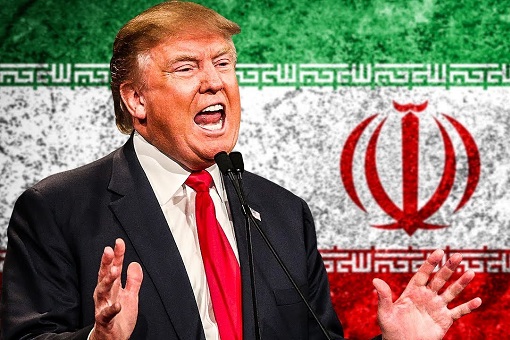
On April 18, when Araghchi, Iran’s top diplomat, said the Strait of Hormuz was open, the Revolutionary Guard told mediators otherwise. Shortly after, media affiliated with the paramilitary force dismissed Araghchi’s remarks, calling them inaccurate or incomplete. That gives Trump a terrible headache, who has repeatedly stated that the U.S. does not know who is currently in charge in Iran
However, despite his clout in Tehran, Vahidi now holds a perilous crown. U.S. and Israeli airstrikes have killed a string of Revolutionary Guard commanders – including his predecessor and General Qassem Soleimani, the former commander of the Quds Force, who was killed in a strike ordered by Trump in his first term. It’s not rocket science that he’s on top of the assassination list.
Other Articles That May Interest You …
- The Real Reasons Behind U.S. Warning Strikes On Iran
- No More Safe Havens – Israel’s Airstrike In Qatar Sends New Message To Countries Harbouring Hamas Terrorist
- Paying The Price For Hamas Attacks – How Trump Misled Iran Before Israel Sends 200 Jets To Attack
- Ran Out Of Luck And Place To Hide – Here’s How Israel Trainee Squad Accidentally Killed Hamas Mastermind Sinwar
- Live By The Sword, Die By The Sword – Anwar Madly Angry After BFF Hamas Terrorist Leader Haniyeh Assassinated
- Playing A Dangerous Game – Here’s Why Facebook Removes News Of PM Anwar Meeting With Hamas Terrorists
- Hamas Is Game Over – How The Terror Group Miscalculated, Betrayed, Abandoned And Made More Mistakes
- Careful What You Wish For – U.S. May Slap Economic Sanction On Malaysia For Supporting & Training Hamas Terrorists
- Human Shields – How Hamas Cleverly Wins Propaganda War, But Was Stunned By “Fire Power” Unleashed By Israel
- Told You So!! – Congrats To Anwar For Radicalizing School Kids As Potential Hamas Terrorists Playing With Guns
- An Eye For An Eye!!! – No One Can Stop Israel From Reducing Gaza To Rubble And Erase Hamas Terrorists

|
|
June 14th, 2026 by financetwitter
|


|

|

|

|

|

|
















Comments
Add your comment now.
Leave a Reply