



Iran has weaponized the Strait of Hormuz to create a global oil crisis. As a result, crude oil prices skyrocketed to almost US$120 a barrel on Monday, before fell on Tuesday sparked by President Trump’s comment that the war would be over “very soon.” Brent, the global benchmark, was still 27% higher than on the eve of the war. But it was too early to celebrate.
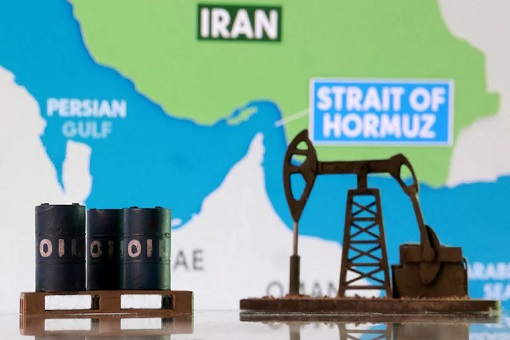
Futures for Brent Crude were on the rise again on Wednesday (March 11), climbing above US$90 a barrel after Iran launched attacks which hit three commercial ships. U.S. officials said Iran has placed mines in the Strait of Hormuz, through which 20% of global crude and LNG (liquefied natural gas) passes. A day earlier, (March 10), the Pentagon said 16 Iranian mine-laying vessels were destroyed.
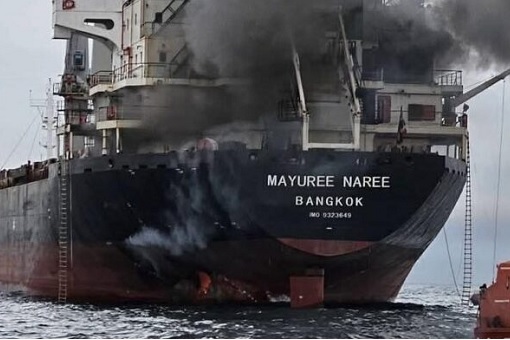
The cargo ships targeted included Thailand-flagged bulk carrier Mayuree Naree, Japanese-flagged container ship One Majesty, and Marshall Islands-flagged bulk carrier Star Gwyneth. Iran has warned that oil could hit US$200 a barrel, while warning that it would “not allow a single litre of oil to transit” the strait. To stabilize soaring crude prices, the IEA said it would release a record 400 million barrels of oil from strategic reserves.
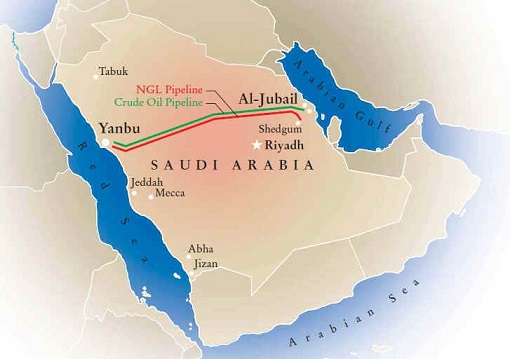
At the same time, Saudi Arabia has activated its backup pipelines – one in Saudi Arabia and one in the United Arab Emirates – to bypass the Strait of Hormuz. The pipes can’t replace the flows carried by tanker ships, but their use can certainly prevent an even worse crisis from exploding. Saudi Arabia’s East-West pipeline could send a maximum of 7-million barrels of oil through the 746-mile-long pipeline.
Built in the early 1980s when the Iran-Iraq War threatened shipping in the Persian Gulf, the Saudi pipeline, running all the way to its Red Sea port of Yanbu, would be a test of the infrastructure as the pipe has never run at full capacity for an extended period. About two million barrels of oil are dedicated to Saudi refiners, leaving 5-million barrels that could reach global markets each day.
Still, the Saudi pipeline doesn’t fix the whole problem – Aramco sends 800,000 barrels daily of petroleum products through the strait, which can’t be rerouted. Additionally, there is oil stranded in Kuwait, Iraq and Bahrain. Worse, Iran could try to attack the Saudi pipeline. But as long as oil is flowing through them, at least some crude can reach buyers while more than 1,000 ships are stuck in the Persian Gulf.
A smaller, newer Emirati pipeline, partially built by a subsidiary of state-owned China National Petroleum Corp., runs from Habshan in Abu Dhabi to Fujairah on the Gulf of Oman. It carries up to 1.8 million barrels a day and was already pushing about 1.1 million barrels through before the war. A rough calculation shows that even with the two pipelines flowing, there are still around 10 million barrels that will be stuck in the Persian Gulf.
Desperate times call for desperate measures. Some ships anchored in the Persian Gulf or transiting the Strait of Hormuz are taking creativity to the next level – changing their tracking data to boast links to China in an attempt to evade Iranian attacks. At a time when the U.S.’ favourite maritime rights under “freedom of navigation” does not work, vessels are flashing the “China card”.
This comes after Iran has signalled it will allow only Chinese vessels to transit the Strait of Hormuz, describing the move as a gesture of gratitude for Beijing’s support since the Middle East war began. The tactic also comes as Tehran’s Revolutionary Guard has effectively declared the strategic waterway closed to international shipping, a move that threatens vital global energy routes and supply chains.
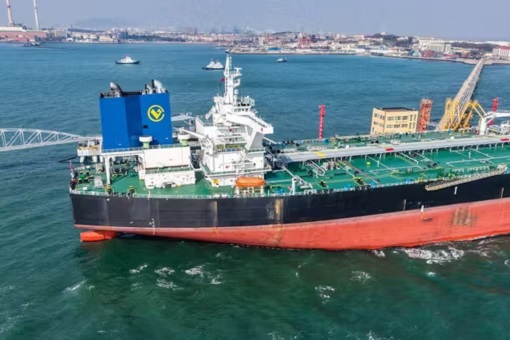
By claiming to have an “All Chinese Crew” or “Chinese Crew Onboard”, or changing their destination to “Chinese Owner,” vessels are linking themselves to Iran’s most important economic partner, Beijing. On Monday, Panama-flagged cargo ship Guan Yuan Fu Xing was the latest to make it safely through the Strait of Hormuz, two days after changing its destination to “CHINA OWNER” via its AIS transponder.
Similar to plane signals, the AIS (Automatic Identification System) allows vessels to broadcast their details, positions, speed and destination to ports and other vessels. These signals are collected by trackers including Marine Traffic. In the past week, around 30 other ships in the Gulf or transiting the Strait of Hormuz have pulled similar stunts – some more audaciously than others.
The Iron Maiden, registered in the Marshall Islands, and the Liberia-flagged Sino Ocean, brandished China links while sailing through the strait, then removed them once they were out. Over the weekend, LPG tanker Bogazici broadcast that it was a Muslim-owned and Turkish-operated vessel, in what appeared to be an effort to avoid attacks as it passed through the strait.
Others have gone through the Strait of Hormuz with their transponders switched off to conceal their position, sometimes only reappearing on marine trackers once safely out of the area. Since last Monday, more than 20 commercial vessels have been detected crossing the strait. Before the war, a daily average of 138 ships transited the Strait of Hormuz.
Additionally, some vessels are manipulating their GPS signals to misdirect Iranian weapons, showing up on shipping data platforms as clustered together. The conflict promises a massive payday for any ships willing to make their deliveries. Freight rates have soared to record highs, and a very large crude carrier heading from the strait to China can earn about US$500,000 in revenue per day.
To encourage shippers to get their cargoes out of the Gulf and ease global energy markets, Trump announced a US$20 billion reinsurance program for oil tankers and other maritime traffic. Analysts have pointed out that the threat of getting blown up by Iranian projectiles is a bigger obstacle than getting insurance coverage. So Trump has also said the U.S. Navy will escort tankers through the strait if necessary.
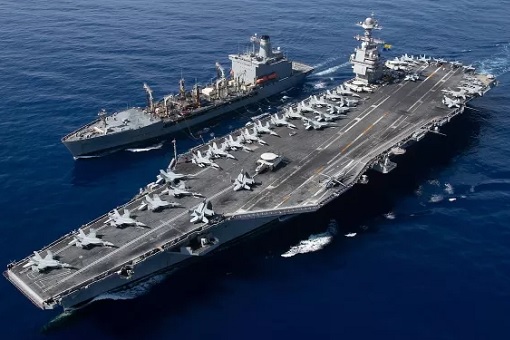
Not everyone is convinced. According to the Center for Strategic & International Studies, the U.S. Navy’s fleet consists of 233 commissioned warships, and 59 are support ships. But most are in port or in maintenance and training, with less than a fifth of the force at sea for operations. As of late February, just 49 Navy ships were at sea conducting operations.
“Trying to protect so many ships is a massive logistical undertaking,” – said Robin Brooks, a senior fellow at the Brookings Institution. “All Iran needs to do is to sneak through a couple of drones to blow up one ship, and we’re going from what is currently a very serious incident to a massive oil shock. In short, I don’t think U.S. assurances of Navy escorts are all that credible. There’s just way too many oil tankers that need protecting.”
Interestingly, Iran is exporting more oil through the Strait of Hormuz than before the war, showing it is in control of a strategic waterway that it has closed off to the rest of the region’s oil producers. As Gulf Arab oil producers from Saudi Arabia to Iraq cut production and scramble for new routes that bypass the strait, Iran is conducting business as usual, according to data from tanker-tracking firm Kpler.
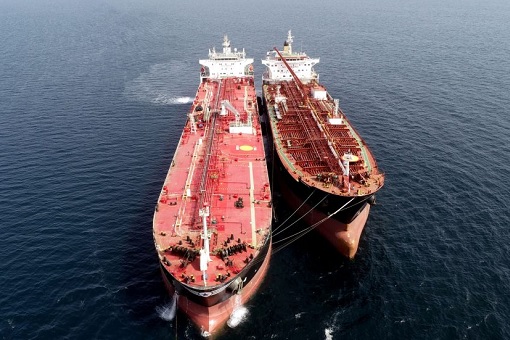
In fact, since the war started on February 28, seven tankers have loaded oil off the Iranian coast, according to Kpler. And at least two of the most recent loadings are out of the Persian Gulf. Over the past six days, tankers have loaded a daily average of 2.1 million barrels of Iranian oil, higher than the 2 million barrels a day Iran exported in February.
Much of the Iranian oil moving across or toward the strait appears to be headed for China on tankers that are part of the so-called shadow fleet. Since the war began, around 15 ships have crossed the strait with most being dark-fleet vessels moving Iranian oil to China and India, according to Lloyds List Intelligence. Many are small Chinese tankers that make their presence and origin known to the Revolutionary Guard through loudspeakers and shortwave radio.
“We are a Chinese ship. We are coming through; we are friendly,” – the Chinese ships transmit in English to the Revolutionary Guard, message which can be heard and monitored by other vessels. One tanker called the Skywave bound for China took on oil last week from Iran’s Kharg Island. The vessel is owned by an Indian shell company sanctioned by the U.S. last year as part of a network it said was directly funding the Iranian armed forces.

Another China-bound ship, the Cume, is owned by a Dubai entity sanctioned by the U.S. and is flying a fake Guyana flag. It loaded 2 million barrels of Iranian crude on February 19, crossed the Strait of Hormuz last week and is currently in the Gulf of Oman, according to Kpler. While Iran ships oil, other operators are struggling. Danish container-ship major A.P. Moller-Maersk has had 10 ships trapped in the Persian Gulf.
Other Articles That May Interest You …
- Energy Security – Why China Can Withstand $100 Oil Prices More Easily
- Strategic Error – How Iran’s Retaliatory Strikes At Gulf States Backfires
- Live By The Sword, Die By The Sword – How Ayatollah Khamenei Was Killed
- Iran Panicking – Armada Is Ready And Trump Could Strike Anytime
- Revolution – How One Man Rallies Iranians To The Street
- From Robot Wolves To Satellite Killer – How China’s Military Parade Sends A Message That Annoys Trump
- Gone In 25 Minutes – How Trump Tricked Tehran Twice Before Obliterated Iran’s 3 Nuclear Sites With MOPs
- Iran’s “Axis Of Resistance” Missing In Action – Why Tehran Became Isolated & Alone In WAR Against Israel
- Iran On Fire – Khamenei Should Flee To Russia While He Can Before US-Israel Upcoming Surprise
- Paying The Price For Hamas Attacks – How Trump Misled Iran Before Israel Sends 200 Jets To Attack
- Psychological Warfare – How Mossad Cracked Hezbollah Secret Network With Low-Tech Pager & Walkie-Talkie “Walking Bombs”

|
|
March 12th, 2026 by financetwitter
|


|

|

|

|

|

|






















Comments
Add your comment now.
Leave a Reply