



Operation Midnight Hammer began with “Drama King” Donald Trump pretending to be indecisive about striking Tehran. After all, he was the co-producer of TV series “The Apprentice”, hosting the reality television show for a whopping fourteen seasons before departing to focus on his 2016 presidential campaign. The show featured him as a powerful and decisive businessman.
Playing his role in judging the business acumen of contestants and delivering the iconic “You’re Fired!” catchphrase, Trump enjoyed watching the faces of contestants caught unprepared when they got fired. He might have decided to replay his TV series role after being briefed by the Pentagon on a tactical surprise attack on Iranian nuclear sites.
It was the second time President Trump had tricked Tehran when he gave Iran two weeks to come to the table for a deal, but suddenly sent some deadly B-2 bombers to obliterate 3 Iranian nuclear sites on Saturday (June 21). It turned out to be a clever smoke screen – to deceive the Iranians and get them to let their guard down and surprise them with a sudden attack.

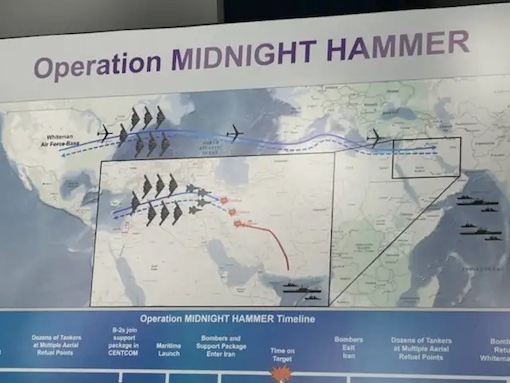
When the U.S. moved a number of B-2 bombers from their base in Missouri earlier Saturday, it was meant to be a decoy to throw off Iranians. Noises were created deliberately so that flight trackers would pick up the group of stealthy bombers heading west over the Pacific. Hours later, however, as one group of B-2 bombers headed to the west, another group quietly split off and headed east to attack Iran.
Flying 18 hours from the U.S. mainland to Iran with multiple aerial refuelings, thanks to an earlier deployment of more than 30 aerial refueling tankers to the Middle East to create a chain of stations in the air, the “main strike package of seven B-2 Spirit stealth bombers” flew over Israel, Jordan and Iraq before approaching Iran. But before they entered Iranian airspace, something else happened.
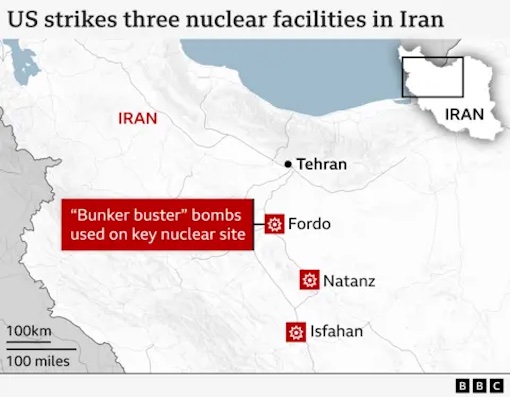
At approximately 5 p.m. Eastern Standard Time (2100 GMT), and just prior to the strike package entering Iran, a U.S. submarine in the Central Command area launched more than two dozen Tomahawk cruise missiles against key surface infrastructure targets at Isfahan and Natanz, two of three Iranian nuclear sites being targeted. But the spectacular firework didn’t start till the unleash of MOPs.

Israel rejoiced and its stock market skyrocketed after a dozen of 30,000 pounds Massive Ordnance Penetrator or “MOP” were dropped on Fordow, and another two were used against Natanz. Better known as the bunker-buster bomb, the GPS-directed GBU-57 bomb, assembled by Boeing Co., is the only weapon possessed by the U.S. which can penetrate Iran’s Fordow nuclear facility – central to its uranium enrichment efforts – buried around 300 feet underground, unreachable to non-penetrating bombs.
It was the first time the GBU-57 had been used in war. The U.S. had produced around only 20 of the giant munitions, and more than half were used in Iran. All the three Iranian nuclear infrastructure targets were struck between 6:40 p.m. and 7:05 p.m. Eastern Time – taking just 25 minutes. All the bombers successfully exited Iran around 7:30 p.m., without Tehran knowing what hit them.
In total, the U.S. used 75 precision weapons during the operation which involved more than 125 U.S. military aircraft – the largest operational B-2 strike in U.S. history. Even though the strikes did not involve Israeli jets, the operation was carried out in coordination with the Israeli military. The Pentagon said the mission has caused “extremely severe damage and destruction” to three Iranian nuclear sites.

The first time Iran was hoodwinked by the U.S. occurred when Tehran was suddenly struck by Israeli attacks while U.S.-Iran negotiation was still ongoing, a few days before the U.S. and Iranian officials were to meet in Oman for a sixth round of nuclear talks. Iranian Foreign Minister Abbas Araghchi has complained of deception in the latest strike – suggesting that Iran was indeed caught with its pants down again for the second time.
However, Trump’s two-week deadline could be time for the U.S. forces to get into place before a real military strike begins to destroy more Iranian military assets, and not the time to demolish Fordow, Isfahan and Natanz nuclear sites. Trump could also believe that the pounding of Iranian nuclear sites by Israel, which is likely to intensify in the two-week period, might soften Iranian position.
While it’s unknown whether Trump is done with the neutralization of the Iranian nuclear sites or is about to join Israel in the campaign to topple the Khamenei regime, any retaliations from Tehran against American interests will provide the U.S. with an excuse to send more bombers back to Iran. The U.S. president simply could not resist the temptation of claiming credit and victory after Israeli had done all the heavy lifting.
To save face, Tehran claims it had shifted all the centrifuge production equipment a long time ago, but Tel Aviv believes the centrifuges were still in Fordow before the U.S. strike. Centrifuges are fragile, finely balanced machines which spin uranium hexafluoride gas at extremely high speeds using rotors. A small problem – such as a power cut – can send a centrifuge spinning out of control, with parts smashing into each other and damaging a whole cascade.
Even before the U.S. military strike, Rafael Grossi of the International Atomic Energy Agency said centrifuges at Iran’s underground uranium enrichment plant at Natanz were likely to have been “severely damaged if not destroyed altogether” following Israeli strikes, which led to power cuts. That’s because an above-ground plant was “completely destroyed” and the electrical installation sustained “almost total damage”.
Likewise, the Israeli attacks on Istafan had “dismantled a facility for producing metallic uranium, infrastructure for reconverting enriched uranium, laboratories, and additional infrastructure”. However, even though Israel had destroyed Isfahan’s facilities for converting enriched uranium into uranium metal which is needed for a warhead, most of Iran’s stockpile of near weapons-grade uranium was held underground at Isfahan.
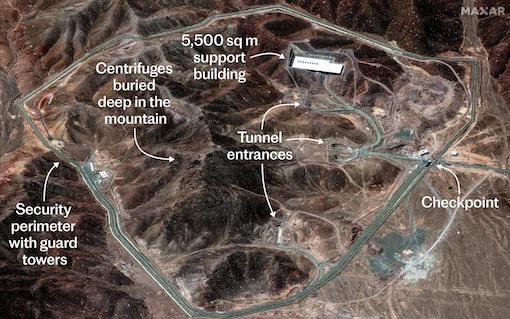
Of the three sites, Fordow suffered limited damage because Israel military did not specifically target the site for obvious reasons – inability to severely damage the site because of its location deep inside a mountainside. Only the U.S. B-2 bombers could destroy Fordow, where Iran’s enrichment there since 2021 has amassed enough 60%-enriched uranium to potentially make nine nuclear bombs.
Clearly, the bunker-buster bombs unleashed by the B-2 bombers were the answer to Israel’s unfinished jobs. While the U.S. strikes appeared to have been limited, Trump warned that he could go after more targets in Iran if the country doesn’t agree to return to the negotiating table. The burning question is should Iran consider the strikes as an official involvement of U.S. in the conflict?
Like it or not, Donald Trump achieved what past presidents had failed, or too chicken to execute for political reasons. It’s not what he had achieved, but how he achieved it. In his first deception, the U.S. and Iran were negotiating, only to be attacked by Israel. In his second deception, the E.U. and Iran were negotiating, only to be attacked by the U.S. Tehran was damn if negotiate, damn if refused to negotiate.
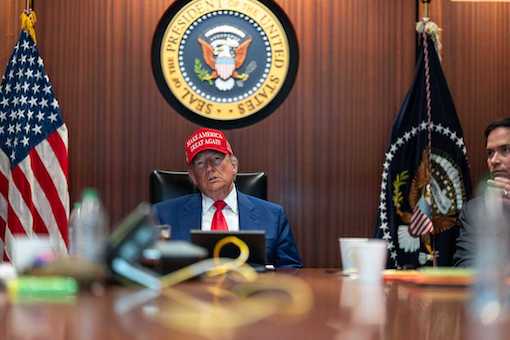
It was absolutely hilarious when Trump’s seemingly indecisiveness was quickly translated by some left-wing news media as a lack of confidence of the U.S. bunker busters. The POTUS was toying with Tehran and Democrats when he said – “I may do it, I may not do it. I mean, nobody knows what I’m going to do”. On paper, Trump saw no compelling reasons not to bomb Tehran.
The Commander-in-Chief was convinced that not only diplomacy alone wouldn’t prevent Iran from developing a nuclear weapon, but was also convinced that Israel had opened the door to the once-in-a-lifetime opportunity to behead the world’s leading state sponsor of terrorism. All he needed to do to put his name in the history was to decisively – which he did – gave Defense Secretary Pete Hegseth the greenlight to move forward with the mission.
Politically, the operation would assert U.S. dominance, as well as to potentially disrupt the close relationship between Iran and China (as well as Russia) – if the Iranian regime collapses. While it’s too early to dream about a true democracy in Iran, the destruction of the Iranian’s three nuclear sites would give peace of mind to not only Israel, but also Saudi Arabia and its allies.

Trump has said in recent days that he has no intention of overthrowing Iran’s regime, despite Israeli’s determination to kill Supreme Leader Ayatollah Ali Khamenei. But on Sunday, the U.S. president appeared to have made a U-turn, stating that he is open to the idea of ending the regime. With no good options, Khamenei could only “hope and pray” that he does not get obliterated in his bunker.
To save face again, Tehran – already outgunned by Israel and outmatched by the U.S. – could use state media to spin and twist that damage at the key Fordow enrichment facility was limited to the entrance tunnel. It could also threaten to close the Strait of Hormuz – a transit chokepoint for a quarter of the world’s oil. And it certainly can send leaders to Russia (and perhaps China) to get moral support to feed its domestic audience.
To divert attention from the humiliating destruction of its 3 nuclear sites, the Mullahs could also increase rhetoric on Israel, accusing the Jewish state of making a grave mistake and is being punished by the Iranians. But without any military retaliation against the U.S., it may embolden Trump, who says it’s time for peace, to trick Tehran for the third time with another surprising attack.
Iran is already firing fewer missiles at Israel each day after Israel secured dominance over Iranian skies, enabling it to destroy launchers and take out missiles before they even leave the ground. Running salt in the wound, Israel said its air force destroyed half of Iran’s missile launchers and has been targeting its arsenal of ballistic missiles. The most Tehran can do is to launch a few missiles every day to prevent Israelis from returning to normal routine.
Other Articles That May Interest You …
- Iran’s “Axis Of Resistance” Missing In Action – Why Tehran Became Isolated & Alone In WAR Against Israel
- Iran On Fire – Khamenei Should Flee To Russia While He Can Before US-Israel Upcoming Surprise
- Israel’s “Operation Rising Lion” – Iran’s Costly Miscalculation Led To Losses Of Top Commanders & Scientists
- Paying The Price For Hamas Attacks – How Trump Misled Iran Before Israel Sends 200 Jets To Attack
- Watch Out The Oil Prices – Israel Preparing To Attack Iran’s Nuclear Sites, Whilst Trump Grabbing Gaza Strip
- Rebuilding Gaza – Clueless Anwar Should Build Housing, Schools, Power, Water & Infrastructure For Malaysia First
- Ran Out Of Luck And Place To Hide – Here’s How Israel Trainee Squad Accidentally Killed Hamas Mastermind Sinwar
- Psychological Warfare – How Mossad Cracked Hezbollah Secret Network With Low-Tech Pager & Walkie-Talkie “Walking Bombs”
- 3 Big Kills In 24 Hours – Why Haniyeh Could Have Been Betrayed By Own Brothers
- An Eye For An Eye!!! – No One Can Stop Israel From Reducing Gaza To Rubble And Erase Hamas Terrorists
- Malaysia Declares War On “Impenetrable” Israel … To Be Slaughtered Like A Pig?

|
|
June 23rd, 2025 by financetwitter
|


|

|

|

|

|

|




















Comments
Add your comment now.
Leave a Reply