



Pahlavi was just 18 years old and in the U.S. training to be a jet fighter pilot when the revolution that ousted his father – Iran’s last Shah Mohammad Reza Pahlavi – unfolded in the 1979 Iran Revolution. After his father died in exile in Egypt in 1980, he declared himself the new Shah, but failed over the following decades to build a formidable Iranian opposition to overthrow the Ayatollah.
Now, a golden opportunity presents itself. Reza Pahlavi took a risk. From exile, the Shah’s eldest son called on Iranians to rally against the regime at 8 p.m. on Thursday and Friday (January 8 and 9). The 65-year-old Pahlavi’s descendant has lived in exile for nearly 50 years despite being born in Iran. Not many Gen-Z knew about this exiled crown prince.
If few had responded, Mr. Pahlavi would have been proven to be another nobody who commanded little influence from safety abroad. Instead, the Iranian people answered his call. The protest wave accelerated, with the largest demonstrations in years in not only Tehran, but across the country. To his surprise, Iranians across the country are chanting slogans in support of Reza Pahlavi.
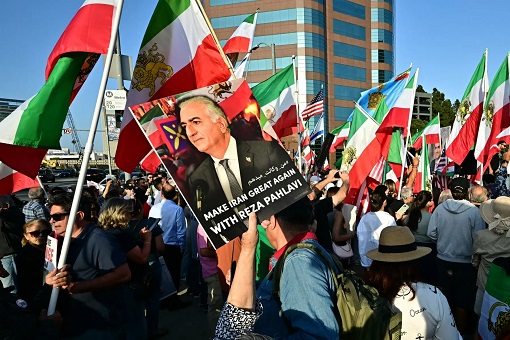
Seeing some Iranians responded to his call to join swelling protests against the government on Thursday night, Pahlavi urged more to take part on Friday. “Be assured that victory belongs to you,” – said Pahlavi, who is based in the U.S. The protest wave accelerated. Thursday and Friday made clear the protests have broad momentum. The longer they go on, the more Iranians overcome the fear on which the regime depends.
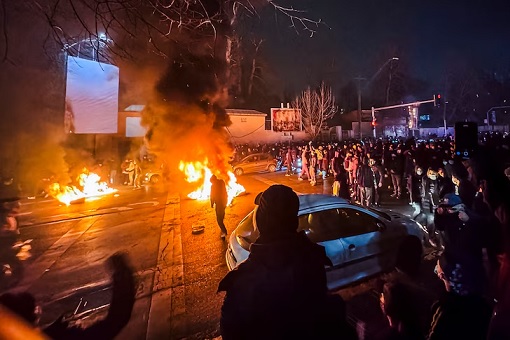
Anti-regime protesters quickly ruled the streets, even in affluent areas in the capital, shouting “down with the dictator,” “freedom” and “long live the Shah.” Police vehicles were abandoned and set ablaze. Regime flags were ripped up. Several state buildings were burned in Tehran, along with a state propaganda building in Isfahan. Even a Tehran mosque was set on fire.
The chants come as the tone of the protests, which began with outrage over a falling currency and soaring prices, is shifting from economic concerns to attacks on the legitimacy of the theocratic regime itself. To the shock of the regime, protesters shouting anti-regime slogans filled streets in Tehran on Thursday night in the largest demonstrations in years.
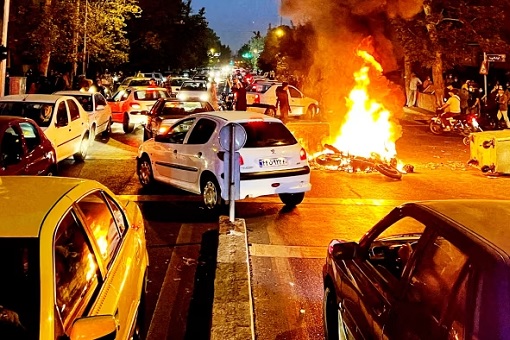
“This is the last battle,” – thousands chanted at another march elsewhere in the capital, “Pahlavi will return.” In the past protests, the Pahlavi dynasty was rarely mentioned largely because the last Shah, who ruled Iran from the 1940s, was widely despised in Iran for his autocratic rule, his political repression and what critics saw as his subservience to the U.S.
Few analysts think Pahlavi has a real path to the throne or leadership in Iran. His improved reputation in recent years is due largely to the mounting discontent with the Islamic Republic rather than a genuine desire by Iranians for a return of the monarchy. Many Iranians see him as everything the current regime is not – pro-Western, secular and capable of ending Iran’s economic isolation.
“Over the past decade, Pahlavi’s popularity has increased, reflecting not just nostalgia, but a sharp contrast of what the past was and what the future could be in Iran. This rise in popularity correlates with increasing secularism and nationalism,” – said Behnam Ben Taleblu, Iran senior director at the Foundation for Defense of Democracies, a Washington think tank.
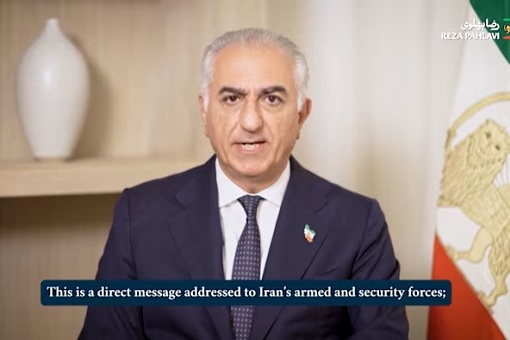
Without weapons, the protesters will need sympathizers in the regime and the military to join their cause. Revolutions also need leaders, and Mr. Pahlavi is the leader who sparks the protests and has other factions join in. The Iranians in the streets aren’t all in favour of restoring the monarchy, hence Mr. Pahlavi says consistently that he wants to be a unifying national symbol and a merely transitional leader.
But the fact that some of the protesters – including midlevel Iranian government officials – said they wanted their king back and hoped Pahlavi could restore Iran’s international standing following a bruising conflict with Israel in June speaks volumes about the Iranian people’s hatred for the current regime. Even a statue of national hero IRGC commander Qassem Soleimani was toppled and destroyed.
“The Islamic Republic is so bad that people will accept anything in replacement, and he offers a simple solution,” said Javad Chamanara, an opposition activist and member of Iran’s Kurdish minority. Still, Pahlavi is seen as a divisive figure among ethnic minorities, which make up close to half of Iran’s population, because of the monarchy’s past refusal to grant them some autonomy.
Besides the exiled crown prince, Iran has other opposition figures, including human rights activists. Shirin Ebadi, the Iranian Nobel Peace Prize laureate, too has called on her fellow citizens to rally for freedom and democracy. “We are witnessing the collapse of the hegemony of the Islamic Republic,” – Ebadi, who lives outside Iran, said on her official Telegram channel on Friday.
Unlike past demonstrations, where waves of anti-government protests that swept Iran in 2009, 2017, 2019 and 2022 were all ultimately repressed, the Islamic Republic is more vulnerable this round. Its economy is in tatters because of sanctions and the collapse of its currency. The 12-day war with Israel devastated its nuclear and missile program and laid bare the limits of its military capabilities.
Israeli strikes across Iran destroyed much of its military leadership, and the follow-on U.S. bombing campaign struck a heavy blow against Iran’s nuclear program. It was a humiliation for a regime that had invested so much of the country’s national wealth into a proxy network that was designed to deter exactly this sort of assault on the homeland. In short, the people no longer see the ayatollahs’ rule as “invincible”.
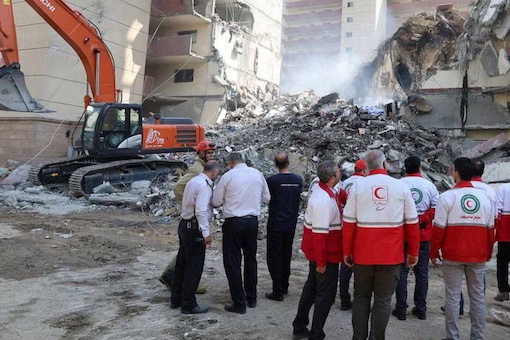
“This was the last straw. The regime over the years had argued that although it has not been able to bring about prosperity or pluralism for the Iranians, at least it has brought them safety and security. Turns out, it didn’t. Now the people have reached the point of saying: Enough is enough,” – said Ali Vaez, Iran project director at the International Crisis Group.
Inflation, which hit a 40-month high of 48.6% in October 2025, and deepening poverty have fuelled the protests, which began with a strike among merchants in Tehran’s bazaar. Many Iranians seek refuge in gold as the currency spirals downwards. The rial has lost about 40% of its value since the 12-day war in June. On December 28, it hit an all-time low, at nearly 1.5 million to the dollar. Food prices rose 72% year-on-year.
There are some similarities between the current protests and the popular unrest that led to the toppling of the Shah in 1979. Widespread economic grievances were the prime catalyst for the revolution. Crucially, the protests that began in late December have mobilized a wide spectrum of Iranian society, from oil workers to bazaar merchants, students, rights activists and ethnic minorities.
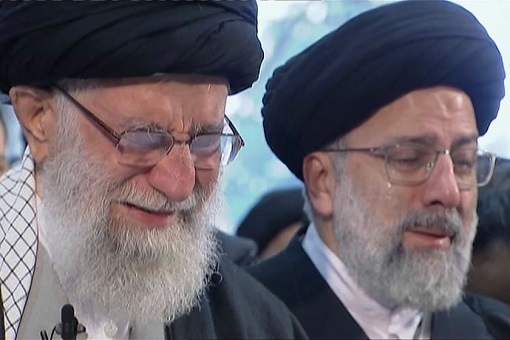
Back in the late 1970s, secular and religious Iranians joined forces against the shah. Key to the uprising’s success was the charismatic leadership of Ayatollah Ruhollah Khomeini, an exiled cleric, and the participation of the Shiite religious establishment. Mass demonstrations forced the Shah and his family to flee in January 1979. Now, an exiled crown prince is joining forces with the people against the cleric.
Iran’s Supreme Leader Ali Khamenei, who has ruled the country since 1989, told a gathering of supporters Friday that he had no plan to cede power. On Thursday itself, the regime cut off internet and phone lines nationwide in an attempt to disrupt protests and cover up its repression. This is the regime’s playbook from 2019, when it killed 1,500 protesters.
Ayatollah Ali Khamenei doesn’t want President Donald Trump to see the crackdown. On Thursday, Mr. Trump reiterated that if the regime slaughters its people, “we’re going to hit them very hard.” The Ayatollah replied on Friday by taunting Mr. Trump – “If he can, let him manage his own country.” At the same time, Tehran’s public prosecutor threatened rioters with the death penalty.
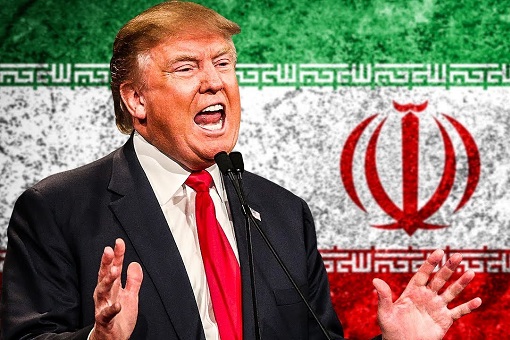
So far, nearly 500 protesters have been killed, including 8 children. As Iran enters a third week of nationwide protests, Tehran reportedly has called Washington “to negotiate” after Trump announced his options of using military intervention. Fresh fromU.S. incursion into Venezuela to kidnap President Nicolas Maduro, the last thing Tehranwants is to provoke the Trump administration.
Trump also said that his administration may speak to Elon Musk about getting Iranians access to Starlink, the tech billionaire’s satellite internet service. It could be the first step towards eliminating the regime. The Ayatollah is at his weakest point, and the U.S., under Trump, is encouraging the protests – while Iran’s regional rivals, especially Saudi Arabia, hope that the regime will be weakened and tamed.
Last June, Trump said on social media that he knew where Khamenei was hiding, but that he wouldn’t have him killed – “at least not for now.” To take out Ali Khamenei is the easiest part. The hardest part is to figure out what will happen to Iran after Khamenei is removed. It could offer an opportunity for the rest of the regime to take a more pragmatic approach. But it could also trigger a new chaos.
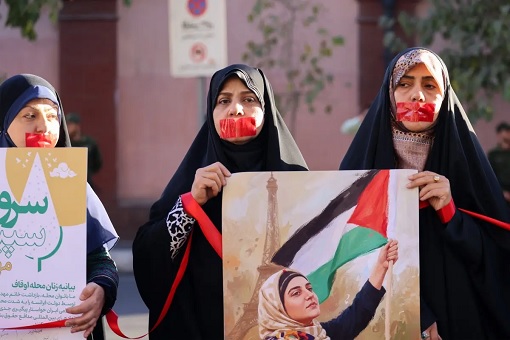
Perhaps the exiled Crown Prince could be the missing link. On Friday, Mr. Pahlavi appealed to Mr. Trump for help. Pahlavi said Trump’s public backing has emboldened protesters and called the “defining” moment a chance to “liberate” the nation. Already, the sign of a regime collapse is written on the wall – members of Iran’s elite and the Supreme Leader’s family have used private jets to flee the country.
Other Articles That May Interest You …
- Maduro Game Over – How U.S. Captured Venezuela’s Untouchable
- “Operation Narnia” Revealed – The Bold Attack On Iran That Israel Feared Could Not Succeed
- Gone In 25 Minutes – How Trump Tricked Tehran Twice Before Obliterated Iran’s 3 Nuclear Sites With MOPs
- Iran’s “Axis Of Resistance” Missing In Action – Why Tehran Became Isolated & Alone In WAR Against Israel
- Iran On Fire – Khamenei Should Flee To Russia While He Can Before US-Israel Upcoming Surprise
- Israel’s “Operation Rising Lion” – Iran’s Costly Miscalculation Led To Losses Of Top Commanders & Scientists
- Paying The Price For Hamas Attacks – How Trump Misled Iran Before Israel Sends 200 Jets To Attack
- Rebuilding Gaza – Clueless Anwar Should Build Housing, Schools, Power, Water & Infrastructure For Malaysia First
- Ran Out Of Luck And Place To Hide – Here’s How Israel Trainee Squad Accidentally Killed Hamas Mastermind Sinwar
- Psychological Warfare – How Mossad Cracked Hezbollah Secret Network With Low-Tech Pager & Walkie-Talkie “Walking Bombs”
- 3 Big Kills In 24 Hours – Why Haniyeh Could Have Been Betrayed By Own Brothers

|
|
January 12th, 2026 by financetwitter
|


|

|

|

|

|

|















Comments
Add your comment now.
Leave a Reply