



Since August, the U.S. had assembled warships, jet fighters and roughly 15,000 troops on Venezuela’s doorstep. Bombers deliberately flexed muscle while U.S. intelligence personnel were already inside the South American country. The Pentagon even released videos of American forces in the Caribbean training to raid compounds and conduct night-time flight operations.
Still, some politicians and analysts in both countries questioned whether Trump, known for chickening out in his trade war with China, would follow through. By December, the U.S. president warned Venezuela’s president – Nicolás Maduro – that he was running out of time. But the 63-year-old Maduro, trying to put up a brave face and to project strength, has been dancing on stage at rallies.
“Don’t worry, be happy,” – Maduro said at an event in the capital of Caracas, wearing a sombrero and flashing a peace sign as he sang along to the Bobby McFerrin classic. It was Maduro’s way of projecting confidence and showing he has little intention of backing down in the face of the largest U.S. military build-up in decades. He even laughed off U.S. campaign to oust him.
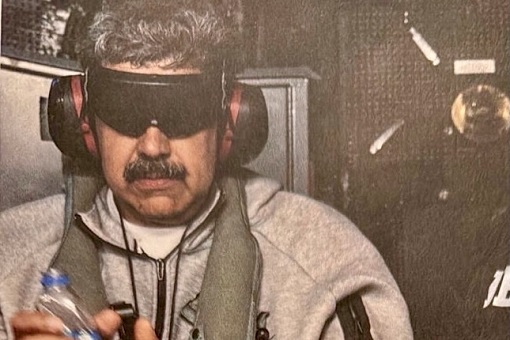
After all, Maduro already withstood Trump’s efforts to oust him through a so-called maximum pressure campaign in 2019. He portrayed himself as the David against an American Goliath bent on plundering Venezuela’s natural resources. Maduro’s advisers and even analysts said getting him out of power may be harder than the Americans and Venezuelan opposition think.
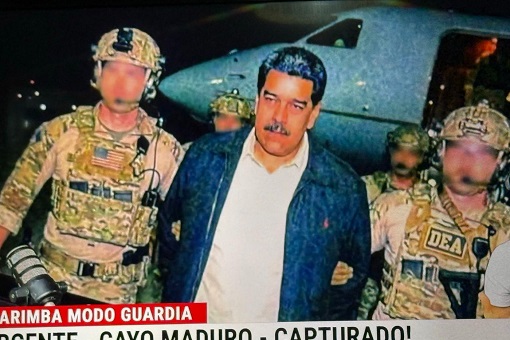
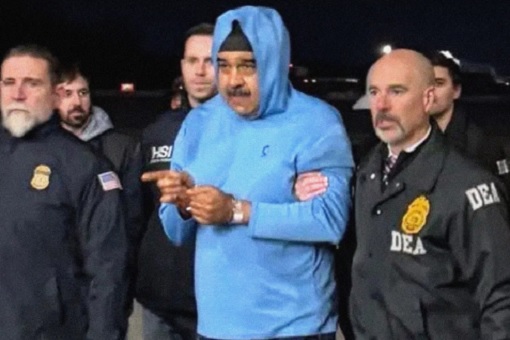
Maduro was calling Trump’s bluff – a huge mistake. Then, in the early hours of Saturday (January 3, 2026) morning, explosions began in the Venezuelan capital. By the time the sun rose in Caracas, Maduro’s nearly 13-year grip on power had ended. In handcuffs, blindfolded and wearing a gray sweatsuit, he was on a U.S. warship, on his way to New York City to face narcoterrorism charges.
Soon, videos showing numerous aircraft in the skies – and others showing the apparent aftermath of explosions – began to circulate widely on social media. One showed a convoy of helicopters flying at low altitude over Caracas as smoke rose from apparent detonations. “We woke up at around 01:55 to the roar of explosions and the hum of planes flying over Caracas,” – witness Daniel said..
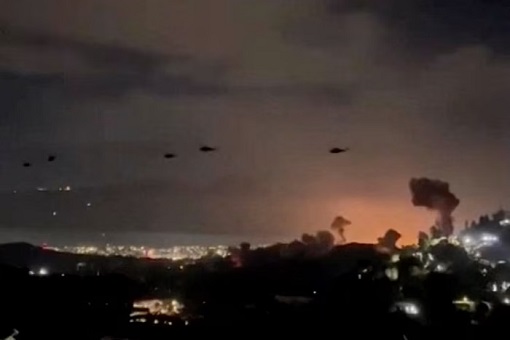
The ferocity and speed of the incursion have stunned the world. The mission – Operation Absolute Resolve – was the culmination of months of secretive planning, and a series of mixed signals that allowed the U.S. to preserve the element of surprise, even though the incursion at times seemed inevitable. For months, U.S. spies had been monitoring Venezuelan President Nicolas Maduro’s every move.
Intelligence personnel began tracking what Maduro ate and wore, where he lived and travelled – helped by an asset within the Venezuelan leader’s inner circle. Meanwhile, U.S. special operations forces rehearsed and rehearsed, practicing how to capture and extract the Venezuelan president inside an exact full-size replica of Maduro’s Caracas safe house.
The plan – which amounted to an extraordinary U.S. military intervention in Latin America not seen since the Cold War – was closely guarded. Congress was not informed or consulted ahead of time. With the precise details set, top military officials simply had to wait for the optimal conditions to launch. Secretary of State Marco Rubio, Defense Secretary Pete Hegseth, CIA Director John Ratcliffe and homeland security adviser Stephen Miller met regularly to discuss the mission.

Before the strike, Trump’s advisers were divided about the wisdom of a military operation – and they offered conflicting statements publicly, insisting they weren’t trying to oust Maduro even as the U.S. military presence in the region ballooned. Military officials told the Commander-in-Chief that any mistake in the intricate mission could result in an embarrassing failure.
Mr. Trump ultimately concluded that Maduro needed to face justice and that his supporters would still back his decision. Trump demanded that the plan to push Maduro out be closely held within a small circle of top advisers to protect the element of surprise. Everything needed for the operation was in place by late December, but Trump waited to see if Maduro would relinquish power on his own.
When he was satisfied that all the diplomatic routes had been exhausted, Trump gave his approval for the operation. U.S. forces tried several times to launch the extraction mission, including on Christmas and New Year’s Day, but the earlier attempts were hampered by weather. Bombers, jet fighters and tankers that had flown into the Caribbean from their bases in the continental U.S. were told to turn around.
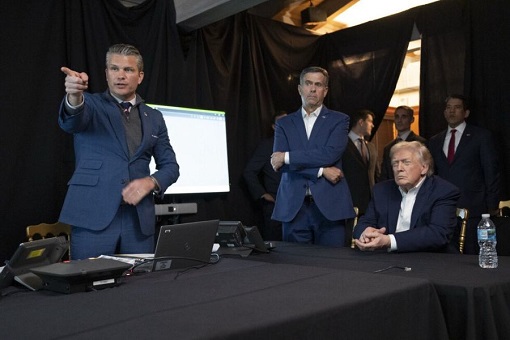
The order from the president to begin Operation Absolute Resolve finally came at 22:46 EST on Friday (03:46 GMT on Saturday). “Good luck and godspeed,” – Trump told military leaders, a message relayed to the readied U.S. forces. Instead of White House situation room, Trump watched one of the greatest gambles of his two presidencies unfold in a secure facility at Mar-a-Lago, his Florida club.
Flanked by top aides, Trump received blow-by-blow updates as 150 warplanes flew from 20 locations throughout the Western Hemisphere to reach the Venezuelan capital before troops pushed their way into Maduro’s bedroom. His team monitored the social-media site X on a large screen for any mentions of the word “Venezuela,” according to images released by the administration.
The U.S. sent overwhelming air power for the operation: F-18, F-22, and F-35 jet fighters, EA-18 Growler electronic warfare planes, E-2 Hawkeye command-and-control aircraft and B-1 bombers that can carry 24 cruise missiles each, as well as remotely piloted drones. They were tasked with “dismantling and disabling” Venezuela’s air-defense systems.

What followed was a “2 hour and 20 minute” mission by air, land and sea that stunned many in Washington and around the world. In terms of scale and precision, it was virtually unprecedented. The helicopters, which carried an extraction force and law-enforcement officers, at some points flew only about 100 feet above the water during the flights into Venezuela.
One U.S. aircraft was hit during the operation, but remained flyable throughout the mission and returned home safely. U.S. forces sustained some injuries, but no Americans were killed, Trump said. At 2:01 a.m. local time, a U.S. Delta Force team arrived at Maduro’s compound. As they approached, the U.S. helicopters came under fire, but American forces responded with “overwhelming force and self-defense.
When U.S. Special Forces arrived inside the compound, they exchanged gunfire with Venezuelan personnel. Maduro and his wife attempted to flee into a steel-reinforced safe room but were unable to close the door in time. But the elite Delta Force was well prepared – heavily armed and carried a blowtorch in case they had to cut through the metal doors of Maduro’s safe house. They “gave up” and were taken into custody by the Justice Department.
“It was very complex, extremely complex, the whole manoeuvre, the landings, the number of aircraft. We had a fighter jet for every possible situation,” – Trump told Fox News. Planes and helicopters were flying all over the city. The U.S. also cut the power in Caracas before the mission began. “The lights of Caracas were largely turned off due to a certain expertise that we have,” Trump said.
Denis Esquivel was asleep at his home near Maduro’s compound when commotion from his neighbours stirred him awake. Police officers stationed on the street outside his apartment were no longer there. “They ran off and only left behind some shotgun shells,” – he said. “The only thing I knew was that the palace was in darkness.”
By 3:29 a.m. local time, Maduro and first lady Cilia Flores, were aboard U.S. aircraft on their way out of Venezuela. Trump later posted a photo of Maduro on the USS Iwo Jima after his capture, wearing dark sunglasses, what appear to be handcuffs and a Nike sweatsuit. Both Maduro and Flores now face federal charges in the Southern District of New York, according to a released indictment.
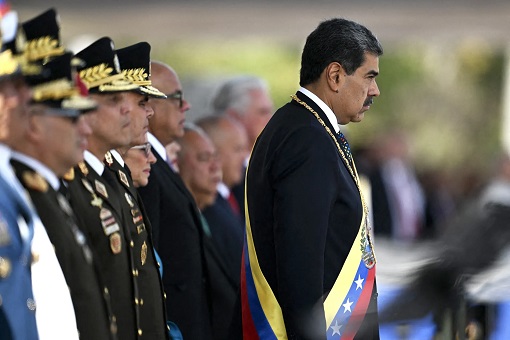
The indictment alleges that Maduro, who had long seemed untouchable despite a US$50 million bounty on his head, facilitated the transport of “thousands of tons of cocaine to the United States.” When asked if the US could have killed Maduro, an authoritarian leader who took over the presidency in 2013, if he had resisted arrest, Trump said – “It could have happened.”
“They will soon face the full wrath of American justice on American soil in American courts,” – Attorney General Pam Bondi said on Saturday. U.S. prosecutors accuse Maduro of being the head of the Cartel of the Suns, a loose knit organization of senior generals and officials who over more than two decades allegedly took millions of dollars in bribes from Colombian guerrilla leaders.
The guerrillas financed their war against the Colombian government by shipping thousands of tons of cocaine through Venezuela to the U.S. and Europe. The name Cartel of the Suns, a term coined by Venezuelan journalists, refers to the gold suns – equivalent to American generals’ gold stars – worn by Venezuelan generals on the epaulets of their uniforms.
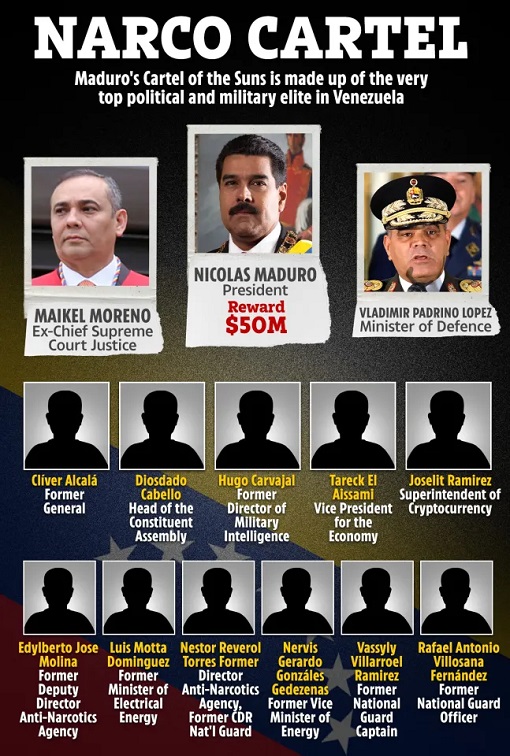
Prosecutors say that Maduro, his predecessor, the late Hugo Chávez, and other senior officials allegedly worked in tandem with the Revolutionary Armed Forces of Colombia to ship the cocaine through Venezuela. The U.S. identified the FARC, as the guerrilla organization was also known, as a terrorist group from 1997 to 2021.
At the same time, prosecutors also say that first under Chávez – who became president in 1999, and then with Maduro who took office after Chávez died in 2013 – Caracas “prioritized using cocaine as a weapon against America.” While Maduro denies the charges, some Venezuela experts believe that prosecutors will have a difficult time proving Maduro’s drug involvement.
Maduro’s situation resembles that of another Latin American strongman – the late Panamanian leader General Manuel Noriega. Once a former U.S. ally, Noriega fell into disfavor after engaging in electoral fraud. He was accused of conspiring with drug traffickers to ship cocaine to the U.S. In late 1989, the U.S. invaded Panama and arrested Noriega two weeks later.
President Trump said the U.S. would run Venezuela until there can be a “proper” transition. According to Trump, the U.S. plan for Venezuela includes “taking a tremendous amount of wealth out of the ground” and sharing it in part with Venezuelans. He added that U.S. oil companies would spend billions of dollars on Venezuela to fix its oil infrastructure.
Other Articles That May Interest You …
- Striking Venezuela – Trump’s CIA & Military Options To Topple Maduro
- Hamas Game Over – How A Missile Strike Leads To A Peace Plan
- How Trump Checkmates Hamas With 20-Point Plan To End Gaza War
- No More Safe Havens – Israel’s Airstrike In Qatar Sends New Message To Countries Harbouring Hamas Terrorist
- Paying The Price For Hamas Attacks – How Trump Misled Iran Before Israel Sends 200 Jets To Attack
- Ran Out Of Luck And Place To Hide – Here’s How Israel Trainee Squad Accidentally Killed Hamas Mastermind Sinwar
- Hamas Is Game Over – How The Terror Group Miscalculated, Betrayed, Abandoned And Made More Mistakes
- An Eye For An Eye!!! – No One Can Stop Israel From Reducing Gaza To Rubble And Erase Hamas Terrorists
- As News Of US Military Invasion Spreads, Maduro Accuses Trump Of Trying To Steal Venezuela’s Oil
- Venezuela Turmoil – Why Najib Sucked Up To Trump & Sent His Spy Woman Soliciting For CIA Support
- Venezuela Now Has 2 Presidents – Here’s A Long List Of U.S. Involvement In Latin American Politics
- Blood Bonds – Greedy Goldman Sachs Making Money Off The Killing Of Venezuelans

|
|
January 4th, 2026 by financetwitter
|


|

|

|

|

|

|











Comments
Add your comment now.
Leave a Reply