



Frustrated, Volodymyr Zelensky said he feels “betrayed” by Donald Trump after Ukraine suddenly faced restrictions on its military-grade Starlink terminals. The critical Starlink satellite communications system, produced by billionaire Elon Musk’s SpaceX but managed by the U.S. government, was no longer working at speeds greater than 100mph.
The unexpected new speed limits were disrupting Ukrainian battlefield missions. The crisis saw how Denys Sienik, the top Ukrainian diplomat in Washington, D.C., sent a frantic message to U.S. lawmakers seeking for help in the early hours of Wednesday morning. Sienik warned it would give Russia an upper hand in the war and make it tougher for Kyiv to intercept strikes against Ukrainian civilians.
By the time Washington’s morning rush hour was under way, it was too late. Russia had already launched deadly attacks against Ukraine that killed several people in Kyiv and hit communications and energy facilities used by Ukraine’s military. At least 600,000 people across the country were left without electricity, and residents said they received no warning of incoming drones before they hit.
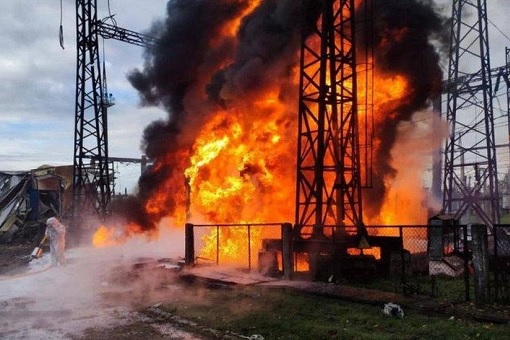
Ukrainian officials suspected President Trump had ordered Elon Musk, who owns the company that operates Starlink, to throttle Ukraine’s access to the satellite systems. The crawling speed effectively rendered most of the drones used by Ukraine to strike behind the frontlines inoperable – and, it later emerged, affected the most effective air defence system to stop Russian jet-powered attack drones bombing Kyiv.
However, Musk said that Starshield, the military-grade sister service to Starlink, is controlled by the U.S. government, and “any limits on speed or usage are decided by the US military and ultimately the U.S. president”. Musk added that Starlink is for “civilian or defensive activities and cannot be used for offensive military action, as doing so would be inappropriate for a commercial company”.
While both companies are owned by Musk’s SpaceX, Starlink is a civilian service that uses satellites in low Earth orbit to provide internet access, particularly in remote areas, while Starshield is designed for government and military use. The latest episode underscore the extent to which the U.S.-Ukraine relationship has soured in recent weeks as Trump has sought an end to the war.

Recently, Trump has offered to buy Moscow’s oil in a lucrative 300,000 tonnes diesel deal, demanded that Ukrainian President Volodymyr Zelensky step down and declared an energy ceasefire between Russia and Ukraine. The U.S. president was upset that his demand for Ukraine to stop striking Russian oil refineries, which he has blamed for the high cost of diesel, was being ignored by Zelensky.
The two leaders fell out in the spring of 2025 during a disastrous visit by Zelensky to the Oval Office, where the US president said – “You don’t have the cards” to win the war. The row was followed by a brief pause in intelligence sharing and a desperate scramble by European allies to calm the row.
The White House declined to answer questions on the Starlink matter. In a statement, the White House said “the President and his team remain committed to continuing to play a constructive role in ending the war between Russia and Ukraine, and he remains optimistic that we’ll ultimately get a peace deal done.”
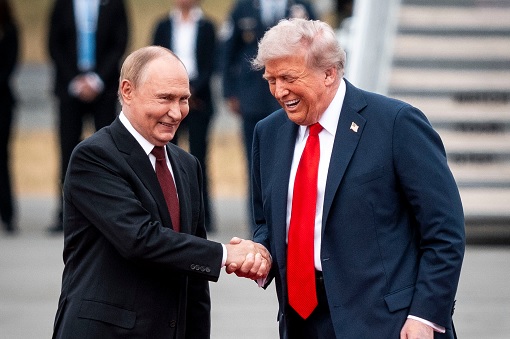
They said Trump was working first to de-escalate the fighting between Russia and Ukraine, then bring a new offer to Moscow that would grant it access to economic and political benefits if it adheres to a more-lasting ceasefire. Administration officials say Trump remains committed to ending the war and is the only person who can parley with both Putin and Zelensky to forge a viable peace deal.
Administration officials also characterized Trump’s offer to buy Russia’s diesel fuel as a way to both lower U.S. gas prices and dangle an economic incentive in front of Putin to bring him back to the negotiating table. They argued that Donald Trump remained open to a future economic relationship between the U.S. and Russia once the war is resolved.
But Ukrainian officials and European allies are now incensed at Trump. In an interview with the Financial Times, Zelensky said Ukraine would restart strikes on Russia’s oil refineries after a pause prompted by Trump’s declaration of an energy ceasefire. Ukraine’s difficulty in accessing the satellite terminals followed U.S. warnings that Trump could cut off intelligence support or military sales to Kyiv.

The latest tension between Trump and Zelensky started with a meeting in New York. Zelensky flew to the U.S. in mid-September for a United Nations summit – confident that a lot of things were going his way. Ukraine had blunted Russian advances on the battlefield and Zelensky had several positive meetings with Trump under his belt, including a chummy North Atlantic Treaty Organization summit in July.
But at the meeting, Trump grilled Zelensky on why Ukraine was striking Russian oil refineries. While hitting such infrastructure is a crucial part of Ukraine’s strategy to hit Moscow where it hurts most, Ukraine’s successful drone campaign against Russia, however, has taken between 40% and 50% of the country’s refining network offline – pushng up energy prices.
Some Republican lawmakers have cheered on Trump’s deal with Russia as a reprieve for American consumers squeezed by high energy prices, while others have rebuked it as a misguided freebie for a Russian leader wholly uninterested in peace. Since Trump’s discussion with Zelensky, the U.S. has asked Ukraine a half dozen times to halt the strikes.

But Ukraine has continued to hit Russian oil refineries as Ukrainian officials argued that Moscow refused to agree to any energy truce. Trump increasingly soured on Zelensky as Ukrainian strikes continued. The president grew annoyed that Ukraine was using U.S. resources to target Russia’s energy exports in a way that he thought could hurt American consumers.
In early October, senior Ukrainian and European officials flew to Miami to meet with two top Trump aides in a bid to revive peace talks. The discussions on October 9, led by Trump’s son-in-law Jared Kushner and U.S. envoy Steve Witkoff, were aimed at drafting new proposals to end the war that would be acceptable to both Russia and Ukraine.
But when Kushner and Witkoff revealed the president was considering the diesel deal with Russia, the Ukrainian and European officials were shocked. In the six-hour meeting, Kushner and Witkoff pushed the Ukrainians and Europeans to come up with a new package of proposals for Russia to end to the war. That same day, Trump held a 90-minute phone call with Putin, announcing the diesel deal shortly after hanging up.

Several angry Republican lawmakers called the White House after the announcement. They said the deal handed Russia a win without any concessions and went against a 2022 law that bars U.S. importing of Russian energy without prior congressional consultation. Trump declared on social media an energy ceasefire between Russia and Ukraine anyway.
Dmitry Peskov, the Kremlin’s spokesperson, told reporters – “The energy truce proposed by Trump was not specified in detail, so it cannot be claimed that Russia is failing to observe it.” When Russia carried out a massive strike against Ukrainian energy infrastructure late on Tuesday evening, it launched 39 ballistic missiles and 120 attack drones against Kyiv and Kharkiv.
Other Articles That May Interest You …
- Trump Pushing Putin & Zelensky To Talk – But Ending Ukraine War Is Easier Said Than Done
- Better Luck Next Time In Moscow – How Putin Plays Trump For A “PR Victory” At Alaska Summit
- Forget 39% Swiss Tariffs – India In Bigger Trouble As Trump Slaps Extra 25% Tariff To 50%
- Trump Threatens 100% Tariffs On Russia – But Here’s Why Russian Markets Jump In Celebration Instead
- Zelensky Last Stand – How Strategist Putin Trapped 10,000 Ukrainian Troops In Kursk, And Slaughtering Them Now
- A Meeting Turned Into Shouting Match – How Trump-Vance Whacked Zelensky Before Kicked Him Out Of The White House
- Ukraine Has Lost The War – Zelensky Forced To Surrender Minerals Deal To Trump, But EU Hasn’t Figure That Out
- Pawns Europe & Ukraine Got Played – The Hidden Message Behind US-Russia Talks In Saudi Without Allies
- The Real Reason Behind Ukraine Invasion – NATO Chief Stoltenberg Admits Russia Invaded Ukraine Due To NATO Expansion
- Ukraine War – China’s Military Support For Russia Would Be Really Bad News For U.S. & Allies
- From Wheat To Oil & Gas – How Russia Invasion Of Ukraine Affects Europe’s Food Supply, And Even Your Loaf Of Bread

|
|
October 15th, 2026 by financetwitter
|


|

|

|

|

|

|















Comments
Add your comment now.
Leave a Reply