



The aerospace and security industries are entering an era where technology is no longer simply improving existing capabilities. It is changing what aircraft, satellites, surveillance systems, and defence platforms can actually do. Artificial intelligence, advanced sensors, autonomous systems, secure communications, and increasingly sophisticated data networks are becoming central to how governments and aerospace companies approach complex challenges.
This transformation is also changing how investors, engineers, policymakers, and industry professionals evaluate aerospace and security companies. Instead of focusing only on traditional hardware, attention is increasingly moving toward the software, electronics, data infrastructure, and research capabilities that make modern platforms effective. Understanding these technologies provides a clearer view of where the sector may be heading and why innovation is becoming such an important competitive advantage.
Artificial Intelligence Is Reshaping Aerospace Systems
Artificial intelligence is becoming one of the most significant technologies influencing aerospace and security. Modern aircraft and defence platforms can generate enormous quantities of information from radar, cameras, communications equipment, navigation systems, and other sensors. AI can help process this information more quickly, identifying patterns and highlighting potential issues that would be difficult to detect manually.
The value of AI is not limited to autonomous weapons or military applications. Aerospace manufacturers can use machine learning for predictive maintenance, flight optimisation, logistics, quality control, and simulations. Commercial aviation can also benefit from systems capable of analysing aircraft performance and identifying maintenance requirements before they develop into expensive operational problems.
However, the increasing use of AI also creates new responsibilities. Systems operating in safety-critical environments must be reliable, explainable, secure, and carefully tested. Institutions such as NASA and the Federal Aviation Administration have emphasised the importance of rigorous safety practices as automation becomes more sophisticated. Human oversight remains essential, particularly when technology is being deployed in complex or unpredictable environments.
Advanced Sensors Are Creating a More Connected Picture
Sensors represent another major area of aerospace innovation. Radar, infrared cameras, electro-optical systems, satellite imagery, and other sensing technologies allow platforms to gather detailed information across enormous distances. Improvements in sensor resolution, processing speed, and integration are helping turn raw observations into useful operational intelligence.
The next generation of aerospace platforms will increasingly depend on combining information from multiple sensors rather than relying on a single source. This approach, often described as sensor fusion, can provide a more complete understanding of changing conditions. A system may combine radar information with optical imagery, location data, communications signals, and information from other platforms to produce a clearer operational picture.
The importance of these capabilities extends beyond defence. Satellites equipped with sophisticated sensors can support weather monitoring, environmental observation, disaster response, navigation, and communications. As space becomes more commercially important, companies capable of developing reliable sensing and data-processing technologies may find themselves serving customers across several industries rather than relying on a single market.
Cybersecurity Is Becoming Part of Aerospace Engineering
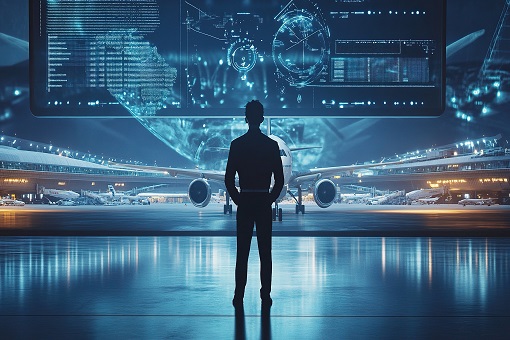
As aerospace platforms become more connected, cybersecurity is becoming inseparable from engineering. Aircraft, satellites, ground stations, command networks, and supply chains increasingly depend on digital systems. Connectivity creates valuable opportunities, but it also introduces additional points that must be protected against disruption, unauthorised access, and data compromise.
Security therefore has to be considered throughout the development process rather than added after a system has already been designed. Secure communications, authentication, encryption, network segmentation, software testing, and continuous monitoring are becoming important components of modern aerospace architecture. The same principle applies to suppliers because vulnerabilities in one part of a highly interconnected supply chain can potentially affect an entire platform.
For investors following the sector, this shift makes technological expertise particularly relevant. Looking at the Elbit stock price, for example, can be one way of exploring how market participants evaluate a company operating within the broader defence technology landscape. However, a share price alone does not explain a company’s technological position. Research capabilities, contracts, product development, financial performance, and long-term demand should all be considered when assessing an aerospace or security business.
Autonomous Systems Are Expanding Operational Capabilities
Autonomous technology is another area likely to influence the future of aerospace and security. Uncrewed aircraft and autonomous systems can perform tasks that may be dangerous, inefficient, or impractical for humans. Their potential applications include surveillance, reconnaissance, inspection, mapping, search and rescue, and monitoring remote infrastructure.
The technology is progressing from simple remote-controlled platforms toward systems capable of responding to changing conditions with greater independence. Improvements in navigation, computer vision, communications, and AI are helping autonomous platforms operate in environments where constant human control may not be practical. At the same time, responsible development requires clear boundaries around decision-making and appropriate human supervision.
Conclusion
The future of aerospace and security will be built on systems that can sense more, process information faster, communicate securely, and operate with greater adaptability. AI, advanced sensors, cybersecurity, autonomous platforms, and space infrastructure are already influencing how the industry approaches these goals.
The most promising developments will not necessarily come from the most visible piece of hardware. They may come from the technologies working quietly behind it, connecting data, improving decisions, and making complex systems more resilient. As these capabilities continue to mature, technological integration will remain one of the defining forces shaping the next generation of aerospace and security.

|
|
September 20th, 2026 by financetwitter
|


|

|

|

|

|

|






















Comments
Add your comment now.
Leave a Reply