



Saudi Crown Prince Mohammed bin Salman (MBS) thought it would be a jolly good strategy to play both sides – “publicly” maintained a stance of neutrality while “privately” and actively encouraging the U.S.–Israeli military campaign against Iran. He has repeatedly stated that Saudi Arabia is neutral and will not permit its airspace or territory to be used for military actions against Iran.
In fact, the “drama prince” personally assured Iranian President Masoud Pezeshkian back in January 2026 in a phone call that the kingdom respects Iran’s sovereignty and opposes using its territory for strikes. However, Tehran was not born yesterday and knew that the Saudi Crown Prince has urged U.S. President Donald Trump to intensify and continue the war against Iran.
It’s not hard for MBS to see that the U.S.–Israeli military campaign was a “historic opportunity” to dismantle Iran’s hardline government, remove a long-term regional threat, and potentially target critical energy infrastructure like Kharg Island. After all, the modern rivalry between Iran and Saudi Arabia is a geopolitical and sectarian power struggle that began since the 1979 Iranian Revolution.

Mohammed bin Salman started the year on a high note. He had just visited the White House where he was embraced by President Trump. Even after the war with Iran kicked off, Saudi Arabia looked relatively well positioned. It could export oil through a pipeline that bypassed the blocked Strait of Hormuz. MBS seriously believed Saudi could escape unscathed whilst watching with popcorn as U.S.–Israeli bombed Iran to oblivion.
But his fantasy was crushed on Saturday (Oct 10) when at least one Houthi missile slammed into the Saudi capital’s international airport, killing at least 13 people and injuring hundreds more, many seriously. It was the single deadliest attack on the U.S. or its Gulf allies in the Iraa War. A 28-year-old Egyptian flight attendant bled to death after her arm was blown off, one of several victims to lose limbs.
Worse, two terminals were struck and their roofs partially collapsed. Video showed passengers rolling suitcases past a trail of blood on the floor as the airport was evacuated. Authorities reported more attacks on the closed airport on Sunday, saying a projectile caused a fire in Terminal 4 and led to one death as well as injuries.
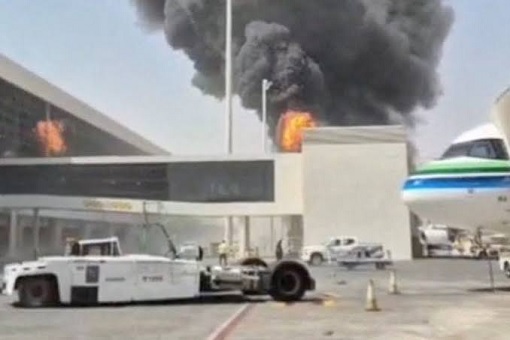
The attacks by the Houthis, an Iran-backed militant group, were the biggest escalation yet in their campaign against Saudi airports, oil facilities and tankers in recent weeks. Though the violence might appear at first sight to be restricted to the Arabian Peninsula, it could have global consequences, pushing up fuel prices and so international inflation.
The Houthis initially stayed on the sidelines of the conflict launched by the U.S. and Israel against Iran earlier this year. As recently as this summer, Saudi officials briefed journalists that the Houthi situation was under control. But last month, the Islamist militia movement seized control of key territory and gained virtual control of the Bab al-Mandab Strait.
The Yemeni government forces and local allies began a major counteroffensive last week to drive back the Houthis from the Bab al-Mandab Strait, which dominates the Red Sea, a critical shipping route for oil and gas exports from the region, whilst also hit other Houthi positions. Saudi Arabia is in the Houthis’ crosshairs because it supports Yemen’s UN-backed government and its forces.
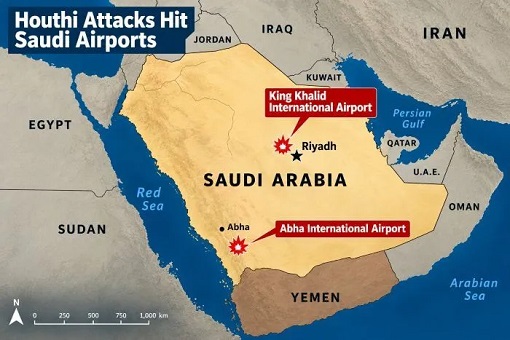
Before the attacks on Saudi airports, the Houthis have already hit energy facilities – including the kingdom’s main east-west pipeline and refineries – showing the growing threat along the southern border. The Houthis’ timing is partly opportunistic but largely strategic as Iran is using its proxy to attack high-profile targets in the kingdom such as oil infrastructure and the capital’s airport to send a message.
The new threat from the Houthis to the Red Sea and to Saudi Arabia highlights the massive leverage Tehran and its allies can exert on global oil and gas supplies, countering recent US pressure in bold move on the conflict’s chessboard. Not only does it trigger massive disruptions to Saudi civil aviation in years, but it also is forcing airlines across Europe and Asia to suspend services.
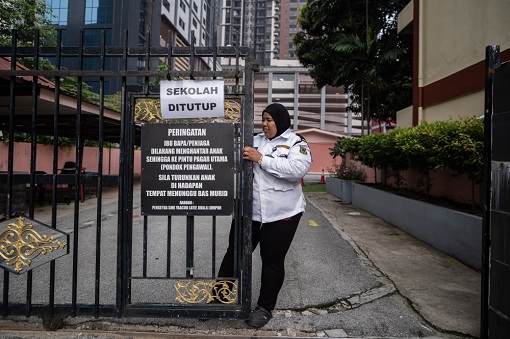
Businesses in Riyadh’s financial hub have told employees to work remotely, authorities in Riyadh have asked schools to switch to online classes this week, and top energy executives were dropped from the schedule of a high-profile conference this week in the capital. The costs of the war have already widened the budget deficit and threaten to push the economy into contraction.
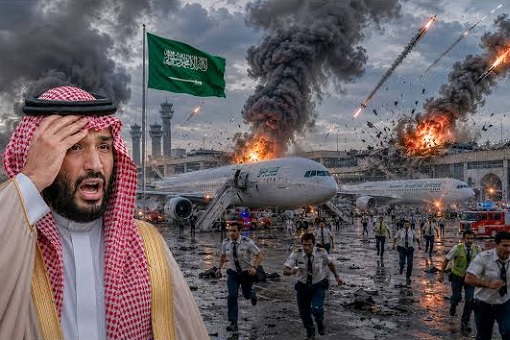
How Prince Mohammed handles this test will have consequences that stretch well beyond the kingdom. Saudi Arabia is a major source of funding for the global tech industry and artificial intelligence projects. It is also a crucial provider of basing and overflight rights to the U.S. military. Trump told reporters over the weekend that the U.S. was in communication with the Houthis, but might join Saudi strikes on the militant group.
Saudi Arabia has invested enormous sums in its military – the kingdom is the world’s eighth biggest spender on weapons – but Houthi attacks are very hard to stop. “Saudi air defences have been able to intercept some Houthi missile and drone attacks, but Saudi Arabia is so large that it’s simply impossible for them to consistently defend themselves,” – said Thomas Juneau, a security analyst at the University of Ottawa.
To make matters worse, Saudi officials said they are running low on interceptors needed to fend off further strikes. Intensifying attacks on Riyadh, which is 500 or more miles from Houthi territory in Yemen, have transformed parts of the Saudi capital into a battle zone, with residents taking cover as explosions ring out across the city.

Reprisals against the Houthis and efforts to pre-emptively destroy the movement’s offensive capabilities are not easy either. The U.S. bombardment in 2025 showed how hard it is to destroy the militia’s capabilities, which have been much enhanced over recent years, in part through Iranian advice and investment. Whether Trump has the appetite to fight the Houthis on behalf of Saudi is a huge question mark.
A month ago, the Saudi Crown Prince called President Trump twice, urging him to launch strikes against the Houthis as the Iran-backed group closed in on a vital Red Sea chokepoint and attacked Saudi tankers there. However, Trump had declined, trying to avoid direct military involvement – even after the Houthis had taken control of a key island in the strait.
Saudi Arabia’s request last month (September) for direct U.S. military action marks a sharp reversal from July, when Riyadh told Washington it could handle the Houthis on its own. When the Saudis failed, it began seeking increasing levels of U.S. support. But Trump’s priority is to keep American forces focused on Iran and the Strait of Hormuz – and avoid opening another front.
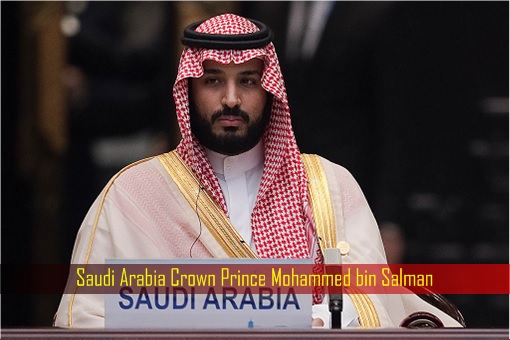
Now, the 41-year-old crown prince is shuttling between heavily guarded palaces equipped with bunkers and is guarded by a handpicked security team. The Saudi leader has few good options. Any military response risks getting drawn in deeper to an asymmetric conflict in which the Houthis have shown they have the ability to inflict significant and symbolic damage.
MBS has plowed funds over the past decade into a slate of ambitious mega projects with extraordinarily complex engineering requirements aimed at signaling the kingdom’s modernization and drawing investment and tourism. They include the futuristic city of NEOM, an enormous cube-shaped building in Riyadh, and a desert ski resort.
The total cost ran to the trillions of dollars, aggressive for a government with an annual budget of around US$350 billion. The costs and economic damage of war with Iran are making that already implausible math impossible to balance. Foreign investment fell in the first two quarters of the year and is running well behind the crown prince’s 2030 target.

Rising defense and infrastructure costs threaten to siphon away money needed for the economic diversification drive. Even the kingdom’s push to become an AI hub now carries new risks, with data centers emerging as targets. Many of the enormous projects spearheaded by Prince Mohammed are stalled or under review.
In January, Saudi Arabia gave up on plans to host the 2029 Asian Winter Games. It still has to find a way to fund the World Expo in 2030 and the soccer World Cup four years later. The Saudi Finance Ministry now expects GDP to shrink by 3.6% in 2026. The kingdom was able earlier in the year to pump oil across the desert to the Red Sea to escape Iran’s chokehold on the Strait of Hormuz.
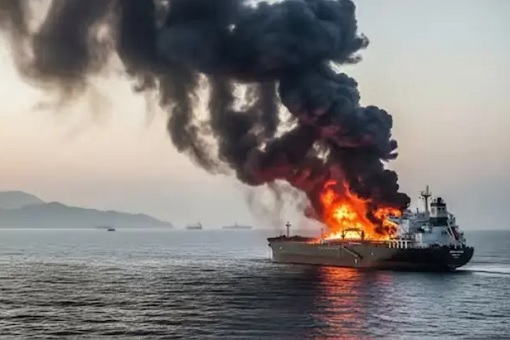
But in July, the Houthis announced a maritime blockade of Saudi Arabia, putting Red Sea shipping at risk. In September, an attack on the East-West pipeline struck at the kingdom’s main escape route from Hormuz. Then the militants took aim at Saudi aviation, putting pressure on another pillar of the economy. The Houthis have hit King Khalid International Airport in Riyadh at least four times.
The new outbreak of violence came as Prince Mohammed was working to contain the confrontation with Iran. While supportive of continued economic pressure on Iran, the crown prince was telling his advisers to keep the diplomatic channel open with Iran and make clear the kingdom’s intentions weren’t confrontational. The kingdom has even called for help from its military ally Pakistan.
Yet, Tehran is quietly using the Houthis to screw MBS, who is now facing an economy weakened by heavy spending and miscalculations of the Houthi threat. So much fortelling President Trump that Washington should pursue diplomatic solutions and avoid massive strikeson Iran that could trigger a wider regional war. He has miscalculated and underestimated both the Houthis and Iran.
Other Articles That May Interest You …
- Terror Hijack – Inside Cockpit Stabbing Of FlyDubai Flight 1073
- Oil Hits $100 – But Iran’s Economy Hit Hard As Oil Dollars Dries Up
- Calm Before The Storm – Iran’s Secret Plan To Escalate The War
- Trump, Truck & Decoy Plane – The Ruse To Evade Iran Threat
- Why Iran Thinks It Has All The Cards To Check-Mate Trump
- No More Safe Havens – Israel’s Airstrike In Qatar Sends New Message To Countries Harbouring Hamas Terrorist
- Paying The Price For Hamas Attacks – How Trump Misled Iran Before Israel Sends 200 Jets To Attack
- Ran Out Of Luck And Place To Hide – Here’s How Israel Trainee Squad Accidentally Killed Hamas Mastermind Sinwar
- Hamas Is Game Over – How The Terror Group Miscalculated, Betrayed, Abandoned And Made More Mistakes
- Human Shields – How Hamas Cleverly Wins Propaganda War, But Was Stunned By “Fire Power” Unleashed By Israel
- An Eye For An Eye!!! – No One Can Stop Israel From Reducing Gaza To Rubble And Erase Hamas Terrorists

|
|
October 13th, 2026 by financetwitter
|


|

|

|

|

|

|




















Comments
Add your comment now.
Leave a Reply