



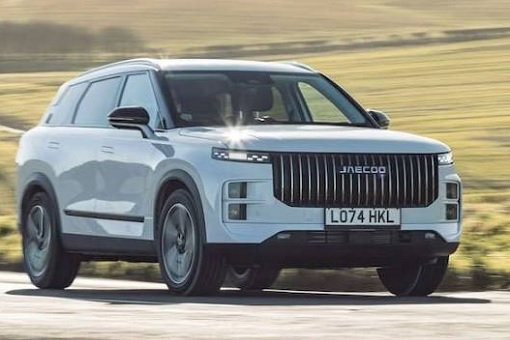
Starting at around £29,210, this mid-size SUV from from China undercuts established luxury British SUVs and alternatives by tens of thousands of pounds while offering a high-end look. It topped the U.K. monthly sales charts in March 2026 and sold 28,571 units by the end of August 2026, securing a solid third place overall in the U.K. sales rankings. By September 2026, it was the U.K.’s top-selling new car.
When Mark Thewlis went looking for a new family car this summer, he was struck by how much cheaper the Jaecoo 7 was than luxury brands with a similar look and feel. And it’s not hard to notice its presence on the road. It actually outsold popular competitors like the Tesla Model 3 (9,929 units) and the Ford Puma (6,958 units) in September 2026.
The 33-year-old from England’s south coast calculated the upfront cost of his preferred version of the Chinese sport-utility vehicle at the equivalent of around US$50,000, half the price of a visually similar Range Rover model. Its resemblance to the 56-year-old British luxury brand has earned the Jaecoo a double-edged nickname – the “Temu Range Rover”.
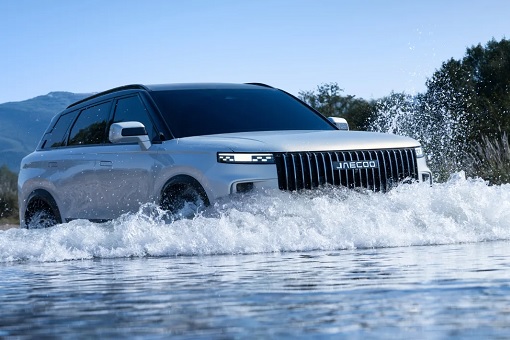
It also helps that Britain lacks the Chinese car tariffs the European Union has. Additionally, the Jaecoo 7 comes as a plug-in hybrid, proving how popular such models have become in the UK. A turbocharged 1.6-litre four cylinder petrol engine mated to a 7-speed auto gearbox, it has 147PS with 275Nm of torque, which provides for leisurely acceleration, 62mph reached in around 8 seconds.
“My first reaction was: What’s the catch?” he said. A test drive convinced him that buying the Jaecoo was a “no-brainer.” No big industrialized economy has embraced Chinese cars more enthusiastically than the United Kingdom, where Brits like Thewlis are being won over by the combination of affordable prices with status-signaling styling and technology.
The Jaecoo 7, made by China’s Chery Automobile, was Britain’s bestselling vehicle in September, an important sales month in the U.K. In the first half of 2026, almost every sixth car sold in Britain bore a Chinese brand, according to Schmidt Automotive Research, a higher proportion than in any other European country except Norway.
Britain’s vehicle imports from China have almost doubled this year compared with the same period in 2025. Only Russia and Brazil – developing economies that mostly buy cheaper models – have imported more. Plunging sales in China, the world’s largest car market, have encouraged its manufacturers to look for growth overseas.
The U.K., a cradle of the car industry, showcases what could happen in America if Chinese cars were let in. “Range Over!” began a press release trumpeting the Jaecoo’s early sales success, winking at its likeness to the Range Rover Evoque. Sam Luscombe, managing director of a dealership in Leeds, Yorkshire, said the appeal was simple – “It looks expensive, it feels expensive – and then you find out how much it costs.”
For now, Chinese cars are essentially shut out of the large U.S. market by high tariffs and restrictions on Chinese software. President Donald Trump in September repeated his openness to Chinese cars produced in American factories, alarming Detroit. Congress is debating a bill that would permanently ban Chinese cars on U.S. roads.
The spectacular growth of Chinese brands in Britain this year has been led by Chery, China’s top vehicle exporter. Through September, its sales more than tripled compared with the same period last year, putting it ahead of Ford Motor, which for decades led the U.K. market. Overall, Chinese brands captured nearly 23% of the total UK car market share in September 2026.
Britain’s “customer open-mindedness is very good for new brands coming in,” – said Chery U.K. managing director Farrell Hsu. The Jaecoo 7, pitched to suburbia as an adventure-ready SUV, was launched in January 2025 in the ballroom of a fancy hotel off Windsor Great Park, near King Charles III’s historic castle west of London.
Less than two years later, the brand has sold almost 87,000 cars in the U.K., including the smaller Jaecoo 5 launched last fall – a success that took dealers and the company by surprise. Steve Young, managing director of Auto West London, launched his dealership for Jaecoo and its sister brand Omoda in March last year with a plan to sell 350 cars. In the end he sold more than 500, and this year he will sell more than 1,200, he said, with many on wait lists.
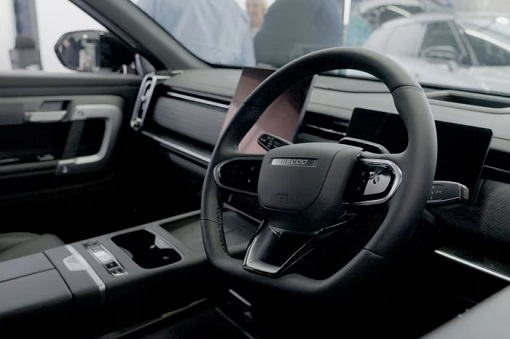
Young estimates that around three-fifths of Jaecoo buyers previously owned luxury brands such as BMW, Mercedes and Range Rover, which have become more expensive for customers to finance as interest rates have risen. Jaecoo has lured customers with interest-free loans. “Why not get a car with similar features at a much lower monthly rate?” he said.
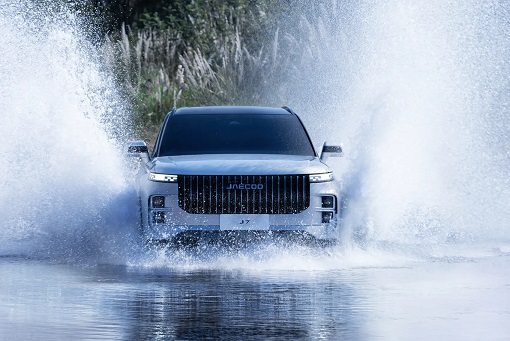
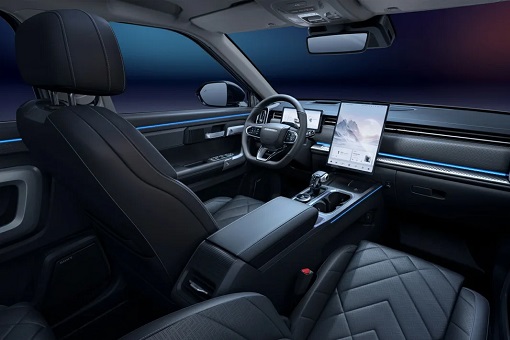
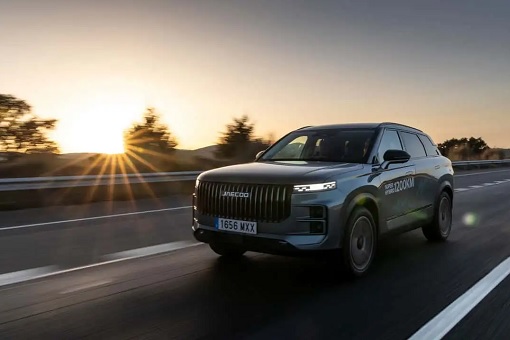
Dealers openly lean in to the resemblance to Range Rover, which is owned by Jaguar Land Rover, a subsidiary of India’s Tata Motors. In fact, it features a boxy, upright luxury posture, floating roofs, large imposing grilles, slim LED light signatures, and flush door handles that mimic high-end Land Rover proportions. Chery had an intimate understanding of the Range Rover Evoque before launching the Jaecoo 7.
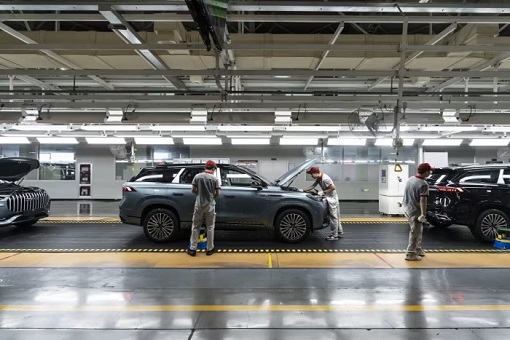
The heavy design inspiration isn’t purely accidental. Jaecoo’s parent company, Chery, operates a long-standing manufacturing joint venture with Jaguar Land Rover (JLR) in China. And it formed the joint venture with JLR in 2012 to take advantage of China’s then-insatiable appetite for Western luxury cars. Until this summer, the JV churned out local versions of the Evoque at a factory in Changshu, near Shanghai.
JLR moved to cancel the Chinese-built models in 2024 after years of headaches. The JV is pivoting to new products built with Chery’s EV technology and badged with JLR’s historic Freelander brand. At a recent event in Abu Dhabi, the business kicked off a global sales push that could in time undercut JLR’s other brands.
PB Balaji, JLR’s chief executive, said in May that Range Rover’s higher price points didn’t put it in direct competition with the current generation of Chinese imports. The company has previously pursued copycats, in 2019 winning a landmark case in Beijing against a knockoff Evoque called the Landwind X7.
Other European automakers are openly worried about the influx of new rivals. Volkswagen and Stellantis, the region’s two largest players, have warned about the impact of new competition on their profit margins. It is among the reasons Volkswagen has given for needing to cut more than 100,000 jobs.
But there is little doubt buyers are happy. For the year through September, total car sales were up around 10% in the U.K. despite modest economic growth, lifted by the influx of affordable Chinese models. Many, like the Jaecoo 7, are conventional combustion-engine vehicles or hybrids, not the EVs for which China is best known.
“The consumer is benefiting from a lower cost,” said Andy Palmer, a former CEO of Aston Martin. “The only debate is whether it is fair competition or unfair competition.”
For car dealers, too, the expansion of Chinese brands is a boon after a slow postpandemic recovery and showroom closures by Ford and Stellantis. “The U.K. automotive sector is undergoing a generational change,” – said Robert Forrester, chief executive of dealership group Vertu. The first Chinese automaker to crack the U.K. market was SAIC, using the British brand MG that it bought out of bankruptcy in the 2000s.
Originally born in Oxford as Morris Garages, MG had been known for roadsters in postwar Britain and the U.S. – its largest market – before decline set in during the 1970s. Sales took off again when SAIC started putting MG’s well-known octagonal badge on electric vehicles. In the pandemic-era mania for EVs, with few affordable models available, it didn’t seem to matter that the new MG had little to do with the old one.
Early MG buyers often weren’t aware the brand was made by a Chinese company. Now, most Britons don’t mind owning a proudly Chinese brand such as Jaecoo after years of purchasing Chinese electronics, said Luscombe, from the Leeds dealership. “People are looking for value, they’re looking for specifications: What features can I get for my money?” he said. “The fact that they’re not built here, it doesn’t put people off.”
Other Articles That May Interest You …
- Kung Fu Robots – China Humanoid Shocks The West During CNY
- BYD Beats Tesla Again – How The U.S. Carmaker Lost Its Crown As World’s Top Electric Vehicles Manufacturer
- Sodium-Ion Battery – How China Supercharge Rechargeable Batteries To Dominate The Next Big Technology
- Electric Car As Cheap As $11,000 – How China Beats The U.S. In Electric Vehicles & Leaves Global Brands In The Dust
- Volvo Will Sell Only Electric Cars By 2030 – And You Can Only Buy It Online
- Learn From China – Mahathir Has To Dismantle Discrimination & Racist Economic Policy First
- China Geely Introduces Meritocracy – But Handicapped Proton “Bumiputeras” Aren’t Happy
- 80% Cheaper To Take Robo-Taxi – The Next Car You Buy Could Be Your Last
- Delivering 310 Miles (499-KM) – Tesla Model 3 Could Be As Successful As iPhone
- Australia Will Get World’s Largest Battery – Free – If Musk Fails Within 100 Days
- Here’s Why Zuckerberg Was Furious When SpaceX Rocket Exploded

|
|
October 6th, 2026 by financetwitter
|


|

|

|

|

|

|



















Comments
Add your comment now.
Leave a Reply