



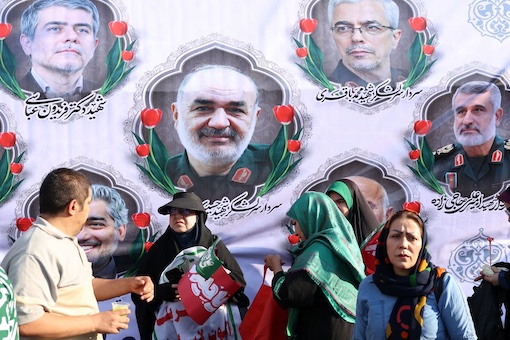
At midnight on June 13 (which coincided with the “unlucky” Friday 13th), Israel’s generals gathered in a bunker beneath Israeli air force headquarters and watched as jets descended on Tehran in an operation they called “Red Wedding.” Hours later and 1,000 miles away, Iran’s top military commanders were dead – a mass killing much like the famous wedding scene from the show “Game of Thrones.”
The combination of intelligence information and military precision that enabled the attack surprised people around the world, especially the Iranian regime. But it wasn’t the only improbable success at the outset of Israel’s 12-day campaign. Now the world understood why the Jewish state said the attack on Tehran could take 14 days, with PM Netanyahu saying it could be many days more (in case of Murphy’s law).
Another key part of the initial attack – considered so fantastical by even its architects that it was called “Operation Narnia,” after the fictional fantasy world created by C.S. Lewis in “The Chronicals of Narnia” – was how it successfully killed nine top Iranian nuclear scientists almost simultaneously at their homes in Tehran. Pulling off the attacks required elaborate ruses to ensure surprise. Few knew they nearly fell apart.

Yes, it killed not only a bunch of “sitting duck” generals, but also scientists. The operations’ success have helped cement Israel as the dominant military power in the region, setting the stage for what Israelis hope will be a dramatic realignment of countries away from Iranian influence and toward friendlier relations with Israel. Top Israeli and U.S. officials say they expect Israel to sign new peace accords following the battle.
However, questions remain over whether Israel, which was later aided by a massive bombing strike on Iran’s nuclear sites by the U.S., has really achieved its war objectives. There are conflicting reports about the damage done to the nuclear facilities, and the jury is out on whether Israel and the U.S. can prevent Iran from rebuilding what has been so-called “obliterated”.
Still, even some Israeli officials were surprised by how their plans, some of which dated back more than a decade, were able to come together. “When we started to plan this thing in detail, it was very difficult to know that this would work,” – said Major General Oded Basiuk, head of the Israeli military Operations Directorate and a key architect of the operation.
This account is based on interviews with 18 current and former Israeli and U.S. security officials.
Israel took a huge risk in launching the attack. Either it would hit the enemy human targets all at once, or they would scatter. If they managed to escape, Iran’s retaliation would’ve been far more severe, and its nuclear ambitions intact. And had Trump not been inspired or convinced by Israel’s early success to bomb Iranian nuclear sites, Israel’s objectives would be jeopardized. Even now, Iran has been hurt but could rebound more determined than ever to build a nuclear weapon.
{ Long Road }
In actuality, the operation’s origins stretch back to the mid-1990s, when Israeli intelligence first identified what it saw as nascent Iranian attempts to build a nuclear weapons program. In the late 1990s, Iran launched a nuclear weapons research program, codenamed “AMAD Project” – led by Mohsen Fakhrizadeh, a top nuclear scientist who aimed to design and build an arsenal of five nuclear warheads by the mid-2000s.
Israeli intelligence began building an extensive network of agents inside Iran to infiltrate and facilitate a sabotage campaign, which included causing explosions twice at one of Iran’s main enrichment sites and assassinating some scientists. But Israeli officials ultimately determined those activities weren’t enough, and that they would eventually need to destroy Iran’s nuclear program, and the Iranian nuclear brain trust, from the air.

Doing so would be incredibly difficult. The sites Israel would need to hit were more than 1,000 miles from home and into the airspace of several foreign countries. It needed great strategies and tactics beyond imagination.
Crucially, Israeli pilots would have to learn how to fly in co-ordinated formations of six to 10 aircraft around a single tanker plane, taking turns to refuel – multiple times – during the journey. They’d also have to learn how to position their planes perfectly so that their missiles, when dropped, would land within 15 to 20 seconds of each other for maximum effectiveness.
Such training obviously wasn’t possible in a country as small as Israel, running just 290 miles north-to-south. In 2008, in what was called Operation Glorious Spartan, more than 100 Israeli F-15s and F-16s flew more than 1,000 miles to Greece, testing their ability to fly far enough to hit Iran’s nuclear facilities. Such exercises would become more frequent.

Over the next several years, Israel came close to launching an air attack several times. But Israeli Prime Minister Benjamin Netanyahu was repeatedly voted down by his ministers and security chiefs who feared starting a war with Iran or angering Washington, which at the time favoured a diplomatic approach. Barack Hussein Obama, the U.S. president from 2009 to 2017, was anti-Israel and pro-Iran.
Israeli military planners kept gaming out an attack, including a multi-front war with Iranian proxies Hamas in Gaza and Hezbollah in Lebanon. There was also the puzzle of flying over Syria, a pro-Tehran enemy state. Now, we understand why Israel launched hundreds of air strikes in Syria to disable its air defence beginning December 2024 after Syrian President Bashar Assad fled to Russia.
After Hamas’s Oct. 7, 2023 attacks, Tel Aviv has spent the past nearly two years decimating Hamas, including its leader Yahya Sinwar and political bureau head Ismail Haniyeh. It has also severely crippled Hezbollah, whose support had helped prop up Syria’s regime. Then, rebel forces toppled Syria’s government, putting in place an anti-Iran government, which cleared the way for Israeli planes to cross the country’s airspace unchallenged.

By that time, Israeli spy networks inside Iran were extensive enough to track the movement of its military leaders and set up drone bases inside the country that could play a crucial role in knocking out Iran’s air defense systems during the attack. Israel was able to further test its long-range fighter jet capability when it targeted Houthi rebels in Yemen over the past year.
It also took out Tehran’s most advanced air defense systems, Russian S-300s, in attacks in April and October 2024. Those attacks by Israel came in response to large missile barrages from Iran, which were largely repelled by Israeli air defense along with help from the U.S. and other allies. The tit-for-tats with Iran gave Israel the confidence it could go head-to-head with its fellow regional superpower.
With so many puzzle pieces in place, plans for an attack intensified. But Supreme Leader Ali Khamenei had no idea what was about to hit him – till it was too late.
{ Operation Narnia }
Adding to the urgency was a sense in Israel that Iran had begun to enrich uranium to such levels that it would be mere months away from building a bomb if it wanted to. Israel said it had no choice but to attack Iran in the “Rising Lion” Operation based on intelligence that Tehran was approaching “the point of no return” in its pursuit of a nuclear weapon – Iran currently has enough enriched uranium to build 15 nuclear bombs.
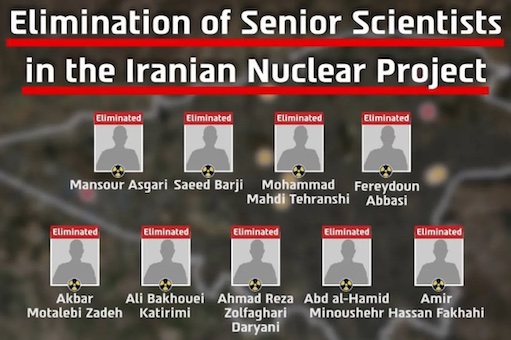
Fearing it had already lost the battle to suppress Iran’s uranium enrichment, Israel launched an operation to kill the Iranian scientists (ranked by their seniorities) who could help their country use that material to build a nuclear weapon, even if Israeli attacks damaged or destroyed its nuclear sites – the far-fetched mission Operation Narnia. Unlike Trump, Israel could not afford and was not interested in a game of chicken with Iran.
In November 2024, the Israeli military gathered 120 individuals from Military Intelligence and the Air Force were brought into a facility in Unit 8200 to decide who and what would be in their crosshairs when fighting began. In the end, the conference drew up a list of over 250 targets, including the scientists the Israelis wanted to kill, nuclear sites, Iranian missile launchers and military officials.
Another priority, of course, was figuring out how to gain air superiority over Iran from the get-go. This would pave the way for Israeli jets to continue pounding the long list of targets for the next 12 days. Israeli officials cross-referenced thousands of intelligence sources to map out Iran’s air defense systems. The air dominance was also vital to convince Trump to mobilize B-2 Spirit bombers.

The Mossad was brought in to aid that effort. Its agents spent months smuggling in parts for hundreds of quadcopter drones rigged with explosives – in suitcases, trucks and shipping containers – as well as munitions that could be fired remotely from unmanned platforms. Small teams armed with the equipment set up near Iran’s air-defense emplacements and missile launch sites, ready to take out the defense systems once Israel launched its attack.
Israel also launched larger drones from its own territory in the attack. The long-distance capabilities of some of the drones were tested for the first time the night before the attack, according to a person familiar with the matter. Israel possesses advanced, long-distance drones – the AIA Heron and Elbit Hermes 900 – used for reconnaissance, surveillance, and potentially combat operations.
{ Israeli Ruses }
Eventually, Prime Minister Benjamin Netanyahu and his military advisers made the final decision on June 9 to attack four days later, according to an Israeli security official. Still, Netanyahu’s team knew they would have to disguise their plans to make sure the Iranians didn’t take precautionary actions, such as dispersing their scientists and military leaders.

Netanyahu’s office deliberately announced he would be taking off work soon for a holiday weekend, followed by the wedding of his son Avner on Monday, June 16. None of the attendees – including Avner or Netanyahu’s wife, Sarah – knew the prime minister was planning to delay the wedding, the prime minister later said. He carried on as normal, so as not to tip off the Iranians.
Meanwhile, Israeli officials were leaking reports to the media suggesting a split between PM Netanyahu and President Trump over whether to launch an attack. The leaks included details of a phone call between Netanyahu and Trump four days before the operation began, in which Trump told the Israeli leader he wanted diplomacy to run its course before turning to military options.
On the day of the attacks, Trump told reporters that the U.S. and Iran were “fairly close to an agreement” and that he didn’t want the Israelis “going in.” Israeli officials also told reporters an attack was imminent, but they would wait to see the final result of a sixth round of nuclear talks between Washington and Tehran scheduled for Sunday. The scheme was to misled Tehran that nothing would happen.
In reality, generals were already making last minute preparations for the attack.
The key to the deception, said a security official familiar with the planning of the operation, was the idea implanted in the minds of the Iranians that Israel wouldn’t strike without U.S. authorization and participation. As long as the U.S. wasn’t mobilizing its forces and was engaged in negotiations, Israel could threaten to attack and even mobilize its troops in plain sight of Iran without giving away the element of surprise.
In fact, as Israeli aircraft were getting in the air, Trump posted (and lied) on Truth Social – “We remain committed to a Diplomatic Resolution to the Iran Nuclear Issue!”
{ Doomed Gathering }
A key part of the final plan was to take out the leadership of Iran’s armed forces all at once – the effort known as Red Wedding. The tactic would cut off any immediate retaliation due to chaos as a result of a loss of the chain of command, while buying time for Israeli fighter jets and drones to take out Iranian missile launchers, thereby diminishing Iran’s inevitable response.

As the Israeli aircraft approached, however, a problem surfaced. The leadership of the Iranian air force was suddenly on the move. Israeli officials in their bunker began to sweat and panic. It was possible the whole plan was unraveling and that the Iranians were onto them. Worst, Tehran could have detected the Jewish state’s plan and started evacuation.
But to the amazement of the Israeli high command, rather than scattering, the Iranian air force leaders gathered together in one place – sealing their fate. Israeli missiles started to fly. Explosions also shattered the scientists’ homes, killing nine in near-simultaneous attacks to prevent them from going into hiding. Despite its long odds and moments of suspense, Operation Narnia was succeeding.
The missiles then also hit radar stations, antiaircraft batteries and Iranian surface-to-surface missiles. Soon, Israeli intelligence was able to confirm that the human targets whose names it had collected back in November had nearly all been killed. It was like a repeat of the stunning assassination of Hamas and Hezbollah leaders – coordinated, precise and ruthless.

In around four hours, the opening operation was over. In the following days, Israeli aircraft pounded Iranian nuclear and ballistic missile production sites and launchers, while also hunting down Iranian military leaders and nuclear scientists. A cease-fire was declared on Tuesday, not because Israel wanted to, but because Trump wanted a quick victory so that he can gloat about it for weeks.
Other Articles That May Interest You …
- Trump’s Wishful “12-Day War” – How And Why The U.S. Forced Israel & Iran To Accept A Ceasefire
- Gone In 25 Minutes – How Trump Tricked Tehran Twice Before Obliterated Iran’s 3 Nuclear Sites With MOPs
- Iran’s “Axis Of Resistance” Missing In Action – Why Tehran Became Isolated & Alone In WAR Against Israel
- Iran On Fire – Khamenei Should Flee To Russia While He Can Before US-Israel Upcoming Surprise
- Israel’s “Operation Rising Lion” – Iran’s Costly Miscalculation Led To Losses Of Top Commanders & Scientists
- Paying The Price For Hamas Attacks – How Trump Misled Iran Before Israel Sends 200 Jets To Attack
- Watch Out The Oil Prices – Israel Preparing To Attack Iran’s Nuclear Sites, Whilst Trump Grabbing Gaza Strip
- Ran Out Of Luck And Place To Hide – Here’s How Israel Trainee Squad Accidentally Killed Hamas Mastermind Sinwar
- Psychological Warfare – How Mossad Cracked Hezbollah Secret Network With Low-Tech Pager & Walkie-Talkie “Walking Bombs”
- 3 Big Kills In 24 Hours – Why Haniyeh Could Have Been Betrayed By Own Brothers
- An Eye For An Eye!!! – No One Can Stop Israel From Reducing Gaza To Rubble And Erase Hamas Terrorists

|
|
June 28th, 2025 by financetwitter
|


|

|

|

|

|

|

























Err… Actually Israel didn’t “succeed”.
The little Zionazi colony did piss poorly even with the physical backup from Yankistan. Effectively, Iran won and worse than that the bombing caused the Iranians to unite rather than overthrow their lunatic mullahs for a regime change. Even worse, the Iranians are starting to love their clerics, Alhamdullilah!
And this war ain’t over yet, plenty of opportunity for it to turn into a “tactical” nuclear war which them war-loving generals the world over would love. Once “tactical” nuclear weapons are used it gives the rest of the world freedom, joy toys, and peace of mind to use them.
Right now, though, the little coward Yahudis have buggered off from their stolen “homeland” to where they slithered from: Yankistan, Europe, etc. Many are hiding in Cyprus, Greece, which makes it all pointless to have a “Holocaust” and any “homeland”!
I vote we shelter the Iranians, their women are lovely, and they are better Muslims than the psychopathic and dumb Sunnis.