



Russia is arguably the “only winner”, if not one of the biggest winners, in the ongoing US-Israel war with Iran. Not only does the conflict trigger a spike in oil prices, which translates into stronger revenues for Russia, which remains one of the world’s largest oil exporters despite Western sanctions following its invasion of Ukraine, but is also saw Moscow enjoy a temporary sanctions relief.
In fact, President Donald Trump spoke on the phone with President Vladimir Putin on Monday to discuss the war with Iran (as well as efforts to end the war in Ukraine). But the main agenda was to reduce oil sanctions on Russia to help cool a surge in global energy prices. Last week, the U.S. already temporarily allowed India to buy Russian oil in the hopes of mitigating production shortages.
Putin almost fell off his chair laughing when the Middle East conflict has rattled global energy markets, sending oil prices sharply higher to almost US$120 a barrel on Monday amid fears of supply disruptions in the Strait of Hormuz. Even as oil fell about 7% on Tuesday after U.S. President Trump signaled that the conflict with Iran could end soon, prices are still around 27% higher compared to before the war started.
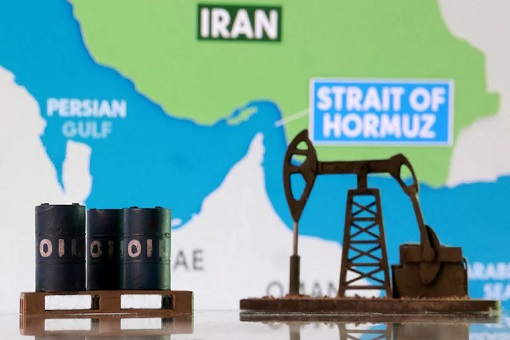
At about US$90 a barrel, that’s still a huge windfall compared to around US$50 from before the Iran war. Higher prices combined with looser enforcement of sanctions will allow more Russian barrels to remain in circulation, providing a short-term boost to Moscow’s finances. If the crisis continues to constrain Gulf exports, the upside could be substantial, generating tens of billions of dollars in additional state revenue for Russia.
It would also create another humiliation chapter for the European Union, which bragged about phasing out Russian energy imports, but may be forced to increase imports of Russian liquefied natural gas (LNG) now. As Russia gains new resources to finance its war against Ukraine as energy prices rise, Europe could only watch as Trump is allowing Moscow to re-open for business.
The fact that Trump had to reach out to Putin, the first call between the two leaders since the beginning of the war with Iran suggests that Washington needs help from Moscow to prevent a global energy crisis. This gives Russia the bargaining chip in any peace talks with Ukraine, not to mention a diversion of military weapons that could otherwise have been sent to support Ukraine.
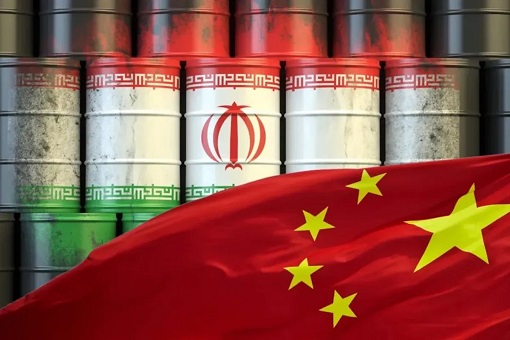
Make no mistake. The war against Iran is not really about helping the Iranian people being suppressed and oppressed by the regime. While Israel’s objective is to topple the Iranian radical regime, the U.S.’s objective is slightly different – to control the Iranian oil and to neutralize China’s influence, which in turn would reassert the U.S. hegemony in the region.
However, the turmoil in the global energy market from war in the Middle East is exactly the sort of emergency scenario that China has long been preparing for. Worried that conflict in the region could wreak havoc on its economy by cutting off the supply of oil, Beijing has been spending lavishly to limit how much it needs to import, while building up large stockpiles and diversifying where it gets its energy from.
The Iran war has brought many of those fears to fruition, serving as the biggest test yet of China’s bid to fortify its economy against what it views as reckless behaviour by the United States. Likewise, Trump too was interested in seeing how much Beijing would be affected by high oil prices due to the stunning war. So far, Beijing is weathering the storm.
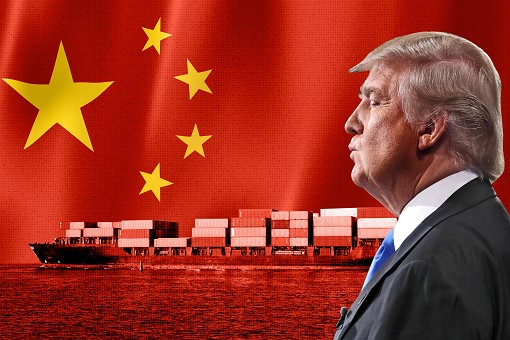
Iran is trying cut off energy shipments through the Strait of Hormuz, a choke-point that carries roughly a fifth of the world’s oil supply and a critical waterway linking producers such as Saudi Arabia to oil-importing nations in Asia and beyond. While China is the world’s largest importer of oil in terms of total barrels, it is less dependent on the Strait of Hormuz for energy than other economies such as Japan and South Korea.
Insulating China from energy shocks has been a priority for President Xi Jinping. Core elements of its strategy include ramping up the use of electric vehicles to replace gas-guzzlers while simultaneously pumping more crude from inside China’s borders. A deepening energy partnership with Russia, meanwhile, has helped curtail Beijing’s reliance on the Middle East.
At the same time, China has accumulated massive oil stockpiles, likely totaling more than 1.2 billion barrels, enough to cover its imports for around 100 days or more. In a sign of continued stockpiling by Beijing in the lead-up to the Iran war, customs data released on Tuesday showed that China’s crude imports rose nearly 16% in the first two months of 2026 compared with a year earlier.
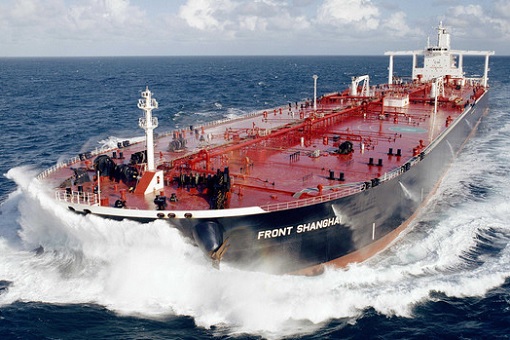
Still, that doesn’t mean Beijing is happy with the supply disruptions. The longer the conflict goes on and shipments through the Strait of Hormuz are disrupted, the bigger the costs become for a country whose economy is already struggling. In the short term, industrial and chemical companies could be squeezed by shortages of liquefied natural gas.
The situation in the Strait of Hormuz remains volatile. Brent Crude prices initially shot up to nearly US$120 a barrel before falling to around US$90 per barrel as of Tuesday. Officials from the Group of Seven (G7) industrialized economies – which includes the U.S., Canada and France – convened on Monday to discuss the possibility of drawing down some reserves.
A key strategy of China’s energy security is to produce as much as possible of what it needs from resources within its borders. Because China’s oil and gas reserves are limited and expensive to access, it has given priority to using electricity wherever possible, such as by replacing gasoline-powered cars with electric models. China’s electric vehicle push, especially in trucks, has already displaced over 1 million barrels per day of oil demand.
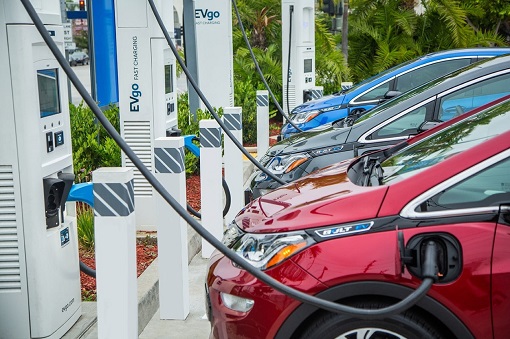
More than half of China’s new passenger vehicles sold are now new-energy vehicles, meaning they rely more on batteries than on gasoline. With road fuel demand already showing signs of peaking and renewable capacity expanding rapidly, China’s sensitivity to oil price fluctuations is declining on a yearly basis. Oil and natural gas only account for 4% of China’s power mix, far lower than the 40% to 50% in many Asian economies.
Besides, China has abundant domestic reserves of coal to generate electricity as well as a vast supply chain for making solar panels and wind turbines. The Middle Kingdom holds the world’s fourth-largest coal reserves (143 billion tons)and is the top producer and consumer, meeting most demand domestically. The world’s largest power grid helps China tie its electricity network together.
China’s energy-security strategy is one aspect of a broader campaign to become as self-reliant as possible to guard against intensifying global volatility. From advanced robots to agriculture, Chinese leaders increasingly prefer to produce what they need as a way to hedge against global security risks, even when goods can be acquired more cheaply through international trade.
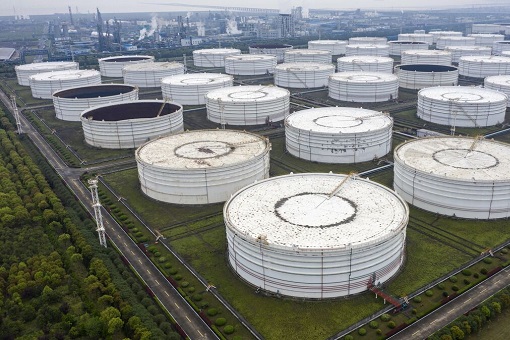
“China has taken the last 20 years to reduce some of its dependence on maritime oil flows,” – said Rush Doshi, director of the China Strategy Initiative at the Council on Foreign Relations. New overland oil pipelines and some diversification to renewables mean the country now only relies on the Strait of Hormuz for about 40% to 50% of its seaborne oil imports, which in turn account for only 6.6% of China’s overall energy consumption.
China does not need to interfere in the war, but will need to shore up ties to the new leadership in Tehran, a key partner in the region that it has been cultivating for decades. While China’s foreign minister has criticized the attacks on Iran in recent days and called for a cease-fire, China’s government has given little indication that it will offer Tehran much more than rhetorical support.
The Iran war could make Russia an even bigger supplier of energy to China, for instance by pushing forward a new natural-gas pipeline linking the countries. Known as the Power of Siberia 2, the long-discussed project raises the risk that Beijing becomes over-reliant on Russia for energy. But analysts say if instability persists in the Middle East, that concern could take a back seat to China ensuring it can secure all the gas it needs.
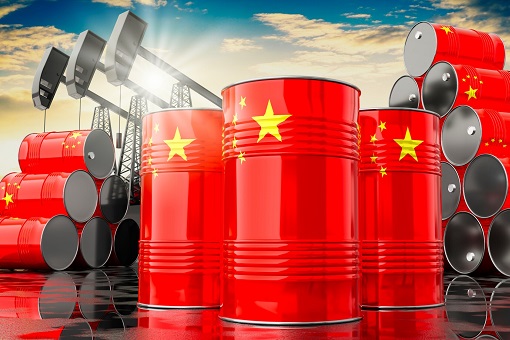
More fundamentally, the attack on Iran will only reinforce China’s bid for energy self-reliance, said Neil Beveridge, who tracks China’s energy sector at Bernstein Research. “I do think they will feel vindicated,” – he said. The Chinese always have a backup plan, and layers of redundancy as it continues building crude reserves.
Other Articles That May Interest You …
- Strategic Error – How Iran’s Retaliatory Strikes At Gulf States Backfires
- Live By The Sword, Die By The Sword – How Ayatollah Khamenei Was Killed
- Iran Panicking – Armada Is Ready And Trump Could Strike Anytime
- Revolution – How One Man Rallies Iranians To The Street
- From Robot Wolves To Satellite Killer – How China’s Military Parade Sends A Message That Annoys Trump
- Gone In 25 Minutes – How Trump Tricked Tehran Twice Before Obliterated Iran’s 3 Nuclear Sites With MOPs
- Iran’s “Axis Of Resistance” Missing In Action – Why Tehran Became Isolated & Alone In WAR Against Israel
- Iran On Fire – Khamenei Should Flee To Russia While He Can Before US-Israel Upcoming Surprise
- Paying The Price For Hamas Attacks – How Trump Misled Iran Before Israel Sends 200 Jets To Attack
- Psychological Warfare – How Mossad Cracked Hezbollah Secret Network With Low-Tech Pager & Walkie-Talkie “Walking Bombs”
- China Has Spoken – If US-South Korea Strikes North Korea, We Will Defend Kim

|
|
March 10th, 2026 by financetwitter
|


|

|

|

|

|

|
















Comments
Add your comment now.
Leave a Reply