



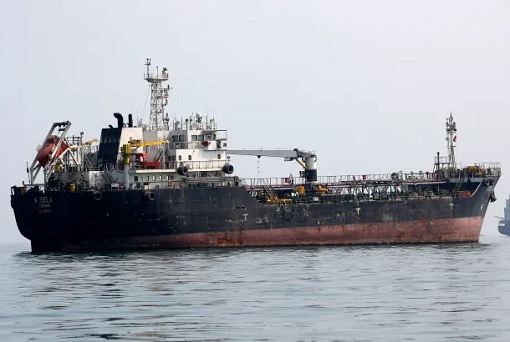
Did Iran really think Donald Trump would surrender after the regime has disrupted one of the world’s most important waterways, the Strait of Hormuz? Not only is Tehran suspected of the attacks on at least 16 foreign commercial ships in the Persian Gulf area since the war began on February 28, but it is also jamming signals in ways that could put ships at risk of colliding.
The strait has been a critical trading entrepôt for centuries. Where the merchandise was once spices and silk, it is now a channel for 20% of the world’s oil and gas, as well as chemicals used in pharmaceuticals and commodities like fertilizer. But since Tehran started weaponized it, ship traffic has plunged in the strait. The once busy trade route is now gone.
Mojtaba Khamenei, Iran’s new supreme leader who has not made any public appearance but thought to be wounded and likely disfigured, described the ability to block the strait as leverage that “must definitely continue to be used.” However, the fact that Tehran had resorted to using its trump card so quickly also means the regime was extremely desperate.
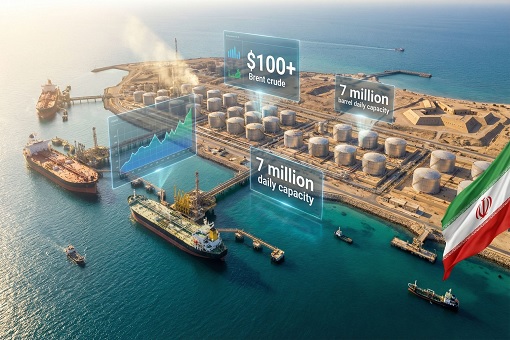
As the war entered its third week, the Commander-in-Chief ordered the U.S. military to bomb Iran’s most strategic economic asset – Kharg Island. Then,Mr Trump immediately launched a social media post saying the U.S. had “totally obliterated” military targets on the island, the export terminal for 90% of Iran’s oil shipments. The strike was to send a message to Mojtaba or whoever calls the shot in Tehran.
U.S. strikes did not target Kharg’s oil infrastructure, but “should Iran, or anyone else, do anything to interfere with the Free and Safe Passage of Ships through the Strait of Hormuz, I will immediately reconsider this decision”, Mr Trump wrote. The U.S. military said on Saturday (March 14) it hit more than 90 military targets including mine and missile storage sites on Kharg Island.
The warning was clear and loud -if Iran didn’t open the Strait of Hormuz to international shipping traffic, the U.S. may bombard the now-defenceless depot which is the beating heart of the Iranian oil industry. If Iran thinks it is the only one with a trump card, Trump has just shown that the U.S. too has a trump card to play. Shutting down Hormuz has backfired.
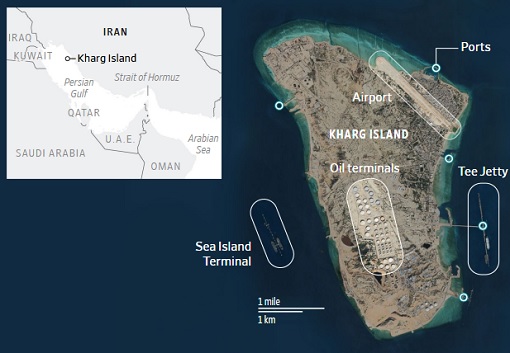
Not only the tiny spot of land in the northern Persian Gulf is the launch point for 90% of Iranian oil exports, storing and loading most of its crude oil exports, but Iran has continued loading from Kharg to sell its crude to China even as it blocks transit through the Strait of Hormuz for other exporters. Tehran exports half of its roughly 3.5 million barrels of crude oil production, and 90% of those exports came out of Kharg Island.
Kharg Island is the primary hub for pipelines transporting crude oil from Iran’s most significant production areas, such as Ahvaz, Marun, and Gachsaran. In a few days leading up to the war, Iran accelerated exports from Kharg Island to near record levels, loading more than two million barrels daily. The total storage capacity of the island is about 30 million barrels.
Of course, Trump was bluffing about his threat to “wipe out” oil infrastructure on Kharg if Iranian forces continued to block the Strait of Hormuz. A better way to skin the cat is to seize the five-mile-long coral island, roughly a third the size of Manhattan. Kharg is important because not only does it have an airport, oil terminals and ports, but also sits in deep water that enables the approach of oil supertankers.
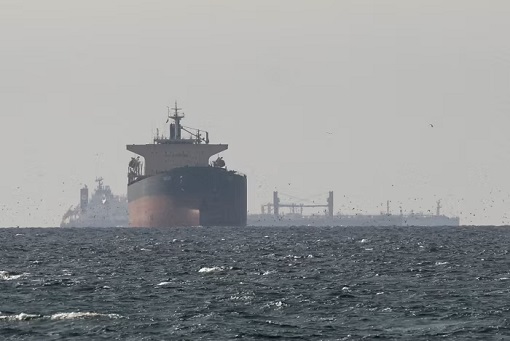
“It’s one of the most efficient loading facilities in the world. If you go in often you get to know the terminal staff. They gave us pistachios and we gave them Marlboros,” – said Yiannis Sgouras, a veteran Greek captain who has crossed the Hormuz dozens of times before the war. Oil is pumped to the island through subsea pipelines and stored in massive storage facilities before being loaded onto tankers.
Iran has switched to using the smaller Jask oil terminal outside the Strait of Hormuz after the U.S. strikes against Kharg Island. But Jask has a limited capacity to load around one million barrels a day, around half of the capacity of the Kharg terminal. Sgouras said it doesn’t make sense for supertankers to go to Jask, where less oil can be loaded and waters are shallower.
Unlike Jask, supertankers could load up at Kharg Island in about 24 hours and move in and out of the Strait of Hormuz like clockwork. Iran has warned Persian Gulf states that an attack on Kharg Island would be a red line, which the U.S. interpreted as its weakness. That’s why the U.S. attacks Kharg on Friday, striking a blow to Iran’s ability to export oil even though it could further escalate the conflict.
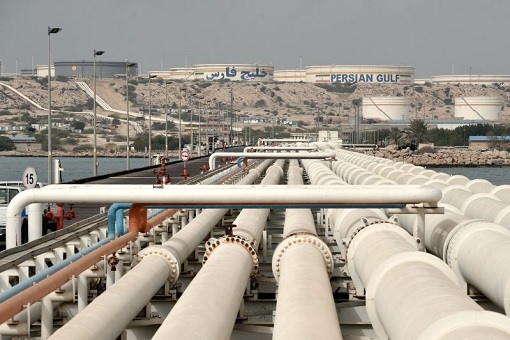
Basically, Trump was calling Tehran’s bluff by deliberately attacking Kharg Island. If Kharg Island were disabled, Iran would be crippled and can’t sell oil to China. Hitting where it hurt the most – oil revenue – the Iranian regime would be further weakened militarily, financially, economically, and politically. It would be left with less bargaining chip at the negotiation table.
By hook or by crook, the U.S. must take back security control of the Strait of Hormuz. If Trump allows Tehran to blackmail him with Hormuz, then the Iranian regime would walk away with the winning card and can always threaten the world whenever it likes. So far, after hitting 6,000 targets across Iran, the White House has no intention of surrendering despite the weaponization of Hormuz.
While invading the huge Iran would be geographically challenged to the U.S. as it requires hundreds of thousands of troops, seizing Kharg Island with special operations forces could be done quite easily. Trump said on Friday that America “has ammunition and plenty of time” to keep fighting. About 5,000 ground combat troops should be enough to take and hold the island.
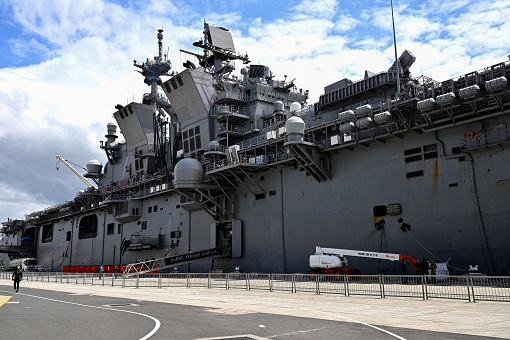
If the Mullahs think they could block the strategic waterway for oil exports except Iran’s own, then they should get their head examined. Now, not only is the regime about to lose Kharg Island, but it also has provoked other allies of America to join the Israel-U.S. war against Iran. While the Pentagon is moving a Marine expeditionary unit and more warships to the Middle East, other countries are sending warships too.
The U.S. has intensified its naval presence in the Middle East, deploying a third carrier, the USS George H.W. Bush, to join the USS Gerald R. Ford and USS Abraham Lincoln, creating a significant naval strike force against Iran as part of a broader “Operation Epic Fury”. Two ships from the Japan-based USS Tripoli Amphibious Ready Group and the 31st Marine Expeditionary Unit are now headed for the Middle East.
Besides thousands of Marines, the deployment will also add several warships and F-35 fighter jets to support those already in the region. That doesn’t sound like Trump is quitting the war, does it? Ultimately, unlocking the Hormuz may require direct intervention by the U.S. Navy with protective escorts of commercial vessels, as it did in the 1980s during the Iran-Iraq war.
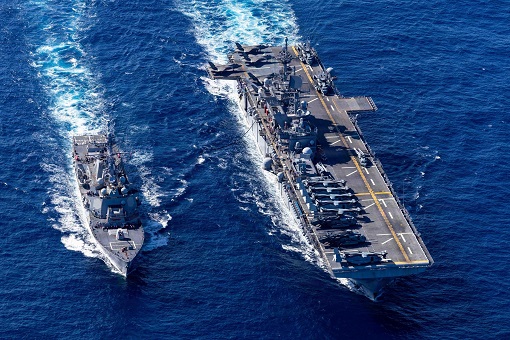
Get real, before the U.S. went to war, the Pentagon and President Trump already knew that an American attack could prompt Iran to close the Strait of Hormuz. Gen. Dan Caine, the chairman of the Joint Chiefs of Staff, said in several briefings that U.S. officials had long believed Iran would deploy mines, drones and missiles to close the world’s most vital shipping lane.
“The Pentagon has been planning for Iran’s desperate and reckless closure of the Strait of Hormuz for decades, and it has been part of the Trump administration’s planning well before Operation Epic Fury was ever launched,” – said White House press secretary Karoline Leavitt. The U.S. operation to wipe out Iran’s military capability “is quite literally intended to deprive them of their ability to close the Strait,” – Leavitt said.
Trump acknowledged the risk, but still moved forward with the Iran war not merely because of confidence in the U.S. military capability, but also because the radical Iranian regime cannot be allowed to hold the world hostage over the Strait of Hormuz. Crucially, to curb Iran’s ability to export terrorism requires weakening its economic and military capacity.
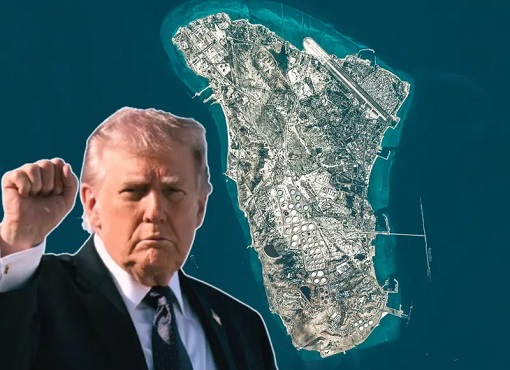
The joint U.S.-Israel military operation has killed Iran’s Supreme Leader Ali Khamenei, targeted military headquarters and damaged or destroyed more than 90 Iranian vessels,not to mention wiping out its air defence, and is now preparing to seize or destroy a depot that controls 90% of Iranian oil exports. After Trump hits Kharg, Tehran makes a U-turn and says the Strait of Homuz is open for business, just not for the U.S. and Israel.
Other Articles That May Interest You …
- Ships Pretend To Be Chinese To Cross Strait Of Hormuz
- Energy Security – Why China Can Withstand $100 Oil Prices More Easily
- Strategic Error – How Iran’s Retaliatory Strikes At Gulf States Backfires
- Live By The Sword, Die By The Sword – How Ayatollah Khamenei Was Killed
- Iran Panicking – Armada Is Ready And Trump Could Strike Anytime
- Revolution – How One Man Rallies Iranians To The Street
- Gone In 25 Minutes – How Trump Tricked Tehran Twice Before Obliterated Iran’s 3 Nuclear Sites With MOPs
- Iran’s “Axis Of Resistance” Missing In Action – Why Tehran Became Isolated & Alone In WAR Against Israel
- Iran On Fire – Khamenei Should Flee To Russia While He Can Before US-Israel Upcoming Surprise
- Paying The Price For Hamas Attacks – How Trump Misled Iran Before Israel Sends 200 Jets To Attack
- Psychological Warfare – How Mossad Cracked Hezbollah Secret Network With Low-Tech Pager & Walkie-Talkie “Walking Bombs”

|
|
March 15th, 2026 by financetwitter
|


|

|

|

|

|

|


















Comments
Add your comment now.
Leave a Reply