



Donald Trump and Benjamin Netanyahu have given mixed and confusing signals on how long the Iran War would go on. By now, Tehran should realize that it was a tactic to keep the regime guessing. It’s part of psychology warfare – pretending to be weak and disunited to let the enemies’ guard down. It also gives the wrong impression that Iran is winning.
Netanyahu said that the war would end “a lot faster than people think.” Meanwhile, Trump said the U.S. was considering “winding down” its military operations. And the Iranian regime is increasingly under the illusion that the U.S.-Israel forces are losing. Tehran‘s only strategy is to drag the war on for as long as possible while choking the Strait of Hormuz to keep energy prices high.
Surging oil and gas prices would put pressure on Trump to end the war that he began in expectation of swift victory on February 28, Iran believes. At the same time, Tehran is particularly proud that as Iranian strikes inflicted catastrophic damage on key energy installations in Qatar, Saudi Arabia, Kuwait, Bahrain and the United Arab Emirates, Iran’s own oil exports kept booming.
The Iranian regime isn’t ready to end the war because it has learned an important lesson – they can – comparatively easily and cheaply – cause a lot of damage and disruption. Iranian leaders’ absurd demands for ending the war illustrate their fantasy. That includes recognition of Iran’s rights (including nuclear and defense), payment of reparations for damages, and international guarantees against future aggression.
Heck, they have even called for transforming the Strait of Hormuz – an international waterway where free navigation is guaranteed under international law – into an Iranian toll booth controlling one-third of the world’s shipborne crude oil. Yes, Iran wants to turn the strait into a cash cow, requiring every passing ship to pay fees to Tehran for the privilege of using it.
Iran somehow believes that not only it is winning the war, but also that Iran would become a superpower in the region and even the world, just because it is still able to fire dozens of ballistic missiles after three weeks of war. Iran’s rhetoric may underestimate Washington’s resolve. In fact, Iran’s hallucination is dangerous because they are not smart enough to understand that President Trump will never let them win.
Even if Trump is ready to chicken out, the Jewish state isn’t. And even if both the U.S. and Israel are ready to let Iran become the new boss in the Middle East, it is hard to imagine the Gulf states would accept such an arrangement. Perhaps Joe Biden would pack, surrender and go home and lick his wound. But not Donald Trump as he cannot afford to look weak, let alone humiliated for losing a war quicker than Putin.
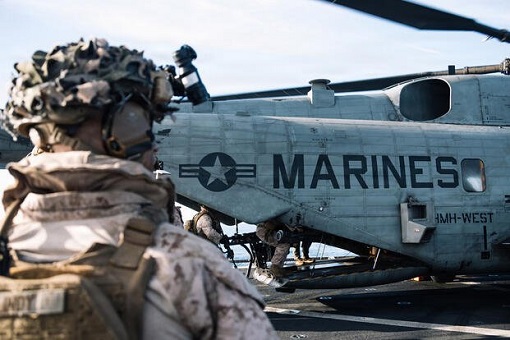
While drama queen Trump is misleading Tehran into thinking that his administration is losing interest in the war, especially after allies such as Europe, Australia and Japan’s reluctance to obey Trump’s call to police the Strait of Hormuz, the Pentagon is deploying the 11th Marine Expeditionary Unit (MEU), made up of at least 2,200 Marines aboard the amphibious assault ship USS Boxer.
The additional troops were mobilised after another unit of 2,200 Marines from the 31st Marine Expeditionary Unit left for the war zone aboard the Japan-based USS Tripoli. The movements come as President Trump has denied the United States is sending more troops to the Middle East. “No, I’m not putting troops anywhere. If I were, I certainly wouldn’t tell you,” – Trump said as he tries to scam Iran again.
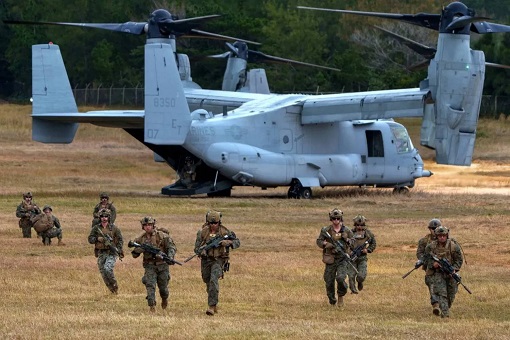
Make no mistake – Trump’s best bet to reopen the Strait of Hormuz as gas prices rise might be the U.S. Marine Corps. The U.S. could use the 4,400 Marines to seize one or more of the islands off the southern coast of Iran to use as leverage or as a base to counter Iranian attacks on commercial shipping. A Marine Expeditionary Unit is a self-sustaining unit that operates off ships, using them as a mobile base.
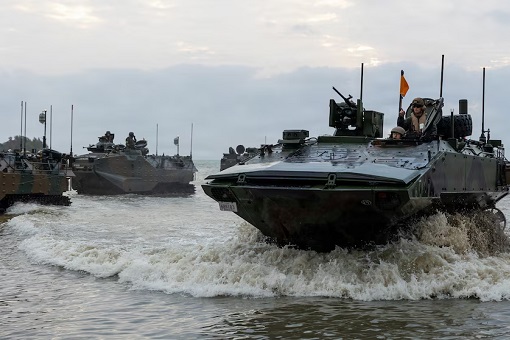
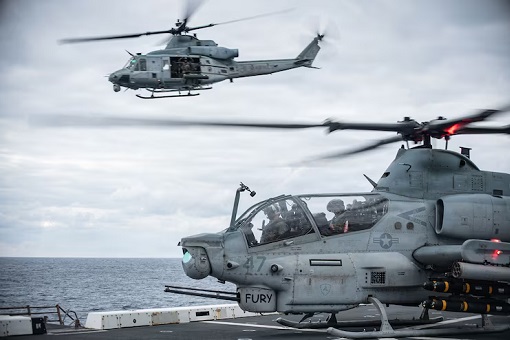
It is composed of four elements: a ground combat unit of Marine infantry, equipped with armored vehicles and artillery; an aviation unit of MV-22 Osprey tilt-rotor aircraft, helicopters and jet fighters such as the F-35B; a command team that coordinates the unit’s movements; and a logistics battalion that provides essential support, supply and equipment maintenance. In short, it specializes in conducting raids by sea and by air.
Iran’s move to close the Strait of Hormuz has wreaked havoc on the global economy, driving up gas prices in the U.S. and elsewhere and posing a military and political problem for Trump. Therefore, by hook or by crook, U.S. forces must reopen the strait by targeting Tehran’s ability to threaten the chokepoint – its launch sites, production capability and warehouses of missiles, drones and sea mines.
The first sign that the Marines are landing soon on Iranian-controlled islands began when the U.S. military dropped 5,000-pound, deep-penetrator munitions on hardened Iranian sites along the coastline that are used to house anti-ship cruise missiles. Iran controls a number of small islands off its southern coast, which the regime uses to host oil infrastructure, base missiles and conceal boats in caves.
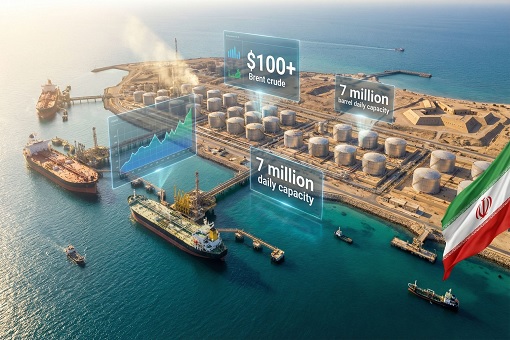
The most economically and strategically significant of those is Kharg Island, located at the northern end of the Gulf roughly 300 miles from the strait that serves as Iran’s main oil export hub. Trump threatened to strike the island’s oil pipelines, after a U.S. military attack last week destroyed key military facilities there. But instead of destroying Kharg’s oil infrastructure, the Marines could seize the island so the U.S. could use it as leverage to reopen the strait.
“Kharg Island, 90% of their oil comes through there. So you’ve got really two choices,” – said retired Gen. Frank McKenzie, the former commander of U.S. Central Command. “You can destroy the oil infrastructure, which would give irrevocable damage to the Iranian economy and the global economy, or you could seize it to use as a bargaining chip, which doesn’t then permanently degrade the world economy.”
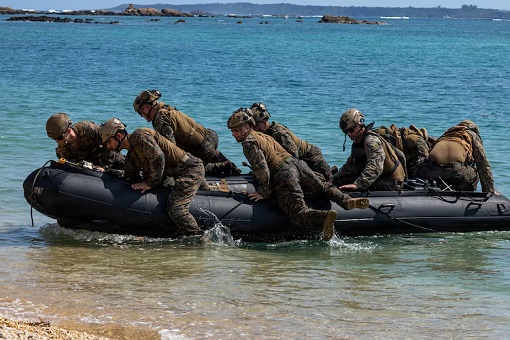
Such a raid could be accomplished by sea, an operation that would involve the USS Tripoli launching ship-to-shore vessels carrying Marines and equipment that can land directly on the shore. Or it could be done primarily by air, using Marines aboard F-35Bs and helicopters designed to land without a runway. The aircraft could be launched from the ships or from nearby Gulf countries.
But Kharg Island – Iran’s economic lifeline that exports 90% of its oil – isn’t the only target, which the U.S. could use an estimated 800 marines to take over. The Marines might also be deployed to seize any of the other islands inside the strait itself. From there, U.S. forces would be strategically positioned to interdict Iranian fast boats and shoot down missiles threatening traffic through the strait.
One strategic target could be Qeshm Island. Large and arrow-shaped, it sits at the mouth of the strait and hosts Iranian naval vessels and missiles in underground tunnels. It is also home to a large desalination plant, which Iran accused the U.S. of attacking. Its size and location allow Tehran to control the flow of ships in and out of the strait.
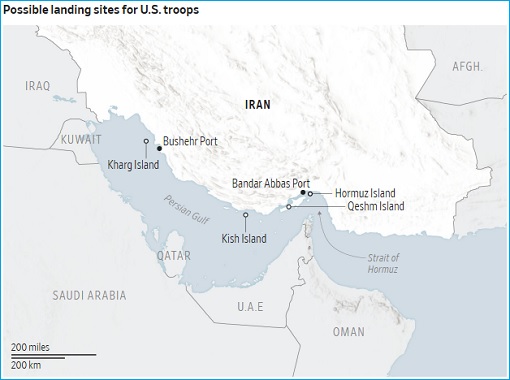
The Marines could also potentially be sent to seize Kish Island, a tiny economic hub west of Qeshm that hosts an airport, or rocky Hormuz Island, east of Qeshm, where Tehran docks small attack ships. A lot of these have some military presence that is highly fortified, or some of them are just empty former places they used to have during the Shah era.
Currently, the IRGC dominates key islands in and around Hormuz – Larak, Qeshm, and Abu Musa – effectively turning them into armed fortresses, which also make them the U.S. targets. It forms part of IRGC’s layered “area denial” strategy. The key roles of the Marines are the following: controlling key terrain, neutralising coastal threats, and enabling naval forces to safely clear and secure the waterway.
Positioning Marines on islands off Iran’s coast, rather than inside Iran itself, could be a loophole or excuse that would allow Trump to claim he has kept his promise not to put American boots on the ground in Iran. The islands that are around Iran, in the Gulf, would give the U.S. some advantage from a tactical sense for a period of time.
So far, the leaders of 22 nations issued a joint statement on Saturday (March 21) condemning “in the strongest terms” the recent attacks by Iran on unarmed commercial vessels and the ” closure” of the Strait of Hormuz. That puts pressure on Tehran, and could be the first step towards other U.S. allies justifying and legitimizing their participation in the U.S.-Israel war against Iran.
Other Articles That May Interest You …
- Shutting Hormuz Backfires – Now Trump Wants To Seize Kharg Island
- Ships Pretend To Be Chinese To Cross Strait Of Hormuz
- Energy Security – Why China Can Withstand $100 Oil Prices More Easily
- Strategic Error – How Iran’s Retaliatory Strikes At Gulf States Backfires
- Live By The Sword, Die By The Sword – How Ayatollah Khamenei Was Killed
- Iran Panicking – Armada Is Ready And Trump Could Strike Anytime
- Revolution – How One Man Rallies Iranians To The Street
- Gone In 25 Minutes – How Trump Tricked Tehran Twice Before Obliterated Iran’s 3 Nuclear Sites With MOPs
- Iran’s “Axis Of Resistance” Missing In Action – Why Tehran Became Isolated & Alone In WAR Against Israel
- Paying The Price For Hamas Attacks – How Trump Misled Iran Before Israel Sends 200 Jets To Attack
- Psychological Warfare – How Mossad Cracked Hezbollah Secret Network With Low-Tech Pager & Walkie-Talkie “Walking Bombs”

|
|
March 21st, 2026 by financetwitter
|


|

|

|

|

|

|





















Comments
Add your comment now.
Leave a Reply