



After four weeks of war, it is obvious that the U.S. and Israel have enjoyed extraordinary military success in eliminating much of Iran’s leadership and military capabilities. However, Iran’s regime has succeeded at a political (at least rhetorical) and economic level – first by simply surviving the onslaught and second by exercising its stranglehold on the Strait of Hormuz.
Because the U.S. has set the bar so high to achieve its goal within a very short time, Trump has to climb down and make flip-flopping statements which confuse the financial markets. Likewise, because Iran has set the bar so low to win within unlimited time, Tehran has to do nothing but fire a few dozens missiles or drones every day enough to spook oil and stock markets.
It’s both amusing and puzzling how the U.S. would be mocked for losing the war because it could not affect a regime change within a few weeks since the war started on February 28, while Iran would be praised for winning the war despite losing Supreme Leader Ayatollah Ali Khamenei, destruction of the Islamic Republic of Iran Navy, Air Force, military infrastructure, ability to project power and whatnot.
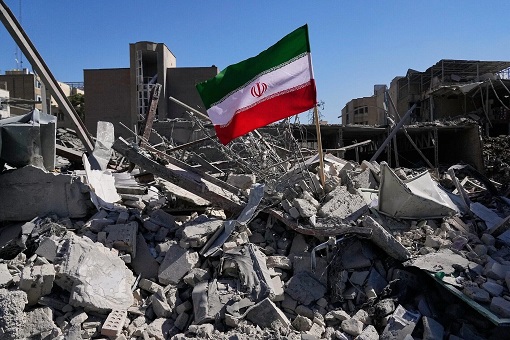
Depending on how they argue, both sides can claim victory if the Iran War were to end tomorrow. When U.S. President Trump reportedly told aides he’s willing to end the U.S. military campaign against Iran even if the Strait of Hormuz remains largely closed, one should take the news with a pinch of salt. Do you really think the U.S. would stupidly tell all and sundry about its war strategies or exit plans?
It’s not rocket science that it was a trap or a smokescreen. While some argue – even laugh – that Trump has lost control of the conflict and is panicking, hence uses the withdrawal narrative to cover up the failure to achieve the original military goals, others argue that it is a deliberate tactic to “pass the buck” to European and Gulf allies to secure their own shipping.
It’s true when Trump says the U.S. does not need Strait of Hormuz because the U.S. is already the world’s largest producer of oil and gas. And the U.S. president was right to tell U.K, France and other unhelpful and parasitic allies to “go get your own oil”, threatening to quit the war in two to three weeks as he argues that the responsibility for keeping the Strait of Hormuz open will rest with countries that rely on the commodities.
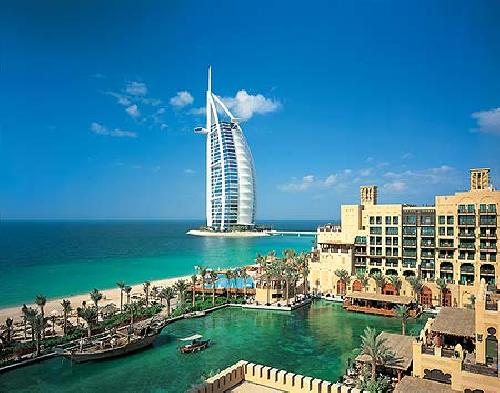
Within the Gulf states, it appears the United Arab Emirates is on the way to become the first Persian Gulf country to take a direct combat role, preparing to help the U.S. and other allies open the Strait of Hormuz by force. And it’s not hard to see why U.A.E. is eager to fight against Iran – over half of the estimated 5,000 projectiles fired by Iran at the GCC (Gulf Cooperation Council) countries were reported to have targeted the U.A.E.
In a fundamental shift in its strategic outlook, the U.A.E. is lobbying for a United Nations Security Council resolution that would authorize such action. In fact, Emirati diplomats have urged the U.S. and military powers in Europe and Asia to form a coalition to open the strait by force, according to Arab officials. Bahrain, a close U.S. ally that hosts the Navy’s Fifth Fleet, is sponsoring the U.N. resolution.
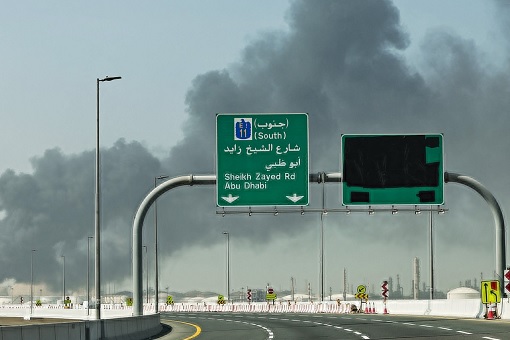
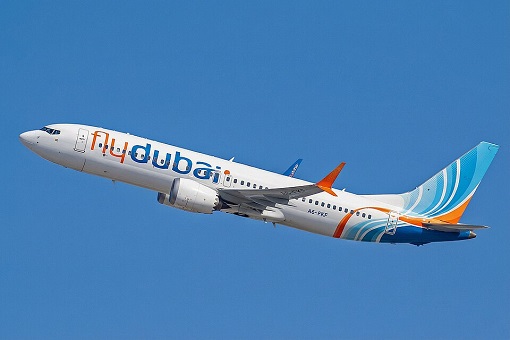
Before the war began on February 28 this year, the U.A.E. saw Iran as a difficult but manageable neighbour. But the outbreak of the war revealed a very different regime that was trying to sow panic with strikes on hotels and airports in Dubai. The Iranian attacks have reduced the U.A.E.’s air traffic and tourism, hurt its property market and led to a wave of furloughs and layoffs.
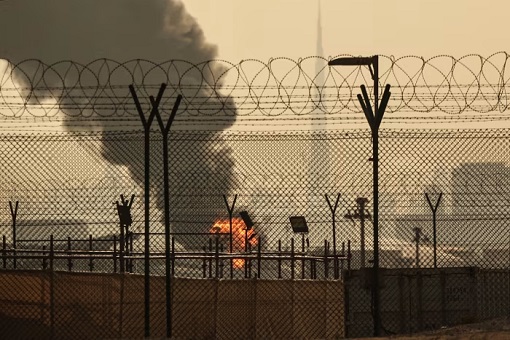
The U.A.E.’s position has now changed largely because Tehran’s indiscriminate attacks have threatened the country’s fundamental selling point – from an oasis of peace to a risky and dangerous neighborhood. The Iranian regime – powerless against the mighty Israeli and Americans – thinks it is fighting for its existence and is willing to bring the global economy down with it by choking the strait.
Unlike the European countries that can buy oil and gas from Russia or elsewhere, the Emirates and other Gulf states must reopen the Strait of Hormuz – a lifeline for its energy exports, shipping business and food. Gulf officials said the U.A.E. believes countries in Asia and Europe that are reluctant now would help clear the strait with the blessing of the U.N. Security Council.
Besides having actively engaged and intercepted hundreds of missiles and drones launched by Iran, the U.A.E. has countered Tehran’s attacks with tough financial measures. A notice from the Dubai-based Emirates airline said Iranian nationals aren’t allowed to enter or transit the country, a step that followed government moves to close the Iranian Hospital and Iranian Club Dubai.
Crucially, UAE authorities have detained dozens of money changers and shuttered offices associated with financial entities linked to Iran’s Revolutionary Guard Corps (IRGC), effectively blocking a major economic lifeline for Tehran. The country has been exploring and implementing measures to freeze billions of dollars in Iranian assets held in the Gulf state, including those belonging to shadow companies.
The Gulf states can only play a defensive role for so long before being forced to retaliate. It doesn’t matter whether Donald Trump was bluffing or not after his threat to pull out of the conflict. The Arabs would be in deep trouble if the unpredictable U.S. president follows through with his threat. Hence, Saudi Arabia and other Gulf states are now turning against Iran’s regime and want the war to continue until it is disabled or toppled.
To show its seriousness, the U.A.E. official said the country had reviewed its capabilities to assist in securing the strait, including efforts to help clear it of mines and other support services. Heck, the Gulf state has also said the U.S. should occupy islands in the strategic waterway including Abu Musa, which has been held by Iran for a half-century and is claimed by the U.A.E.
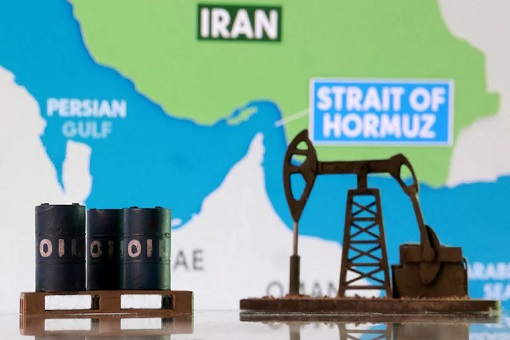
Still, U.A.E. participation in freeing the strait carries risks. Tehran has warned it would destroy the vital civilian infrastructure of any Gulf state that supported any operation to seize its territory and specifically pointed to the U.A.E. The Gulf state could enter the war, but Trump could choose to declare victory before reopening the strait or crippling Iran’s missile and drone capabilities.
Russia and China could veto the resolution. But even if the resolution fails, the U.A.E. would still be prepared to gamble and join an effort to free the Strait of Hormuz due to deep concerns over Iran’s implementation of a de facto “toll booth” system for ships navigating the Strait of Hormuz. The Gulf states fear diplomatic solutions might legitimise Iranian control over the waterway, especially after Trump’s remarks.
While it isn’t clear that military action could open the strait, Gulf states like Saudi Arabia and the U.A.E. that support military action feel that the consequences of having a hostile neighbour controlling such a vital conduit make it worth the risk. A decision to join the military campaign would send a public signal of Arab support for the war.
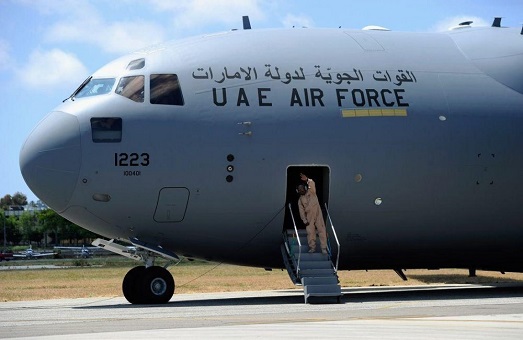
It would also open up additional options for operations against Iran and for attempting to reopen the Strait of Hormuz. The U.A.E. has bases, a deep-water port at Jebel Ali and a location near the entrance to the Strait of Hormuz that could be useful staging grounds for a U.S.-led operation to seize islands or to escort commercial tankers through the waterway.
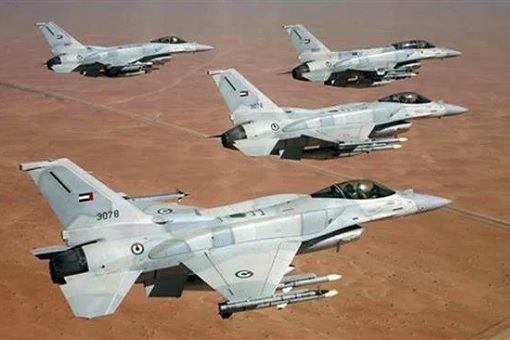
Tehran might look down at the tiny U.A.E., but the Emirates also has a small but capable air force with U.S.-supplied F-16 jet fighters that conducted airstrikes in Iraq alongside the U.S. in the fight against Islamic State. The Emirates also has surveillance drones and a stockpile of U.S.-supplied bombs and short-range missiles that could help ease U.S. and Israeli shortages.
“The proximity along the strait means that you can team up and place different platforms there to protect shipping and go after Iranian targets on the other side of the Gulf,” said Grant Rumley, a senior fellow at the Washington Institute, a think tank. To be clear, there are now over 50,000 American troops in the Middle East.
And the aircraft carrier USS George HW Bush has been deployed on Tuesday (March 31) and is slated to travel to the region along with three destroyers. The new deployment of a carrier strike group that consists of more than 6,000 sailors follows the administration’s decision to send 2,500 Marines and 2,000 paratroopers from the 82nd Airborne Division to the region last week. These are not signs Trump is ending the war soon.
Other Articles That May Interest You …
- How Pakistan Suddenly Becomes Peace Broker In Iran War
- Seizing Iran Islands – How U.S. Marines Plan To Reopen Strait Of Hormuz
- Shutting Hormuz Backfires – Now Trump Wants To Seize Kharg Island
- Ships Pretend To Be Chinese To Cross Strait Of Hormuz
- Energy Security – Why China Can Withstand $100 Oil Prices More Easily
- Strategic Error – How Iran’s Retaliatory Strikes At Gulf States Backfires
- Live By The Sword, Die By The Sword – How Ayatollah Khamenei Was Killed
- Gone In 25 Minutes – How Trump Tricked Tehran Twice Before Obliterated Iran’s 3 Nuclear Sites With MOPs
- Iran’s “Axis Of Resistance” Missing In Action – Why Tehran Became Isolated & Alone In WAR Against Israel
- Paying The Price For Hamas Attacks – How Trump Misled Iran Before Israel Sends 200 Jets To Attack
- Psychological Warfare – How Mossad Cracked Hezbollah Secret Network With Low-Tech Pager & Walkie-Talkie “Walking Bombs”

|
|
April 1st, 2026 by financetwitter
|


|

|

|

|

|

|



















Comments
Add your comment now.
Leave a Reply