



Just a few years ago, Pakistan faced diplomatic and economic uncertainty – even isolation. For years, during the Cold War and War on Terror, the U.S. counted on Pakistan as an ally. The Central Intelligence Agency (CIA) worked closely with Pakistan’s army and intelligence services in its hunt for the al Qaeda militants responsible for Sept. 11, 2001, attacks, including the group’s leader, Osama bin Laden.
Islamabad’s reputation and trustworthiness in the eyes of Washington took a dive when Osama was discovered living in a Pakistani town – where he was killed in a covert U.S. mission in 2011. During Trump’s first term, he accused Pakistan of lying and deceiving the United States while receiving billions of dollars in foreign aid. In 2018, the U.S. president alleged Pakistan harboured terrorists.
Criticizing Pakistan for offering a “safe haven” to terrorists, Mr Trump said – “We have been paying Pakistan billions and billions of dollars at the same time they are housing the very terrorists that we are fighting. It is time for Pakistan to demonstrate its commitment to civilisation, order, and peace”. In retaliation, Pakistan mocked Trump for being bitter due to the “U.S. defeat in Afghanistan”.

The Biden administration as recently as 2024 alleged that Pakistan was seeking to develop a missile that could strike the U.S. To make matters worse, Pakistan’s total external debt and liabilities skyrocketed to US$138 billion as of late 2025. The country continues to rely on IMF bailouts for external financing as it faces roughly US$30 billion in annual external debt obligations.
As of late 2023–2024, China is Pakistan’s largest creditor, holding about US$28-US$29 billion in debt, which makes up about 22% of Pakistan’s total external debt. Struggling with repayments, Pakistan, with tail between legs, had to go to the IMF. But the U.S. is the International Monetary Fund’s largest financial contributor. Therefore, Islamabad cannot afford to offend Washington.
The reset in relations began early in Trump’s second term after the Pentagon delivered a message to Islamabad – “find and deliver the militant behind the 2021 Kabul airport bombings”. Two months after Trump’s inauguration, Pakistan gladly delivered a key plotter behind the bombing that killed 13 U.S. service members, and Trump praised it in an address to Congress last March.
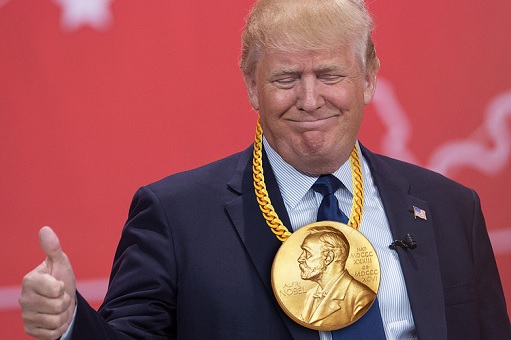
Just weeks after that, in an effort to suck up to Trump, Islamabad credited Washington for a cease-fire in a brief 4-day conflict with its nuclear-armed neighbour, India, something New Delhi disputes. For Trump’s role in mediating the ceasefire, the Pakistani government has formally recommended U.S. President Donald Trump for the 2026 Nobel Peace Prize.
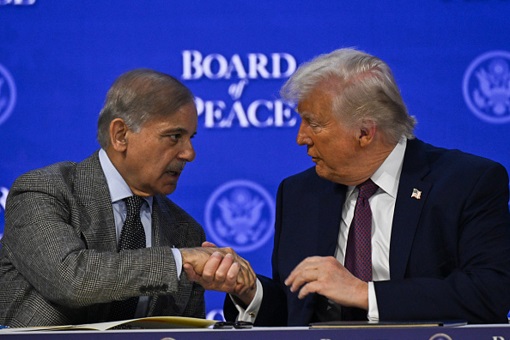
After nominating Trump for the peace prize for his so-called “stellar statesmanship” in preventing a nuclear war between India and Pakistan, Islamabad was one of the first to sign up to Trump’s international Board of Peace. At the board’s inaugural meeting in Washington, special envoy Steve Witkoff announced a deal for the U.S. and Pakistan to jointly redevelop the Roosevelt Hotel in New York, owned by Pakistan’s loss-making airline.
During that meeting, Trump praised Asim Munir, whom he previously hosted at the White House, as a “tough man and good fighter.” The Pakistan’s army chief, whom Trump has described him as his favourite Pakistani field marshal, had earlier this year presided over the signing of a crypto deal between a Witkoff firm and the Pakistani government.
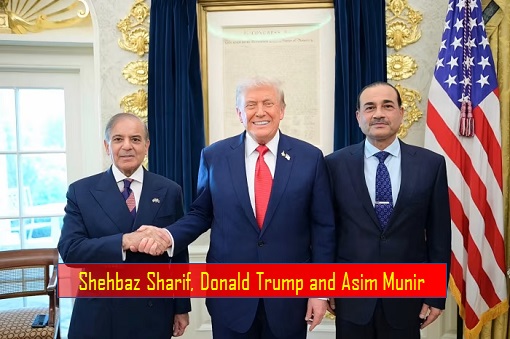
The Iran War provided another opportunity for Pakistan to be in the good books of the U.S. Islamabad’s offer to host potential peace talks between the U.S. and Iran saw how it helped deliver America’s 15-point peace plan to Iran. Pakistan’s sudden and surprise role as a peace broker marks a remarkable return to the White House’s confidence.
Not bad for a country that Trump in his first term insulted as a bad-faith actor that had given the U.S. nothing but “lies & deceit.” But Pakistan’s emergence as a peace broker is testament to how its powerful officials have cultivated Trump and made deals involving the president’s inner circle, cryptocurrency, critical minerals and counterterrorism.
Crucially, the strong working relationship between Pakistani Prime Minister Shahbaz Sharif and Field Marshal Asim Munir has been central to this effort, blending political leadership with institutional strength. Shahbaz Sharif has publicly offered Islamabad as a venue for dialogue between the U.S. and Iran. “Pakistan stands ready and honoured to facilitate meaningful and conclusive talks,” – the PM said on X.
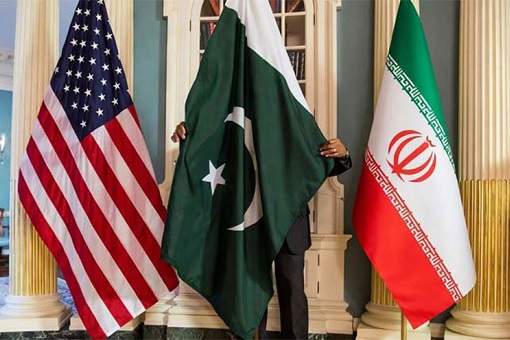
Soon after, U.S. President Donald Trump reposted Shahbaz Sharif’s post on X, conveying subtle endorsement and raising hopes of a possible end to the war sooner rather than later. This suggests that through back-channel diplomacy, Pakistan is playing a quiet but critical role in relaying messages between Washington and Tehran.
Pakistan’s handling of regional tensions drew international recognition because the country not only managed to avoid escalation, but also projected itself as a responsible nuclear state committed to dialogue. Last week, PM Shahbaz briefed Saudi Crown Prince Mohammed bin Salman on Pakistan’s diplomatic efforts to reduce tensions in the Middle East, while condemning recent Iranian attacks on the Kingdom and reaffirming Islamabad’s support for Riyadh.
Additionally, Tehran respects Islamabad. Iran, which shares a border with Pakistan, has economic and diplomatic ties with Islamabad and regards it as a friendly nation. Tehran has agreed to allow 20 additional Pakistani ships to transit the Strait of Hormuz, which the Islamic Republic has effectively blocked to commercial shipping – a sign of progress which Trump quickly took credit.
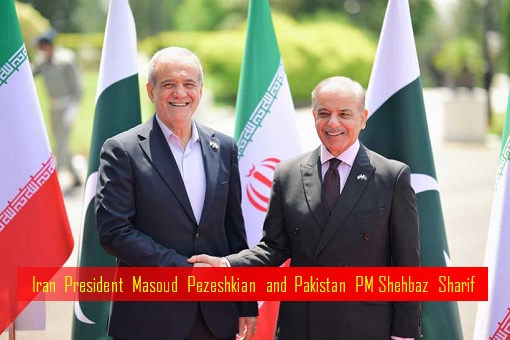
Although Iran has rejected the U.S. 15-point peace proposal and responded with its own 5-point plan, Pakistan said over the weekend that an initial summit of mediating countries is set to take place in Islamabad this coming week in an effort to de-escalate the conflict. While there’s no guarantee the summit would lead to substantive peace talks, Pakistan has already executed a diplomatic coup in its favour.
“From Pakistan’s point of view, it’s a win-win. Whether there is a deal or there isn’t,” – said Husain Haqqani, a former Pakistani ambassador to the U.S. “What Pakistan has accomplished is that the impression and image of isolation has been replaced by it being center stage.” At a time when the entire world is suffering from the fallout of the ongoing Iran war, with no hope of any immediate end, Pakistan has made headlines.
From the point of domestic politics, Pakistan has good reason to do everything it can to bring about an end to the conflict. After the U.S. and Israel killed Iran’s Supreme Leader Ayatollah Ali Khamenei, deadly anti-American protests broke out in Pakistan. After Iran, Pakistan has the world’s largest Shia Muslim population – numbering between 20 million and 40 million.
In actuality, Pakistan’s mediating role started as early as September last year – some five months before the U.S.-Israel’s blitzkrieg on Tehran – when it communicated messages between Iran and the U.S. on the sidelines of the United Nations General Assembly in New York, in an unsuccessful attempt to revive nuclear talks, according to an Iranian and an Arab official.
However, from the beginning, Pakistan’s job is to get the “U.S. and Iran talking”, and not to directly involved in negotiations, which will be very complex. They say it would prefer to play the role of back channel facilitator, which Islamabad held in talks with the Taliban over the U.S. military’s withdrawal from Afghanistan. Still, the job isn’t a walk in the park largely because both the U.S. and Iran cannot be seen as weak.
While U.S. President Donald Trump has repeatedly claimed negotiations are underway, Iran has flatly rejected that, insisting publicly any end to the war would be on its terms. Behind the rhetoric, Iranian officials have quietly indicated openness to talks, even as Tehran maintains a hard public line. The gap between public messaging and private signalling is where countries like Pakistan are stepping in.
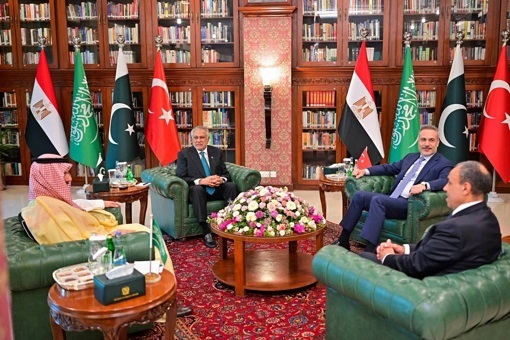
In truth, Egypt, Turkey, Indonesia and even Malaysia wanted to play the role. Egypt is seen as too close with the Gulf Arab states, which are in direct conflict with Iran. Turkey is not only a NATO member, thus complicating its image as a strictly neutral party, but also has strongly criticized Israel. Because the U.S.-Iran conflict is deeply tied to the US-Israel-Iran war, this bias limits Ankara’s credibility with Washington.
While Indonesia has offered to mediate, it lacks neutrality due to its pro-Palestine and anti-Israel position. Iranian officials have urged Indonesia to take a “firm stance in condemning the aggression” of the US and Israel. Likewise, Malaysia has been highly critical of U.S. and Israeli actions against Iran, but closed both eyes when the regime butchered thousands of ordinary Iranians who demonstrated against the Mullahs.
Worse, the U.S. has expressed serious concerns about Iran using Malaysian entities to finance and sell oil to allied groups, which has led to pressure from the U.S. Treasury. Reports suggest Malaysia has been viewed by the U.S. as a “silent enabler” of Iran’s sanction evasion, with studies indicating hundreds of ship-to-ship transfers of Iranian oil in Malaysian waters.

Other Articles That May Interest You …
- The Back-Channel Talks Behind Trump’s U-Turn & Iran’s Denial
- Seizing Iran Islands – How U.S. Marines Plan To Reopen Strait Of Hormuz
- Shutting Hormuz Backfires – Now Trump Wants To Seize Kharg Island
- Ships Pretend To Be Chinese To Cross Strait Of Hormuz
- Energy Security – Why China Can Withstand $100 Oil Prices More Easily
- Strategic Error – How Iran’s Retaliatory Strikes At Gulf States Backfires
- Live By The Sword, Die By The Sword – How Ayatollah Khamenei Was Killed
- Gone In 25 Minutes – How Trump Tricked Tehran Twice Before Obliterated Iran’s 3 Nuclear Sites With MOPs
- Iran’s “Axis Of Resistance” Missing In Action – Why Tehran Became Isolated & Alone In WAR Against Israel
- Paying The Price For Hamas Attacks – How Trump Misled Iran Before Israel Sends 200 Jets To Attack
- Psychological Warfare – How Mossad Cracked Hezbollah Secret Network With Low-Tech Pager & Walkie-Talkie “Walking Bombs”

|
|
March 30th, 2026 by financetwitter
|


|

|

|

|

|

|
















Comments
Add your comment now.
Leave a Reply