



Were there diplomacy talks between the U.S. and Iran – either directly or indirectly – to end the war in the Middle East? Trump proudly said “yes” whilst Tehran said “no”. As strange as it may sound, both Trump and Tehran did not lie. A back-channel diplomacy had indeed occurred, but Iran was not officially and directly involved due to political complications and risk factors if Tehran admits it.
Foreign ministers from Egypt, Turkey, Saudi Arabia and Pakistan gathered before dawn on Thursday (March 19) in Riyadh for talks aimed at finding a diplomatic deal to the war in Iran. But there was one big problem – finding a counterpart in Iran to negotiate with. Earlier that week, Israel killed Iran’s national security chief, Ali Larijani, who had been considered a viable partner who could engage with the West.
Apparently, Egyptian intelligence officials managed to open a channel with Iran’s Islamic Revolutionary Guard Corps (IRGC) – the paramilitary group that protects the Iranian regime and is the country’s most powerful security and political entity – and put forward a proposal to halt hostilities for five days to build confidence for a cease-fire.
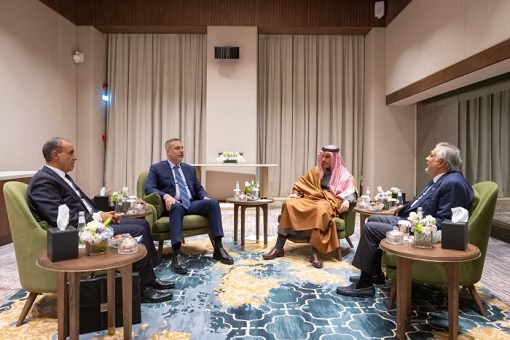
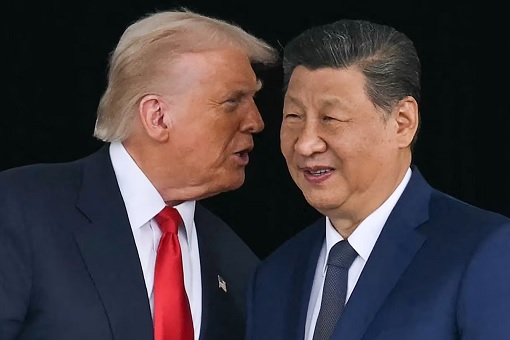
On Saturday night, President Trump, who spent the weekend at his Mar-a-Lago club, gave Iran an ultimatum to reopen the Strait of Hormuz within 48 hours or the U.S. military would “obliterate” the country’s power plants. Two days later, as word of the discussions in Riyadh made its way to the White House, Trump reversed course, embracing diplomacy with Tehran and putting his threat to strike on hold.
Trump’s U-turn on Monday morning followed a series of closed-door discussions – through Middle Eastern intermediaries – that U.S. officials said gave them hope an agreement to settle the conflict was possible. It also reflected a growing desire by Trump and some of his advisers to bring the war to a close as the president faces political and economic fallout from the conflict.
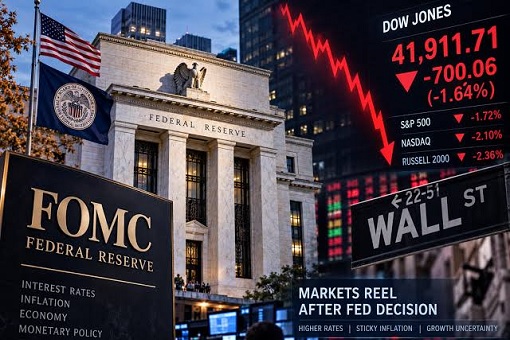
Trump’s announcement that he would postpone for five days strikes on Iranian power plants triggered a stock-market rally, giving the president a small reprieve after weeks of pain on Wall Street. The Dow Jones Industrial Average and S&P 500 posted their biggest one-day gains since early February. Brent Crude, the international benchmark, ended the session down 11%, just below US$100 a barrel – its lowest level since March 11.
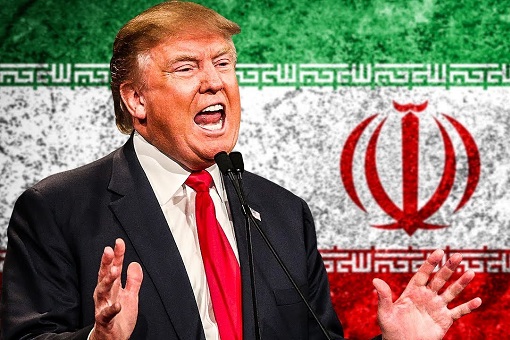
Iran’s foreign ministry initially insisted no talks were held and that Trump had chickened out in the face of the scale of the economic and energy crisis he had single-handedly created. The foreign ministry also accused Trump of trying to lower energy prices – a key metric of Iran’s success in the war – or seeking to buy time to prepare the ground force he needs to take strategic islands in the still-blocked strait of Hormuz.
When asked why Iran was denying talks had happened, the U.S. president said it was possible the country’s internal communications system was failing. Trump refused to identify the name of the “respected leader” with whom he said he had been talking, but said it was not the supreme leader, Mojtaba Khamenei. He added that the mystery leader had been reasonable and so far delivered on what he had been asked.
“These are sensitive diplomatic discussions, and the U.S. will not negotiate through the press,” – said White House press secretary Karoline Leavitt. “This is a fluid situation, and speculation about meetings should not be deemed as final until they are formally announced by the White House.” But Arab mediators privately expressed skepticism that the U.S. and Iran could quickly reach an agreement.
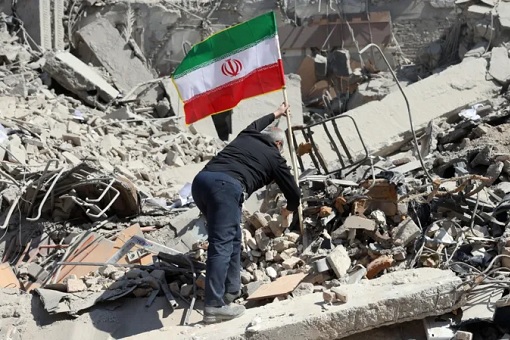
As a condition of any deal to end the war, Iran is demanding that the U.S. and Israel pledge not to launch future attacks. Another impossible demand – Tehran wants compensation for damages sustained during the war. The U.S. still wants what it sought from Iran before the war started – the dismantlement of Tehran’s nuclear work, a suspension of its ballistic-missile program and a stop to its support for proxy militias.
Actually, the backchannel talks between Donald Trump’s special envoy, Steve Witkoff, and the Iranian foreign minister, Abbas Araghchi, were not a secret in the sense that the Egyptian foreign ministry had tweeted that conversations were under way on Sunday, 24 hours before Donald Trump’s late Monday deadline to start blowing up Iran’s energy infrastructure.
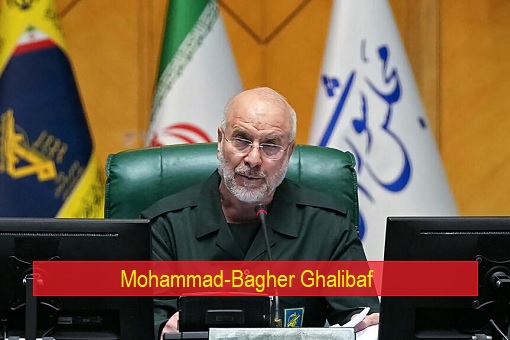
But the mystery lranian leader Trump referred to isn’t Araghchi. That man is Mohammad-Bagher Ghalibaf, Iran’s parliamentary speaker and one of the country’s top remaining officials. In the chaotic Iran’s leadership, speculation grew that foreign minister and chief nuclear negotiator Araghchi had been sidelined in a power struggle that had yet to be revealed.
Thanks to an aggressive and effective Israeli assassination campaign, Iran’s lines of political authority have been in a state of chaos and badly damaged. Among the survivors, Iran’s President Masoud Pezeshkian, a former heart surgeon and a member of the reformist faction, has his strengths as a unifying figure of integrity, but is not fully trusted by the military.
Ali Larijani, the former secretary of the supreme national security council and Iran’s political glue in the past 12 months, had just been buried. The new supreme leader was possibly in a coma, and definitely invisible. That largely left in terms of politics Mohammad Bagher Ghalibaf, the speaker of the parliament, and a staunch supporter of the IRGC.
But Ghalibaf suggests Tehran isn’t yet ready for negotiations with Washington. “Iranian people demand complete and remorseful punishment of the aggressors,” – he wrote in English. There had been no negotiations with the U.S., he asserted, adding that such optimism “is used to manipulate the financial and oil markets and escape the quagmire in which the U.S. and Israel are trapped.”

Ghalibaf, 64 years old, is a hard-line former IRGC commander but at times has positioned himself as a pragmatist, including his terms serving as Tehran’s mayor. But he is also one of the few remaining senior officials who could persuade Iran’s political leadership and hard-liners to accept a deal. Ghalibaf had to act tough and defiant for obvious reasons.
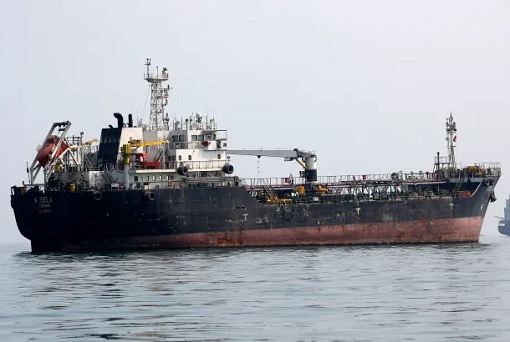
The U.S. sent Iran a 15-point plan to end the war, which centers largely around previous Trump administration demands of Tehran. Crucially, during the back-channel discussions last week, Arab leaders were especially focused on opening the Strait of Hormuz, the narrow waterway through which 20% of the world’s oil exports typically flow, and not about ending the war.
They called for the strait to be overseen by a neutral committee that would allow safe access by all ships. Iran’s Islamic Revolutionary Guard Corp floated the idea that Iran should collect fees from transiting ships, just as Egypt does now with the Suez Canal. However, one of the key elements of the U.S.’s 15-point plan was that the Strait of Hormuz should be jointly controlled by “Trump and the Ayatollah. Whoever the ayatollah is.”
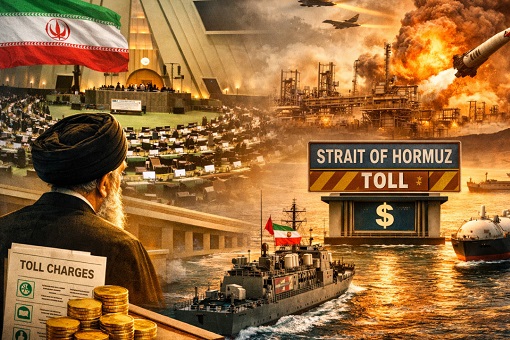
But for Iran to agree to reopen the strait without any concessions, let alone abandoning its right to enrich uranium was already wishful thinking. At the same time, Gulf states objected to the idea of fees, with Saudi Arabia saying the kingdom wouldn’t allow Iran to have the upper hand in operations in the strait. They feared such a deal would entrench Iranian influence over Gulf energy exports for years to come.
Gulf Arab states are also growing alarmed by Trump’s eagerness to do a deal. The leaders of Saudi Arabia and the United Arab Emirates are lobbying Trump to stick with the war until Iran is sufficiently weakened that it won’t pose a threat. The Pentagon has ordered the deployment of about 3,000 soldiers from the Army’s elite 82nd Airborne Division to the Middle East to support operations against Iran.
While messages continued to be exchanged, with Qatar, Oman, France and the U.K. working their back channels, Pakistan offered to host a meeting to mediate peace talks between the U.S. and Iran to end the war. The U.S. could be represented by special envoys Steve Witkoff and Jared Kushner, although there was also a possibility that Vice President JD Vance could come if a deal was close.
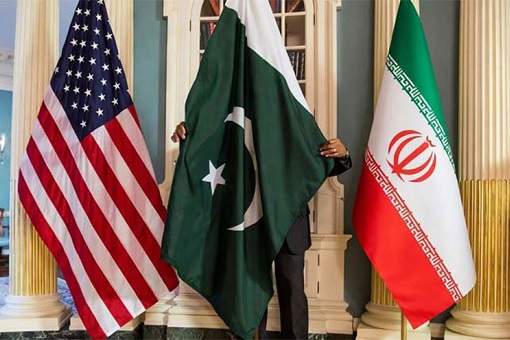
Islamabad is trying to leverage its warm ties with Trump, who hosted its powerful army chief Amir Munir last year at the White House, and its longstanding relationships with Iran and other major countries in the region. Pakistan is home to the world’s largest population of Shia Muslims outside Iran and relies heavily on energy exports from the Persian Gulf, making it a good candidate as a mediator.
For now, Tehran is playing hardball largely because Mohammad Bagher Ghalibaf cannot show a weak leadership, and partly because Iran has to seek as many concessions as possible at the negotiation table. Both Trump and Tehran are playing the game of brinkmanship. Yet, despite Iran’s defiance, the Iranian foreign ministry spokesperson Esmail Baghaei opened up.
The spokesperson said – “Over the past few days, messages arrived through some friendly countries indicating America’s request for negotiations to end the war, which were responded to appropriately and in accordance with the country’s principled positions. Iran’s stance regarding the strait of Hormuz and the conditions for ending the imposed war has not changed.”
Other Articles That May Interest You …
- Seizing Iran Islands – How U.S. Marines Plan To Reopen Strait Of Hormuz
- Shutting Hormuz Backfires – Now Trump Wants To Seize Kharg Island
- Ships Pretend To Be Chinese To Cross Strait Of Hormuz
- Energy Security – Why China Can Withstand $100 Oil Prices More Easily
- Strategic Error – How Iran’s Retaliatory Strikes At Gulf States Backfires
- Live By The Sword, Die By The Sword – How Ayatollah Khamenei Was Killed
- Revolution – How One Man Rallies Iranians To The Street
- Gone In 25 Minutes – How Trump Tricked Tehran Twice Before Obliterated Iran’s 3 Nuclear Sites With MOPs
- Iran’s “Axis Of Resistance” Missing In Action – Why Tehran Became Isolated & Alone In WAR Against Israel
- Paying The Price For Hamas Attacks – How Trump Misled Iran Before Israel Sends 200 Jets To Attack
- Psychological Warfare – How Mossad Cracked Hezbollah Secret Network With Low-Tech Pager & Walkie-Talkie “Walking Bombs”

|
|
March 25th, 2026 by financetwitter
|


|

|

|

|

|

|















Comments
Add your comment now.
Leave a Reply