



The substantial role of central banks in the gold market continues due to their involvement in monetary policy and participation through direct purchases. In 2024, the world’s central banks collectively bought just above 1,045 tonnes of gold. It showed that for the third year in a row, purchases in net terms have surpassed the 1,000 ton mark, which indicates a persistent appetite for gold as a strategic asset in the country’s reserve.
These purchases are made for various reasons, including diversification of foreign exchange, hedging currencies and decreasing dependency on the US dollar. In this case, the emerging market central banks seem to be the most aggressive ones. Poland increased its gold reserves by 89.5 tonnes, Turkey by 74.8 and India by 72.6. They all cited the need to have greater preparedness in the context of financial volatility, geopolitical uncertainties and evolving monetary policy changes.
After a short pause, China’s central bank bought additional gold in November 2024, incrementing its reserves by 5 tonnes. This brought the country’s gold hoard to just about 2,264 tonnes. This policy shift indicates a desire to protect reserves from exposure to dollar and treasury movements, using these assets bolstered by gold’s position as a long-term currency anchor.
These trends emphasise that gold continues to be a key component in the international monetary systems. Central banks broaden their portfolio and respond to changing economic conditions, and these actions have an effect on global markets with regard to pricing expectations, sentiment, demand, and investor activity.
Interest Rates and Their Impact on Gold Prices
Interest rates remain one of the most vital components within the gold market. Differently from equities or fixed-income securities, gold does not yield income. Thus, an increase in interest rates will enhance the opportunity cost of holding gold, leading to a lower demand for a non-interest-bearing asset. On the other hand, gold becomes more attractive when interest rates are low or expected to drop in the future.
In early 2025, expected rate cuts from the Federal Reserve and other major central banks are helping gold reach surplus extremes. It was noted that, due to weakening economic indicators and changing expectations, gold value saw considerable growth around mid-April, where values exceeded $3,357 per ounce. Increased values were noted alongside a shift in monetary policy expectations. The market is already anticipating that the Fed will be more aggressive than expected due to the signs of persisting inflation-controllable growth.
Like any other commodity, Gold is influenced by interest rate policies. Those who trade gold pay close attention to inflation data releases as well as employment and GDP growth figures, as these affect the decisions taken by the central bankers. Furthermore, traders also analyse various policy statements and meeting minutes to understand how “outlook” bias affects policy changes.
Many traders often position themselves on the bullish side, anticipating gold momentum when they foresee rate cuts or falls. However, contrary shifts in policy leaning toward a hawkish stance due to stronger-than-anticipated economic indicators can shift expectations, thus creating volatile corrections within gold markdowns. Consequently, implementing strategies based on shifting policies becomes increasingly important when dealing with gold volatility.
Gold, along with many other commodity prices, is influenced by various factors besides interest rates, including quantitative easing (QE). This strategy aims to boost lending and investment by increasing the money supply through purchasing government bonds and other financial assets held by the central banks. Although the policy is viewed as beneficial in growing the economy, there are often underlying consequences that come into play declining commodity prices, such as gold.
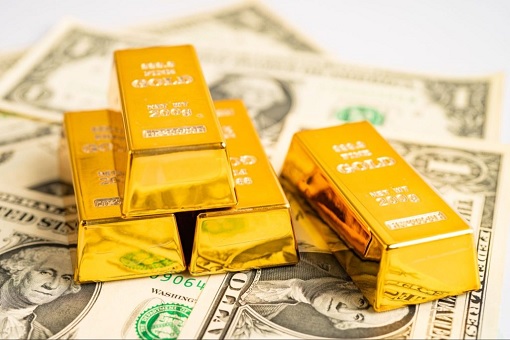
Quantitative Easing and Market Liquidity Effects
An increase in the money supply can trigger the depreciation of fiat currencies, particularly when investors believe that the QE policies would cause inflation in the long run. In this scenario, gold is likely to benefit because it is often considered a safeguard against inflation, rising prices, and devaluation of currencies. The resulting demand, both from institutional and retail investors, gold prices.
In 2024, the impacts of QE were still visible. While some central banks started cutting their rate of asset purchases as part of their tightening cycles, the support, which was previously given economically, remained because of years of aggressive stimulus. This was also true for some economies in Asia and Latin America, which continued to spend because of low anticipated growth. With high inflation concerns, these factors led to Gold being perceived as a better store of value.
This was shown in market activity. In Q1 2025, Gold ETFS had an inflow of more than 220 tonnes, the largest uptake since early 2022. These geopolitical tensions were additional factors that made equities volatile. An increase in left gold is attributed to lower monetary policy and boom-time low interest rates.
The interaction between quantitative easing, expectations of inflation, and the demand for gold is intricate but remarkably straightforward. The gold itself is a hard asset that, along with other tangible assets, benefits from the newly created liquidity due to the increasing expansion of central banks’ balance sheets. This phenomenon adds another level of strategic complexity for traders, especially in turbulent or uncertain macroeconomic conditions.
As discussed above, central bank action constitutes a primary driver of gold trader strategy, determining everything from price direction to market sentiment. Central bank actions such as modifying benchmark interest rates, expanding the balance sheet, or even purchasing gold prominently influence the ecosystem in which traders and other market participants try to navigate.
With heightened scrutiny of central bank statements, central bank economic data, and policy changes, traders and investors are able to better understand how gold may behave in relation to macroeconomic shifts. Whether taking on short-term trades based on technical analysis or shifting positions from defensive to long-term strategic holds, understanding eurodollar prices remains vital in determining how gold moves in today’s financial markets.

|
|
May 2nd, 2025 by financetwitter
|


|

|

|

|

|

|























Comments
Add your comment now.
Leave a Reply