



Never interrupt your enemy when he’s making a mistake – said Napoleon Bonaparte. It’s unclear if he had actually learned and adapted the military strategy from Sun Tzu, a Chinese military general, strategist, philosopher, and writer born in 544 BC. The quote means when an opponent is acting recklessly or making poor decisions, you should not stop them, but rather let their mistakes lead to their own downfall.
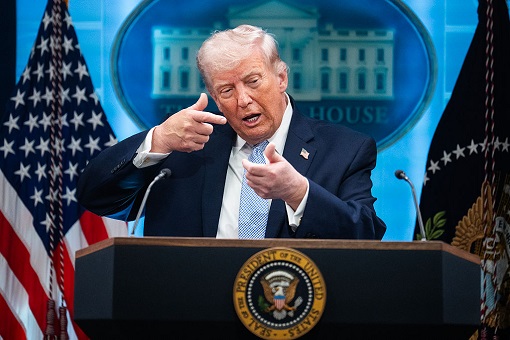
However, on Tuesday (April 7, 2026), Donald Trump said something extremely disturbing he had to be interrupted. At 8:06 a.m. that day, the U.S. President issued the most dramatic ultimatum of his presidency – Unless Iran struck a deal in the next 12 hours, “a whole civilization will die tonight, never to be brought back again.” Not even dictator Adolf Hitler had publicly threatened to wipe out a civilization, although the Nazi did kill six million Jews.
Despite known for spewing bombastic language and has long relied on maximalist threats to get what he wanted, Trump’s 85-word post was startling. It ricocheted from the Oval Office to foreign embassies and stock markets, setting off a countdown to Trump’s 8 p.m. deadline and a frantic global guessing game over what the world’s most powerful man was prepared to unleash.
At 9 a.m., Defense Secretary Pete Hegseth and Joint Chiefs Chairman Gen. Dan Caine initiated their secure video-conference with Adm. Brad Cooper, the commander of U.S. Central Command. Pentagon and military planners pulled out existing target lists that had already been reviewed and vetted by military lawyers. They had been preparing for potential strikes on Iran’s energy infrastructure.
Of course, the list of targets was far fewer than Trump’s threat that “every power plant in Iran will be out of business, burning, exploding.” But each target was legally viable because it had a clear connection to Iran’s military and security forces and wouldn’t harm the civilian population excessively. Overnight, the U.S. military pounded more than 50 military targets on Kharg Island for the second time, but didn’t strike oil infrastructure.
The U.S. president had been warning for days that he would bomb Iran’s bridges, power plants, and other civilian infrastructure, justifying the country’s people “would be willing to suffer that in order to have freedom.” He wrote on Tuesday morning – “WHO KNOWS? We will find out tonight, one of the most important moments in the long and complex history of the World.”
While traders on Wall Street treated the day like other Trump deadlines that have come and gone – a negotiating tactic they largely expected to pass without catastrophe – phones were ringing off the hook in the White House with calls from executives and political allies trying to decipher whether Trump’s threat was a bluff or a prelude to an escalation that might send Iran back to the “Stone Ages”.
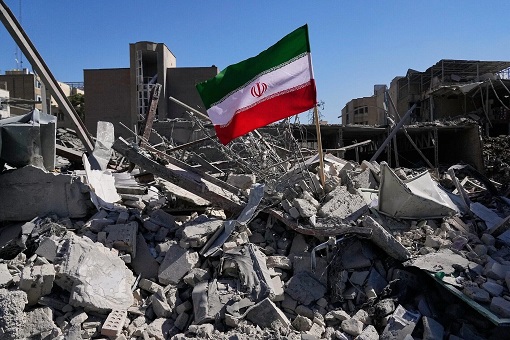
Less than 30 minutes after Trump’s jaw-dropping annihilation threat, Iranian officials told Egypt that Tehran had cut off direct communications with U.S. negotiators. As his threat made the rounds in Iran, many residents prepared for power and gas to go out and debated whether it would be safer to stay in the city or scramble for the countryside.
Not only Trump’s post was so disturbing that some officials inside the Trump administration privately expressed concern about the president’s threat, it had also shocked former Israeli Prime Minister Ehud Olmert, who said – “I want to believe what he meant is we will destroy the regime. I don’t think we can accept any destruction, total or partial, of Iranian civilization.”

Shortly after 3 p.m., Pakistani Prime Minister Shehbaz Sharif publicly called on Trump to extend his ultimatum by two weeks and back a U.S.-Iran cease-fire, while urged Tehran to reopen the Strait of Hormuz for the same period as a goodwill gesture. The president spent most of the afternoon holed up with key aides in the Oval Office, taking calls and listening to pros and cons of the proposal.
Then, the moment arrived. The crude oil prices immediately plunged 16% to below US$95 a barrel about less than ninety minutes before Trump’s deadline – he decided to hold off on his planned strikes, writing in a social-media post that he had agreed to a two-week cease-fire with Iran and would suspend his threatened strikes subject to the immediate reopening of the Strait of Hormuz.
In turn, Iranian Foreign Minister Abbas Araghchi said on social media that Tehran will agree to a ceasefire “if attacks against Iran are halted”, as well as the reopening of the key Strait of Hormuz waterway. Apparently, mediator Pakistan was not the key influencer who had managed to get Tehran to a ceasefire. President Trump publicly said he believed China had persuaded Iran to negotiate.
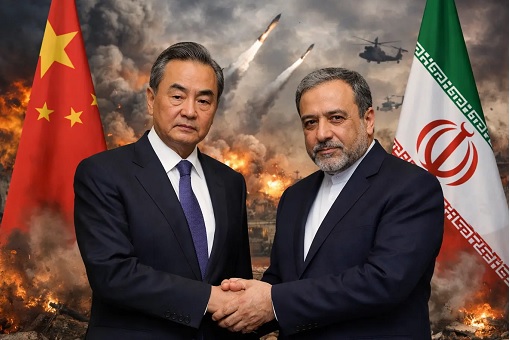
In fact, China directly contacted Iran to persuade Tehran to agree to a temporary ceasefire with the U.S., according to the Associated Press (AP) news agency. Beijing initially tried to act through intermediaries, including Islamabad, Ankara, and Cairo. But as Trump’s deadline approached to wipe out the Iranian civilization, Chinese officials decided to directly contact the Iranian regime to facilitate the ceasefire.
Hours before the ceasefire announcement, China and Russia, another ally of Iran, blocked a resolution at the United Nations Security Council (UNSC) that would have authorised the use of force to reopen the Strait of Hormuz, through which one-fifth of the world’s oil passes. On the same Tuesday, Chinese Foreign Minister Wang Yi held 26 phone calls with Iran, Israel, Russia and Gulf countries.
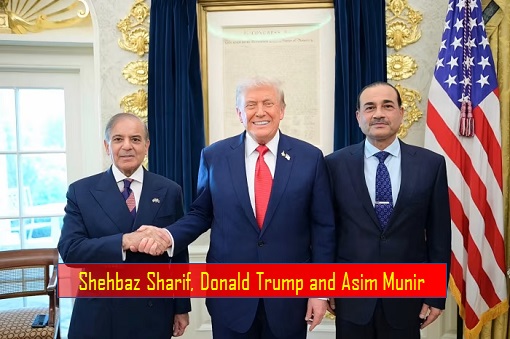
While Trump acknowledged China’s role, it was not mentioned in Trump’s official statement. For obvious reasons, the U.S. president’s ceasefire announcement explicitly and deliberately credited Pakistan, naming Prime Minister Shehbaz Sharif and his “favourite Field Marshal” Asim Munir. By crediting Pakistan, Trump preserves the narrative that the U.S. drove the outcome while using a trusted intermediary, and keeps China’s role invisible.
Recognizing, or worse praising the Chinese role, would position Beijing as a co-equal peace-broker in a war that Washington started. The last thing Trump wants is to legitimize China – and not Pakistan – as the real player behind the mediation. It would dilute Pakistan’s role as a peace-broker, reducing its role to a messenger boy between the U.S. and Iran.
Even if Trump was bluffing about wiping out the entire Iranian civilization, he certainly was not bluffing about blowing up Iranian power plants, oil storage or strategic bridges used by the IRGC (Islamic Revolutionary Guard Corps). While China prefers not to interfere, and quietly watching with popcorn to learn how the U.S. engaged in the Iran conflict, Beijing cannot afford to see its ally lost power permanently.
Make no mistake – China has been in no rush to end the war in Iran. Beijing is watching the United States sink deeper into the Iranian battlefield − pouring in billions, stretching troops thin, losing military assets, and chasing a decisive victory that never comes. It’s a geopolitical windfall for China, weakening America’s grip without Beijing firing a shot. China is also learning how the U.S. forces would act in the event of a Taiwan invasion.
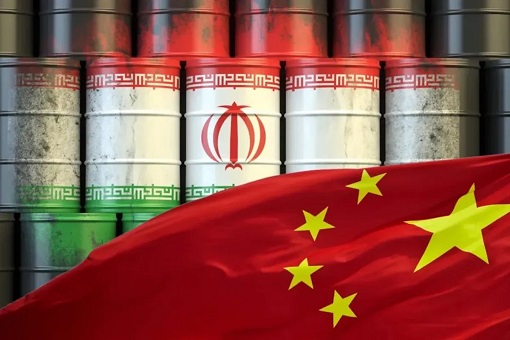
But Iran is a strategic partner. China doesn’t need Iran to win. It just needs Iran to survive, remain estranged from the West, and stay economically dependent on Beijing. A weakened but functioning Iran is still a useful partner. A collapsed Iran, or one reduced to become a puppet of Washington would not benefit Beijing. China knew Trump would pull the trigger to “incrementally” destroy Iran’s infrastructure.
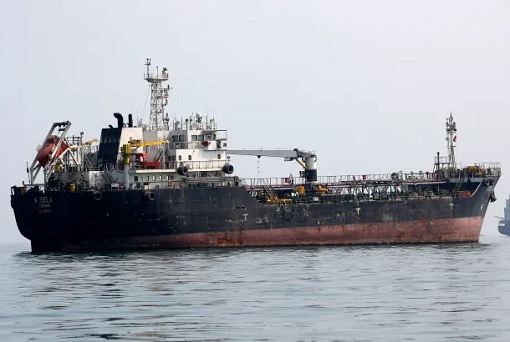
The bigger risk for China was the consequences if Trump pulled the trigger. If a full-blown war broke out, all bets are off and Iranian oil exports would stop entirely. Worse, if the U.S. took control of Hormuz, the shadow fleets could be intercepted. Already, Venezuelan oil exports to China have fallen after the U.S. took control of its reserves following the capture of its president, Nicholas Maduro.
Crucially, Beijing is the main buyer of Iranian oil, most of which passes through the Strait of Hormuz. But at the same time, China also has strong economic ties to the Gulf countries. At the rate Iran is firing missiles and drones at neighbouring Gulf states, those kingdoms would be badly damaged long before the U.S. could dismantle the Iranian regime. That would make the Arabs more depended on the U.S.
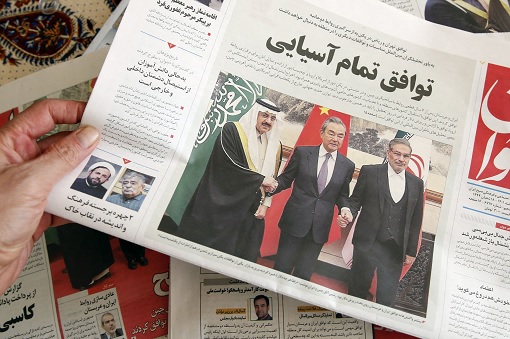
Therefore, a dramatic escalation in the Middle East would directly hurt China’s energy security and economy. Roughly 13% of China’s seaborne oil imports came from Iran, accounting for about 80% of Iran’s exported oil. Any prolonged disruption to shipping would raise import costs, strain economic growth, and intensify pressure on an already fragile economy.
Moreover, an unstable global economy due to prolonged war could severely hit the ability of China, a global manufacturing hub, to sell goods around the world. Clearly, ending the war and unblocking the Strait of Hormuz would serve Chinese interests on multiple fronts. Beijing does not need to take any credit because by helping Pakistan to broker a ceasefire, it also helps promote the Chinese as a trustworthy partner.
China hopes its political weight in influencing Iran could help to push Pakistan to resolve its military escalations with Afghanistan, both nations with which China maintains special relationships. The Pakistan-Afghanistan “open war” exploded following surge in cross-border militant attacks from the Taliban-led government in Afghanistan and retaliatory air strikes by Pakistan.
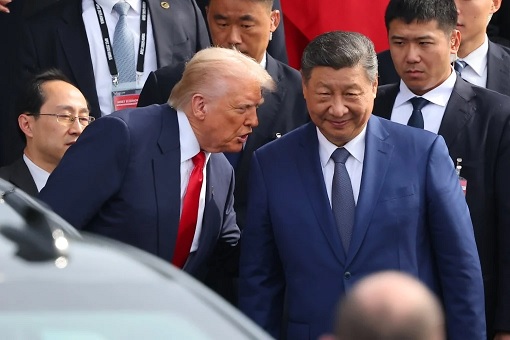
Trump is scheduled to travel to Beijing in mid-May to meet Chinese counterpart Xi Jinping, in a crucial summit between the two superpowers. The trip was originally scheduled for early April, but Trump postponed it due to the Iran war. China’s 11th-hour call to pressure Iran to accept a temporary ceasefire would see the war calm down as Beijing prepares to meet Trump for a more pressing matter – trade war.
Other Articles That May Interest You …
- U.A.E. Readies To Join Iran War – Wants To Force Hormuz Open
- Seizing Iran Islands – How U.S. Marines Plan To Reopen Strait Of Hormuz
- Shutting Hormuz Backfires – Now Trump Wants To Seize Kharg Island
- Ships Pretend To Be Chinese To Cross Strait Of Hormuz
- Energy Security – Why China Can Withstand $100 Oil Prices More Easily
- Strategic Error – How Iran’s Retaliatory Strikes At Gulf States Backfires
- Live By The Sword, Die By The Sword – How Ayatollah Khamenei Was Killed
- Gone In 25 Minutes – How Trump Tricked Tehran Twice Before Obliterated Iran’s 3 Nuclear Sites With MOPs
- Iran’s “Axis Of Resistance” Missing In Action – Why Tehran Became Isolated & Alone In WAR Against Israel
- Paying The Price For Hamas Attacks – How Trump Misled Iran Before Israel Sends 200 Jets To Attack
- Psychological Warfare – How Mossad Cracked Hezbollah Secret Network With Low-Tech Pager & Walkie-Talkie “Walking Bombs”

|
|
April 9th, 2026 by financetwitter
|


|

|

|

|

|

|













Comments
Add your comment now.
Leave a Reply