



In a stunning and shocking strategic move, the United Arab Emirates (UAE) has announced its withdrawal from the Organization of the Petroleum Exporting Countries (OPEC) and OPEC+ effective May 1, 2026. The third-largest producer in OPEC behind Saudi Arabia and Iraq, the tiny kingdom joined OPEC in 1967, seven years after the organization was founded.
While the UAE did not clearly state why it decided to leave OPEC now, the energy ministry said the decision was based on the UAE’s national interest following a comprehensive review of its production policy and capacity. “We reaffirm our appreciation for the efforts of both OPEC and the OPEC+ alliance and wish them success,” – the energy ministry said in a statement.
“This decision follows decades of constructive cooperation. The UAE joined OPEC in 1967 through the Emirate of Abu Dhabi and continued its membership following the formation of the United Arab Emirates in 1971. Throughout this period, the UAE has played an active role in supporting global oil market stability and strengthening dialogue among producing nations,” – read the statement.
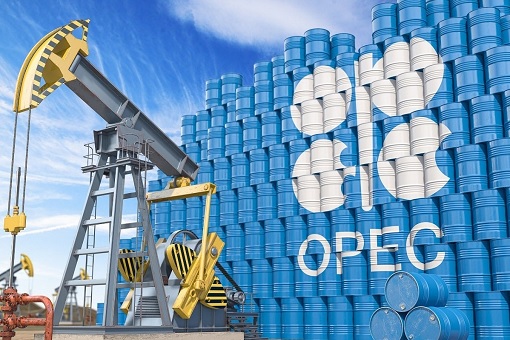
The statement from UAE Energy Minister Suhail Mohamed al-Mazrouei nevertheless offers some hints as to why the country made the decision to quit the cartel – “While near-term volatility, including disruptions in the Arabian Gulf and the Strait of Hormuz, continues to affect supply dynamics, underlying trends point to sustained growth in global energy demand over the medium to long term,”
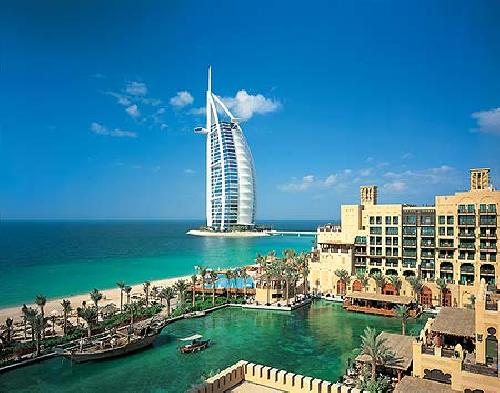
The UAE, which is the Gulf state with the closest relationship to Israel, was targeted with thousands of Iranian ballistic missiles and drones, destroying the appeal of Dubai, a luxury tourism hotspot. Tehran’s blockade of the Strait of Hormuz has also severely constrained the UAE’s ability to export oil, threatening the foundation of its economy. It’s only natural for the kingdom to prioritize its own interests.
Losing the UAE, a longstanding OPEC member, would certainly weaken the group, which has usually sought to show a united front despite internal disagreements over a range of issues from geopolitics to production quotas. But the Gulf state, bordering Saudi Arabia and Oman, has no choice even though its decision would deal a heavy blow to OPEC and its de facto leader, Saudi Arabia.

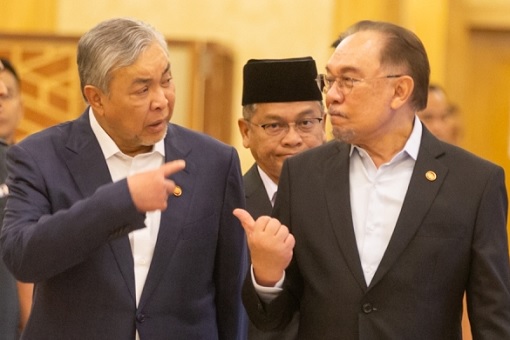
UAE presidential advisor Anwar Gargash said the six-member Gulf Cooperation Council (GCC) – half of whom are also OPEC members – had failed to respond collectively after Iran launched retaliatory attacks against them. “The GCC’s stance was the weakest historically, considering the nature of the attack and the threat it posed to everyone,” – Gargash said.
“I expect this weak stance from the Arab League and I am not surprised by it, but I haven’t expected it from the GCC (Gulf Cooperation Council) and I am surprised by it,” – said Gargash. The UAE’s desperate position is partially due to its reliance on the Strait of Hormuz for oil exports and an unwillingness among the UAE’s elite to see Iran cement itself as a regional power in the Gulf.
But the real frustration came from strict OPEC production quotas and tensions with Saudi Arabia regarding energy strategy and regional influence. The move to leave the oil cartel would allow the UAE to independently increase oil production and pursue long-term economic goals. OPEC sets uniform petroleum policies among its member countries with the mission of maintaining stable global oil markets.
Crucially, leaving OPEC will give the UAE more flexibility in responding to market dynamics and allow it to increase oil production as much as leaders deem appropriate, which could, in theory, reduce the global price of oil. The U.A.E. has production capacity of 4.8 million barrels a day and is currently allowed around 3.4 million barrels a day under OPEC’s quota system.
Once outside the group, it will have both the incentive and the ability to increase production. The UAE national oil company, the Abu Dhabi National Oil Company (ADNOC), had already set a goal of increasing its crude oil production capacity to 5 million barrels per day (up from 2.94 million in 2023) by 2027. It has invested heavily in expanding capacity through ADNOC over the years, and its oil is relatively cheap to produce.
Jorge León, an analyst at Rystad, said – “The UAE withdrawal marks a significant shift for OPEC. Alongside Saudi Arabia, it is one of the few members with meaningful spare capacity – the mechanism through which the group exerts market influence. While near-term effects may be muted given ongoing disruptions in the strait of Hormuz, the longer-term implication is a structurally weaker OPEC.”
The UAE’s exit would take away 13% of OPEC’s production capacity, according to figures by the IEA (International Energy Agency), damaging the organization’s market capabilities. Alongside Saudi Arabia, the UAE is one of the few members with meaningful spare capacity, or the ability through which the group exerts market influence and responds to supply shocks.
OPEC was formed in 1960 by Iraq, Iran, Kuwait, Saudi Arabia, and Venezuela to stabilize prices and sustain development among its member states. The organization has since expanded to 13 members. OPEC cooperates with a group of 11 non-member oil-producing countries such as Russia, Azerbaijan and Malaysia through the OPEC+ framework.
By coordinating how much its 12 members – Saudi Arabia, Iraq, Iran, UAE, Kuwait, Algeria, Libya, Nigeria, Gabon, Equatorial Guinea, Republic of the Congo and Venezuela – pump at any given time, it’s able to influence global energy markets and its decisions can ripple quickly through gasoline prices, inflation and the broader global economy.
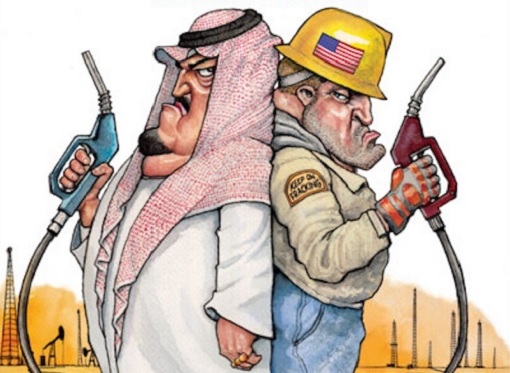
However, analysts have noted OPEC’s weakening grip on the global oil market over time as production outside of member countries has surged. The non-OPEC supply of oil, including that from Brazil and the United States, has grown fast enough to partially offset cuts in the supply from member countries. In fact, the U.S. is the world’s largest oil producer, producing over 21–23 million barrels per day (bpd) in 2024-2025 – roughly 22% of global production.
After the emergence of U.S. shale oil, OPEC’s power to sway markets appeared greatly diminished. It teamed up with Russia, adding market share and pricing power. In recent weeks, OPEC producers have privately complained that attacks by Iran in the Strait of Hormuz have stripped them of their position as the main influence over swings in the global oil market.
Trump has accused OPEC of “ripping off the rest of the world” and argued that many OPEC members receive U.S. military protection “for nothing” while they’re simultaneously “exploiting” the U.S. Global policymakers have long described the group as a cartel manipulating prices. The UAE is not the first country leaving OPEC. Angola officially left OPEC on January 1, 2024, following disputes over reduced oil production quotas.
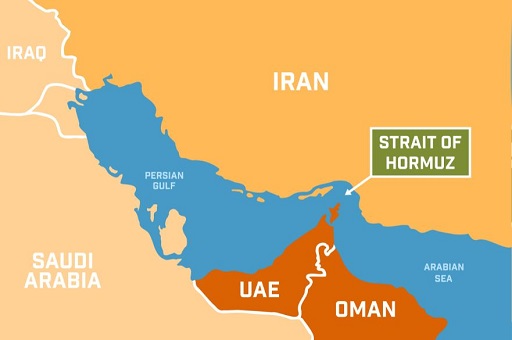
While the war has rattled the UAE’s economic model, which was built on its reputation as an oasis in a dangerous region, the kingdom is in quite a unique and privileged position with the ability to circumvent the blockage in the strait by routing more than half of its oil exports across the country. Its independence also allows the country to invest heavily in overland pipelines designed to bypass the Strait of Hormuz.
Other Articles That May Interest You …
- Iran Ship Failed To Breach Blockade – Now It Could Become Spoils Of War
- Hormuz Opened & Closed – Trump & Tehran Create More Confusion & Contradiction
- Round 2 – US To Blockade Hormuz After Talks Fail
- Wiping Iran Civilization – How & Why China Got Iran To A Ceasefire
- Seizing Iran Islands – How U.S. Marines Plan To Reopen Strait Of Hormuz
- Ships Pretend To Be Chinese To Cross Strait Of Hormuz
- Energy Security – Why China Can Withstand $100 Oil Prices More Easily
- Strategic Error – How Iran’s Retaliatory Strikes At Gulf States Backfires
- Live By The Sword, Die By The Sword – How Ayatollah Khamenei Was Killed
- Iran’s “Axis Of Resistance” Missing In Action – Why Tehran Became Isolated & Alone In WAR Against Israel
- Paying The Price For Hamas Attacks – How Trump Misled Iran Before Israel Sends 200 Jets To Attack

|
|
April 29th, 2026 by financetwitter
|


|

|

|

|

|

|
















Comments
Add your comment now.
Leave a Reply