



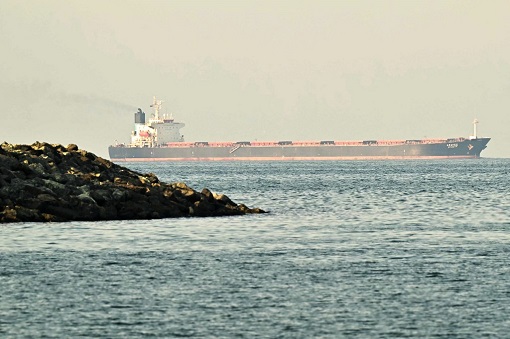
Some 20 ships lining up to cross the Strait of Hormuz were waiting anxiously and desperately to get out of the “strait of hell”, as some crews called it. The vessels had been waiting to enter the Persian Gulf via the Iran-controlled northern Larak corridor, and had agreed to pay Iran’s Islamic Revolutionary Guard Corps (IRGC) imposed tolls of US$2 million each.
No ships apart from ones controlled by the Iranian regime have crossed through the main route at the center of the waterway since the war began on February 28. On Friday (April 17), some 48 days later, as dozens of world leaders were discussing how to reopen the Strait of Hormuz in a videoconference led by France and Britain, President Trump declared on social media that the strait would be fully reopened.
In celebration, Donald Trump also claimed on Friday that Iran had agreed never to close the strategic waterway again, hailing “A GREAT AND BRILLIANT DAY FOR THE WORLD!” On the same day – the first full day of a 10-day ceasefire between Israel and Lebanon – Iran’s foreign minister Abbas Araghchi confirmed that the strait has reopened for commercial vessels.
“In line with the ceasefire in Lebanon, the passage for all commercial vessels through Strait of Hormuz is declared completely open for the remaining period of ceasefire on the coordinated route as already announced by Ports and Maritime Organisation of the Islamic Republic of Iran,” – Araghchi wrote on X. His post has encouraged Trump to claim bigger credits.
For several hours on Friday, through a series of interviews and social-media posts, Trump kept bragging his victories and what he got from Tehran – a full reopening of the Strait of Hormuz, falling oil prices, a promise from Iran that it would give up its supply of enriched uranium, and commitments for Iran to halt its support for proxy terror groups in the region.
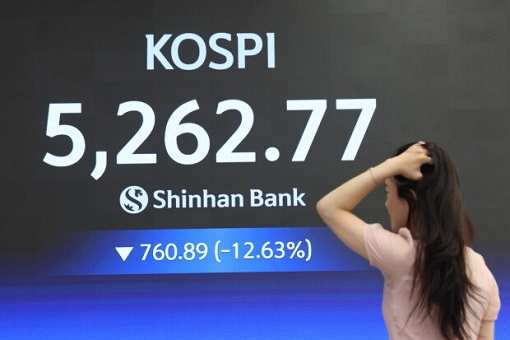
Oil prices plunged 13% and the Dow Jones popped over 1,000 points after after Iran said the Strait of Hormuz would be “completely open”. A barrel of Brent crude fell to US$88. Before the conflict, Brent crude was trading at under US$70 per barrel. It rose above US$100 before reaching a peak of more than US$119 per barrel in March. Then, U-turns began.
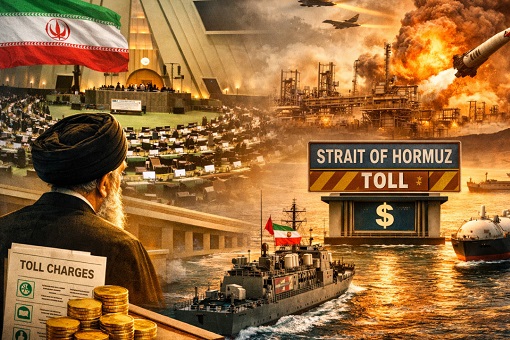
Mahmoud Nabavian, a conservative lawmaker and member of Iran’s negotiating team, rejected Trump’s announcement that the strait was fully open. He said Iran would continue charging tolls for commercial ships going through the strait. Tasnim, an Iranian media outlet aligned with the country’s powerful Islamic Revolutionary Guard Corps, criticised Araghchi for his post.
A follow-up social media post from U.S. President Donald Trump said the blockade of the Strait of Hormuz “will remain in full force” and attacks will resume if no agreement is reached with Iran. That was like a slap in the face on Tehran. It made the IRGC look weak as if it had surrendered the strait after the U.S. blockade. The regime can’t lose face whilst Trump was busy boasting about victories.
Iran’s parliamentary speaker later warned it would shut the strait of Hormuz again if the U.S. blockade continues. Tehran also said the country’s stockpile of enriched uranium would not be transferred “anywhere under any circumstances”, denying Trump’s claim on Friday that the regime had agreed to hand it over to the U.S. The contractions between Trump and Tehran as well as within Iran’s own government have created confusion.
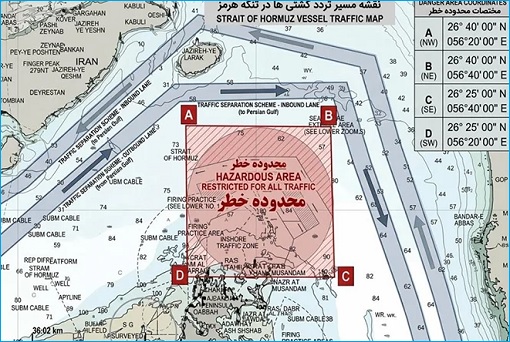
Less than 24 hours after the U.S. and the Iranian government declared it open, Tehran said on Saturday that it has closed again the Strait of Hormuz – blaming Trump’s blockade. Worse, commercial shipping in and around the Strait of Hormuz came under attack for the first time since the ceasefire. The U-turn has forced the 20 ships waiting to cross the strategic waterway to turn back toward Oman.
“The IRGC is vetoing whatever the foreign minister is doing. I mean, they couldn’t be more clear,” – said Yoruk Isik, the head of the ship-tracking consultancy Bosphorus Observer. The divergent messages from Iran’s political and military establishment heightened concerns about the difficulty of opening the strait even through a diplomatic agreement with Iran.
Adding more confusion to the half-baked cease-fire deal was when the U.S. reportedly told Tehran it would give Iran access to US$20 billion in frozen funds held in foreign countries as part of a deal for Iran to give up its stockpile of uranium, only for Trump to deny the proposal in an interview with CBS. A second round of talks between the U.S. and Iran is expected to take place on Monday in Pakistan.
Vice President JD Vance is expected to lead the negotiations again, alongside Trump’s Middle East peace envoy Steve Witkoff and Jared Kushner, the president’s son-in-law. “Only President Trump, not Iran, determines who negotiates on behalf of the United States,” said White House spokeswoman Anna Kelly. “We will not negotiate through the press, and anything not announced by President Trump or the White House should be considered speculation.”
In spite of Trump’s confidence and optimistic statements that “we’re very close to having a deal”, two major sticking points remain in the peace talks – Iran’s stockpile of near-weapons-grade enriched uranium and the future of the Strait of Hormuz. While Iran defends its right to what it says is a civilian nuclear energy programme, Trump says the U.S. would remove Iran’s stockpiles of enriched uranium.
During the first round of talks, the U.S. proposed a 20-year suspension of all Iranian nuclear activity, while Iran suggested a halt of three to five years. There were signs of a compromise that could remove part of the stockpile. But the distrust and suspicion between the U.S. and Iran may see the current conflict drag on for a few more months.
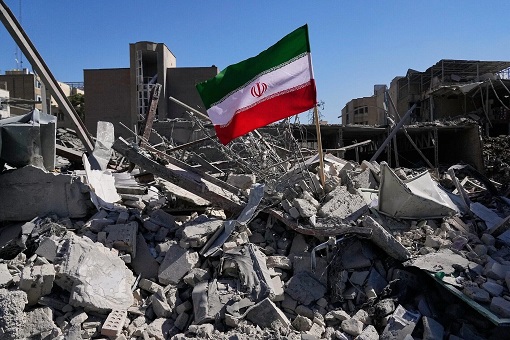
Pakistan deployed fighter jets to escort an Iranian delegation home from talks with the U.S. after concerns were raised they could be targeted during their return. About 20 aircraft, including fighter jets and an airborne warning system, were involved in the operation to provide cover for the Iranian delegation. The delegation was escorted beyond Pakistani airspace.
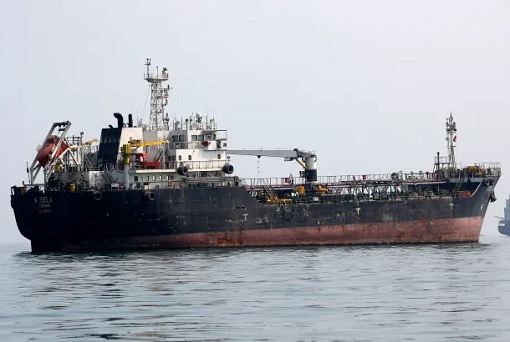
The hostility is expected to only increase now that the U.S. military is preparing in coming days to board Iran-linked oil tankers and seize commercial ships in international water. The U.S. has already turned back 23 ships that have sought to leave Iranian ports as part of a naval blockade of Iranian ports. President Trump is optimistic that the naval blockade will help strike a “peace deal”.
The U.S. Treasury Department revealed it was expanding its list of sanctioned vessels, companies and individuals to intensify pressure on Iran’s illicit oil trade. The newly sanctioned ships and companies are controlled by oil shipping magnate Mohammad Hossein Shamkhani, son of Ali Shamkhani, who was a top security adviser to Ayatollah Ali Khamenei and who was killed along with the Iranian leader.
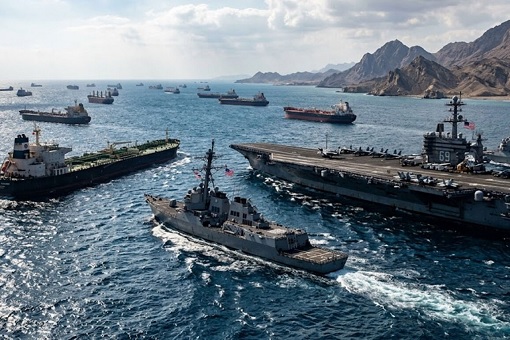
Mark Nevitt, associate professor of law at Emory University Law School, said that the Trump administration appears to be involved in three actions at sea – the blockade near Iran, the potential seizure of dark fleet vessels in other parts of the world and an effort to crack down on contraband, such as missile parts.
Other Articles That May Interest You …
- Panicking – Now Iran Cries Blockade Illegal & Act Of Piracy
- Round 2 – US To Blockade Hormuz After Talks Fail
- Wiping Iran Civilization – How & Why China Got Iran To A Ceasefire
- Seizing Iran Islands – How U.S. Marines Plan To Reopen Strait Of Hormuz
- Ships Pretend To Be Chinese To Cross Strait Of Hormuz
- Energy Security – Why China Can Withstand $100 Oil Prices More Easily
- Strategic Error – How Iran’s Retaliatory Strikes At Gulf States Backfires
- Live By The Sword, Die By The Sword – How Ayatollah Khamenei Was Killed
- Iran’s “Axis Of Resistance” Missing In Action – Why Tehran Became Isolated & Alone In WAR Against Israel
- Paying The Price For Hamas Attacks – How Trump Misled Iran Before Israel Sends 200 Jets To Attack
- Psychological Warfare – How Mossad Cracked Hezbollah Secret Network With Low-Tech Pager & Walkie-Talkie “Walking Bombs”

|
|
April 18th, 2026 by financetwitter
|


|

|

|

|

|

|













Comments
Add your comment now.
Leave a Reply