



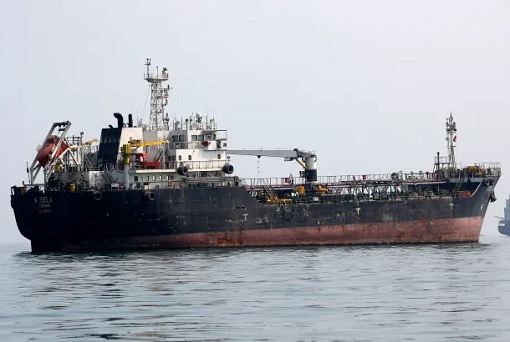
Starting Monday (April 13), 10 a.m. Eastern Time, the U.S. military would block maritime traffic entering and leaving Iranian ports, a move that would prevent roughly two million barrels of Iranian oil a day from entering the world’s markets. While that would obviously further tighten global supply, the strategic move would also hit Iran where it hurts the most – oil revenue.
The fact that U.S. President Donald Trump did not take long after peace talks between the U.S. and Iran collapsed to execute the move shows that the U.S. has been planning the blockade for some time – possibly even before the Iran conflict began on February 28. The Iranian regime had miscalculated if it thought the U.S. was powerless against Tehran’s shutdown of the Strait of Hormuz.
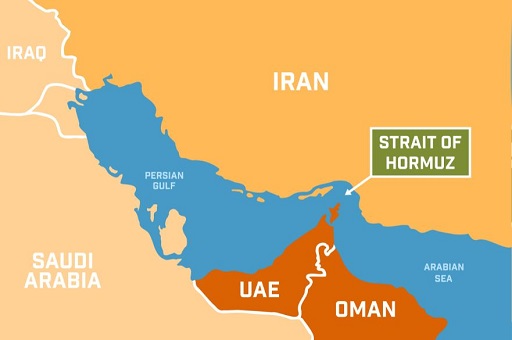
Initially, there was confusion after Trump said the U.S. Navy “will begin the process of blockading any and all ships trying to enter, or leave, the Strait of Hormuz”. Then, the U.S. military’s Central Command clarified that the blockade would apply only to ships going to or from Iran, including all Iranian ports on the Gulf and Gulf of Oman. Vessels transiting the strait to and from “non-Iranian” ports are not affected.
On the surface, the blockade may seem like a crazy idea which only Trump could deploy. But a president who did not care about mocking Pope Leo as “weak on crime and terrible for foreign policy” and further insulting the head of the Catholic Church for thinking it’s OK for Iran to have nuclear weapons is definitely bad news to the Iranian regime.
True, blocking Iranian shipments would disconnect a significant source of oil from the world’s markets. Iran exported 1.84 million barrels per day (bpd) of crude in March alone. It has shipped 1.71 million bpd thus far in April, compared with a full-year average of 1.68 million bpd in 2025. However, 80% to 90% of Iran’s total exported crude oil goes to China.
So, as far as Trump is concerned, crippling Iranian oil exports through the blockade also means denying the commodity to the Chinese. Last month, the U.S. unveiled a sanctions waiver that has enabled other buyers, including India, to import Iranian oil. That creates a perception to Tehran – who was laughing all the way to the bank – that Washington was terrified of high oil prices.
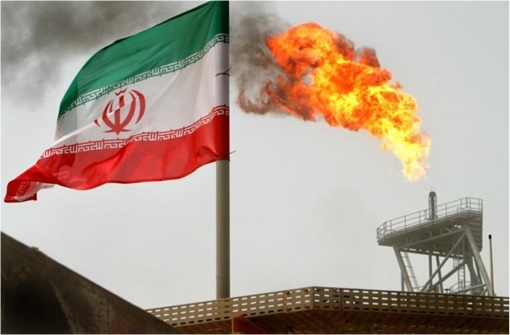
Mr Trump’s naval blockade has certainly shocked – even creates panic – within the so-called powerful Islamic Revolutionary Guard Corps (IRGC). And the signs of panicking were all over Tehran and the bunkers they were hiding. Furious and frustrated, Iran screams that U.S. restrictions on maritime navigation in international waters are “illegal” and constitute an act of “piracy”.
Tehran’s criticism was both hilarious and entertaining – Iran’s own act of piracy in blocking the strait was legal, but not when the U.S. pulls a similar stunt? Suddenly, Iran understands the “international waters”. Heck, terrorist-turned-pirate Iran has even started to illegally collect transit payments by setting tollbooths in an attempt to control an international shipping waterway.
Having tasted its own medicine, Tehran is now crying, whining and bitching about Trump’s blockade. Was it not the arrogant Iranian regime who had previously celebrated its victory, with its new supreme leader Mojtaba Khamenei vowing to keep blocking the Strait of Hormuz? For more than 5 weeks, not only has maritime traffic through the strait been disrupted, but several vessels had even been attacked by Iran.
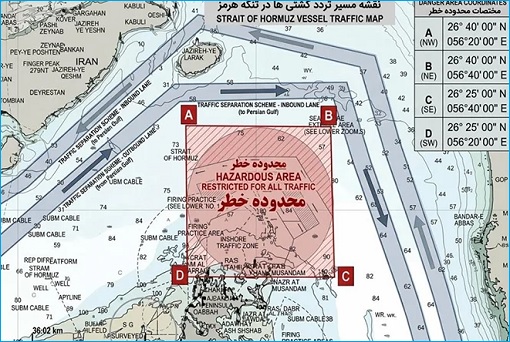
The Iranian regime, which had killed thousands of its own people for peaceful protests over economic hardship, thought it had won the war by weaponizing Hormuz. It thought the U.S. had been checkmated by allowing only Iranian and certain friendly ships to pass the strait. Trump simply turned the tables and took the control of the strait away from Iran by saying everyone cannot enter or exit except those allowed by the U.S.
By targeting shipping linked to Iran, Trump’s “all-or-none” policy is seeking to cut off a key source of revenue for Tehran’s government and military operations. Either the regime unconditionally reopens the strait, or its economy suffers the consequences of the U.S. blockade. It was also a clever strategy to force Tehran back to the negotiating table with a weaker bargaining power.
To a certain extent, the president may also be trying to pressure China into pushing Iran back to the negotiating table. Trump called Iran’s control over the waterway “world extortion”. Amusingly, only after his declaration of a blockade that some countries – including the Chinese, Turkish, European and Asian government – began to talk about “freedom of navigation” and “international waters”.
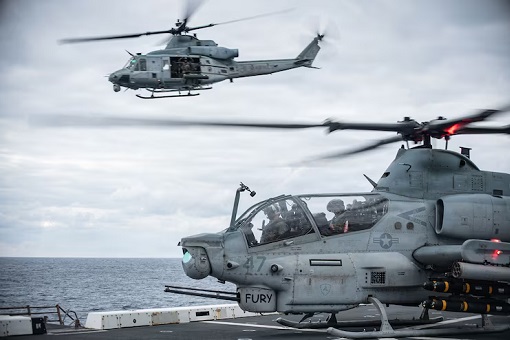
But the blockade was not the only option in the U.S.’s toolbox. Trump and his advisers are looking at resuming limited military strikes in Iran, although he could also resume a full-fledged bombing campaign to pressure Tehran. The regime should realize that the U.S. has yet to bomb its infrastructure such as desalinization plants and electric-generating plants.
U.S. officials have outlined Trump’s red lines in further negotiations with Iran. Those include Iran fully opening the Strait of Hormuz without tolls; ending all uranium enrichment and dismantling enrichment facilities; handing over its highly enriched uranium; accepting a broader security framework that includes regional allies; and ending funding of proxies such as Hezbollah in Lebanon and Yemen’s Houthi rebels.
A successful blockade would choke off Iran’s oil exports, which are the engine of its economy, and demonstrate to U.S. allies and nervous global energy markets that Tehran can’t hold the strait hostage. Around half of Iran’s government revenue comes from oil and gas. “We’ve seen this blockade strategy essentially work on Venezuela, and Trump has an opportunity to replicate it here,” – said Matthew Kroenig, a former Pentagon official.
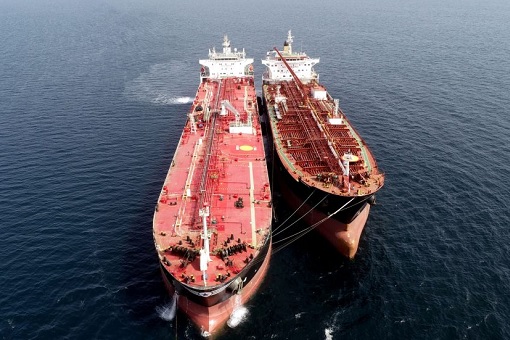
The Iranian government has yet to bow to economic pressure from the U.S., including decades of crippling sanctions. But that does not mean it would remain untouchable with the blockade. The inability to sell oil – through the usual fleet of “dark fleet” of tankers that mask their identity and location to bypass U.S. – would deliver a huge blow to the Iranian regime.
“My advice to the White House folks I’ve spoken to is secure the strait at any cost and immediately as a matter of economic and national and global security,” – said Steve Moore, an economic adviser to Trump. The large delegation Iran sent to Islamabad for peace talks already showed that Tehran was more desperate than they appear to be.
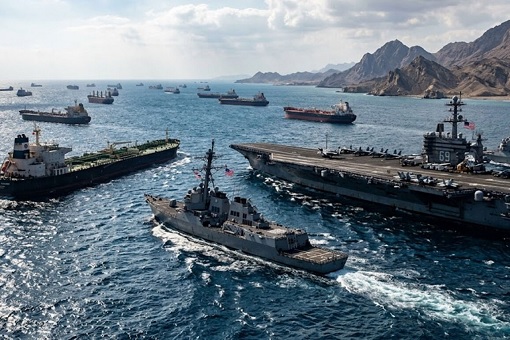
A large U.S. Navy presence outside the Strait of Hormuz will provide the U.S. the ability to choke off traffic and interdict oil tankers. The aircraft carrier USS Abraham Lincoln in the Arabian Sea could serve as a base of operations for boardings. The U.S. had eight guided-missile destroyers in the region at the start of the conflict, and now has ballooned to more than 15 U.S. warships in place to support the operation.
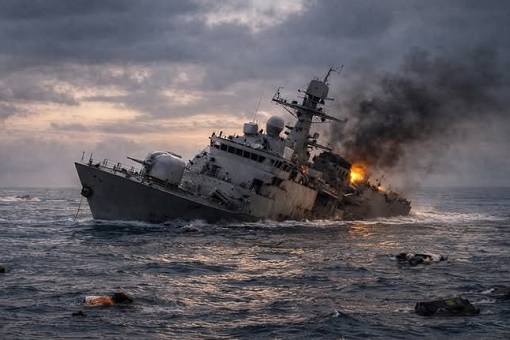
The blockade will take place well off Iran’s coastline, and well beyond the range of most Iranian drones. Sure, the IRGC can try to fire missiles at U.S. warships, or even attempt suicide missions by ramming small fast boats into U.S. vessels. But the U.S. Navy is more than capable of detecting and dealing with such threats, not to mention Iran no longer has a navy.
Additionally, Trump has threatened drug-boat-style strikes on Iranian ships, saying in a social-media post that they would be targeted “using the same system of kill that we use against the drug dealers on boats at Sea.” And in case the slow, massive and cumbersome tankers and container ships refuse to cooperate, the U.S. special forces would simply board and tow them away.
Iran said no port in the Persian Gulf or the Sea of Oman would be safe if its ports are threatened. Iran’s Revolutionary Guard navy said that any approach by military vessels toward the Strait of Hormuz would be treated as a violation of the cease-fire. However, any Iranian attacks on ports of Gulf states could provoke the U.S. to launch ground assaults to seize islands such as the Kharg Island or Abu Musa.

Unless China enters the war, which they won’t, Iran is being systematically defanged and skinned by the military superpower. After each phase of slaughtering, the U.S. would stop and offer an option to talk, and then move on to the next phase of butchering the radical religious extremists. Trump’s counterattack to Tehran’s blockade with a blockade has not been anticipated by the IRGC.
To make matters worse for Tehran, its airspace is already being dominated by the U.S. and has become a playground for Israel, so it is in no position to airlift any essential supplies. Most of Iran’s neighbours are also uncooperative or downright hostile to the Islamic Republic. Israeli jets have preemptively bombed Iranian naval installations in the Caspian Sea, effectively barring Russain seaborne trade with Iran.
Instead of trapping its enemies in Hormuz, the Iranian regime is seriously boxed in. The best part – the blockade effectively destroys Iran’s fantasy of controlling and collecting toll fees from shipping companies. Whether the U.S. blockade is legal is a matter of debate that will preoccupy experts for a long time. What is clear is that a naval blockade against an enemy is a well-established and well-used strategy in warfare, which even China is exploring to take over Taiwan.
Other Articles That May Interest You …
- Round 2 – US To Blockade Hormuz After Talks Fail
- Wiping Iran Civilization – How & Why China Got Iran To A Ceasefire
- Seizing Iran Islands – How U.S. Marines Plan To Reopen Strait Of Hormuz
- Shutting Hormuz Backfires – Now Trump Wants To Seize Kharg Island
- Ships Pretend To Be Chinese To Cross Strait Of Hormuz
- Energy Security – Why China Can Withstand $100 Oil Prices More Easily
- Strategic Error – How Iran’s Retaliatory Strikes At Gulf States Backfires
- Live By The Sword, Die By The Sword – How Ayatollah Khamenei Was Killed
- Iran’s “Axis Of Resistance” Missing In Action – Why Tehran Became Isolated & Alone In WAR Against Israel
- Paying The Price For Hamas Attacks – How Trump Misled Iran Before Israel Sends 200 Jets To Attack
- Psychological Warfare – How Mossad Cracked Hezbollah Secret Network With Low-Tech Pager & Walkie-Talkie “Walking Bombs”

|
|
April 14th, 2026 by financetwitter
|


|

|

|

|

|

|

















Comments
Add your comment now.
Leave a Reply