



Vice President JD Vance flew back to the U.S. early Sunday after peace talks with Iran in Islamabad, Pakistan collapsed. It was not even a negotiation as demands from both sides were simply too outrageous to each other. Nevertheless, the talks were a long shot. U.S. President Donald Trump himself played down the importance of the peace talks, which took place against the backdrop of a fragile cease-fire
However, as the pece talks kicked off, something interesting happened on Saturday (April 11). Two U.S. Navy guided-missile destroyers entered the Strait of Hormuz – the first American warships to transit the strait since the U.S.-Israel offensive in Iran began on February 28. “This was an operation that focused on freedom of navigation through International waters,” – the U.S. official said.
The U.S. military’s Central Command said that the two guided-missile destroyers, the USS Frank E. Peterson and the USS Michael Murphy, “transited the Strait of Hormuz and operated in the Arabian Gulf.” The CENTCOM also said the operation was part of a broader mission “to ensure the strait is fully clear of sea mines previously laid by Iran’s Islamic Revolutionary Guards Corps,”
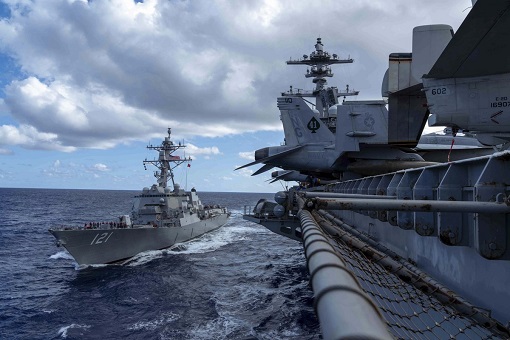
Frank E. Petersen is part of the Abraham Lincoln Carrier Strike Group, while Michael Murphy is an independently-deployed destroyer. “Today, we began the process of establishing a new passage and we will share this safe pathway with the maritime industry soon to encourage the free flow of commerce,” – said CENTCOM commander Admiral Brad Cooper.
To be sure Iran gets the message, CENTCOM said additional U.S. forces, including underwater drones, will join the clearance effort in the coming days. The U.S. clearly wanted to send a message that the re-opening of the strait was non-negotiable in the U.S.-Iran ceasefire deal. And Trump wanted to demonstrate that the Iranian regime has no control over the strait.
President Trump posted on Truth Social on Saturday that the threat that a ship may “bunk” into sea mines was the only thing Iran had to intimidate them from crossing the strait. ‘We’re now starting the process of clearing out the Strait of Hormuz as a favour to countries all over the world, including China, Japan, South Korea, France, Germany, and many others,” – he wrote.
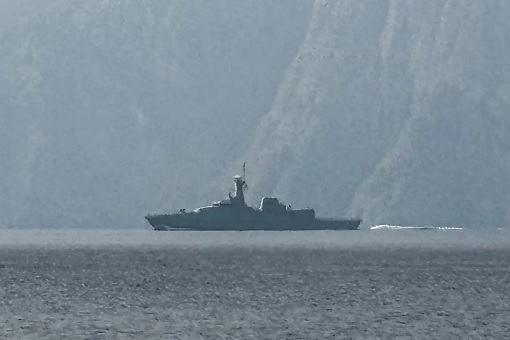
Washington wants to show that not only Tehran’s grip over the Strait of Hormuz can be challenged by sending American warships there, but also that the U.S. is capable of ensuring the safety of ships transiting the strait. This comes after Iran announced on Thursday that there were mines in the strait – a tactic to strike fear in commercial vessels.
As part of a strategy to illegally control the international waterway, Iran has laid out two paths that ships can use to avoid the mines. One of the paths included the Tehran tollbooth, which required ships to sail by Iran’s Larak Island while also contacting the IRGC (Islamic Revolutionary Guards Corps) to provide documentation and, in some cases, payment.
This week, two Japan-based Avenger-class minesweepers were dispatched toward U.S. Central Command. USS Pioneer (MCM-9) and USS Chief (MCM-14) came into port in Singapore after transiting the South China Sea. Transits through the strait have continued to trickle despite the two-week ceasefire between the U.S. and Iran, and Trump was not impressed.
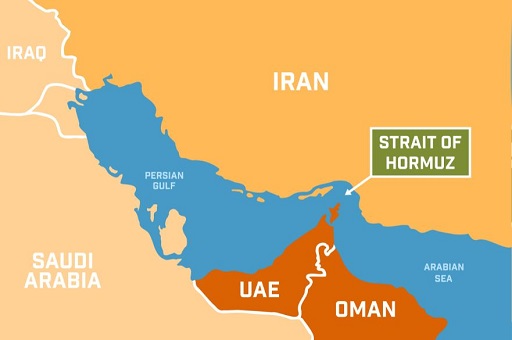
However, Iran “strongly rejected” Washington’s claims that U.S. vessels entered the strait. Admitting that the enemy warships had successfully crossed without any military retaliation from the so-called powerful IRGC would be a humiliation. At the same time, if Tehran starts striking the American warships, it would provoke the military superpower to retaliate with a force the regime can’t handle.
The fragile ceasefire was just an excuse for the U.S. Navy to buy some time to restock its depleted weapons arsenals. President Trump revealed that while the war is paused, the military is staying in place to “be loading up with supplies of all kinds” during the peace talks. Officials have said U.S. joint forces struck more than 13,000 targets before the ceasefire, sinking more than 90% of Iran’s regular naval fleet.
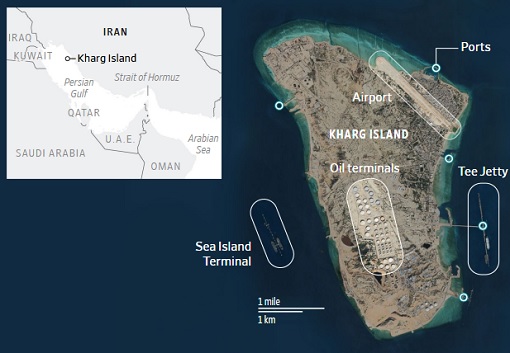
Round-2 of the conflict could see a potential invasion by American troops on strategic Iranian positions such as the Kharg Island, a key oil hub responsible for 90% of Iran’s oil exports. The U.S. could also take over Abu Musa that acts as a cornerstone of Iran’s naval strategy to control the Strait of Hormuz – serves as a base for IRGC missiles, drones, and fast-attack craft.
There are many ways to skin a cat. After peace talks with Iran collapsed, President Trump said the U.S. Navy would begin blockading “any and all ships trying to enter or leave the Strait of Hormuz,” The Commander-in-Chief said – “I have also instructed our Navy to seek and interdict every vessel in International Waters that has paid a toll to Iran. No one who pays an illegal toll will have safe passage on the high seas,”
Yes, taking a page from Iran’s playbook, Trump is threatening to close off the Strait of Hormuz – the same way Iran closed the strait to oil tanker traffic, causing severe economic damage to some countries that rely on Middle Eastern crude. So why would Trump want to blockade the strait that he wants reopened?
The strait isn’t technically closed – Iran has been gradually allowing some tankers through in exchange for a toll of up to US$2 million per ship. Crucially, Iran has been allowing its own oil to pass in and out of the region throughout the war: Iran had managed to export an average of 1.85 million barrels of crude a day through March – about 100,000 barrels a day more than in the previous three months.
By closing off the strait, Trump would cut off a key source of financing for Iran’s government and military operations. To prevent oil prices from skyrocketing during the conflict, the U.S. Navy has allowed Iranian tankers to pass through the region. In fact, the United States in March granted a temporary license for Iran to sell oil that had been sitting afloat on tankers.
The license allowed Iran to sell its sanctioned oil to help finance its war against the U.S. and its allies. And Iran was profiting handsomely off its sales, selling its oil for a premium of several dollars above the price of Brent crude, the international benchmark – earning approximately US$139 million per day from oil exports, driven by high export volumes to China.
With Iran’s refusal to give up its pursuit of nuclear weapons, Trump said that his eventual goal was to clear the strait of mines and reopen it to all shipping, but that in the meantime Iran must not be allowed to profit from its control of the waterway. In a Fox News interview, Trump threatened to impose a 50% tariff on Chinese imports if Beijing tries to help the Iranian military.
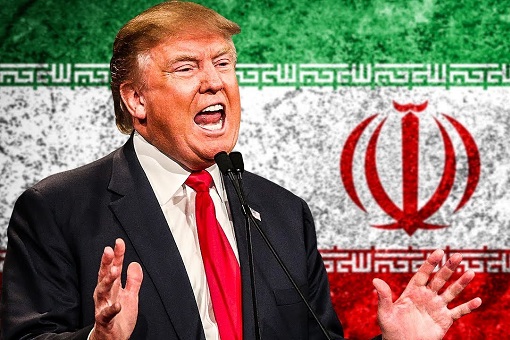
After Trump’s announcement of a blockade, which is a declaration of war, and a warning that any Iranians who attack U.S. vessels or other peaceful ships “will be BLOWN TO HELL!”, Iran’s Islamic Revolutionary Guard Corps Navy said “any miscalculation or hostile move” will trap the U.S. “in the Strait in deadly whirlpools,”
Other Articles That May Interest You …
- Wiping Iran Civilization – How & Why China Got Iran To A Ceasefire
- U.A.E. Readies To Join Iran War – Wants To Force Hormuz Open
- Seizing Iran Islands – How U.S. Marines Plan To Reopen Strait Of Hormuz
- Shutting Hormuz Backfires – Now Trump Wants To Seize Kharg Island
- Ships Pretend To Be Chinese To Cross Strait Of Hormuz
- Energy Security – Why China Can Withstand $100 Oil Prices More Easily
- Strategic Error – How Iran’s Retaliatory Strikes At Gulf States Backfires
- Live By The Sword, Die By The Sword – How Ayatollah Khamenei Was Killed
- Iran’s “Axis Of Resistance” Missing In Action – Why Tehran Became Isolated & Alone In WAR Against Israel
- Paying The Price For Hamas Attacks – How Trump Misled Iran Before Israel Sends 200 Jets To Attack
- Psychological Warfare – How Mossad Cracked Hezbollah Secret Network With Low-Tech Pager & Walkie-Talkie “Walking Bombs”

|
|
April 12th, 2026 by financetwitter
|


|

|

|

|

|

|




















Comments
Add your comment now.
Leave a Reply