



War has imposed a heavy cost on Iran’s economy – more than a million people jobless, skyrocketing food prices, increasingly worthless currency and a prolonged internet shutdown that has crippled online businesses. The question is how much more pain Iran’s leaders, whoever are in charge now, are willing to tolerate as they try to negotiate a favourable end to the war.
Talks between the United States and Iran have stalled as both are playing a game of brinkmanship. American officials are betting that Iran will soon crack because of the deepening economic crisis. The Iranian regime, on the other hand, is betting the U.S. will crack first and end its blockade of Iranian ports to calm global markets and bring down American gasoline prices.
At the center of the game of chicken is the continued closure of the Strait of Hormuz, the narrow channel for roughly a fifth of the world’s oil and liquefied natural gas (LNG). Iran closed the strait at the early stage of the conflict, effectively using the waterway to hold the world economy hostage. Later, the U.S. responded with a naval blockade of its own, dealing a devastating blow to Iran’s already-battered economy.
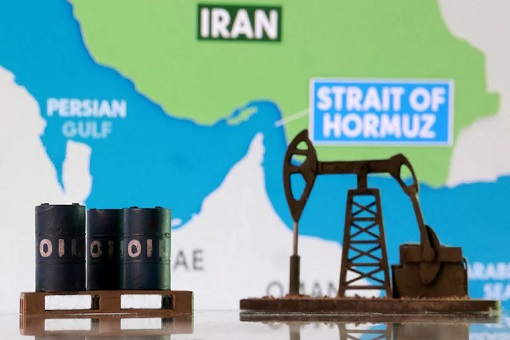
Initially, Iran thought it had found the “holy grail” when it brought the entire planet to its knees by weaponizing the Strait of Hormuz. Tehran not only continued to ship its own oil and determined who can or cannot cross the strait, but also creatively monetized the strait by slapping toll charges on ships passing through – until Trump slapped the U.S. blockade on Iran’s blockade.
Isolated and unable to sell oil, Iran could end up worse than North Korea if the U.S. blockade continues. At least, Kim Jong-Un is alive, and North Korea can still do business with China, Russia and other countries, though its trade is severely restricted by international sanctions due to its nuclear program. But Iran is being blocked completely from trade and commerce.
The war has thrown around one million Iranian people out of work directly and another million indirectly. The cost of living has skyrocketed, with the annual inflation rate reaching 67% in the month through mid-April from the same period a year earlier. The subsidized price of red meat has gone up to around US$3.60 a pound, beyond the reach of most Iranians whose minimum wage is around US$130 a month.
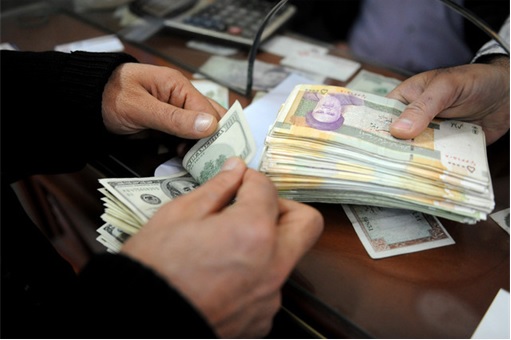
Iran’s national currency on Wednesday hit a record low of 1.8 million rial to the dollar. Businesses across the country – from manufacturers to retailers – are closing. The lack of steel and other raw materials is hampering production in various industries. Electronic goods, which are mostly imported, are in short supply and expensive.
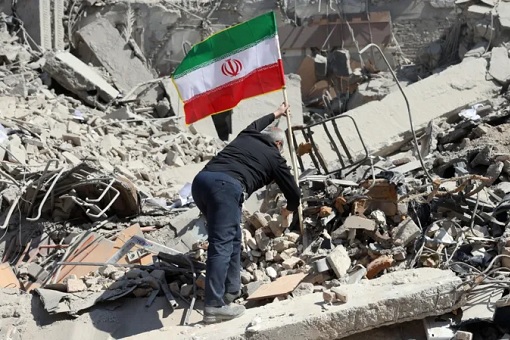
Worse, the bombing campaign by Israel and the U.S. caused extensive physical damage to roads, ports and residential buildings. It also hit key industries such as steel-making and petrochemical factories. Iranian state media estimates that postwar reconstruction could cost around US$270 billion, a crippling amount for a country with GDP (annual gross domestic product) last year of US$341 billion.
Before the blockade, most of Iran’s oil exports and most of its imports – from food to pharmaceuticals to raw materials – transited through the Strait of Hormuz. Now, Iran is struggling to ship oil and other commodities that generate most of its revenue. As recently as March, Iran exported 1.85 million barrels of crude oil a day, worth US$191 million at international prices.
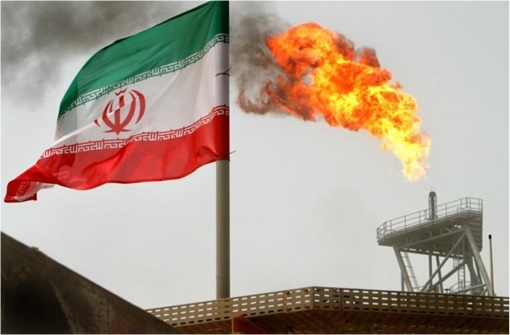
Instead of pussyfooting, Iran is pushing for a quick reopening of the Strait of Hormuz, an indication of how vital it is to its economy. Tehran has presented mediators with an offer to stop its attacks in the strait in exchange for a full end to the war and a lifting of the U.S. blockade of Iranian ports. At the same time, it wants to postpone discussions about Iran’s nuclear program. But it fails to fool Trump.
Seeing the economic pain due to the U.S. blockade, President Donald Trump has instructed aides to prepare for an extended blockade of Iran. In recent meetings, including a Monday discussion in the Situation Room, Trump decided to continue squeezing Iran’s economy and oil exports by preventing shipping to and from its ports. This strategy is more effective and less risky than resume bombing.
Iran’s three-step offer to reopen the Strait of Hormuz and save nuclear talks for the final phase were not only an insult to Trump’s intelligence, but also showed Tehran was not negotiating in good faith. A senior U.S. official said the blockade is demonstrably crushing Iran’s economy – especially its inability to sell oil – and sparked fresh outreach by the regime to Washington.
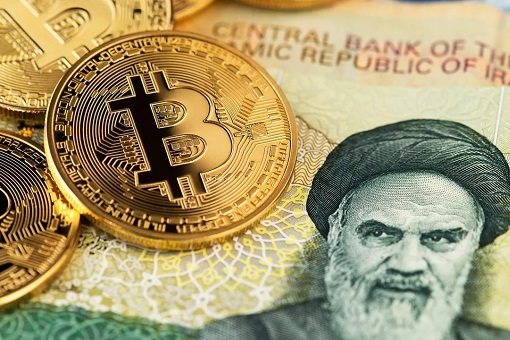
To make matters worse for Iran, the U.S. Treasury Department has frozen nearly US$500 million in cryptocurrency tied to Iran and is ramping up efforts to choke off the regime’s access to global revenue streams as part of “Operation Economic Fury” – a campaign aimed at crippling Tehran’s financial lifelines by seizing Iranian assets, freezing bank accounts and pressuring foreign governments to cut ties with the nation.
The administration has signaled it is prepared to expand sanctions on foreign entities and financial institutions accused of facilitating Iran’s illicit trade, including airlines, shipping networks and financial institutions. Officials also flagged independent “teapot” refineries in China, particularly in Shandong Province, as ongoing buyers of Iranian crude oil, raising the risk of further enforcement actions.
Trump even brags that Iran has told him the country is in a “state of collapse” and wants the U.S. to open the Strait of Hormuz “as soon as possible” while they try to “figure out their leadership situation.” If the message was true, it came after the U.S. president cancelled a planned trip by his son-in-law Jared Kushner and special envoy Steve Witkoff to Islamabad, Pakistan on April 25.

Iran has a huge problem that cannot be hidden anymore. It is rapidly running out of space to store its oil as Trump continues his naval blockade in the Strait of Hormuz – which could lead to “irreversible” damage to the regime’s biggest industry and lifeblood of its economy. Kharg Island, Iran’s primary oil export terminal, is soon nearing storage capacity, which will force the regime to reduce oil production.
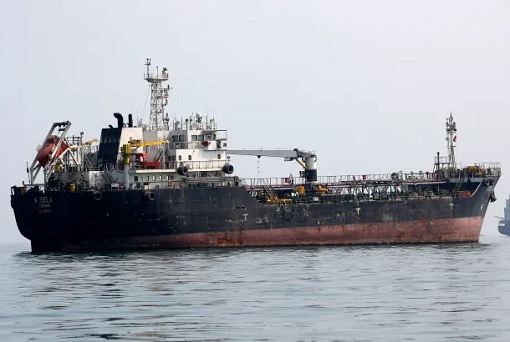
Tehran has repeatedly tried to push its ships through the US naval blockade, but its ships are routinely intercepted. With nowhere for crude tankers to go thanks to the US blockade around the Gulf of Oman, the regime is using the vessels as floating storage. Heck, it is even trying to ship crude by rail to China – a desperate step aimed at delaying an infrastructure crisis and blunting Washington’s leverage.
Rail infrastructure links Tehran to the Chinese cities of Yiwu and Xi’an. But the trip, while generally shorter than ship voyages, can still take weeks. Also, rail isn’t as cost-effective as seaborne tankers – especially for the so-called teapot refineries in northeastern China, the main buyers of Iranian crude. That makes the rail push less a solution than a signal of distress in the system.
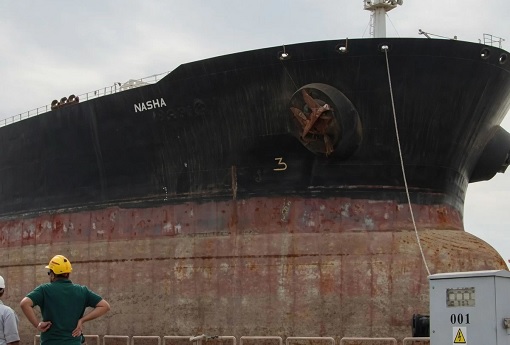
The situation was so bad that Iran has revived its retired ships as “junk storage”, such as Nasha, a 29-year-old Iranian supertanker which had suddenly appeared at Kharg Island after years off the radar. The Islamic Republic is scrambling against time before Iran hits “tank tops” – industry parlance for running out of room to store the crude it pumps.
A temporary halt to bombing does not mean the war has stopped. The war between the U.S. and Iran has turned into a race to see whether Tehran’s oil industry or global energy consumers crack first. Every barrel that can’t leave the country through normal export channels must go somewhere – into a tank, onto a ship, into an improvised storage site, or remain underground.
Geologically, Iranian oil wells, often located in mature fields, require constant pressure. Therefore, Iran cannot easily shut down oil production due to a lack of storage capacity because abruptly stopping oil wells causes “irreversible” geological damage, such as water encroachment and reservoir pressure loss, which can permanently damage field productivity.
Currently, Iran is engaged in firefighting. To contain the economic fallout, the government has increased the minimum wage and raised the salaries of government employees and continued to subsidize the price of bread, fuel and other essential goods. It is also giving cash handouts to the poor and issuing coupons for the purchase of rice, chicken, cooking oil and other goods.
Iran understood that a regime that slaughtered its own citizens to silence protests isn’t popular. So, to further soften the economic blow for regular people, strategic reserves of household staples were used. The government has appealed to Iranians to do their part by limiting their consumption of water, electricity and gas. Tehran residents were encouraged to drive less and use public transportation instead.
To bypass the U.S. blockade, the Iranian government is using rail and road connections with Turkey, Armenia and Azerbaijan as well as the Caspian Sea to the north to import goods. At least 11 vessels loaded with grain, corn and sunflower oil have arrived in Iran’s Caspian ports since the U.S. blockade started. As the blockade bites, Iran might go ballistic and resume its attacks on regional energy production.
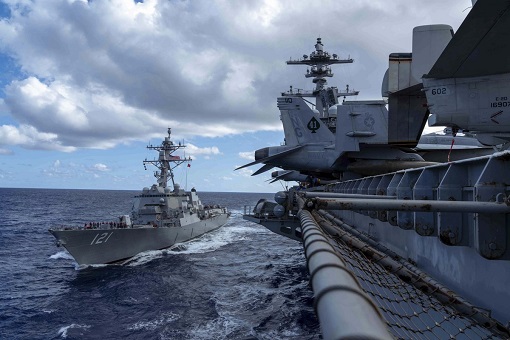
Donald Trump’s next move is to do nothing but wait and watch, while maintaining the U.S. blockade. Even if the U.S. wanted to talk, there’s another complication – the Iranian negotiators sent to talk aren’t the decision makers. They would go back to negotiating with other Iranians – hardliners hiding in bunkers – to figure out what they can agree to, what they can offer, and what they’re willing to do.
Other Articles That May Interest You …
- UAE Leaving OPEC – Reasons Why This Kingdom Quits Oil Cartel
- Iran Ship Failed To Breach Blockade – Now It Could Become Spoils Of War
- Hormuz Opened & Closed – Trump & Tehran Create More Confusion & Contradiction
- Round 2 – US To Blockade Hormuz After Talks Fail
- Wiping Iran Civilization – How & Why China Got Iran To A Ceasefire
- Seizing Iran Islands – How U.S. Marines Plan To Reopen Strait Of Hormuz
- Ships Pretend To Be Chinese To Cross Strait Of Hormuz
- Energy Security – Why China Can Withstand $100 Oil Prices More Easily
- Live By The Sword, Die By The Sword – How Ayatollah Khamenei Was Killed
- Iran’s “Axis Of Resistance” Missing In Action – Why Tehran Became Isolated & Alone In WAR Against Israel
- Paying The Price For Hamas Attacks – How Trump Misled Iran Before Israel Sends 200 Jets To Attack

|
|
April 30th, 2026 by financetwitter
|


|

|

|

|

|

|



















Comments
Add your comment now.
Leave a Reply