



Donald Trump hails “historic” deal for the U.S. to control 65 billion barrels of Venezuela’s oil, which critics slammed as a deal made at “gunpoint”. Of course, the U.S. has denied that the energy deal, which the U.S. president bragged as “the biggest oil deal in world history”, is an example of Washington’s “heavy-handed” attempt to “take” Venezuelan oil in violation of the South American country’s constitution.
But it’s not hard to see how Trump’s deal with Venezuela’s unelected interim president, Delcy Rodríguez, “looks less like a normal commercial transaction than it does the famous scene of U.S. businessmen meeting with the Cuban strongman in The Godfather Part II”. Trump warned Rodríguez, who was Maduro’s vice-president, she would face an even worse fate if she did not toe the U.S.
There’s a reason why American demonstrators have frequently used “Emperor” and “King” metaphors to criticize President Donald Trump’s exercise of power, most prominently during nationwide “No Kings” rallies. While they depicted Trump as an exposed or absolute ruler, activists argue that his style of governance challenges traditional democratic checks and balances.
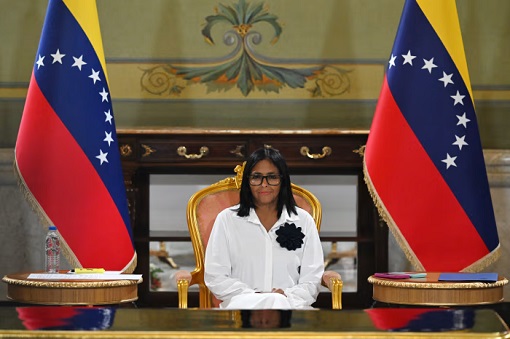
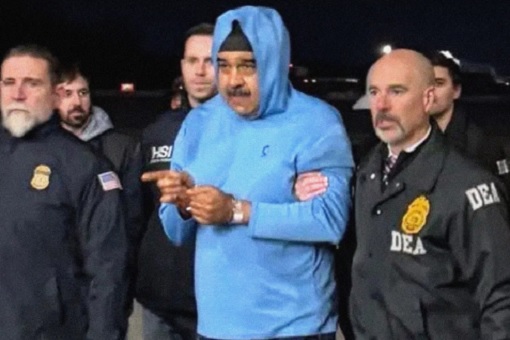
Delcy Rodríguez was installed as interim president on 5 January, two days after the president, Nicolás Maduro, was abducted by U.S. special forces during an “invasion” on Caracas. As Trump’s new puppet, Rodríguez claimed Trump’s oil deal had “endless” benefits and would help produce more than US$209 billion in revenues that could be used to improve healthcare and education.
A few months after capturing Venezuela’s leader, President Trump joked about making it the 51st state, the same way he threatened to make Canada the “51st state” of America since returning to office. While Trump’s desire to annex Canada isn’t likely to happen, the POTUS has already made his move on Venezuela – annexing the country’s oil through his puppet.
Venezuela didn’t end up as American’s 51st state, it has become like a vassal, or protectorate, or a colony. Call it whatever you like, but it isn’t sovereign. Its interim president, Delcy Rodríguez, was installed by the Americans and serves at their pleasure. American troops come and go at will. Its oil revenue flows through the U.S. Treasury.
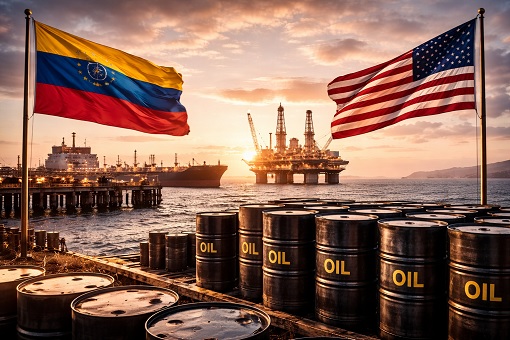
And last week’s declaration by Mr Trump that the U.S. had taken control of a sizable chunk of its oil reserves at zero cost demonstrates the most extreme manifestation of Trump’s “Donroe” doctrine. Under that reformulation of the 1823 Monroe Doctrine – a United States foreign policy that opposes European colonialism and foreign interference in the Western Hemisphere – the U.S. seeks dominance of the Western Hemisphere.
Trump has intervened in Argentina’s markets to help an ally while meddling in the elections of Brazil and Colombia in hopes of defeating adversaries. In Venezuela, Trump is prioritizing control of oil over the restoration of democracy. A democratic transition or fresh presidential elections isn’t on Trump’s agenda. Washington’s goal in colonizing an oil-rich country has been achieved.
Trump’s treatment of Venezuela helps explain why Canada broke off trade talks with the U.S. Yet, American officials seem puzzled that Prime Minister Mark Carney would risk trade war given the disproportionate cost Canada is likely to bear. “He’s not doing what’s best for the Canadian people,” Treasury Secretary Scott Bessent declared on Monday.
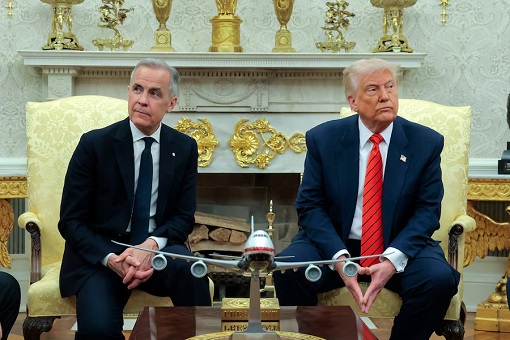
For Carney, it isn’t about economic cost, but sovereignty. “No Canadian leader wants to be the Delcy Rodríguez of the North,” – Chrystia Freeland, Canada’s former deputy prime minister, told CNBC last week. Since World War II, the U.S. has pursued trade liberalization as a way to generate mutual benefit and strengthen ties with allies. In that spirit, Canada in the 1980s took what it called a “leap of faith” and negotiated a free-trade deal with the U.S.
President Ronald Reagan described the resulting pact as a “model for the future of this country and the world.” A few years later, Mexico joined. The North American Free Trade Agreement (NAFTA) was followed by numerous new bilateral pacts slashing trade barriers, including with Colombia, Chile, Peru, and the Dominican Republic, as well as Central America.
However, when Trump came to office in 2017, he set out to reverse the free-trade tide. His trade representative, Robert Lighthizer, was anti-free trade and pro-tariff. But he also knew his counterparts had to be able to sell a deal politically back home. The resulting U.S.-Mexico-Canada Agreement, which replaced Nafta, and deals with Japan and South Korea favored the U.S., but were nonetheless embraced by its partners.
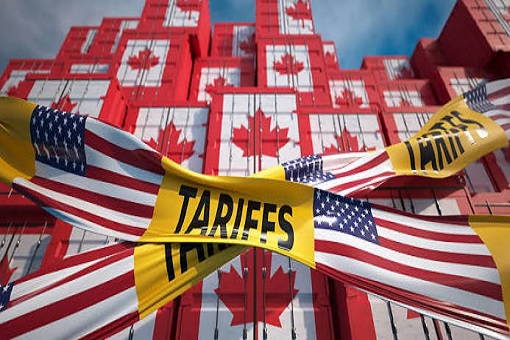
In his second term Trump’s approach was completely different. Not only did he hit almost everyone with steep tariffs, he regularly linked the levies to political or territorial goals. He threatened Colombia with tariffs for refusing to take deportees, Brazil for prosecuting his ally, former President Jair Bolsonaro, and Europe to make Denmark hand over Greenland. He even said Canada could avoid tariffs by becoming the 51st state.
The U.S., of course, has a long history of interfering in Latin America. Still, Venezuelan-born Harvard economist Ricardo Hausmann says this was often to establish free market institutions and keep out the Soviet Union. Trump’s demands on Venezuela lack any such “moral compass,” he said, and are simply “an illegitimate power grab.” (The U.S. accused Venezuelan dictator Nicolás Maduro for drug trafficking.)
Canada’s stance in trade negotiations was heavily shaped by the threats against its sovereignty from Trump and his allies. In January, Bessent appeared to express support for Alberta secession. The province holds a referendum next month on the question. This led Canada to view U.S. demands through a different prism than in the past.

Once eager to prove itself a secure supplier of resources, Canada now worries about the leverage the U.S. could wield as the dominant customer of those resources. Canada feared U.S. tariffs on autos and trucks were intended to wipe out its industry, which Trump did little to dispel. “I don’t want Canadian cars, I don’t want Canadian parts, I don’t want Canadian anything,” – Trump said on social media.
Essentially, like Imperial Britain and Japan, Trump sees its neighbours as a source of raw materials and a market for manufactured products. This shapes his negotiations. While insisting on steep tariffs on Canadian-manufactured goods, Trump has kept tariffs low on Canadian oil whilst pressing for greater access. Though the U.S. is the world’s largest oil producer, Trump wanted to revive the Keystone XL pipeline from Canadian oil fields to American refineries.
Most problematic was what Canadian officials interpreted as demands for a veto over trade deals with other countries. U.S. Trade Representative Jamieson Greer disputed that, arguing the U.S. wanted to ensure cheap aluminum and steel, such as from China, didn’t enter the U.S. from Canada. In truth, Canada worries that recent U.S. actions in Venezuela could hurt Canadian oil sales and reduce its economic independence.
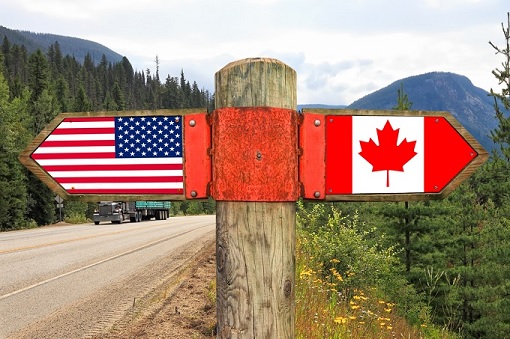
Canada had suggested a common approach toward China – “Fortress North America,” as Carney puts it. But the U.S. envisioned “a ‘Fortress North America’ where one ruler would have dictated what other inhabitants of the fortress could have done with the outside world, while feeling free to impose restrictions at will on them within the fortress,” former Canadian trade negotiator Steve Verheul wrote in a commentary.
It’s an open question whether Canadian defiance will outlast a brutal trade war. Its leaders may hope they only have to outlast Trump. Tariffs of some sort are likely here to stay; the Donroe doctrine, not so much. Congress didn’t clamor for control of Venezuela. It could be years before the U.S. reaps any tangible benefits from its oil reserves, even as resentment in Venezuela grows.
Trump has also pushed a series of high-profile proposals and executive orders to rename major international bodies of water and geographic landmarks. Already, large majorities of Americans oppose Trump’s tariffs on Canada and his changing the name of Lake Ontario to “Lake America.” After trying to rebrand the Gulf of Mexico as “Gulf of America”, he also wanted to change the Strait of Hormuz to Trump Strait.
Despite all the fears, experts point out major differences between the two nations. Unlike Venezuela, Canada has a stable legal system, strong democratic institutions, and a diverse modern economy. Besides, Washington has not recognized Maduro as Venezuela’s president since 2019, unlike the Canadian prime minister.
Other Articles That May Interest You …
- Uninvestable – Oil CEOs Unconvinced With Trump To Plunder Venezuela
- Maduro Game Over – How U.S. Captured Venezuela’s Untouchable
- More Than Just Trade Deals – Canada And Brazil Levies Show Trump’s Abusing Tariffs As Political Weapon
- Outsmarting Trump’s 145% Tariff – From Diverting China-US Imports To Canada To Smuggling In Black Market
- Learning Soviet’s Failures – How Xi Jinping Spent Decades Preparing For A Cold War Today With The U.S.
- China Too Strong For U.S. – Why Europe In Trouble As Trump Shifts Target To Bully EU With 50% Tariff Threats
- Trump Has Already Lost His Trade War Against China – But He Can’t Find Ways To Climb Down And Save Face
- Casualty Of Trump Bullying – PM Trudeau Fast Losing His Job After Tariff Threat & Mocking Of Canada As 51st State
- From Terminating Trade Deal To Cancelling $1.1 Trillion Debt Owed To China – Here’re Some Of Trump’s Crazy & Dirty Ideas
- As News Of US Military Invasion Spreads, Maduro Accuses Trump Of Trying To Steal Venezuela’s Oil
- Venezuela Now Has 2 Presidents – Here’s A Long List Of U.S. Involvement In Latin American Politics

|
|
September 3rd, 2026 by financetwitter
|


|

|

|

|

|

|















Comments
Add your comment now.
Leave a Reply