



Marco Rubio’s first visit to Southeast Asia as Secretary of State has given the U.S.’s Asian allies and trading partners a golden opportunity to express their concerns – or rather complaints – about Trump administration’s tariff threats. With only 36 hours to spare, he skipped visits to Japan and South Korea, heading directly to Malaysia to meet with foreign ministers at a regional summit.
However, Rubio’s real intention was not about meeting the ASEAN leaders there, let alone explaining Trump’s letters to 8 of the 10 Asean leaders about the new tariffs. His trip to Kuala Lumpur was to meet with China’s foreign minister, Wang Yi,who arrived earlier on July 9 to attend high-level talk held in conjunction with the 58th Asean Foreign Ministers’ Meeting.
After Rubio and Wang’s first face-to-face meeting since U.S. President Trump returned to office, both leaders said they had a “positive” meeting on Friday (July 11) in an apparent bid to ease tensions between the rival powers. Crucially, it appears that Rubio has secured an appointment for Donald Trump for a China visit this year, after Chinese President Xi Jinping made Trump foolishly waited for a phone call from him.
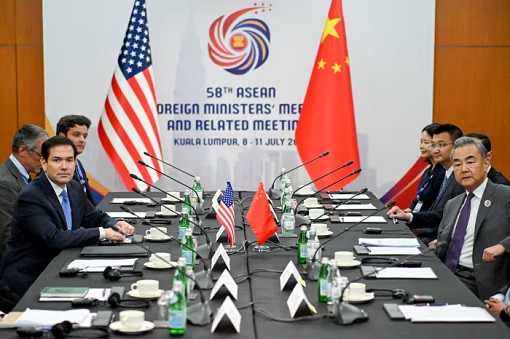
Top diplomat Wang Yi, of course, gladly seized the opportunity to hammer the U.S. and sent a message that Beijing is a better partner than Washington. “The U.S. is wantonly imposing tariffs, damaging the free-trade system, and disrupting the stability of global production and supply chains,” – Wang told the Thai foreign minister. Then he told his Malaysian counterpart that the U.S. tariffs on Asean countries represent “a typical act of unilateral bullying.”
But the U.S.’ tariff isn’t about just trade deals. After 14 countries received their love letters from Donald Trump, Brazil was shocked to learn that it has been hit with a 50% tariff – a punishment that has nothing to do with trade, breaking with more than a half-century of global economic precedent. After all, the U.S. goods trade surplus with Brazil was US$7.4 billion in 2024, a 31.9% increase over 2023.
Instead, Trump cited the trial of his close political ally, former Brazilian President Jair Bolsonaro, as the rationale for new tariffs set to take effect August 1 on imports from the largest economy in Latin America. It is one of the latest – and clearest – examples of Trump using tariffs as a political weapon rather than a trade tool. And chances are he will continue to use his favourite tariffs to get anything he likes.
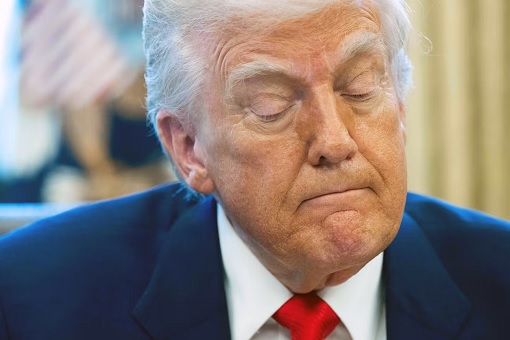
Bolsonaro is facing charges that he plotted to overturn his 2022 election loss by fomenting a January 2023 insurrection at the Brazilian Congress, when thousands of his supporters overran the legislative body after the election of current left-leaning president, Luiz Inácio Lula da Silva. In his tariff letter, Trump called the trial “nothing more, or less, than an attack on a political opponent – Something I know much about,” adding “LEAVE BOLSONARO ALONE!”
Prior to the Brazil episode, Trump threatened tariffs on Colombia in January over repatriation flights for migrants. Then he imposed steep duties on Canada, Mexico and China over their role in the fentanyl trade, and threatened jaw-dropping levies on countries that buy oil from Venezuela. He has also used the threat of tariffs to attempt to secure more military spending from Asian nations such as Japan and South Korea.
And on Thursday evening (July 10), Trump said the U.S. would slap a 35% levy on close ally Canadian imports – up from the current 25% rate. He cited the flow of fentanyl again in his latest tariff threat to Canada. Even after Canadian officials have argued till foaming at the mouth that very little fentanyl gets into the U.S. from Canada, Trump has shown little interest or simply didn’t care.
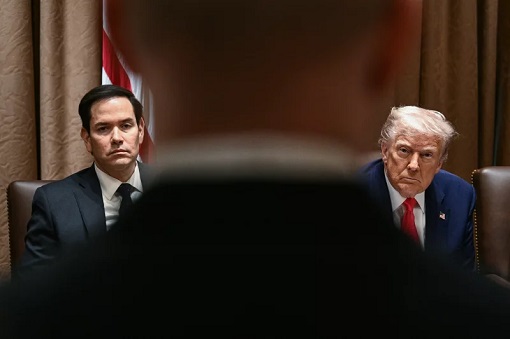
From annexing Canada to snatching Greenland, and from declaring tariffs war against the world to seeking a third term in the White House, Donald Trump has already created so much chaos that the Russia-Ukraine War and the Israel-Hamas War appears like a child play. And the U.S. president has not even completed his first year in the Oval Office.
Trump “views tariffs as a tool that is effective in getting results, not just in terms of economic impact, but also leverage in all sorts of situations,” – said Kelly Ann Shaw, former deputy director of the National Economic Council in Trump’s first term. Trump’s moves, however, have shaken the global trade order established in the 1940s, when market economies sought to put tariffs and trade among them on a stable footing.
Historically, tariffs have generally been motivated by economic or domestic political goals, such as when the Smoot-Hawley Act hiked U.S. tariffs in 1930. For twisting the arm of another country, usually a geopolitical adversary, trade embargoes were often used, such as when Napoleon tried to cut off Britain from all trade with continental Europe, or when the U.S. cut off Japan’s access to American oil in 1940 to punish the country for expansionism.

After World War II, the U.S. led an international effort to build a rules-based trading order that kept politics out of tariffs. The General Agreement on Tariffs and Trade (GATT), signed in 1947, required countries to stick to agreed tariffs and not discriminate against imports from other nations. Its core principles were adopted by GATT’s successor, the WTO (World Trade Organization), in the 1990s.
The rise of China as an economic powerhouse and the decline of manufacturing jobs in Western countries have undermined the consensus for the post-war trading order. Jennifer Hillman, a trade-law specialist at Georgetown University and a former U.S. and WTO official, said – “Major shifts in geopolitical power, and perceptions of unfairness and growing income inequality in the U.S. and other importing countries, are seen as justifying the breaking of the rules.”
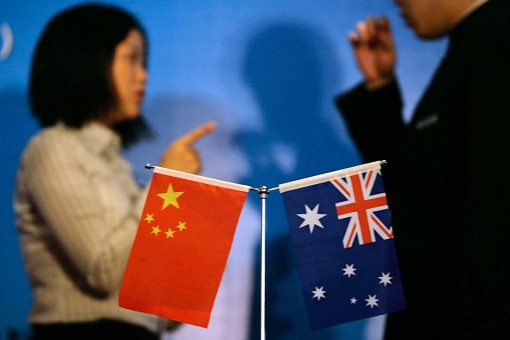
As the U.S. started abusing its power and breaking the rules it set, Beijing quickly learnt the art of the game. Since 2010, China has learned the wonder of using trade restrictions to punish other countries over political issues unrelated to trade. For example, Beijing slapped heavy tariffs on Australian products, ranging from wine to barley, after Australia called for an international inquiry into the origins of Covid-19.
During Trump’s first term, the president baffled U.S. allies such as Canada when he invoked national security to justify tariffs on steel and aluminum imports. But his second-term linkage of trade measures with a growing array of political concerns has little precedent. “This is brand new. What we don’t know is, is this purely Trump, or is this the future?” – said Hillman.
Trump’s approach carries legal risks. In May, the U.S. Court of International Trade struck down many of the president’s tariffs, saying they weren’t justified by the emergency legal authority that he cited. An appeals court will hear the case on July 31, a day before Trump’s so-called reciprocal tariffs are scheduled to go back into effect on Brazil and scores of other nations.
The administration argues the U.S. government has always used economic tools to extract foreign-policy concessions from other nations, like the extensive use of economic sanctions against adversarial nations such as Russia, Iran, Cuba and more. Treasury Secretary Scott Bessent has said Trump believes that the U.S. has “gotten over our skis” on sanctions and that they could be driving nations away from the U.S. dollar.

“Other countries routinely use tariffs to advance their foreign policy and national security interests, and President Trump is committed to using every tool at his disposal – including access to the American economy, the world’s biggest and best consumer market – to put Americans and America First,” – said White House spokesman Kush Desai.
Many Trump allies are supportive of the president’s tactic of using access to the U.S. consumer market as leverage to extract concessions across a number of political issues. Others in Trump’s own party have criticised the economic uncertainty, as it does not only risk inflation and recession, but also hurt allies such as the European Union, Canada, Australia, Japan and South Korea.
“The idea of haphazardly talking about 50% tariffs on a country based on different policies that are going on in that country is chaotic for the markets, it makes it hard for businesses to predict, and if it’s done for every country’s current events, will lead to chaos,” – said Senator Rand Paul (R., Ky.), a frequent critic of Trump’s trade wars.
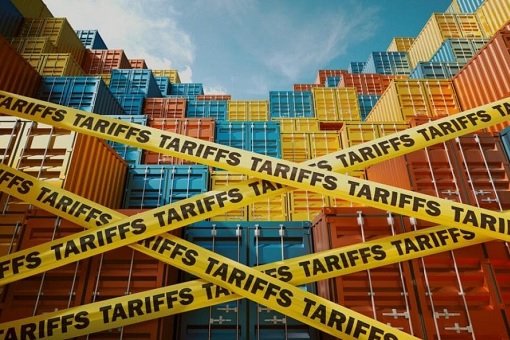
Trade-reliant U.S. businesses complained the tariffs make it harder to plan investments. Jake Colvin, president of the National Foreign Trade Council, which represents large U.S. firms, said – “Businesses and consumers will face cost pressures every time the president follows through on his tariff threats.” But the problem is Trump tends to make multiple U-turns, imposing tariffs before retracting them, and re-imposing again.
Other Articles That May Interest You …
- Learning Soviet’s Failures – How Xi Jinping Spent Decades Preparing For A Cold War Today With The U.S.
- China Too Strong For U.S. – Why Europe In Trouble As Trump Shifts Target To Bully EU With 50% Tariff Threats
- Art Of War vs. Art Of Deal – China Laughs All The Way To The Bank As Trump Slashes Tariffs From 145% To 30%
- Empty Store Shelves In 2 Weeks – Here’s Why Trump’s Damage Control Is Too Little Too Late, And It Will Be Ugly
- Trump Has Already Lost His Trade War Against China – But He Can’t Find Ways To Climb Down And Save Face
- White House Privately Begging Xi To Call Trump First – But China Slapped 125% Tariff Instead
- Beijing Raises Tariffs To 125% – American Goods No Longer Marketable In China
- Recession 2025 – Why You Should Prepare For A Historic Crash As Massive Correction Builds
- “Black Myth: Wukong” Makes $600 Million In 3 Days – But The West Is Very Pissed, Accused The Chinese Game Lack Diversity
- From Terminating Trade Deal To Cancelling $1.1 Trillion Debt Owed To China – Here’re Some Of Trump’s Crazy & Dirty Ideas
- Watch Out Trump!! – China May Weaponize “Rare Earth” To Retaliate Against U.S.’ Ban On Huawei

|
|
July 11th, 2025 by financetwitter
|


|

|

|

|

|

|












Comments
Add your comment now.
Leave a Reply