



Every time the United States makes its move against a sovereign state – either through an invasion or a political intervention – it’s always about oil or the U.S. hegemony, and little about democracy. We had seen it in Iraq, Libya, Syria, Afghanistan, Sudan, Yemen, Somalia and the list goes on. The entire Middle East is under the U.S. protection or target due to one reason – oil and gas.
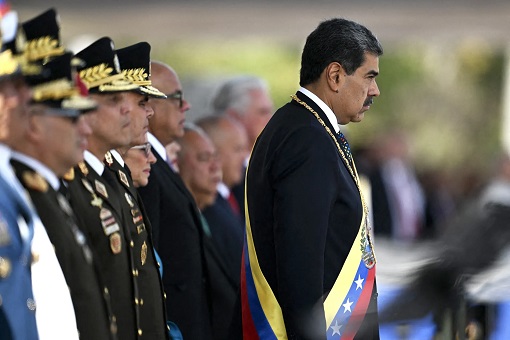
And it’s no difference with Venezuela. Under the pretext of dismantling a global drug trafficking linked to Nicolas Maduro, President Donald Trump gave the order to invade the country and abduct the dictator to face trial on American soil. In reality, the military operations were all about oil and China, and very little about fighting drug cartels in Latin America.
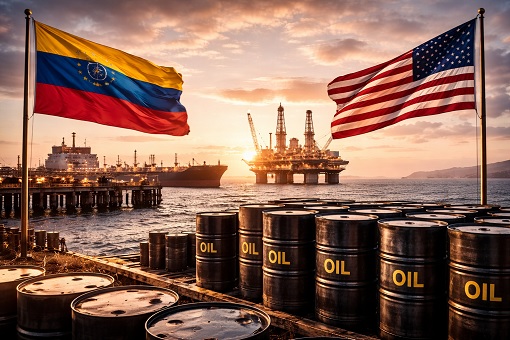
Venezuela holds the world’s largest proven oil reserves, estimated at over 300 billion barrels, representing about 17% of global supply. And China has invested heavily in oil-rich Venezuela, one of its closest South American partners, with over 600 agreements between the two countries. When Maduro was captured – blindfolded and handcuffed – Beijing was not impressed.
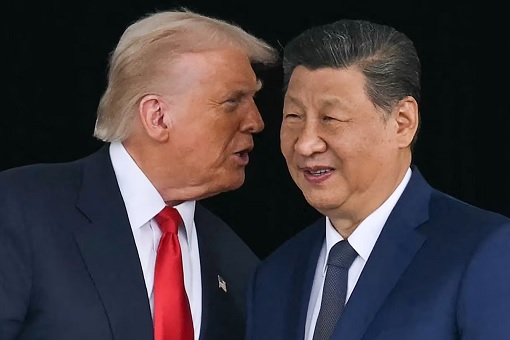
In fact, the U.S. could not hide its excitement after its military operations to topple Maduro regime when U.S. Secretary of State Marco Rubio gloated – “This is the western hemisphere. This is where we live – and we’re not going to allow the western hemisphere to be a base of operations for adversaries, competitors and rivals of the United States.” The message to China was clear – get out of our backyard.
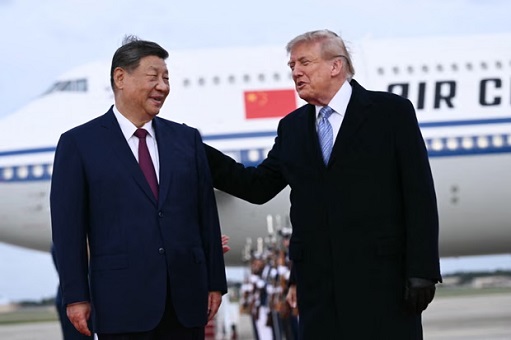
China joined many countries around the world in condemning Washington’s unilaterally move against a sovereign state. It accused the U.S. of acting like a “world judge” and insisted that “the sovereignty and security of all countries should be fully protected under international law”. Beijing also strongly condemned a U.S. report that suggested Washington will order the acting Venezuelan president to sever economic ties with China and Russia.
The relationship between Beijing and Caracas was fairly simple. China needed oil. Venezuela needed cash. Between 2000 and 2023, Beijing provided more than US$100 billion to Venezuela to finance railways, power plants and other infrastructure projects. In exchange, Caracas gave Beijing the oil it needed to fuel its booming economy. Last year alone, around 80% of Venezuelan oil went to China.
The chaos created by Trump has sparked risk, uncertainty, and frustration for Chinese oil firms like CNPC and Sinopec in Venezuela. The good news is Venezuelan oil sent to China represented only 4% of the country’s oil imports. The bad news is Chinese assets might be nationalised by the Venezuelans, under the direction of the U.S., not to mention US$10 billion of outstanding loans that Venezuela owes Chinese creditors.
Immediately after the U.S. invasion, President Donald Trump announced that Venezuela will turn over 30 million to 50 million barrels of sanctioned oil, which will be sold at market prices. “That money will be controlled by me, as President of the United States of America, to ensure it is used to benefit the people of Venezuela and the United States,” – said Trump. That’s as clear as daylight robbery.
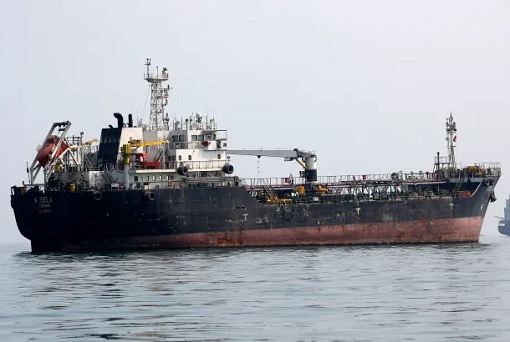
But sources said the 50 million barrels are only the first tranche and shipments will continue indefinitely. The U.S. also will ensure storage ships will transport the oil directly to receiving docks in the U.S. This means China has to buy Venezuelan oil from the U.S. instead because Washington has now taken control over Venezuela’s daily production of 800,000 barrels per day.
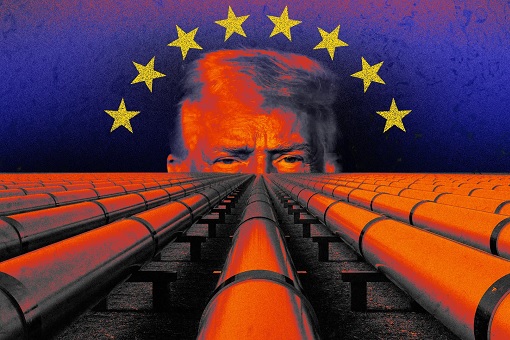
However, Trump’s real goal is to monopolize Venezuela’s oil sector. The president said he will personally decide which oil companies would be allowed to enter Venezuela, and that U.S. firms would spend “at least US$100 billion of their money to revitalize the country’s oil infrastructure”. He argues that adversaries like China and Russia would have taken over oil production in Venezuela if the U.S. didn’t do it first.
On Friday (Jan 9, 2026), less than a week after the U.S. incursion in Venezuela, Trump held a gathering at the White House to press top executives from nearly two dozen oil companies to plant flags in Venezuela and drill into one of the world’s largest oil bounties. While the CEOs from Chevron (the only U.S. oil company active there), Exxon Mobil, ConocoPhillips and other companies signalled great interest, they did not commit to any oil investment.
Obviously, their biggest concerns about going into the country are political stability and security, even though Trump promises “government protection and the government security”. No company in their right mind would splash US$100 billion without actually “feeling safe” in a country just being attacked by the U.S., therefore, it is again a chicken-and-egg question.
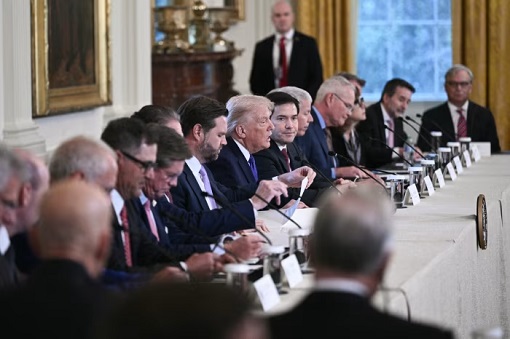
“If you don’t want to go in, just let me know because I’ve got 25 people that aren’t here today who are willing to take your place,” – Trump appeared to threaten the executives. But it is not as easy as sending the marines into Venezuela and starting the drilling. And it’s highly unlikely that China and Russia will pack their bags and leave tomorrow without a fight.
Exxon CEO Darren Woods said Venezuela is currently “uninvestable” without significant changes to the country’s commercial frameworks, legal system and hydrocarbon laws. ConocoPhillips CEO Ryan Lance did not commit to his company operating in the country, and a top Chevron official at the meeting detailed the company’s current operations rather than discussing dramatically scaling them up.
“We’ve had our assets seized there twice,” – Woods said. “You can imagine to re-enter a third time would require some pretty significant changes from what we’ve historically seen here and what is currently the state.” As the longer-term issues are being resolved, Woods said Exxon could have a technical team visit to assess the current state of Venezuelan assets within the next couple of weeks.
Exxon first entered Venezuela in the 1940s but hasn’t been active there for almost two decades, he noted. He said Exxon could assist getting Venezuelan crude to market through its integrated businesses, which include refining and trading. “It has to be a win-win-win proposition for shareholders, for the government of Venezuela and for the people of the country,” – Mr Woods said.
ConocoPhillips CEO Ryan Lance, meanwhile, noted his company is the largest non-sovereign credit holder in Venezuela today. Asked by Trump how much the firm had left behind in the country, Lance said it was US$12 billion. “We’re not gonna look at what people lost in the past because that was their fault,” – Trump said, before adding, “You’re gonna make a lot of money, but we’re not going to go back.”
Exxon and ConocoPhillips are still seeking to collect most of their debts after former Venezuelan leader Hugo Chavez nationalized both American companies’ oil assets in 2006. Corporations can use tax write-offs to note business deductions to reduce their taxable income. Trump seemed assured that the oil companies would be compensated for assets that were seized in Venezuela.

Still, even Harold Hamm, founder of independent US oil company Continental Resources and a close ally of Trump, was careful to not overcommit exploring for oil in Venezuela when asked by Trump. Another Trump donor, Jeff Hildebrand said his company Hilcorp, which isn’t currently active in Venezuela, is fully committed and ready to go rebuild the infrastructure in Venezuela.
Trump plans to use Venezuela’s huge crude reserves “to cut U.S. oil price to US$50 a barrel”. At such a price, the risk is too high for any businessman to invest hundreds of billions in the country. On one hand, the president wanted American oil companies to commit huge investments, but on the other hand, he wanted to drive down the oil prices to below profitable levels.
Oil was already trading below US$60 before news emerged last weekend of the U.S. capture of Venezuelan strongman Nicolás Maduro. Before the incursion, Goldman Sachs estimated that the U.S. benchmark crude price would average US$52 a barrel in 2026. The investment bank estimates that prices could average US$50 a barrel this year if production from Venezuela increased by 400,000 barrels a day.
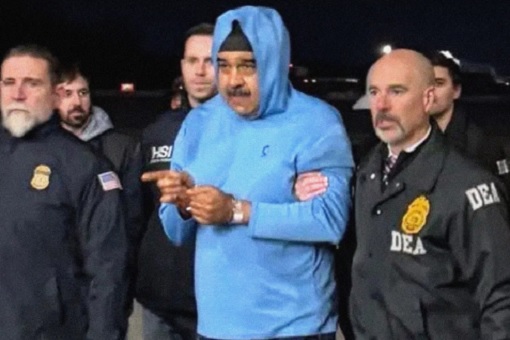
Restoring Venezuela’s oil production to its former glory would require tens of billions of dollars, thanks to years of negligence, underinvestment, mismanagement and corruption that have led to a dilapidation of oil-and-gas fields that would require a comprehensive overhaul of the country’s infrastructure. China and Russia are watching with popcorn.
The situation in Venezuela could easily descend into chaos. And if past experience from Iraq is any lesson, where the U.S. also said the country’s oil reserves would pay for the reconstruction of the economy, China needs to do absolutely nothing in Venezuela. China is now the largest buyer of Iraqi crude. The biggest problem with Trump’s half-baked plan is that he has only 3 years left as president.
To return Venezuela’s production to pre-socialism levels, the oil industry would need to lay pipelines, set up drilling rigs, build port infrastructure, and install reliable electricity, among other projects. That would cost more than US$10 billion a year and take more than a decade to pay off. By then, a Democrat would have become a new president and dismantle Trump’s policy, and a new dictator could emerge in Venezuela.
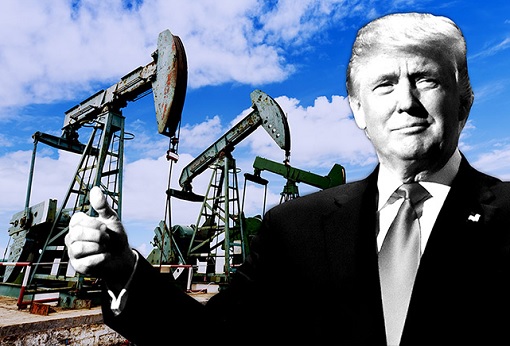
Rather than burning US$100 billion – a figure Trump plucked from the sky – in a risky place called Venezuela, the safest bet is to plunder and siphon cheap Venezuelans oil to U.S. refinery operators like Valero and Marathon Petroleum. For now, Trump said – “We are open for business. China can buy all the oil they want from us, there or in the United States. Russia can get all the oil they need from us.”
Other Articles That May Interest You …
- Maduro Game Over – How U.S. Captured Venezuela’s Untouchable
- Striking Venezuela – Trump’s CIA & Military Options To Topple Maduro
- Hamas Game Over – How A Missile Strike Leads To A Peace Plan
- How Trump Checkmates Hamas With 20-Point Plan To End Gaza War
- No More Safe Havens – Israel’s Airstrike In Qatar Sends New Message To Countries Harbouring Hamas Terrorist
- Paying The Price For Hamas Attacks – How Trump Misled Iran Before Israel Sends 200 Jets To Attack
- Hamas Is Game Over – How The Terror Group Miscalculated, Betrayed, Abandoned And Made More Mistakes
- As News Of US Military Invasion Spreads, Maduro Accuses Trump Of Trying To Steal Venezuela’s Oil
- Venezuela Turmoil – Why Najib Sucked Up To Trump & Sent His Spy Woman Soliciting For CIA Support
- Venezuela Now Has 2 Presidents – Here’s A Long List Of U.S. Involvement In Latin American Politics
- Blood Bonds – Greedy Goldman Sachs Making Money Off The Killing Of Venezuelans

|
|
January 10th, 2026 by financetwitter
|


|

|

|

|

|

|












Comments
Add your comment now.
Leave a Reply