



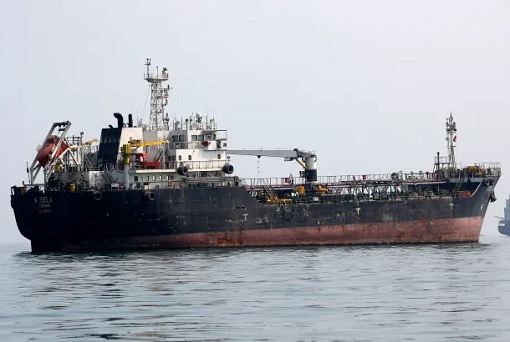
As Iran started its bold game of cat and mouse with the United States, the MV Touska became the first casualty after the Iranian cargo ship tried – and failed – to breach the U.S. blockade. The U.S. made good on its threat to board and seize any vessel defying its blockade of Iran’s ports on Sunday (April 19). As expected, Iran has vowed to retaliate.
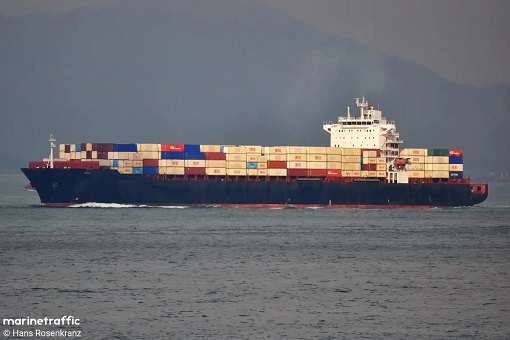
What will happen to the ship and its crew would depend on what it was carrying. The containership, part of a fleet controlled by a subsidiary of the Islamic Republic of Iran Shipping Lines, a company that has been accused of transporting items with potential military use to Iran, has been under sanctions since 2018 – until its luck ran out on Sunday.
According to MarineTraffic.com, the Touska’s last port of call was Port Klang, Malaysia, on April 12. Before that, it had been going back and forth between the Chinese city of Zhuhai and various Iranian ports. The ship is owned by the Mosakhar Darya Shipping Co, which has an address in Tehran and is subject to sanctions, according to the US Treasury’s Office of Foreign Assets Control.
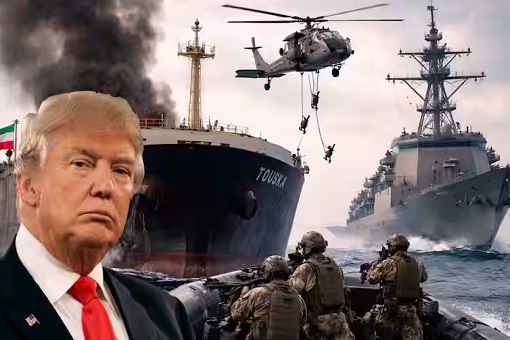
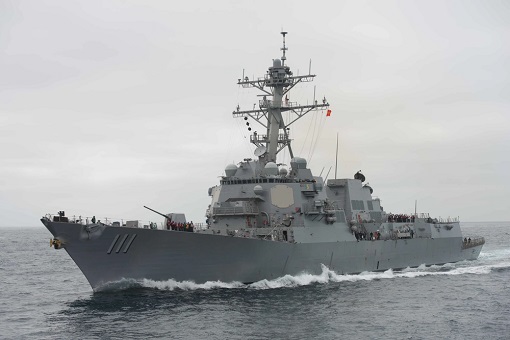
US Central Command (CENTCOM) says the guided-missile destroyer USS Spruance warned the Touska repeatedly over a six-hour period, during which time the container ship was steaming in the Arabian Sea toward Bandar Abbas, Iran. The ship’s defiance saw the destroyer warned the crew to evacuate the ship’s engine room before firing several rounds from its 5-inch gun, disabling its propulsion.
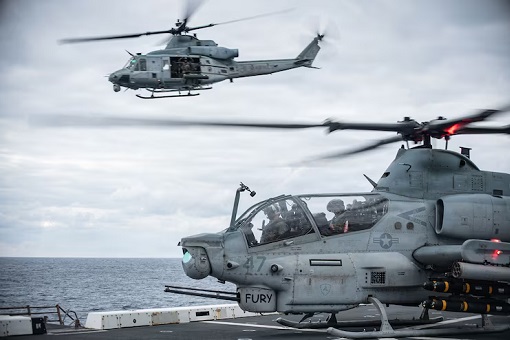
After the Touska’s diesel engine was knocked out, marines from the amphibious assault ship USS Tripoli then boarded the Touska by helicopter. Searching such a huge ship at sea would be impossible, with potentially thousands of containers to be inspected. Therefore, the disabled Iranian ship would need to be towed to an anchorage or port for inspection or valuation.
Once that is done and its cargo can be determined, it could eventually become property of the U.S. government as a “prize.”It can be treated as a “spoils of war”, like any enemy combatant or materials seized from an enemy in the course of armed conflict. Essentially, those tolls collected by the Iranian regime may not be enough to cover the losses of the Touska.
“Under the laws of naval warfare, you can seize a vessel in these circumstances that has tried to run a blockade,” said Jennifer Parker, a non-resident fellow at the Lowy Institute and a former Royal Australian Navy officer. “If they choose to keep it for the long term, it would need to go through a prize court, which would need to be established,” – she said.
Charlie Brown, a former U.S. Navy officer and senior adviser for United Against Nuclear Iran, a U.S.-based advocacy group, said the Touska’s decision to try to breach the blockade suggested it was carrying something of value to Iran. “It must have been worth the risk to try to run the blockade, but they chose poorly,” – he said.
As for the fate of the Touska’s crew, that would depend on their nationalities. If it was Indian or Filipino sailors, for example, the crew would just be taken off the vessel and repatriated. However, if the crew are Iranian, they may be detained, or worse – if members of Iran’s Islamic Revolutionary Guard Corps (IRGC) were aboard, they could be held as prisoners of war (POW).
Obviously, if the Touska was carrying any weapons or armaments for Iran, the crew would likely be detained. Either way, the Touska, which last month was flagged as one of several Iranian ships that continued to operate despite the conflict, would not be returned to Iran. The Touska was one of nine other Iranian ships that visited Zhuhai port since the start of the Iran war on February 28.
The Touska is controlled by an IRISL subsidiary, Rahbaran Omid Darya Ship Management, according to the EU’s Equasis database. Last year, two other containerships controlled by the subsidiary transported from China 1,000 tons of a material used in the solid propellant for Iranian midrange missiles. Two other cargo ships affiliated with IRISL traveled from Zhuhai to Iran last month, raising concerns that they were carrying missile fuel components.
While China says it doesn’t sell arms to Iran and maintains strict control of equipment with both civilian and military applications, known as dual-use goods, at the same time, Beijing doesn’t recognize U.S. sanctions, which it calls unilateral and illegal. Despite the U.S. self-imposed sanctions on Iran’s energy sector, China became the leading buyer of Iranian oil.
The U.S. Navy announced last week that ships sanctioned by the U.S. would be subject to boarding, search and seizure. The U.S. said all Iranian ships were subject to potential stops, regardless of location, along with ships suspected of carrying items deemed contraband such as weapons, ammunition and military electronics.
The chances of a breakthrough in any U.S.-Iran talks – if they even take place – are slim at best. Whatever slivers of hope there were in Islamabad eight days ago have shrunk further as Iran accuses Washington of breaching the ceasefire with its naval blockade of all Iran’s Gulf ports – and now, of maritime piracy after U.S. forces fired on and impounded the Iranian-flagged MV Touska.
Iran, having briefly reopened the Strait of Hormuz before closing it, said it might not even show up after the U.S. seized one of its ships. Iran Foreign Ministry spokesman Esmail Baghaei said on Monday that Tehran had no plans yet regarding a second round of talks, accusing the U.S. of lacking “seriousness in pursuing a diplomatic process.”
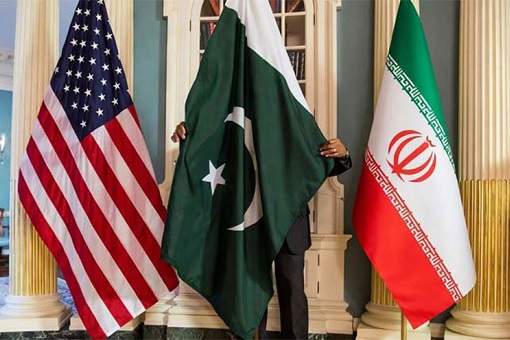
But Trump announced Sunday that a negotiating team was on their way to Islamabad on Monday evening and warned Iran against walking away from negotiations. The president said – “We’re offering a very fair and reasonable DEAL, and I hope they take it because, if they don’t, the United States is going to knock out every single Power Plant, and every single Bridge, in Iran. NO MORE MR. NICE GUY!”
Interestingly, Iranian President Masoud Pezeshkian said “war is not in anyone’s interest” and “every rational and diplomatic path must be used to reduce tensions,” – suggesting that despite a divide between the hardliners and reformers in Iran, the moderate leaders are still trying to make a deal with the Trump administration as the war entered its eighth week.
Other Articles That May Interest You …
- Hormuz Opened & Closed – Trump & Tehran Create More Confusion & Contradiction
- Round 2 – US To Blockade Hormuz After Talks Fail
- Wiping Iran Civilization – How & Why China Got Iran To A Ceasefire
- Seizing Iran Islands – How U.S. Marines Plan To Reopen Strait Of Hormuz
- Ships Pretend To Be Chinese To Cross Strait Of Hormuz
- Energy Security – Why China Can Withstand $100 Oil Prices More Easily
- Strategic Error – How Iran’s Retaliatory Strikes At Gulf States Backfires
- Live By The Sword, Die By The Sword – How Ayatollah Khamenei Was Killed
- Iran’s “Axis Of Resistance” Missing In Action – Why Tehran Became Isolated & Alone In WAR Against Israel
- Paying The Price For Hamas Attacks – How Trump Misled Iran Before Israel Sends 200 Jets To Attack
- Psychological Warfare – How Mossad Cracked Hezbollah Secret Network With Low-Tech Pager & Walkie-Talkie “Walking Bombs”

|
|
April 20th, 2026 by financetwitter
|


|

|

|

|

|

|





















Comments
Add your comment now.
Leave a Reply