



With internet access almost impossible, queues at petrol stations, and streets in Tehran that were quieter than usual, the war begins on February 28 after the United States and Israel launched a wave of strikes against Iran. The Israel Defense Forces (IDF) says its strikes in Tehran targeted locations where senior political and security figures were gathered, as well as military assets.
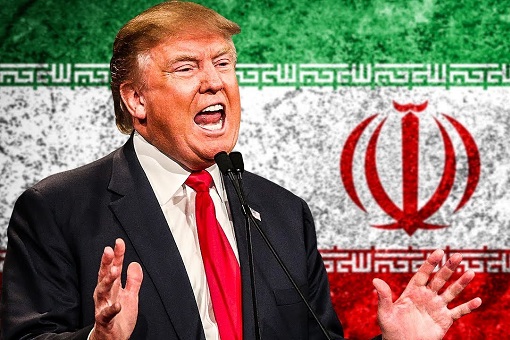
At the same time, President Donald Trump said he had launched a major combat operation to ensure Americans would never be threatened by a nuclear-armed Iran. He called on Iranians to take control of the government. “I say tonight that the hour of your freedom is at hand,” – he said in a video posted on Truth Social.
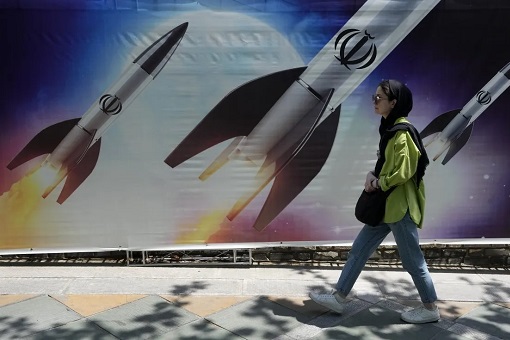
Iran retaliated by firing a barrage of missiles and drones at Israel and U.S. bases throughout the region, including in Qatar, Kuwait, the United Arab Emirates and Bahrain. “All occupied territories and the criminal US bases in the region have been struck by the powerful blows of Iranian missiles. This operation will continue relentlessly until the enemy is decisively defeated,” – Iran’s Revolutionary Guards said.
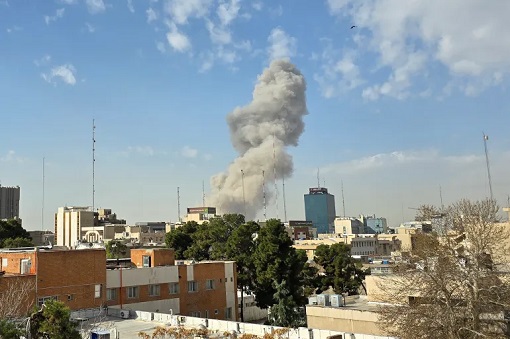
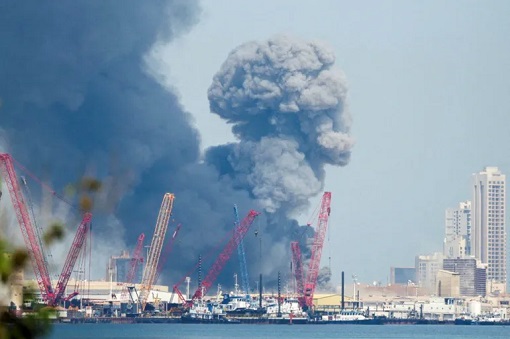
However, the U.S. military as well as Kuwait, Qatar, the UAE and Jordan intercepted most of the Iranian missiles. Bahrain confirmed an attack inside its territory and said a service centre of the US Fifth Fleet had been struck, while at least one person had been killed in Abu Dhabi, where loud booms were heard across the city as fighter jets could be seen flying around the Yas Island area of Abu Dhabi.
From the beginning, the U.S.-Israeli military strike on Iran was imminent and inevitable, even long expected after the biggest American air power buildup since the 2003 Iraq invasion. The negotiation between Washington and Tehran was merely a smokescreen for both parties to buy time to make some strategic moves before a military clash.
Iran, badly weakened militarily by Israel last June and under financial pressure, was trying to pull an Obama on Trump. Taking a page from the playbook when Tehran scammed Barack Obama in 2015, where Iran agreed to curb its uranium enrichment, reduce stockpiles, and allow IAEA inspections in exchange for oil and financial sanctions relief, Iran was playing the same game.
The main concession Iran was discussing is to temporarily suspend uranium enrichment, whilst refusing to end enrichment of nuclear fuel or move it offshore. Even if Tehran may agree to hand over its stockpile of enriched uranium from beneath the rubble, Iran’s regime wants Russia to hold it. The regime also refused to allow inspections of the damaged sites.
But Iran isn’t enriching simply because it can’t thanks to U.S. bombers, and it isn’t ready to resume. In exchange for that status quo, Tehran wants U.S. sanctions relief, which would be a lifeline to the regime. So, by pretending to reluctantly agree to stop enriching, Iran hopes to trick Trump with an illusion that the U.S. president has won.
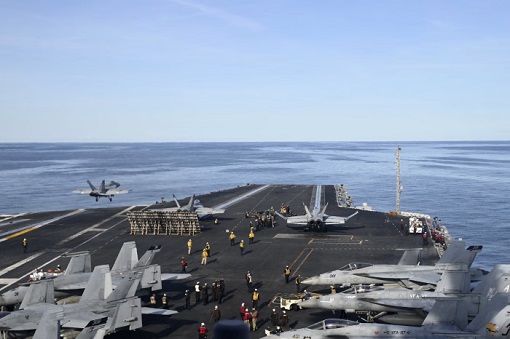
None of this suggests the regime was serious about reaching a deal. As a result, Trump decisively sent a second aircraft carrier – USS Gerald R. Ford – to the Middle East. Tehran took a gamble, betting that the U.S. was bluffing. As Gerald Ford approached the Middle East on Friday, little did Iran realize that the U.S. would begin striking the regime the next day.
The U.S. ambassador to Israel, Mike Huckabee, sent an email to embassy staff Friday telling them there was no need to panic but if they wanted to leave Israel, they “should do so TODAY”. It followed orders for a partial evacuation of U.S. Embassy personnel in Lebanon on February 23. The United Kingdom, Canada and China already advised their citizens on Friday to leave Iran immediately.
Yet, despite the expectation of a military strike, strategy experts and government officials in both the Middle East’s capitals and in Washington had expected Trump to only seek the destruction of Iran’s nuclear and missile capabilities. But in his first statement after authorizing Operation Epic Fury, Trump not only declares his key objective for an Iranian regime change, but also appeals ordinary Iranians to “take over” their government.
Another surprise was President Trump’s readiness for a longer period of war than his usual preference for a swift and sharp Iran operation that avoids putting U.S. troops in harm’s way. He warned his fellow Americans that they faced “major combat operations” and that “the lives of courageous American heroes may be lost and we may have casualties.”
While Iran’s move of dragging all the Arab monarchies into the conflict by attacking the entire region could be a tactic to spook its Arab neighbours about the consequences of a wider regional war in the hope that the Arabs will ask the US to stop the offensive, the plan fails and backfires. Saudi Arabia has already announced that, after Iranian missiles hit its territory, it will join the U.S. in its offensive against Iran.
Israel and the U.S. are making no secret of the fact that their initial attacks were designed to decapitate the Iranian regime. According to a reliable Israeli source who spoke to the media on condition of anonymity, Iran’s Supreme Leader Ayatollah Ali Khamenei and President Masoud Pezeshkian were both targeted in the strikes. Many other leaders and scores of top military commanders were also on the target list.
The Office of the Supreme Leader, where all the decisions of Ayatollah Ali Khamenei are translated into action, appears to have been flattened, as have been several other key government buildings in Tehran. It will be days, if not weeks, before anyone knows with certainty how many top Iranians have survived the initial US and Israeli attacks.

There appears to be a division of jobs between the U.S. and Israel forces, with U.S. strikes concentrating on destroying installations of Iran’s nuclear programme and missile launchers. In contrast, the Israeli strikes remain focused on eliminating senior Iranian officials and paralysing the country’s government. Khamenei is said to have left Tehran, hiding at secret location.
Israel’s ability to continue hunting top Iranian political leaders and military commanders will depend on how good Israel’s human intelligence networks are on the ground. If Israeli agents inside Iran continue to supply accurate information, Israel’s quest to hit at Iran’s top decision-makers can continue. But based on past results, there is little chance that Iran top commanders could survive.
The biggest question is over how extensive Iran’s remaining stock of ballistic missiles and attack drones is. By hitting its neighbouring Arab nations, Iran may have scored maximum political impact, but it has also reduced its reserves of offensive weapons. What Israeli military planners are waiting to see is whether Iran can still launch the sort of missile barrage that can create serious damage inside the Jewish state.

If no such concerted attack comes through in the next 24 hours, that will be interpreted as an indication that the Iranians are running out of stock of missiles and drones. Thereafter, small units of U.S. special forces and a great deal of cyber operations designed to paralyse Iran’s decision-making could be launched to try to topple the government of the Islamic Republic.
All the evidence suggests that Ayatollah Khamenei, Iran’s supreme leader, has nominated potential replacements for all the country’s leadership positions, including his own. The idea behind this strategy is to ensure that the Islamic Republic survives even if the current leaders do not. But Iran has never been good at managing political succession in peacetime, and it’s unlikely to be better when it faces such a military onslaught.
Essentially, the previous suggestion that Trump might be able to bomb Tehran back to the negotiating table to force deep concessions is no longer an option. Iran’s response on Saturday by launching missiles at U.S. allies Israel and oil-producing Gulf Arab countries and Trump’s seeking a regime change in Tehran also means diplomacy can no longer achieve a breakthrough.
Other Articles That May Interest You …
- Iran Panicking – Armada Is Ready And Trump Could Strike Anytime
- Corruption, Cronyism – How A Bank Collapse Sent Iran Into Chaos
- Revolution – How One Man Rallies Iranians To The Street
- “Operation Narnia” Revealed – The Bold Attack On Iran That Israel Feared Could Not Succeed
- Gone In 25 Minutes – How Trump Tricked Tehran Twice Before Obliterated Iran’s 3 Nuclear Sites With MOPs
- Iran’s “Axis Of Resistance” Missing In Action – Why Tehran Became Isolated & Alone In WAR Against Israel
- Iran On Fire – Khamenei Should Flee To Russia While He Can Before US-Israel Upcoming Surprise
- Israel’s “Operation Rising Lion” – Iran’s Costly Miscalculation Led To Losses Of Top Commanders & Scientists
- Paying The Price For Hamas Attacks – How Trump Misled Iran Before Israel Sends 200 Jets To Attack
- Ran Out Of Luck And Place To Hide – Here’s How Israel Trainee Squad Accidentally Killed Hamas Mastermind Sinwar
- Psychological Warfare – How Mossad Cracked Hezbollah Secret Network With Low-Tech Pager & Walkie-Talkie “Walking Bombs”

|
|
February 28th, 2026 by financetwitter
|


|

|

|

|

|

|


















Comments
Add your comment now.
Leave a Reply