



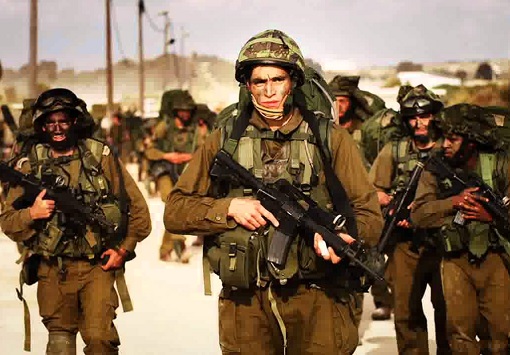
Shortly before February 28, 2026, a secret base was already operational that would serve as a logistics hub for the Israeli Air Force (IAF) and housed special forces search-and-rescue teams during the war against Iran. Located approximately 180 km (112 miles) southwest of Najaf-Karbala, Iraq, the site was reported as a makeshift airstrip in a dry lakebed.
With full knowledge of Washington, Israel set up the clandestine covert military outpost – located in the Nukhayb desert between Najaf and Anbar provinces – in the Iraqi desert near the Saudi border to support not only its air campaign against Iran, but also launched airstrikes against Iraqi troops who almost discovered it early in the war, people familiar with the matter including U.S. officials said.
Search-and-rescue teams were positioned there in case Israeli pilots were downed. So far, there hasn’t been any such need. When a U.S. F-15 jet fighter was shot down near Isfahan, Iran, the Israelis offered to help, but U.S. forces managed the rescue of two airmen themselves. However, Israel did carry out airstrikes to help protect the operation.
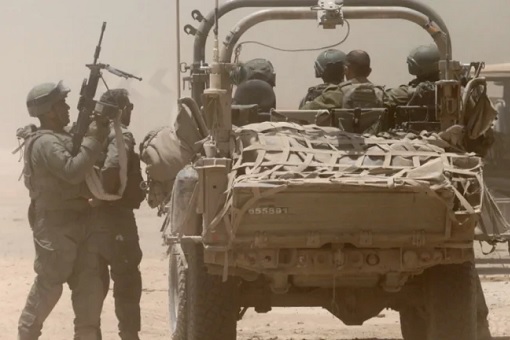
The Israeli base on Iraqi soil was almost discovered in early March. Iraqi state media said a local shepherd reported unusual military activity in the area, including helicopter flights, which led to the Iraqi military sending troops to investigate. Iraqi troops approaching the area were driven back by Israeli airstrikes, which left an Iraqi soldier dead.
While Israel’s military declined to comment, the Iraqi government at the time condemned the attack. “This reckless operation was carried out without coordination or approval,” – Lt. Gen. Qais Al-Muhammadawi, deputy commander of the Joint Operations Command, a central security body, told Iraqi state media in comments about the attack in early March.
In a complaint lodged later in March with the United Nations, Iraq said the attack involved foreign forces and airstrikes, attributing it to the U.S. The U.S. wasn’t involved in the attack, the person familiar with the matter said. The clash was widely reported in Iraqi and Arab media and generated speculation about the identity of the combatants.
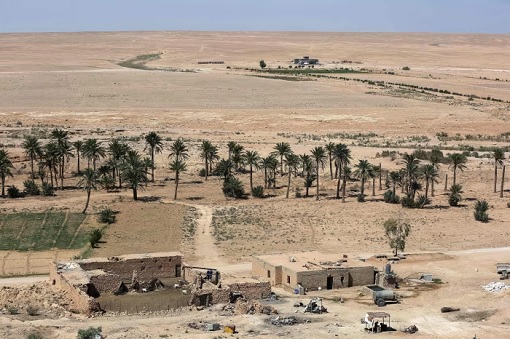
After the initial report from the shepherd, Iraqi soldiers set out in Humvees and drove at dawn toward the site. The group came under intense fire, killing one soldier and wounding two others, Muhammadawi said.
Iraqi authorities dispatched two more units from the country’s Counter Terrorism Service, which played an important role in Iraq’s fight with Islamic State (ISIS / ISIL), to join a search of the area. It found evidence that military forces had been present in the area. “It appears there was a certain force on the ground before the strike, supported from the air, operating beyond the capabilities of our units,” – Muhammadawi told state media.
An Iraqi government spokesman declined to comment further on the incident or whether it knew of the Israeli base. A senior Iraqi security official denied the reports, stating they were “false” while acknowledging a “mysterious” incident in the al-Nukhaib desert area in March. But the U.S. has carried out multiple strikes in Iraq to protect its own bases and other assets.
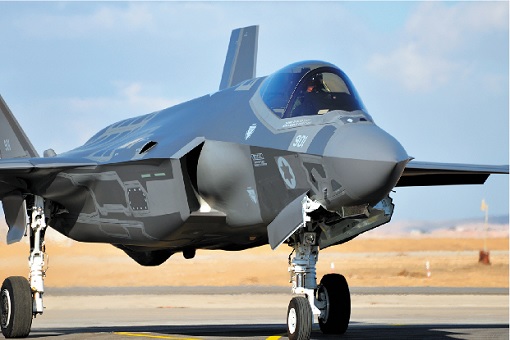
Details of the base – and the risks Israel took to establish and protect it – help explain how the Jewish state managed to fight an air campaign against an enemy around 1,000 miles away. Israel’s air force carried out thousands of strikes against targets in Iran during the five-week campaign.
The base in Iraq allowed Israel to get closer to the battlefield. Israel deployed search-and-rescue teams there so they could respond more quickly if needed for emergency rescue missions. Israeli air force special forces, trained to carry out commando operations in enemy territory, were also present on the base, according to one of the people familiar with the matter.
U.S. forces often set up temporary operational sites in the lead up to military operations, security experts say. A makeshift forward-operating base was set up inside Iran and used in the mission to rescue the U.S. airmen whose plane went down in early April. The U.S. blew up planes and helicopters that got stuck there during the mission.
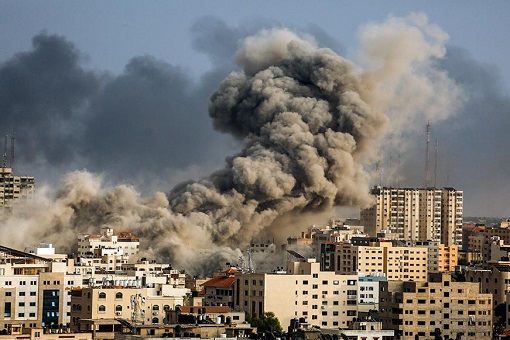
“It’s normal that before operations you reconnoiter and set up these kinds of locations,” – said Michael Knights, the head of research for Horizon Engage, a strategic advisory firm. The western desert region of Iraq is vast and sparsely populated, making it an ideal location for temporary outposts, Knights said. U.S. Special Forces made use of this area in Iraq as part of operations against Saddam Hussein in 1991 and 2003.
People living in the Iraqi desert have witnessed strange activity over the years, from militant groups like Islamic State to special operations teams, and have learned to stay away, Knights said. He said locals told him they had spotted unusual helicopter activity there during the current war.
Iraq, which lies in a key location between Jordan and Iran, was dragged into the Iran war amid strikes in its territory from both sides, as it has long walked a tightrope navigating its relationships to Washington and to Tehran. The U.S. has long demanded that Baghdad disarm powerful Iran-backed groups, which the U.S. designates as terrorist organizations and which hold significant sway inside Iraq.
During the Iran war, these pro-Iranian groups targeted American interests in Iraq, including the U.S. embassy in Baghdad, its diplomatic and logistics facility at the capital’s airport, and oil fields operated by foreign companies. In retaliation, US forces repeatedly struck their positions and bases in response, killing dozens of fighters.
Israeli officials have alluded to covert operations during the war. In early March, the head of the Israeli air force, Tomer Bar, issued a letter to his servicemen. “These days, fighters from special units of the air force are conducting ‘extraordinary’ operations which could ignite the imagination,” – said Bar, who ended his term as air force chief in early May.
The U.S. and Iran are working with Pakistani mediators to draft a one-page, 14-point MOU (memorandum of understanding) that would set the parameters for a month of talks to end the war. The working document calls for Iran to ease its chokehold on the Strait of Hormuz, while the U.S. would wind back its blockade of Iranian ports during 30 days of talks.
Other Articles That May Interest You …
- Iran Has Oil Storage Problem – Trump’s Using It To Inflict Pain
- UAE Leaving OPEC – Reasons Why This Kingdom Quits Oil Cartel
- Iran Ship Failed To Breach Blockade – Now It Could Become Spoils Of War
- Round 2 – US To Blockade Hormuz After Talks Fail
- Wiping Iran Civilization – How & Why China Got Iran To A Ceasefire
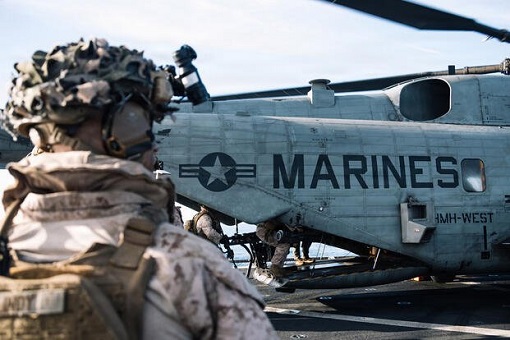
- Seizing Iran Islands – How U.S. Marines Plan To Reopen Strait Of Hormuz
- Ships Pretend To Be Chinese To Cross Strait Of Hormuz
- Energy Security – Why China Can Withstand $100 Oil Prices More Easily
- Live By The Sword, Die By The Sword – How Ayatollah Khamenei Was Killed
- Iran’s “Axis Of Resistance” Missing In Action – Why Tehran Became Isolated & Alone In WAR Against Israel
- Paying The Price For Hamas Attacks – How Trump Misled Iran Before Israel Sends 200 Jets To Attack

|
|
May 10th, 2026 by financetwitter
|


|

|

|

|

|

|





















Comments
Add your comment now.
Leave a Reply