



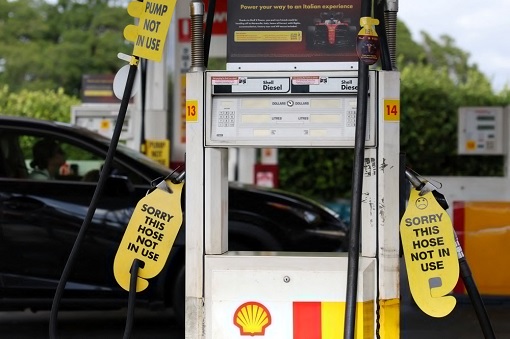
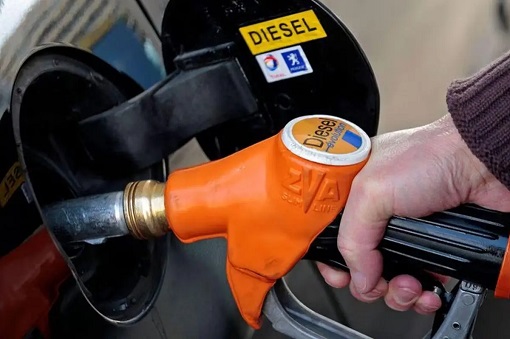
Fuel shortage, including subsidized RON95 petrol and unsubsidized diesel, has begun despite denial by the deputy minister of domestic trade and cost of living, Fuziah Salleh. An increasing number of stations, especially Shell, have put up signs that read ”Under Repair” to their pumps. There were cases where 8 out of 10 pumps were “out of order” – obviously due to the fuel shortage.
Shell Malaysia had claimed disruptions at several stations in the Peninsula were caused by delayed deliveries of RON95 and diesel. That’s a polite way of admitting a crisis of fuel shortage, which could spread nationwide if the clueless Anwar government does not fix the problem fast. Of course, to prevent panicking buying, the government had to lie and said it was just a temporary disruption of supply.
The signs of a crisis are all over the Madani administration. From Prime Minister Anwar Ibrahim’s lecture for the people to brace for price hikes to Transport Minister Anthony Loke’s warning that we are in crisis mode, and from cutting the monthly subsidized RON95 petrol quota from 300 litres to 200 litres to sending civil servants to work from home (WFH), the government is running around like a headless chicken.
In fact, thanks to Donald Trump and Iran’s move to shutdown the Strait of Hormuz, the Iran War has torpedoed Anwar’s plan to call for a snap election this year. So, when Democratic Action Party (DAP) secretary-general Anthony cried about Malaysia in crisis mode, he actually meant about not only fuel supply, but also the 16th General Election that may have to be postponed to next year.
The longer the conflict in the Middle East drags, the worse it will be for PM Anwar, who is seeking a second term. The energy crisis could easily bring down his government, if he’s not careful. Fuel prices have long been politicised in Malaysia, including by Anwar himself. Many still recall – and mock – his repeated claims as Opposition Leader – “If we win today, tomorrow the price of fuel will go down.”
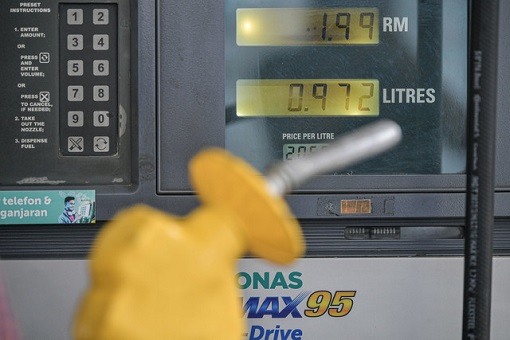
But it would take fake reformist Anwar almost three years after he was installed as the 10th Prime Minister in November 2022 to – reluctantly – bring down the RON95 petrol to RM1.99 per litre, from RM2.05 per litre, effective September 30, 2025. Even then, he did it due to plunging popularity and preparation for a general election. The unsubsidized diesel had shot up to RM6.72 per litre.
With the bill for subsidizing fuel bloated from RM700 million before the war to RM7 billion per month now, Mr Anwar, like a broken record, has been urging Malaysians to tighten their belts. He has also banned Hari Raya open houses by ministries and restricted overseas travel by government officials – largely seen as political drama or a populist move to pacify angry voters.
Yesterday (April 15), under pressure to cover up, the Madani government announced a blanket reduction in all fuel prices. The prices of RON97 and unsubsidized RON95 will be reduced by 25 sen nationwide from April 16 until April 22, while the price of diesel in West Malaysia will go down by 75 sen. Effectively, RON97 would be RM5.10 per litre, and unsubsidized RON95 at RM4.27 per litre.
Hence, the price of diesel in West Malaysia will be fixed at RM5.97 a litre, down from RM6.72 per litre but is still higher than diesel in Borneo – Sabah, Sarawak and Labuan – which is being subsidized at RM2.15 per litre. Interestingly, the government also decided to increase cash assistance for diesel users under two “Budi Madani” schemes to RM400 for April, up from RM300 in March.
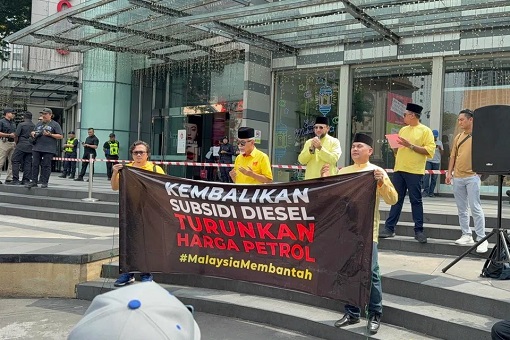
Make no mistake. This is not because the government suddenly realized the economic disaster sparked by its own reckless policy in removing the blanket diesel subsidies. Rather, this is a damage control after Malaysia was exposed to having sold diesel to the Philippines at a time when Malaysians were left to fend for themselves with fuel shortages and high prices of diesel.
A few days ago (April 12), Economy Minister Akmal Nasrullah Mohd Nasir again repeated the Armageddon of fuel shortages, saying – “June and July will be a very critical period in ensuring fuel supplies are available.” Malaysian Prime Minister Anwar Ibrahim earlier in April signalled Malaysia may face uncertainty over fuel supplies as early as June.
However, at a time when the forked-tongue Prime Minister was whining, crying and bitching about fuel shortages and subsidies whilst the Madani government told ordinary folks to tighten their belts, all hell broke loose after the Philippine News Agency said about 329,000 barrels, or 52.311 million litres of diesel had been shipped from Malaysia to the Philippines to boost the country’s fuel supply.
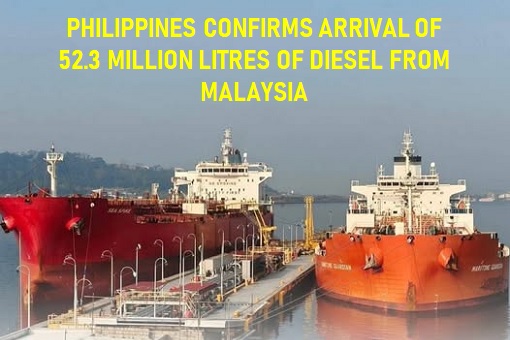
According to the report, the shipment was part of efforts by the Philippine government to strengthen domestic supply, following a delivery of 142,000 barrels, or 22.578 million litres, from Japan on March 26. And thanks to Malaysia’s diesel delivery, the Filipinos saw their diesel prices drop by over 20 pesos (RM1.32) per litre effective April 14, 2026.
In response, Anwar said the recent shipment of diesel is not from national oil company Petronas but from a foreign commodity company, Vitol. “They (Vitol) have an agreement to transport oil and sell it to the Philippines. It is not us (PETRONAS) supplying it to the Philippines. But we are not stopping it. We are giving passage. The oil belongs to parties under foreign agreements,” – the Premier said.
Defending the shipment of diesel to the Philippines, PM Anwar also said Vitol had received approval for the transaction. Exactly from whom did the Swiss-based Dutch multinational energy and commodity trading company get its approval if not from the Anwar government? And the fact that Anwar “is giving passage and not stopping it” means the shipment of diesel could be stopped.
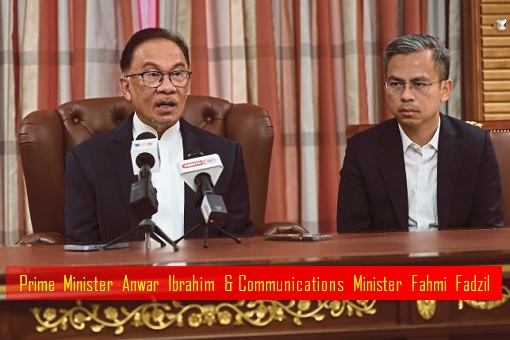
It has already raised a red flag when the Premier impatiently wanted the issue to end. The best part was when Minister of Communications cum Minister of Propaganda – Fahmi Fadzil – tried to spin and twist with more lies that the diesel shipped to the Philippines is not from Malaysia. If either the crude oil used to process diesel or the final product diesel has nothing to do with Malaysia, then why the government’s approval was needed in the first place?
You can’t say Musang King durians being exported by XYZ company to China are not from Malaysia when the government approved the export, gave passage and is not stopping the export even when Malaysians are suffering a serious shortage of the durians, can you? Fahmi’s lies were busted when the Philippines Department of Energy (DOE) undersecretary Sharon S. Garin dropped a bombshell yesterday.
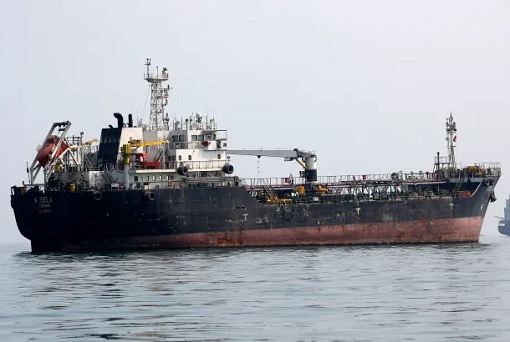
“We wish to clarify that the PNOC EC shipment referenced in my post last Saturday, April 11, 2026, was procured from Singapore-based trader Vitol Asia PTE LTD. Based on the Certificate of Origin, the petroleum products were sourced from Malaysia and loaded onto the vessel MT Maritime Guardian on April 4, 2026, with delivery to PCSPC in Subic Bay Freeport Zone. In total, the government purchased 329,000 barrels, or approximately 52.31 million litres, of diesel to help augment the country’s fuel supply,” – wrote Sharon.
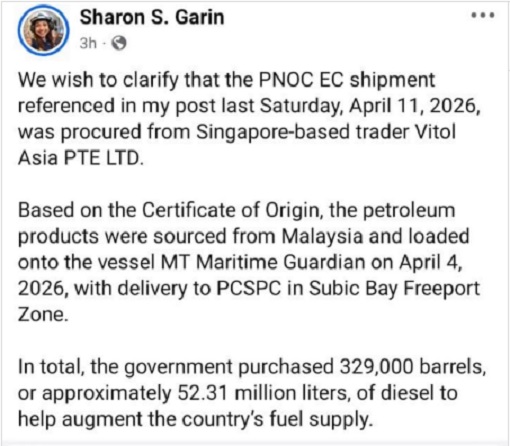
Yes, which part of “Certificate of Origin (COO)” and “sourced from Malaysia” that PM Anwar Ibrahim, Minister Fahmi Fadzil and all the blind bootlickers don’t understand, or pretend to not understand? A Certificate of Origin in the shipping industry essentially certifies that goods in a shipment were wholly obtained, produced, or manufactured in a particular country, which in this case Malaysia.
A piece of COO acts as a product’s “economic passport” – essential for customs clearance, determining tariff rates, and ensuring compliance with trade policies. Unless serial liar Anwar wishes to cook up another half-baked story that the raw material to produce diesel or the final product was actually smuggled from Iran before shipped to the Philippines, the Madani government has betrayed the people of Malaysia.
Vitol is just a trading company, making profit by outsourcing the dirty job of refining crude oil to Pengerang refinery in Johor to create products like diesel, which are then exported to countries like the Philippines. The Philippine government has admitted through Sharon’s statement that the petroleum products were sourced from Malaysia – not Middle East. Besides, Pengerang Refining and Petrochemical Sdn Bhd is a partnership between Petronas and Saudi Aramco.
Even though Petronas did not directly sell to the Philippines, it was involved, one way or another. Petronas could have sold to Vitol, who in turn exported to the Philippines. It doesn’t matter whether the oil processed in Pengerang is from the Middle East, locally produced, or a mixture of both. What is sure is Vitol did not transport 329,000 barrels itself all the way from the Middle East to Pengerang just to be processed.
At best, Petronas and Finance Minister Anwar Ibrahim chose profit over own people’s welfare by selling and refining Malaysia’s already depleted oil to the Philippines despite a domestic crisis of fuel shortages. At worse, the Anwar government is sucking blood from the people with a record high price of diesel at RM6.72 per litre – a man-made crisis which indirectly might have subsidized diesel for the Filipinos.
Anwar also loves to argue that Petronas is now a net importer of fuel to justify slashing of fuel subsidies due to Iran War, but keeps quiet about how the high oil prices would also boost Petronas’ dividends to the Malaysian government – profits that could be used to offset subsidies. The diesel shipment to the Philippines could be a contributing factor that made Malaysia a net importer of oil.
It’s only “half-truths” that Malaysia becomes a net importer of crude oil because its imports more than it exports due to declining domestic production and rising local demand. Petronas can actually increase production, but its exports and production levels are restricted by production quotas agreed upon within the OPEC+ cooperation agreements. The quota is voluntary, but Petronas chooses to follow the OPEC agenda for obvious reasons.
Petronas is a net exporter (not net importer) of energy overall, primarily driven by strong exports of liquefied natural gas (LNG) as well as crude oil. This is the part where the government won’t tell the public. The controversial shipment of diesel to the Philippines is also why Petronas has faced long-standing criticism regarding a lack of transparency in its financial reporting.
Its accounting books are kept partially secret or opaque to enable hanky-panky business such as bailouts, dubious contract allocations, and kickbacks. Operating in secret, Petronas only announces its overall profits. There are reasons why Petronas is not fully accountable to Parliament and reports only to the Prime Minister. Siphoning diesel out of the country is one of them.
Other Articles That May Interest You …
- PM Anwar Shamelessly Demands Credit & Praise For Iran Diplomacy
- RON95 & Fuel Subsidies – Anwar Should Call Iran For Safe & Free Passage
- Ships Pretend To Be Chinese To Cross Strait Of Hormuz
- Energy Security – Why China Can Withstand $100 Oil Prices More Easily
- Live By The Sword, Die By The Sword – How Ayatollah Khamenei Was Killed
- Iran Panicking – Armada Is Ready And Trump Could Strike Anytime
- Gone In 25 Minutes – How Trump Tricked Tehran Twice Before Obliterated Iran’s 3 Nuclear Sites With MOPs
- Iran’s “Axis Of Resistance” Missing In Action – Why Tehran Became Isolated & Alone In WAR Against Israel
- Iran On Fire – Khamenei Should Flee To Russia While He Can Before US-Israel Upcoming Surprise
- Paying The Price For Hamas Attacks – How Trump Misled Iran Before Israel Sends 200 Jets To Attack
- Psychological Warfare – How Mossad Cracked Hezbollah Secret Network With Low-Tech Pager & Walkie-Talkie “Walking Bombs”

|
|
April 16th, 2026 by financetwitter
|


|

|

|

|

|

|















Comments
Add your comment now.
Leave a Reply