



Desperate people do desperate things. The war has spread after Iranian Supreme Leader Ali Khamenei and more than 40 senior Iranian commanders were killed by the Israel Air Force (IAF) in less than a minute in the opening wave of Operation Roaring Lion. That’s a humiliation of the highest order, and the Iranian regime is seeking revenge, or must be seen seeking revenge or risk losing face.
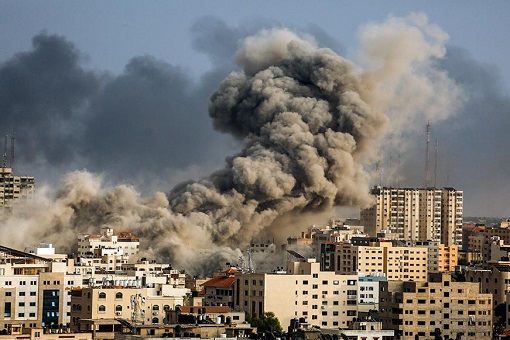
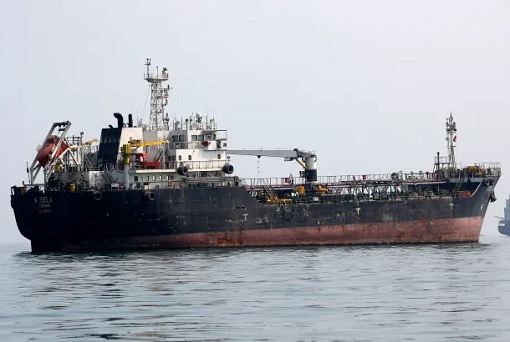
Iran has since fired several barrages of missiles at its Gulf neighbours hosting U.S. military bases such as Qatar, Kuwait and Bahrain. Tehran also fired missiles at the United Arab Emirates, Saudi Arabia, and Oman. Additionally, Tehran also said that the Strait of Hormuz is closed and Iran will fire on any ship trying to pass – a move that threatens to choke a fifth of global oil flows and send crude prices sharply higher.
As Israel began the fifth day of the Middle East conflict by launching a new round of attacks on Tehran and stationing troops in southern Lebanon, Iran continued to fire at Israel and other targets in Gulf states. Saudi Arabia has blamed Iran for a drone attack on the U.S. Embassy in Riyadh and warned such actions would lead to further escalation. But Iran can’t stop without looking weak.
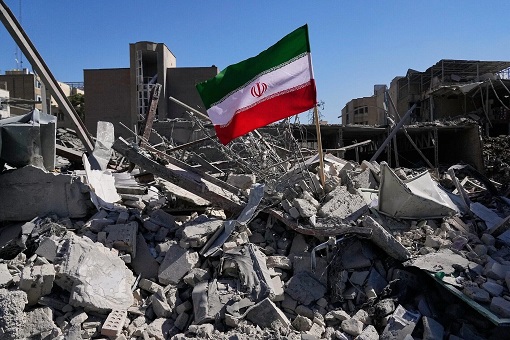
Six U.S. troops have been killed so far, with Trump warning more casualties are likely. In other signs of escalation, the U.S. president won’t rule out boots on the ground in Iran. Adding fuel to the fire, President Trump reportedly is open to supporting groups – such as the Kurds – in Iran willing to take up arms to dislodge the regime, an idea that could turn Iranian factions into fighting machines.
While there are countless ways the U.S. and Israeli attack on Iran could go wrong, they had already gotten their biggest trophy – Ayatollah Ali Khamenei. U.S.’s success against Iran could be a game changer for world oil security. Make no mistake, an already weakened Iran even before the Israel’s “Operation Roaring Lion” and the U.S.’ “Operation Epic Fury” has no chance of winning this war.
What Tehran is doing now is to drag the war on as long as possible and to inflict as much damage as it can on everyone in the region. It still has tonnes of missiles, but without the launchers, which Israel is actively hunting, they are useless. But there’s one burning question – why hasn’t Iran’s partner in the Middle East, China, come to its assistance like how the U.S. always helps Israel?
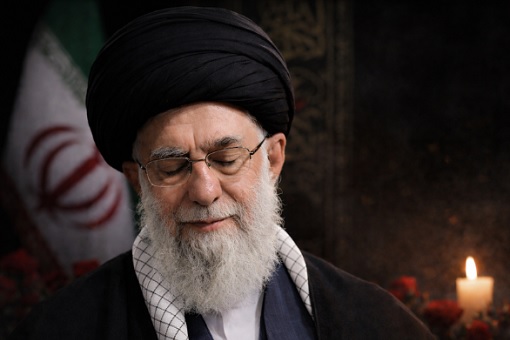
As the U.S. and Israel have pummeled Iran, killing Iran’s leader and calling for its people to overthrow the government, Beijing has responded with sharp criticisms, but that’s all. Chinese Foreign Minister Wang Yi said that it was “unacceptable” for the U.S. and Israel to attack Iran while carrying out negotiations, let alone assassinate a leader of a sovereign country and instigate regime change.
China “supports the Iranian side in safeguarding its sovereignty, security, territorial integrity and national dignity,” – Wang said, speaking with Iranian Foreign Minister Abbas Araghchi by phone on Monday. Despite the risks of choking off the significant portion of its oil imports that runs through the Strait of Hormuz, Beijing could offer very little to buddy Tehran.
From the beginning, the Middle Kingdom isn’t a warmongering nation like the U.S. or Britain. The difference between China and the Western power is its non-interference policy, a cornerstone of its foreign policy since the 1950s, which dictates that Beijing will not interfere in the internal affairs of other nations. This principle distinguishes China from Western interventionism.
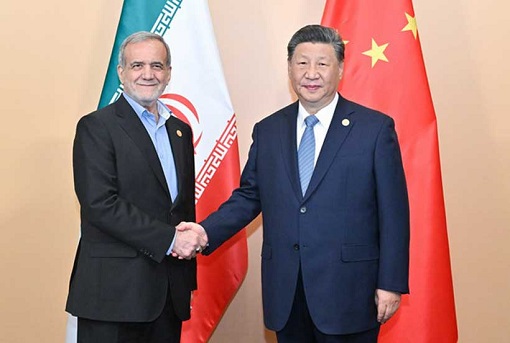
The Chinese are pragmatic. Instead of going to war, Beijing is likely to position itself as an upholder of the international order and avoid ensnaring itself in a protracted Middle East conflict while preparing to work with whoever governs Iran after the fighting stops. It has to be consistent, unlike the West, in its commitment to a principle of non-interference in the internal affairs of sovereign countries.
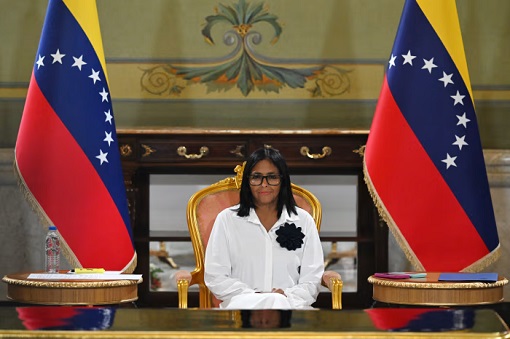
That pattern follows Beijing’s limited support for the government of Venezuela, another close partner of China’s, when the U.S. military abducted President Nicolás Maduro in January. Likewise, if the U.S. were to take action against Cuba, with which Beijing has what it calls an “ironclad friendship”, chances are China too would not come to its rescue.
Sure, China, together with Russia, helped Iran join two multilateral groupings where they are charter members – the BRICS bloc of emerging economies in 2024 and the Shanghai Cooperation Organization (SCO), a security-focused body, in 2023. That, however, does not oblige the Chinese or the Russians to defend Iran militarily because SCO does not have NATO Article 5.
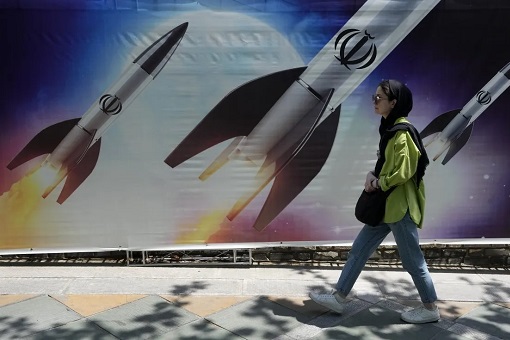
Instead, Beijing views Tehran as a useful strategic partner in its long-term effort to counter Western – especially U.S. – dominance of the international system. China supports Iran diplomatically and economically, while also offering limited and discreet military-related assistance. And this support isn’t in the form of arms sales, but rather the provision of dual-use components and technologies that can be used in Iranian drone and missile production.
These approaches allow Beijing to strengthen Iran’s resilience without incurring the costs associated with formal military alliances or large-scale weapons transfers. From China’s perspective, sustained Iran-U.S. tension can be strategically advantageous. For a start, the current conflict would keep Washington focused on the Middle East – both militarily and politically.
By allowing Iran to create havoc using missiles and drones, it gives Beijing greater freedom of action in the Indo-Pacific, particularly with respect to pressure on Taiwan. It’s not rocket science that improved Iran-U.S. relations could reduce Tehran’s reliance on Beijing and weaken their shared interest in countering American power. China prefers a prolonged period of managed tension between Washington and Tehran.

Crucially, the U.S. is straining its military capacity while depleting its stockpile of munitions, particularly the type of weapons that might be used in any sort of conflict with China over Taiwan. Key missile stocks, including Tomahawk land-attack missiles and SM-3 interceptors, are in short supply. The Pentagon is also facing a shortage of Patriot missiles, as Ukrainian air defenses have used a significant portion of the stockpile over the past four years of war with Russia.
Executives from U.S. defense contractors Lockheed Martin and RTX, the parent company of Raytheon, are expected to meet White House officials on Friday (March 6) to discuss accelerating weapons production. The meeting comes despite President Donald Trump’s remarks on Tuesday that the U.S. had a “virtually unlimited supply” of “medium and upper medium grade” weapons.
The U.S. is also providing the Chinese military with a glimpse of its latest equipment and tactics. The U.S. has moved military resources out of Asia, a shift that could prove durable if the war in Iran doesn’t end quickly. Additionally, the strikes on Iran have given China an opportunity to portray the U.S. as leading what Wang, the foreign minister, called “the regression of the world to the law of the jungle.”
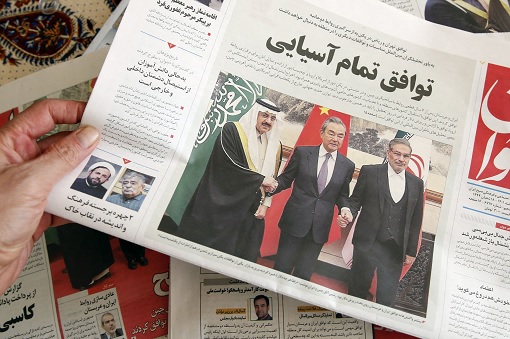
Diplomatically, the entanglement of several Gulf states, which Iran has attacked with long-range drones and missiles, adds to the complexity of the war for China. Saudi Arabia, for instance, sold more crude oil to China last year than Iran did. And Chinese investments in Saudi Arabia and the United Arab Emirates far exceed their investments in Iran. If China were to take steps that would help Iran attack its neighbours, it could harm Beijing’s ties with those critical countries.
The war already has implications for China’s core interests in the region, which are mostly economic and energy security, said Tuvia Gering, a China researcher at the Institute for National Security Studies in Israel. “I don’t think that China right now can do or is willing to do much but to observe first where the war is going to take Iran, the U.S. and Israel,” – he added.
If China were to come out in open support of Iran now, it would make it harder for it to deal with the new authorities in the event of any subsequent regime change in Iran. Beijing does not want to take sides and trap itself later. It’s also not an exaggeration to suggest that Iran is “beyond saving”, having suffered devastating losses of senior commanders and scientists in last year’s US-Israeli air strikes, only to repeat the same mistakes this time, even losing its supreme leader in a bombing.

More importantly, unlike North Korea that serves as a crucial strategic, geopolitical, and military buffer for China, there is no strategic advantage to fight for Iran, not to mention the US may escalate “secondary sanctions” which could target the Chinese Renminbi settlement system. While China accounts for roughly one-third of Iran’s total trade, Iran makes up less than 1% of China’s overall foreign trade.
Rather than getting entangled in the Middle East crisis, it’s smarter to let the U.S. get entangled in the conflict – just like how the Americans had plunged into wars in Iraq and Afghanistan. Whoever holds power in Iran is unlikely to sever economic ties with China entirely. The war – with or without China’s involvement – has seen a spike in oil and natural-gas prices.
However, China has taken several steps to insulate itself from a shock disruption to energy imports. It has built up a strategic national oil reserve while promoting electric vehicles and other technologies to curb its reliance on oil consumption, which is expected to peak by next year. “The Chinese have been preparing for this situation for a while,” – said Ghiselli, who is also head of research at the ChinaMed Project, which analyzes China’s impact in the Mediterranean region.
Other Articles That May Interest You …
- Strategic Error – How Iran’s Retaliatory Strikes At Gulf States Backfires
- Live By The Sword, Die By The Sword – How Ayatollah Khamenei Was Killed
- Iran Panicking – Armada Is Ready And Trump Could Strike Anytime
- Revolution – How One Man Rallies Iranians To The Street
- From Robot Wolves To Satellite Killer – How China’s Military Parade Sends A Message That Annoys Trump
- Gone In 25 Minutes – How Trump Tricked Tehran Twice Before Obliterated Iran’s 3 Nuclear Sites With MOPs
- Iran’s “Axis Of Resistance” Missing In Action – Why Tehran Became Isolated & Alone In WAR Against Israel
- Iran On Fire – Khamenei Should Flee To Russia While He Can Before US-Israel Upcoming Surprise
- Paying The Price For Hamas Attacks – How Trump Misled Iran Before Israel Sends 200 Jets To Attack
- Psychological Warfare – How Mossad Cracked Hezbollah Secret Network With Low-Tech Pager & Walkie-Talkie “Walking Bombs”
- China Has Spoken – If US-South Korea Strikes North Korea, We Will Defend Kim

|
|
March 4th, 2026 by financetwitter
|


|

|

|

|

|

|



















Comments
Add your comment now.
Leave a Reply