



Saudi Arabia and other Gulf Arab states like the United Arab Emirates (UAE) had thought that it was safer to be on friendly terms with a hostile Iran rather than confront it. When China brokered a deal in March 2023 to restore diplomatic relations between two bitter rivals in the Middle East, Saudi and Iran, the peace proposal was quickly signed by Riyadh and Tehran, a partner of Beijing.
With Joe Biden, who vowed to make Saudi a “pariah” over human rights abuses, in the Oval Office, Saudi Arabia saw it as a strategic move to accept the China-brokered peace deal with Iran to secure its regional interests, advance its Vision 2030 economic goals, and manage risks from Iran-backed proxies. It worked until last Saturday, when Israel and the U.S. attacked Iran on February 28.
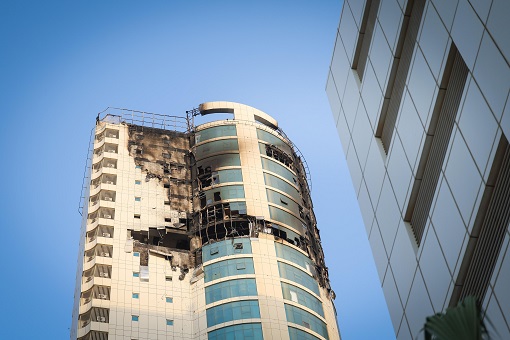
In the past week, Iran launched roughly 1,400 ballistic missiles and drones at the UAE alone, and hundreds more at the other Gulf Cooperation Council (GCC) countries of Bahrain, Kuwait, Oman, Qatar and Saudi. The strikes targeted everything from U.S. military bases to critical infrastructure like oil installations and civilian targets like residential buildings and airports. At least three people have died in the U.A.E.
On Saturday (March 7), a week after the war erupted, Iranian President Masoud Pezeshkian apologized for the waves of attacks. “I deem it necessary to apologize to neighboring countries that were attacked,” – he said on state TV. He said the armed forces had been told to no longer attack neighbors unless attacked first. But it was far from clear if Iran would really stop.
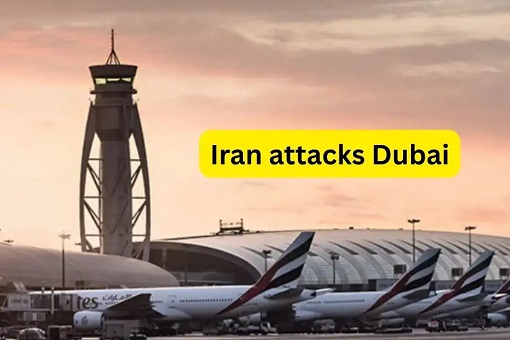
A drone exploded near Dubai’s airport, forcing the temporary suspension of flights. Saudi Aramco’s Berri oil field was targeted on Saturday by an Iranian drone. Saudi officials also said two ballistic missiles headed to a U.S. base were downed and four drones heading for the Shaybah oil field were intercepted. And Iran’s Islamic Revolutionary Guard Corps (IRGC) said it had launched a drone attack on a U.S. base in the U.A.E.
The Iranian strikes even targeted countries that had explicitly tried to stay friendly, including Oman, which was leading negotiations between the U.S. and Iran. Even Qatar, which last year brokered the U.S.-Israel-Iran cease-fire and had sheltered Iran’s proxy Hamas leaders for years, is being targeted. Earlier this week, Qatari F-15 jets downed two Russian-made Iranian bombers only miles from the Qatari coast.
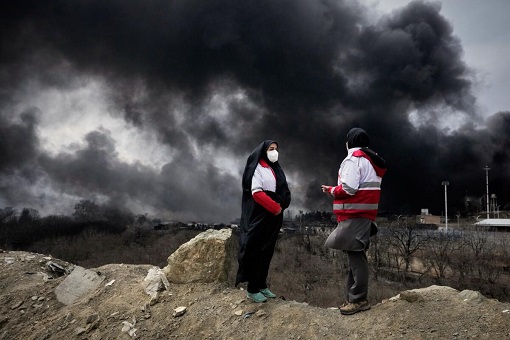
On Saturday, Bahrain reported damage to a desalination plant following an Iran drone strike, marking the first time the Tehran regime has struck at drinking-water infrastructure in the region. “Iranian aggression indiscriminately attacked civilian targets,” – the Bahraini Interior Ministry said in a post on X.
Tehran’s apology means little when other top Iranian officials contradicted Pezeshkian, including the powerful speaker of Iran’s parliament, Mohammad Bagher Ghalibaf, who said that as long as countries in the region hosted U.S. bases, they wouldn’t see peace. The attacks, even if they subside, could scramble the diplomatic calculus across the Gulf for years to come.
Iran’s game plan in launching the attacks is that a wave of terror and the prospect of long-term economic damage from regional instability will push Gulf states to press the Americans and Israelis to stop the campaign sooner rather than later, giving the regime in Tehran breathing space. Even if it slows down the barrage, Iran knows Gulf states will remain fearful of another surge in attacks at any moment.
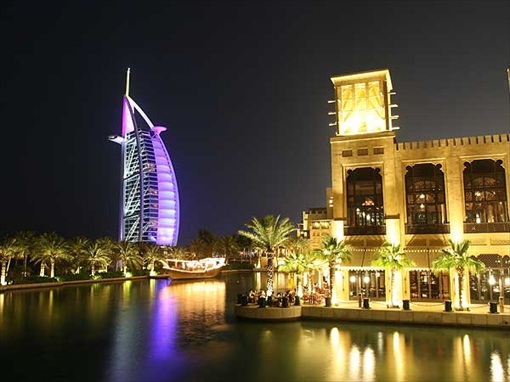
But it will come at a cost. Gulf countries like Saudi Arabia and the U.A.E. that were on the verge of war with Iran in 2019 won’t take kindly to being attacked and will likely draw closer to the U.S. for security. The U.A.E. is now weighing freezing billions of dollars of Iranian assets held in the Gulf state, a move that could sever one of Tehran’s most important economic lifelines.
Dubai has for years functioned as a financial hub for Iranian businesses and individuals seeking a haven from Western sanctions, according to analysts tracking Tehran’s activities and the U.S. Treasury. Iran’s sanctions-evasion infrastructure has allowed Tehran to keep selling oil abroad and use the proceeds to fund weapons programs and regional proxies.
Those weapons are now being used against the Gulf and Dubai itself. Gulf states will likely conclude that their de-escalation approach to Iran has failed, said Allison Minor, a Middle East expert at the Atlantic Council. “I don’t see how you cannot draw that conclusion given how hard they’ve been hit,” she said. The GCC countries labeled the Iranian attacks “treacherous” and vowed to remain united in defending themselves.
Iran’s apology on Saturday could be due to several considerations. Its leaders could be wary of drawing their rich neighbours into the conflict and may feel they have already sent a strong signal to Gulf states. Iran could also be running low on missile stocks. Or, Pezeshkian’s apology could be doublespeak – a smokescreen – aimed at obscuring Iran’s intention.
Other analysts were not surprised with Iranian’s gimmick. “This is a familiar pattern with Iran – push the envelope, test the limits and then start floating de-escalation and off-ramps once the danger of escalation becomes real,” – said Anne Dreazen, a former Pentagon official and vice president of the American Jewish Committee’s Center for a New Middle East.
President Trump, meanwhile, said Iran’s apology reflected that it was losing the fight. Trump had said the attacks on Iran’s neighbours were “the biggest surprise” of the conflict so far and could draw Gulf states to join the U.S. and Israeli attack. But it’s still too early to say the Gulf states would gang up to attack Iran, largely because the rich nations have more to lose than Iran.
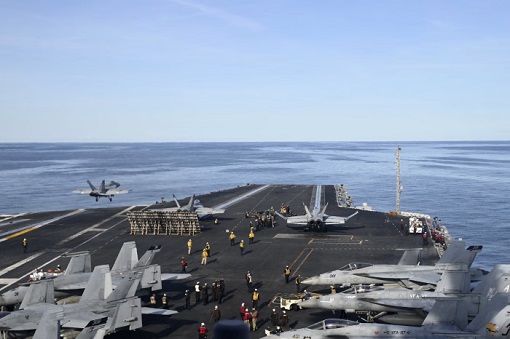
If the current U.S. campaign doesn’t end in regime change, countries such as Saudi Arabia and Qatar could be forced to live with the consequences of a wounded and resentful but still dangerous adversary. Even so, the attacks have inflamed old tensions, and the Arab nations cannot afford to do nothing while being attacked by the Iranian regime.
The U.S. and Israel understood the Arabs’ concerns, and by hook or by crook, they have to win the war. Since the war began on February 28, Israel said it had carried out strikes on 3,400 targets in Iran, intercepted over 110 drones and struck 600 Hezbollah targets and killed 200 militants in Lebanon. And for the first time, the Israeli military has on Saturday bombed Tehran’s energy infrastructure.
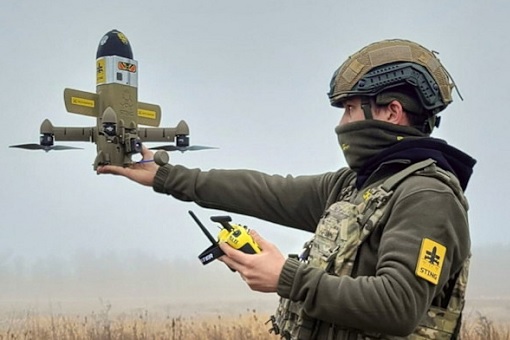
The U.S. Army, on the other hand, is rushing to the Middle East counter-drone systems that have been battle-tested in Ukraine, in an effort to thwart Tehran’s destructive attacks across the region. A small number of the defensive systems, dubbed Merops, are being sent from U.S. Army stocks in Europe, along with U.S. personnel to operate them and train other troops.
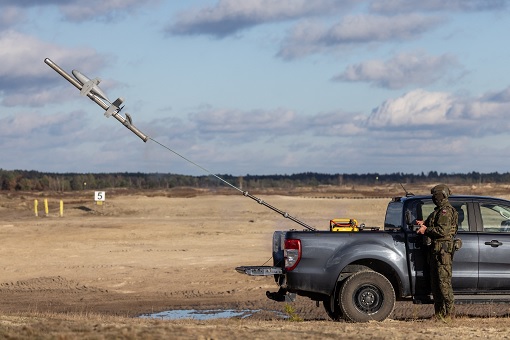
America’s use of Ukraine-tested innovations marks a turnabout. For several years, U.S. military officers have sent equipment to Ukraine and studied the war there to learn how to defend against Russia’s large fleet of one-way attack drones. Now, Ukraine has become a laboratory for defensive systems to be used in President Trump’s new war against Iran -specifically in fending off Iran’s Shahed drones.
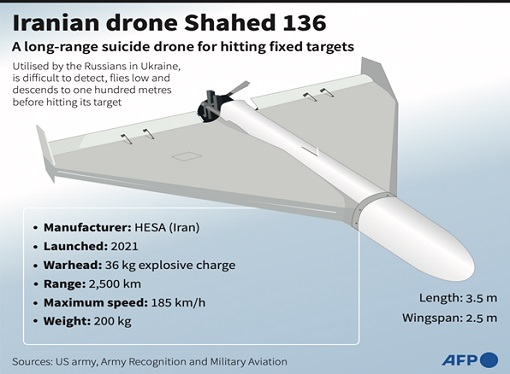
The Iranian regime has used hundreds of ballistic missiles and Shahed drones in strikes against neighbouring states and U.S. military bases. One UAV attack killed six American service members. The United Arab Emirates said that it was targeted by 689 drones in just the first three days of this conflict, with 44 hitting the country.
Shaheds, which Russia uses extensively, are an Iranian-developed weapon, so the U.S. faces a threat that is familiar to Ukraine. Moscow manufactures its own Shaheds and has developed versions that are even more advanced than those Iran is now launching. The U.S. and its allies deployed some Merops systems in Poland and Romania last year following incursions by Russian drones, and has proven to be a popular system.
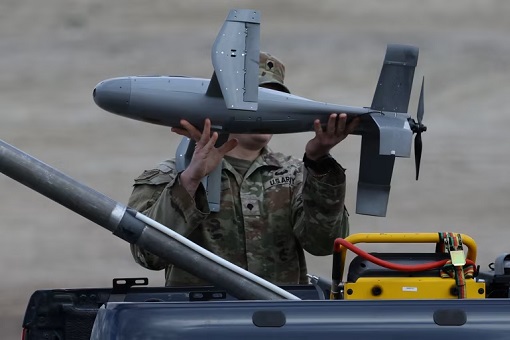
The Merops, which is itself a drone designed to neutralize enemy drones, can autonomously seek an incoming drone using radio waves, radar or the target’s heat signature. Small enough to be launched from a pickup truck, the Merops has intercepted over 1,000 Russian Shahed-type drones in Ukraine. Capable of speeds exceeding 280 km/h and reaching an altitude of up to around 16,000 feet, it operates autonomously or via remote control
More importantly, each Merops drone costs less than US$10,000 – cheaper than Shahed Drones,each costing around US$15,000. The cost per unit should drop to around US$7,000 as production volume increases. The unit price is far lower than interceptor missiles from U.S.-made Patriot air-defense systems, which can cost around US$4 million and producing them is a slow process.
The U.S. Air Force has also put relatively cheap laser-guided rockets on jet fighters to shoot down enemy drones, a capability it employed in the clash last year with the Houthis. “The Shahed isn’t a simple target,” said Col. Yuri Ihnat, a spokesman for the Air Force. “Ukrainian forces learned how to intercept them effectively through hard experience, but that process took time,” – he said.
However, the U.S. isn’t the only country interested in Ukraine’s battlefield experience in its 4-year conflict with Russia. Representatives of Qatar and other Gulf states targeted by Iranian drones and missiles have traveled to meet with Ukrainian arms manufacturers and learn from their experience in building supply chains. More than a dozen Qatari officials toured the production facilities of a major Ukrainian defense company.
Qatari officials also visited a secret training ground in Ukraine, where Merops is also used, to learn how the country brings down Russian drones with Ukrainian and other technology. “Everyone’s phone is ringing constantly. Calls from Oman, Dubai, Qatar, U.A.E.,” – said Yury Hudymenko, the head of an independent group that oversees defense procurement.
First, the Gulf states need to learn how to fight back by deploying far cheaper methods of downing the Shahed kamikaze drone. Then, perhaps they could retaliate by attacking the regime. Already, the U.S. and Israel’s persistent strikes have degraded Iran’s missile stockpiles and launchers. Pentagon said Iran’s ballistic-missile launches were down 90% from the first day of fighting, while drone attacks fell 83%.
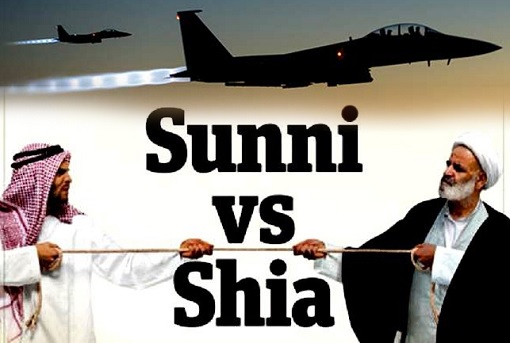
Saudi Arabia has long feared Iran and viewed it as a rival for regional dominance. Ties between Saudi and Iran were cut in 2016 after the Saudi Embassy in Tehran was overrun amid protests over the execution of a prominent Shiite cleric by the Saudi government. In the years that followed, they backed opposite sides in conflicts ranging from Syria to Yemen.
The reason the Gulf states refused to allow the U.S. to use any of its bases on Gulf soil or airspace in the region was because they wanted to avoid fallout from any confrontation between Iran and the U.S.-Israel. Now, all bets are off. The conflict has stunned many residents in Gulf countries, many of whom have never come under such intense attacks before and have few bomb shelters or early warning systems.
As oil prices jumped above US$100 a barrel, Qatar PM Sheikh Mohammed bin Abdulrahman Al Thani slams Iran for betraying the Gulf region with missiles and drones destroying everything in their relationship. They want a quick end to this war, whatever the outcome in Tehran.
Other Articles That May Interest You …
- Strategic Error – How Iran’s Retaliatory Strikes At Gulf States Backfires
- Live By The Sword, Die By The Sword – How Ayatollah Khamenei Was Killed
- Iran Panicking – Armada Is Ready And Trump Could Strike Anytime
- Revolution – How One Man Rallies Iranians To The Street
- From Robot Wolves To Satellite Killer – How China’s Military Parade Sends A Message That Annoys Trump
- Gone In 25 Minutes – How Trump Tricked Tehran Twice Before Obliterated Iran’s 3 Nuclear Sites With MOPs
- Iran’s “Axis Of Resistance” Missing In Action – Why Tehran Became Isolated & Alone In WAR Against Israel
- Iran On Fire – Khamenei Should Flee To Russia While He Can Before US-Israel Upcoming Surprise
- Paying The Price For Hamas Attacks – How Trump Misled Iran Before Israel Sends 200 Jets To Attack
- Psychological Warfare – How Mossad Cracked Hezbollah Secret Network With Low-Tech Pager & Walkie-Talkie “Walking Bombs”
- China Has Spoken – If US-South Korea Strikes North Korea, We Will Defend Kim

|
|
March 9th, 2026 by financetwitter
|


|

|

|

|

|

|



















Comments
Add your comment now.
Leave a Reply