



Azerbaijan, which borders Iran to the north and has nothing to do with the Middle East conflict, has now become the latest country dragged by Iran into the war. The former Soviet republic promised a response after it said Iran’s regional attacks had spread to its territory, injuring two people thanks to Iranian drones. The conflict has now hit at least 13 countries outside Iran and Israel.
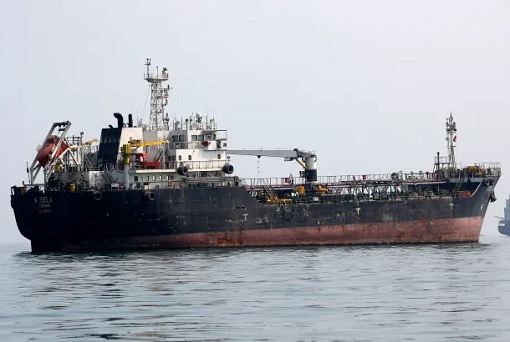
Even Turkey, supposedly a good friend of Iran, was targeted by Tehran but NATO air defenses managed to shoot down an Iranian missile before it reached southern Turkey. The missile was destroyed while passing through Iraqi and Syrian airspace, with debris landing in Turkish territory. The conflict has also spread beyond the Middle East, after a torpedo from an American submarine sank an Iranian warship near Sri Lanka on Wednesday (March 4).
While U.S. Navy had destroyed Iran’s most modern frigate, adding to a long list of Iranian Navy ships America has sunk, Spain is sending its most advanced frigate to help provide air defense for the island of Cyprus, a fellow member of the European Union, which has been the target of Iranian drones. The Spanish deployment is part of a larger fleet of Dutch, Greek and Italian warships, led by the French aircraft carrier Charles de Gaulle.
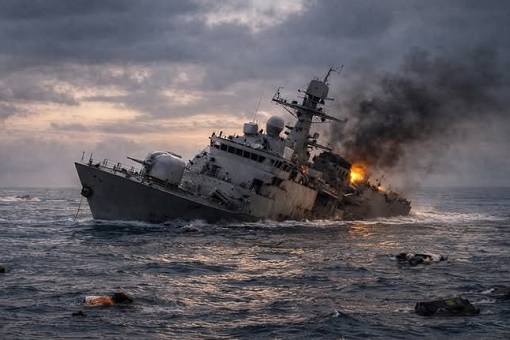
And like tonnes of previous empty threats, Iran cries and warns that the U.S. will “bitterly regret” for sinking its crown-jewel IRIS Dena in the Indian Ocean, which left at least 87 sailors dead. US Defense Secretary Pete Hegseth mocked how the Iranian vessel was sunk – “An American submarine sunk an Iranian warship that thought it was safe in international waters. Instead, it was sunk by a torpedo.”
What Hegseth called a “quiet death” and the first US sinking of an enemy ship by torpedo since World War II, Tehran saw it as yet another humiliation after Iranian Supreme Leader Ayatollah Ali Khamenei – painted as invincible for close to 40 years – and more than 40 senior Iranian commanders were killed by the Israel Air Force (IAF) in less than a minute in the opening wave of Operation Roaring Lion.
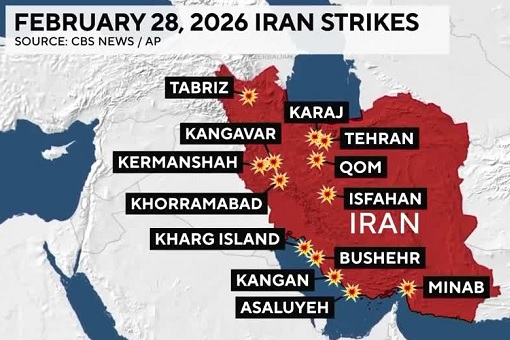
The Pentagon had so far destroyed 20 of the regime’s vessels since the U.S. and Israel began carrying out strikes on Saturday (March 1). The Islamic Republic’s “prize ship” is believed to have been tracked by the U.S. nuclear-powered submarine, and was neutralized before it could go back to Iran from eastern India to threaten the global shipping of oil after Iran close the Strait of Hormuz.
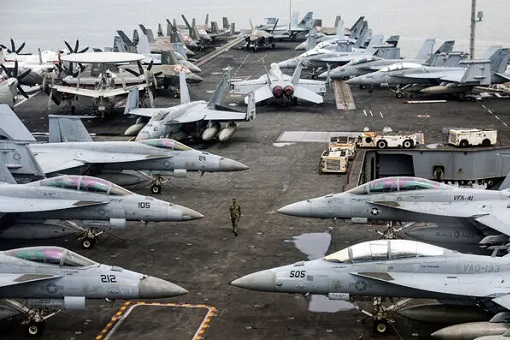
It’s not hard to see why Iran is toast as it is fighting a losing war against military superpower United States and Israel, arguably the biggest military power in the Middle East. The fact that Tehran thought it was a jolly good idea to attack neighbouring Arab nations with the illusion they would pressure Donald Trump to pack and go home shows how Iran still keeps making Khamenei’s strategic mistakes.
Yes, even though the dictator had been killed, the regime continues the Ayatollah’s mistakes. Just like in June 2025, the pileup of Supreme Leader Ali Khamenei’s mistakes had served President Trump, and Prime Minister Netanyahu for that matter, a strategic opportunity too mouth-watering to pass up. On Saturday, Khamenei paid with his life due to his arrogance and penchant for bluffing.
The proximate error came during negotiations, in which Iran all but announced it still wanted to pursue nuclear weapons. What else was Mr. Trump supposed to conclude from Iran’s evasions? Khamenei thought he could scam Trump the way Obama was conned. But Trump was not hopelessly stupid. No more domestic enrichment of uranium for nuclear fuel, the president said.
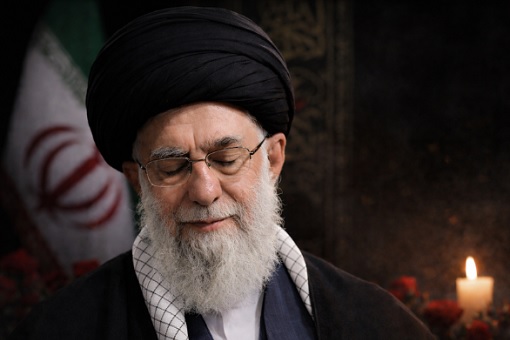
Trump’s demand was hardly unreasonable – 23 nations operate nuclear power programs by importing enriched uranium. U.S. negotiators even offered to provide Iran the fuel free of charge, a senior administration official said on Saturday. Iran balked. Despite vast oil reserves, Iran claimed to need nuclear power and its own enrichment program. For this, it would risk everything.
Worse, one of Iran’s last proposals was that it be allowed to maintain thousands of advanced centrifuges and enrich uranium to as much as 20% purity – covering most of the technical effort to reach weapons-grade. As the nonproliferation expert Andrea Stricker put it, the regime’s clear purpose was “to maintain the means to produce nuclear weapons fuel at a time of its choosing.”
Each Iranian “compromise” along those lines offers more evidence of the regime’s goal – hanging on to the capability to pursue nuclear weapons. This was the Ayatollah’s policy, for which he has made his people suffer for two decades. What made it so damaging this time was the revolutionary rally. In January the Iranian people showed that they seek to overthrow the regime.
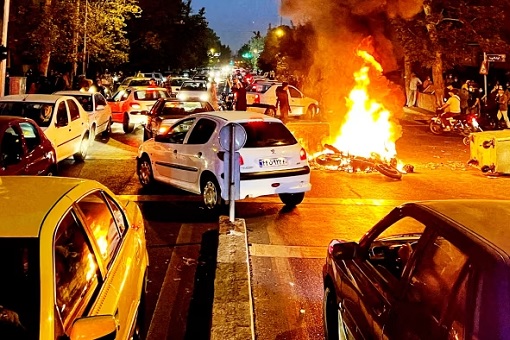
But the regime responded by showing that it rules only by the bullet. It gave Washington an opening. “You better not start shooting,” – Mr. Trump warned Iran amid the country’s protests, “because we’ll start shooting too.” The regime scoffed. “Trump says things like this a lot,” Ali Larijani, Iran’s National Security Council chief, commented. “Don’t take him seriously.”
Ayatollah Khamenei taunted President Trump and crossed his red line as flagrantly as he could, slaughtering thousands in the streets – at least 32,000 people in two days, Mr. Trump said. The president was willing to overlook a few dozen killings in the protests’ early days, but the astonishing scale guaranteed a confrontation and made a limited response difficult.
The people of Iran had been driven to the streets by economic impoverishment, and the regime had no answer but gunfire. While it smuggled a billion dollars to Hezbollah in the first 10 months of 2025, amid the January protests it offered its own citizens only US$7 a month. Had Khamenei been clever, he would have sought a compromise on nuclear enrichment and waited to outlive the Trump administration to fight another day.

But the arrogant Demi God Khamenei refused. The ayatollah may have thought he had to stand firm, or else the U.S. and Israel would never cease pushing him around. In truth, his own errors had already brought about the collapse of Iran’s deterrence. Pretending that June’s 12-day war had changed nothing only made a sequel more likely.
In the lead-up to June, Iran had issued the same kind of threats that had deterred U.S. and Israeli action for two decades. Like former president Barack Obama, some in the West believed the bluff – Tucker Carlson wrote that “a strike on the Iranian nuclear sites will almost certainly result in thousands of American deaths.” He warned of US$30 gasoline and a world war. None of it happened.
From the first day, Israel ruled the skies over Tehran and lost not a single jet, striking Iran’s most sensitive and strategic assets at will. Iran’s missiles and drones failed to inflict major damage in response. Israel’s success was so great, and Iran’s weakness so glaring, that Mr. Trump had as low-risk a shot on the remaining nuclear sites as planners could ever have imagined.
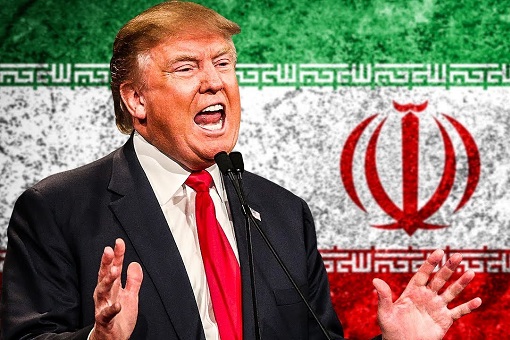
Having lost its crown jewels, Iran fired off some missiles, hit a U.S. radar dome, and asked for a cease-fire. Yet after this meager performance, and weakened in the war, the regime spent the past few months repeating the same threats from before June. Sure, Iran has scored some deadly hits, killing at least three U.S. service members and 11 Israeli civilians, but not enough to make Trump blinks. Experience had given him confidence that the risks were manageable.
Khamenei screwed up in giving Israel that same confidence before the 12-day war. He did it by departing from his own strategy of not directly engaging the Jewish state in war, at least not before acquiring nuclear weapons. Massive Iranian ballistic-missile strikes in April and October 2024 showed Israel that it could withstand the assault and allowed it to destroy Iran’s key air defenses in retaliation. This left the nuclear program exposed, inviting attack.
All the proxy warfare in the world hadn’t done that. Even the October 7, 2023, invasion by Hamas terrorists – funded, armed and trained by Iran for that purpose – didn’t make Iran a target. Neither did the entry into the war of the rest of Iran’s “Axis of Resistance”, an informal Iran-led military coalition that operates across West Asia to destroy the Jewish state.
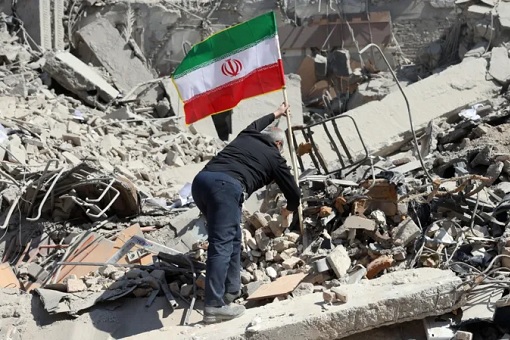
Those proxies were supposed to do the Iranian regime’s bidding, but under the stresses of the October 7 war, Tehran ended up intervening more or less on their behalf. Perhaps Ali Khamenei felt it was necessary given the beating his proxies were receiving at Israel’s hand. Generational investments to the tune of billions of dollars in Hamas and Hezbollah were sinking before his eyes.
Hezbollah was the insurance policy for Iran’s regime and nuclear program. It deterred attacks on Iran by threatening to rain down 150,000 missiles on Israel’s major cities. But Khamenei misused that insurance by directing Hezbollah to join Hamas’s war on October 8, 2023, and then to keep firing rockets for 11 months. Keeping this front alive past the point of diminishing returns was another mistake, which allowed Israel to defang Hezbollah in late 2024.
With all proxies crippled, paralyzed and demoralized, Iran was alone in June, when it counted. If Israel also had to deal with Hezbollah’s full arsenal, it might not have attacked. This time Hezbollah has fired a few missiles, in what the journalist Amit Segal called an act of “Israel-assisted suicide,” but it has been so weakened that the prospect was no longer enough to deter Israel or the U.S.

Operation Epic Fury owes everything to Khamenei’s mistakes. He squandered his proxies and insurance policy. He lost his air defenses and allowed the U.S. and Israel to test their own. He risked a war in June that exposed Iran as a paper tiger. He tanked his currency with postwar intransigence, then slaughtered his people when they rose up to protest, trampling over Mr. Trump’s red line.
Fatally, he was stubborn in his effort to keep a nuclear option and refused to adapt to a radically altered balance of power. Most disastrously of all, the so-called Supreme Leader continued to underestimate Trump. He wasn’t the only one. The conventional Western analysis has long been that this president would settle for an agreement like Barack Obama’s from 2015 and then call it the greatest deal ever made.
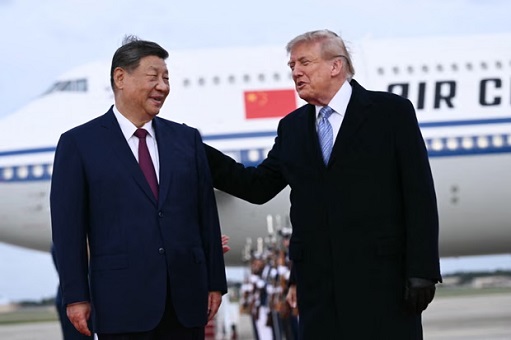
A deadly wrong prediction. In the end, Khamenei presented Trump with the best opportunity any president was ever likely to have to weaken, transform or topple this Iranian regime. Khamenei did not realize that he was not North Korean Supreme Leader Kim Jong-Un, who enjoys Chinese protection. And what is left of the regime is now following – blindly – Khamenei’s path to self-destruction.
Other Articles That May Interest You …
- Why China Watching With Popcorn Without Helping Partner Iran
- Strategic Error – How Iran’s Retaliatory Strikes At Gulf States Backfires
- Live By The Sword, Die By The Sword – How Ayatollah Khamenei Was Killed
- Iran Panicking – Armada Is Ready And Trump Could Strike Anytime
- From Robot Wolves To Satellite Killer – How China’s Military Parade Sends A Message That Annoys Trump
- Gone In 25 Minutes – How Trump Tricked Tehran Twice Before Obliterated Iran’s 3 Nuclear Sites With MOPs
- Iran’s “Axis Of Resistance” Missing In Action – Why Tehran Became Isolated & Alone In WAR Against Israel
- Iran On Fire – Khamenei Should Flee To Russia While He Can Before US-Israel Upcoming Surprise
- Paying The Price For Hamas Attacks – How Trump Misled Iran Before Israel Sends 200 Jets To Attack
- Psychological Warfare – How Mossad Cracked Hezbollah Secret Network With Low-Tech Pager & Walkie-Talkie “Walking Bombs”
- China Has Spoken – If US-South Korea Strikes North Korea, We Will Defend Kim

|
|
March 5th, 2026 by financetwitter
|


|

|

|

|

|

|




















Comments
Add your comment now.
Leave a Reply