



Nothing goes to waste. Apple, long known for producing premium-priced products, has also managed to develop a booming business selling cheaper devices when most gadget makers are being hammered by rising costs. When Macbook Neo was introduced on March 4, 2026, as an entry-level, budget-friendly laptop the company did not know that the US$599 device would become a hit.
In fact, the original plan was to produce around only 5–6 million MacBook Neos. But it was so successful that CEO Tim Cook announced that it was the best launch week ever recorded by Mac with regards to new users buying their first-ever Mac. Following the overwhelming performance of the MacBook Neo, Apple is having discussions with its supply chain.
However, behind the success story, Macbook Neo is actually using defective chips. The chip powering the Neo is Apple’s A18 Pro, the same chip first used inside the iPhone 16 Pro two years ago, but with one key difference. The Neo version of the chip has a “5-core” graphics processor, one less than the version inside the 2024 iPhones – they are “chip-binned”.
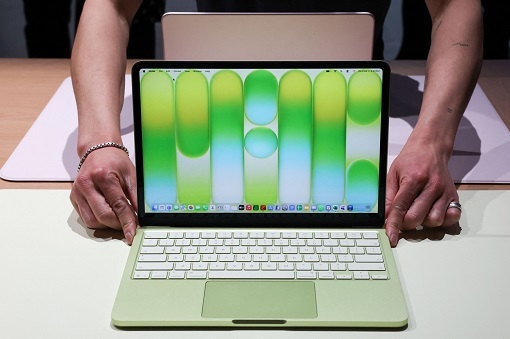
Instead of throwing away chips with slight defects, Apple was able to save some of the A18 Pro chips with a defective core for future use. Defective cores can be disabled, leaving a chip that still functions perfectly well to power different, often cheaper devices – in this case an entry-level laptop like Macbook Neo instead of a top-of-the-line iPhone.
“If you can take the stuff that doesn’t meet highest level specs and still use it, you can save money, scrap and time,” says Tim Culpan, a supply-chain analyst who has written about Apple’s Neo chip orders. “Also you can reach a lot more customers you might not otherwise be able to sell to.” What began as a salvage operation has evolved into a brilliant design strategy, allowing Apple to segment its lineup with surgical precision, achieving efficiencies that smaller rivals struggle to match.
Essentially, Apple has used its flexibility with its own silicon to develop lower-priced iPhones and computers, many of which have sold well. The Neo is so popular that Apple is running low on leftover chips and has been forced to order new ones. Repurposing chips is one of many ways Apple takes advantage of its massive and formidable supply chain. The strategy is weaponizing prices to attract new users.
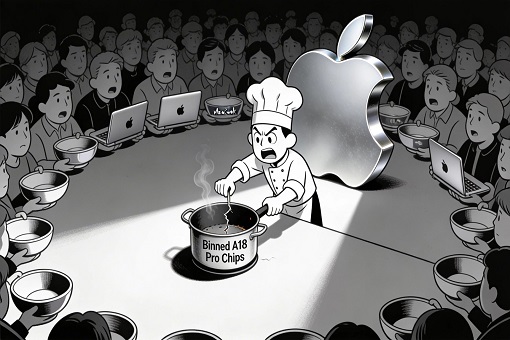
But Macbook Neo is not the only product which Apple sells cheaply to poach potential Chromebook and PC users and make money. The iPhone 17e, which also uses a “binned” chip, is cheap enough to attract Android users. Rival device makers are struggling more than Apple with the surging price of memory and storage, making lower-end devices unprofitable to sell and enabling Apple to gain market share.
Besides, every new user of an Apple device is also a potential buyer of Apple’s higher-margin services, such as iCloud storage, and the App Store. Since 2021, Apple has sold six of its A-series chips with one less GPU core in a cheaper device after the fully functional version first appeared in a more expensive iPhone, according to a Wall Street Journal analysis of nearly 200 Apple documentation pages.
Apple sells more than 200 million iPhones a year. Even if a small percentage of smartphone chips don’t meet specifications, Apple still has millions to repurpose. The 17e uses chips that aren’t good enough for the iPhone 17. The iPhone Air uses chips that wouldn’t meet specifications for the more expensive 17 Pro. Besides the Neo, iPhone 17e, and iPhone Air, others using defective chips included iPhone SE, iPad Mini, and iPhone 16e.

Apple makes far fewer Macs, and the M-series chips that power them. Even so, two years after rolling out with MacBook Pros, M-Series chips that lack a GPU core are used in the cheaper iPad Air. The strategy of reusing faulty chips dates back to the first chip Apple designed, the A4, which powered the first iPad, then months later the iPhone 4, and after that the second-generation Apple TV box.
A4 chips that drew too much power weren’t well-suited for smartphones running on a battery, but worked just fine in the Apple TV plugged into an outlet. Something similar happened with less efficient S7 chips, which ended up in the second-generation HomePod rather than the Apple Watch for which they were originally designed.
When Apple bought processors from suppliers like Intel or Samsung, it could pick the most choice chips they made. Now that Apple designs its own processors, it pays Taiwan Semiconductor Manufacturing, or TSMC, to make silicon wafers filled with hundreds of chips, sometimes of varying quality.

Apple puts chips with more processing cores in devices with bigger displays and more storage to create higher-priced models. And as it rolls out new chip designs, Apple repurposes its older chips for cheaper products. The A8 chip first appeared in 2014 in the iPhone 6, then in 2015’s iPad Mini and Apple TV, and finally in 2017 in the first HomePod.
Using chips in the Neo that might otherwise be tossed is one way Apple was able to deliver its first entry-level laptop. Yet the Neo is so popular Apple is blowing through its supply of ultra cheap binned chips and recently placed fresh orders for A18 Pro silicon specifically to keep Neo production going, according to people familiar with Apple’s supply chain.
That isn’t as easy as it used to be. Apple gets its most advanced chips from one supplier, TSMC, which is also struggling to meet voracious demand for artificial-intelligence chips. “Apple no longer has the flexibility it once enjoyed, and the strain is starting to show,” – said Ming-Chi Kuo, an analyst with TF International Securities.

Tim Cook said the company is facing chip shortages that are preventing it from meeting customer demand, especially for iPhones and increasingly for Macs. Apple’s website currently lists shipment times of one to two weeks for a new Neo. Not bad for faulty or defective chips. But with the arrival of a fresh batch of A18 chips, Apple may have to disable a GPU core on them to ensure all MacBook Neos in circulation have just five active GPU cores.
Other Articles That May Interest You …
- Give Him Something To Brag About – Apple CEO Tim Cook Shows How To Scam Trump To Avoid Tariffs
- Malaysia, Thailand, Cambodia Celebrate 19% Tariffs – The Art Of Sucking Up Trump & Surrendering Concessions
- US-EU Giant Trade Deal – Why Europe Pretends 15% Tariff “Bad Deal” Is A Good Deal
- Trump Threatens 100% Tariffs On Russia – But Here’s Why Russian Markets Jump In Celebration Instead
- Pawns Europe & Ukraine Got Played – The Hidden Message Behind US-Russia Talks In Saudi Without Allies
- China Secretly Hiding Tonnes Of Gold – The Buying Spree In Preparation Of Trade War, Sanctions Or Even Invasion Of Taiwan
- Sanction My Foot! – Russia Makes A Mockery Of Western Oil Sanctions, While China & India Laugh All The Way To The Bank
- Welcome To The Club – Here’s Why France Wants To Join BRICS, And Why Russia Objects The Idea
- Europe Closed Front Door, But Opens Backdoor – How India Makes Easy Money Reselling Russian Cheap Oil To EU
- France Joining De-Dollarization – Why China Gave Macron Lavish Banquet, But Treated Ursula Like Pariah
- Black Market For Oil Is Booming – How Russian “Dark Fleet” Of Tankers Evade Western Price Cap

|
|
May 18th, 2026 by financetwitter
|


|

|

|

|

|

|
























Comments
Add your comment now.
Leave a Reply