



Despite approval rating hitting 32%, Donald Trump’s worry isn’t about re-election or the Iran war. Instead, the U.S. president, whose second-term has seen the Dow Jones, S&P 500 and Nasdaq rallied 57%, 70%, and 142% respectively, is deeply worried about a stock market crash. After all, he has been somewhat of a magnet for major geopolitical and historical events.
From Germany to France, and from Japan to the United States, the global bond market is seeing selloff going into the month of September – raising borrowing costs for governments and putting pressure on U.S. stocks. As oil prices continued to climb after the U.S. and Iranian militaries clashed over the weekend for the first time in weeks, worries that the conflict will keep inflation hot could lead to something more serious.
The Federal Reserve may raise the interest rates. Swelling fiscal deficits world-wide, increased competition from corporate borrowers and Fed Chairman Kevin Warsh’s reluctance to give forward guidance saw the 10-year Treasury note yield hit a 20-month high to 4.7880% – highest level since January 2025. That means the U.S. is paying 4.788% annual return to you for lending money to the U.S. government.
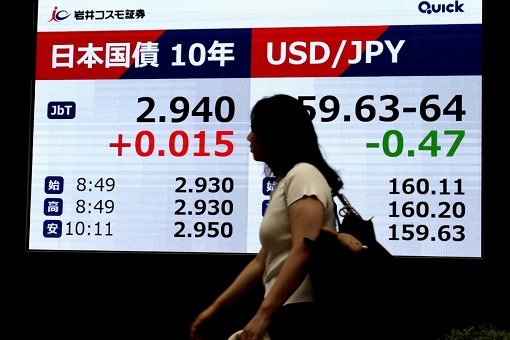
But that was the beginning. Japan’s 10-year bond yield jumped more than 6 basis points to 3% for the first time since 1996 after Treasury Secretary Scott Bessent hinted at possible BOJ (Bank of Japan) rate hikes. The country is at the epicenter of a global bond rout driven by expectations of higher interest rates and worries around swelling government debt.
Bond yields also rose to multiyear highs in the U.K., Germany and France. Britain’s 10-year yield hit its highest since 2008 above 5.25%, while the equivalent German yield rose to a 15-year high at 3.36%. France 10 Year Government Bond Yield, meanwhile, increased to 4.15%, the highest since November 2008. Data on Tuesday (Sept 1) showed euro zone inflation rose back above 3% in August due to higher energy cost.
A sustained move higher in yields will have consequences well beyond Wall Street. One of the most direct victims is the government itself, which will be forced to pay higher interest rates on its growing pile of debt as older bonds mature and are replaced by new ones. Now, nearly one in five dollars of revenue goes to interest payments – thanks to US$40 trillion U.S. national debt.
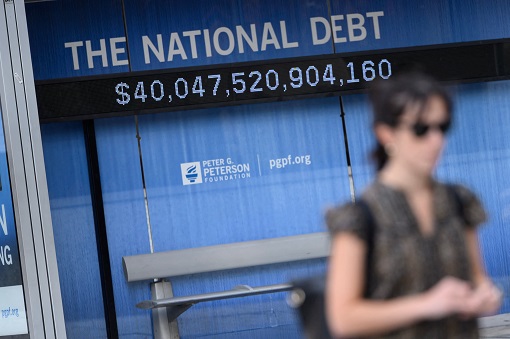
Essentially, the US annual interest expense now stands at a record US$1.25 trillion, more than four times the level seen in 1991. “I think really most of this (bond) sell-off has been a re-assessment of Fed policy,” said Andrew Lilley, chief rates strategist at Barrenjoey, an investment bank in Sydney. “I think the Fed hikes in September, and I think it’s the beginning of the three-rate hike cycle at minimum.”
Higher yields could put pressure on tech companies that are borrowing massively in bond markets to fund AI investments. The higher yields go, the bigger strain it provides to this particular sector, which is one of the largest growth drivers of equity markets. Therefore, if the cost of borrowing jumps, it could crush the AI investments, which in turn would crash the stock markets.
Five of the biggest AI hyperscalers – Alphabet, Amazon, Meta, Microsoft and Oracle – have issued a jaw-dropping US$220 billion of debt already this year as they fund investments in data centres and models. This is more than double last year’s total figure. Borrowing for AI investments has helped push global corporate bond issuance to a record US$4.9 trillion so far in 2026 – up 14% from this point a year ago.

Traders are pricing in a more than 66% chance that the Fed will raise rates by a quarter point later this month, according to CME data. It was just a week ago when the chances of a hike were just under 40%. Expectations that the central bank will raise interest rates jumped after Kevin Warsh struck a hawkish tone at Jackson Hole on Friday.
America’s rising borrowing costs have set off a battle between Bessent and bond investors, but the factors pushing up yields in the U.S. are also issues in other big markets. In many advanced economies, widening budget deficits, high debt levels and stubborn inflation have unnerved investors who believe that governments are either unable or unwilling to take steps to improve their fiscal situations.
The rise in oil prices since the start of the war in Iran has compounded worries about stubbornly high inflation. Mr. Bessent is meeting with international finance ministers this week in Asheville, N.C., for a Group of 20 meeting, as U.S. foreign policy continues to upend the global economy. Brent Crude, the international oil benchmark, rose on Tuesday (Sept 1) to above US$92 a barrel, nearly 30% higher than prewar levels.
The jump in energy costs – the prices of refined fuels like gasoline and diesel have risen even faster – has increased expectations of accelerating inflation that could prompt central banks to raise the short-term interest rates they control. Higher fuel prices also add enormous costs to governments in Asia and Europe, which are big energy importers.
As far as investors are concerned, many politicians don’t appear worried enough about these debt levels. Instead, investors see government plans that are not likely to shrink budget deficits. Therefore, with expectations of more borrowing to come, investors are demanding higher returns to hold government bonds.
“The confrontation between bond markets and policymakers is becoming a battle of attrition,” Geoffrey Yu, a strategist at BNY Mellon, wrote in a note on Tuesday. “Persistent inflation, fiscal concerns and energy risk continue to push investors to demand greater compensation.” Yet, Bessent said the U.S. bond market remains the “best performing market” in the world.
Other Articles That May Interest You …
- Market Turmoil – Oil Hit $100, Bond Selloff, Stocks Plunge, Grains Skyrocket
- Iran War Reveals How U.S. Sanction Was Easily Evaded Using Yuan
- Paying The Price For Hamas Attacks – How Trump Misled Iran Before Israel Sends 200 Jets To Attack
- Ran Out Of Luck And Place To Hide – Here’s How Israel Trainee Squad Accidentally Killed Hamas Mastermind Sinwar
- Live By The Sword, Die By The Sword – Anwar Madly Angry After BFF Hamas Terrorist Leader Haniyeh Assassinated
- Playing A Dangerous Game – Here’s Why Facebook Removes News Of PM Anwar Meeting With Hamas Terrorists
- Hamas Is Game Over – How The Terror Group Miscalculated, Betrayed, Abandoned And Made More Mistakes
- Careful What You Wish For – U.S. May Slap Economic Sanction On Malaysia For Supporting & Training Hamas Terrorists
- Human Shields – How Hamas Cleverly Wins Propaganda War, But Was Stunned By “Fire Power” Unleashed By Israel
- Told You So!! – Congrats To Anwar For Radicalizing School Kids As Potential Hamas Terrorists Playing With Guns
- An Eye For An Eye!!! – No One Can Stop Israel From Reducing Gaza To Rubble And Erase Hamas Terrorists

|
|
September 1st, 2026 by financetwitter
|


|

|

|

|

|

|





















Comments
Add your comment now.
Leave a Reply