



Microsoft co-founder Bill Gates held the title of the world’s richest person for the longest combined duration in modern history. He topped the Forbes annual billionaire rankings for 16 out of 21 years between 1995 and 2017, including 13 years consecutively from 1995 to 2007. He was so rich that people in the 1990s could not imagine anyone would be richer than him.
In fact, Gates was so wealthy that there was a popular joke which went viral in the 1990s (before the invention of social media) through emails – if he somehow dropped a US$100 bill, he would not bother to stop and bend over to pick up the note because he made between US$100 and US$120 a second. Doing so would “technically” lose more than U$100.
But while Bill Gates used to be the planet’s richest man for 13 consecutive years, he was just a billionaire. Till today, he cannot realistically become a trillionaire because he sold and donated the vast majority of his Microsoft equity. He could have been the world’s first trillionaire if he hadn’t sold his original 45% stake in Microsoft and dedicated billions to philanthropy.
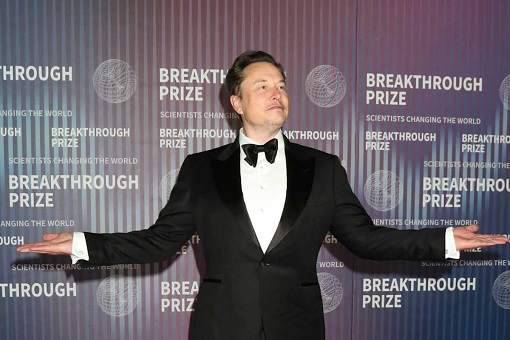
The man highly anticipated to become the world’s first trillionaire is Elon Musk. His fortune now stands at roughly US$970 billion, mostly in stock, according to a Wall Street Journal analysis. The initial public offering (IPO) for SpaceX could push Musk to become the world’s first trillionaire. Even without SpaceX, he is way ahead of the other billionaires behind him.
For example, world’s second-richest man – Larry Page of Google – is worth only US$308 billion, according to Bloomberg Billionaire Index. Larry Ellison is ranked third with net worth of about US$299 billion from his roughly 40% ownership stake in Oracle Corporation. Bill Gates today is in 19th place, worth about US$104 billion, behind many billionaires not heard of in the 1990s.
Musk’s wealth includes US$538 billion for his pre-IPO stake in SpaceX, US$167 billion for his stake in Tesla, and another US$150 billion or so for stock options in those companies he could exercise just about any time. Accumulating that amount over his career averages out to US$992 a second. That’s almost 10 times Gates made during his peak time when he did not bother to pick up a dropped US$100 note.

Then there is US$5 billion apiece for The Boring Company, which drills tunnels, and Neuralink, the brain-implant firm he founded, and US$104 billion in property, aircraft and other investments and assets as estimated by Altrata, a wealth-intelligence firm. Musk actually co-founded the first of his many U.S. tech and engineering-oriented companies in 1995, 31 years ago.
The 54-year-old born in South Africa made his initial fortune by co-founding the online payments company X.com in 1999, which later merged with Confinity to become PayPal. When eBay acquired PayPal in 2002, Musk – as the company’s largest shareholder – walked away with approximately US$180 million. He immediately reinvested nearly all of this capital into founding SpaceX and funding Tesla.
Interestingly, two richest men – Elon Musk (born in 1971) and Bill Gates (born in 1955) – represent two different technological eras. Gates defined the personal computing revolution of the 1970s and 1980s with Microsoft, while Musk defines the modern era of space exploration, electric vehicles, and artificial intelligence. And while Gates’ wealth grew steadily, Musk’s exploded exponentially.
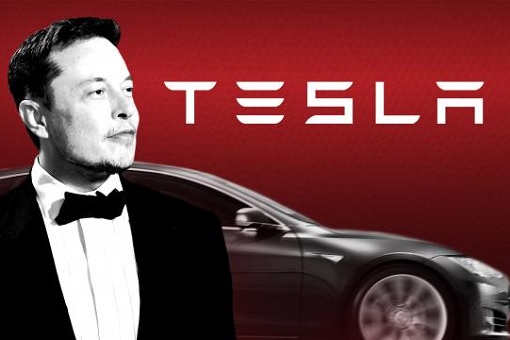
Amassing a jaw-dropping US$970 billion meant accumulating roughly US$59,492 a minute, US$3.6 million an hour, US$85.7 million a day, US$602 million a week, US$2.6 billion a month or US$31.3 billion a year. To put that in perspective, an American household earning the median U.S. income (US$83,730 in 2024) would have to work more than 11 million years to make Musk’s wealth.
To be sure, the success of Tesla and SpaceX also has made billions of dollars for investors who bet on Musk and made millionaires of employees who got shares in the businesses. Ingrid Robeyns, a philosopher and economist, has written that the wealth of the world’s richest has soared so much it is nearly incomprehensible for laypeople to grasp.
She recently estimated that Musk would make about US$4.2 million an hour in his career if he worked 70 hours a week without vacations until he is 75 years old. Musk, of course, is known for sleeping on factory floors and rarely taking vacations. After buying Twitter, he said his work exploded to more than 120 hours a week from about 80 hours before.

Musk’s net worth eclipses the GDP (gross domestic product) of more than 125 countries, including Norway, Thailand, Argentina, and South Africa. His self-made fortune, built on electric vehicles, rocket ships and artificial-intelligence ambitions, amounts to about 3% of U.S. gross domestic product today. On that basis, he easily surpasses John D. Rockefeller, the richest American who ever lived before Musk.
A century ago, Rockefeller rode the wave of industrialization by building Standard Oil into a behemoth, wielding influence over railroads and pipelines. The monopoly was ultimately broken up by the federal government. Rockefeller amassed a fortune of about US$1.4 billion by 1937 – roughly 1.5% of U.S. GDP at the time. His estimated inflation-adjusted net worth is widely cited financial publications at around US$340 billion in modern value.
However, most of his wealth is tied up in his companies. He famously said in 2020 that he would “own no house” and sold off several California properties, only to later buy homes in Texas. Musk can borrow billions against his holdings in SpaceX and Tesla, but much of his wealth is on paper – not cash he can easily spend.

Still, many have argued that Elon Musk becomes super rich for utilizing personal loans secured by his corporate shares to fund his lifestyle and investments. Critics argue this practice is a massive tax loophole, allowing him to live luxuriously and acquire companies like X (formerly Twitter) without paying income taxes, as borrowed money is not considered taxable income.
Interestingly, Musk, who had US$200 million in cash at one point, invested “his last cent in his businesses” and said in a 2010 divorce proceeding, – “About four months ago, I ran out of cash.” Musk told the New York Times’ DealBook at that time, “I could have either done a rushed private stock sale or borrowed money from friends.”
Of course, Musk was able to live on US$200,000 a month in loans from billionaire friends – while still flying in a private jet – rather than sell any of his Tesla stake. Unlike ordinary Joes and Janes’, that’s a “good problem” for a business owner like Elon Musk who is “asset rich” and “cash poor.”
Other Articles That May Interest You …
- Kung Fu Robots – China Humanoid Shocks The West During CNY
- US$1 Trillion Pay Package – What Musk Needs To Do To Become First Trillionaire
- Chaos & Confusion As Trump Slaps $100,000 Fee On H-1B Visa
- Forget BYD’s 34% Discount – Here’s How “Zero-Mileage” Used Cars Spread Like Wildfire To Boost Sales
- Trump Has Already Lost His Trade War Against China – But He Can’t Find Ways To Climb Down And Save Face
- Beijing Raises Tariffs To 125% – American Goods No Longer Marketable In China
- Co-President Elon Musk Flexes Power – Europe In Chaos As Tesla Billionaire Having Fun Interfering In Politics
- ISIS-Inspired Terror Attack & Tesla CyberTruck Explosion – The Military Connection In The 2025 New Year Terrorism
- Tesla Disaster – Owners Stranded As “Dead Robots” Won’t Charge In Freezing Temperature, But China Has The Solution
- BYD Beats Tesla Again – How The U.S. Carmaker Lost Its Crown As World’s Top Electric Vehicles Manufacturer
- Tesla & JPMorgan Won’t Quit China – Why U.S. Billionaires And Business Leaders Refuse To Decouple From China

|
|
June 3rd, 2026 by financetwitter
|


|

|

|

|

|

|














Comments
Add your comment now.
Leave a Reply