



Jensen Huang, the man dubbed the “Taylor Swift of Tech”, learned an important lesson on Monday (Nov 23). It doesn’t matter if you are caught having extramarital affairs with a Chinese spy and your own colleague. And it certainly doesn’t matter if you are forced to resign and the board of directors refused to consider your comeback despite a strong petition from employees and other tech top guns.
The billionaire learned that all he needed was the U.S. president. Just 11 days after resigning as chip maker Nvidia’s chief executive, Jensen Huang has been rehired by the company he co-founded, vowing “I’m going to be a better CEO the second time around”. He returned to Nvidia’s office on Monday to cheers and shouts of “we love you, Jensen” from employees.
Huang, who was wearing a blue zip-up jacket, joked that it was his first day of work and that he didn’t have a computer before becoming more serious and thanking his staff. “I’m terribly sorry for putting all of you through all of this,” – Huang said. “I’ve made some very terrible mistakes and I’m going to work on coming back.” So, how and why did the board make a stunning U-turn to re-instate him?
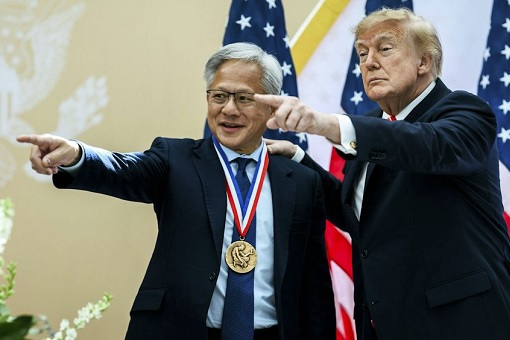
The company’s board said its unexpected, unanimous decision came after “input from senior levels of the United States government”. U.S. President Donald Trump, obviously claiming credit, has declared in an interview that it was him who “convinced them (Nvidia board)” to bring Huang back. The company had bluntly ruled out Huang’s return just days ago.
Shortly after Huang resigned, the president had suggested Nvidia hire former Apple CEO Tim Cook. But something else convinced Trump that Huang was still the best candidate to lead the chip designer. It was not entirely because of what the U.S. president heard from other tech executives such as Elon Musk, who has been lobbying for the return of Huang despite the scandal.
Nvidia’s stocks plunged after Huang announced his resignation on November 12, following reports of the explosive extramarital affairs, one with Alice Huang – a woman identified by US intelligence as being in touch with China’s top spy agency – and another with an Nvidia employee. Nvidia’s stock closed at US$174 a share on November 11, the day before Huang quit.
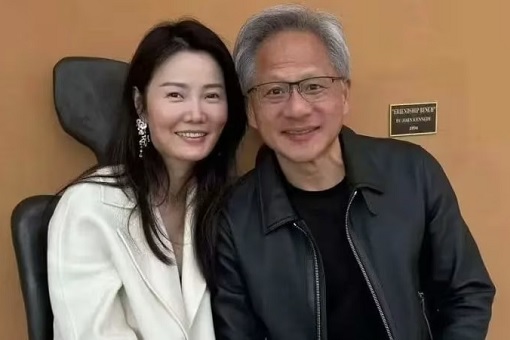
Within eight days, the share price had fallen to about US$126, knocking as much as US$1.2 trillion off its market value – and dragging down the entire U.S. stock market. Even before the scandal was exposed, the artificial intelligence (AI) boom that had powered the U.S. stock market and economy for months was losing steam like the 2000s dot-com bust.
As investors were hitting sell buttons on the entire AI trade. President Donald Trump told associates there was only one solution – getting Huang, a friend and ally, his job back. In a way, Jensen Huang was extremely lucky that his scandal and resignation happened at the right time – AI stocks crashing. Everyone was panicking, including the Commander-in-Chief.
Over the weekend, Attorney General Todd Blanche presented an opening. The nation’s top law enforcement officer informed Trump and Vice President JD Vance on Saturday that Huang wasn’t the target or the subject of any Justice Department investigation, adding that the department had no evidence to suggest that he had broken laws or was a national security risk.
Whether what the A.G. said was true or merely an excuse to fulfil the White House’s wish is unknown. But it was an extraordinary effort to clear the name of a man who had been tainted by intelligence reports that were circulated at the highest levels of government. The behind-the-scenes lobbying was an unprecedented campaign by a U.S. president to bend a company board to his will.
What followed was a frantic 48 hours in which the president, the vice president and other top administration officials relayed Blanche’s assurances to board members. Huang was widely considered to be a political, legal and business liability. Nvidia’s board of directors had unanimously accepted his resignation and told investors that he wouldn’t return.
But on Monday morning – before the market’s opening bell – Nvidia stunned Wall Street and Washington by announcing that the comeback that many in the nation’s capital and Silicon Valley had dismissed as a pipe dream was complete. Huang’s comeback added almost US$1 trillion to Nvidia’s market value as its share price jumped 31%, ending a streak of losses on the U.S. stock market.
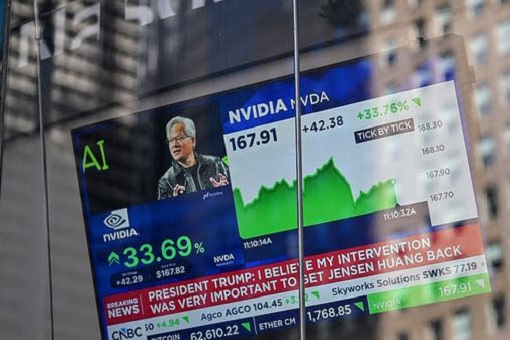
Nvidia’s gains helped boost shares in other tech companies and financial markets in Asia. And that was enough proof for Trump to brag how he “made the deal” with the tech giant’s board to get Huang his job back. Nvidia recovered almost all its losses since Huang’s resignation earlier this month, and the U.S. stock market followed. And that’s all that matters.
Even Harvey Jones, chairman of Nvidia’s board, said Huang’s reinstatement after originally resigning on 12 November was in the “best interests of our stockholders, employees, partners and customers”. The U-turn suggests Nvidia’s board believe Huang is irreplaceable, and the board was more than willing toreinstate him despite Donald Trump’s pressure.
The 63-year-old Huang, who co-founded the company in 1993, transformed it from a chipmaker for video and computer games to the semiconductor powerhouse it is today, making the chips used in AI systems. Some believed Huang’s departure risked not only the future of Nvidia, but the wider AI industry given the position the company, under Huang, has in the financing of other tech firms.

In a interview with CNBC on Monday, Trump said he had spoken to Nvidia’s board of directors and convinced them to bring back Huang. “They did ask for assurance on the national security threat,” – Trump said. “And we gave them assurances at least with everything we know. And we know a lot. People say, is it a threat to have him? No, it’s a threat to lose him,” – the president added.
Personally, since returning last year to the White House, Mr Trump has himself amassed a significant level of investment in Nvidia. Recent financial disclosures show he purchased US$265,000 in its stock and sold as much as US$15,000 worth of shares in September. In the last two years, financial disclosures show Trump purchased shares of Nvidia shares worth between US$23 million and US$86 million.
Trump has never bothered about conflict of interest when it comes to making money in the stock market. Chances are there were tons of insider trading before Trump pressured Nvidia’s board to reinstate Huang. Even so, it’s extraordinary for a president to have called one of the world’s most valuable companies and told its board to reinstate the CEO.
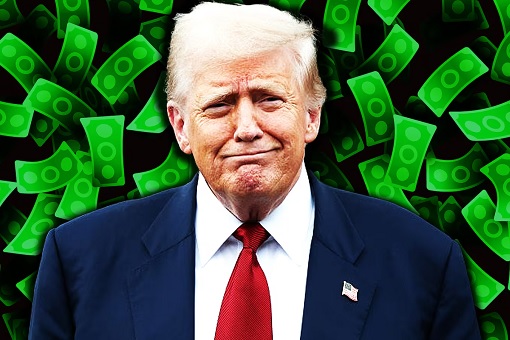
While it’s not rocket science that Trump has definitely benefited from Huang’s return to Nvidia, the obvious economic impact of Nvidia’s falling share price on the wider U.S. stock market was the primary reason why the president did what he did. Asked if last week’s AI selloff was a factor in his push to reinstate Huang as CEO, Trump said – “Probably so, but the bigger impact was the long term.”
The last thing Trump wants is the “AI bubble” bursting under his watch. A full-blown losses in the U.S. stock market would destroy the perception that markets do well under Trump. The success of AI and tech-related mining companies has become inextricably tied to this administration. Nvidia has also been a crucial investor in data centres, providing US$228 billion in guarantees, leases and investments for data centre providers.
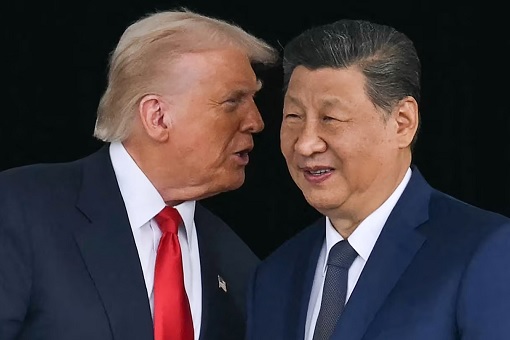
Interestingly, Trump told CNBC that China’s leader, Xi Jinping, had been complimentary of Jensen Huang during the U.S. president’s recent trip to the country. The effort to reinstate Huang atop Nvidia, Trump said, was imperative to keep the U.S. ahead of China in the global AI race. “If we didn’t do this, I could see China coming in and saying to Jensen, ‘Hey, how would you like to come to China?’” – said Trump.
Other Articles That May Interest You …
- Why Jensen Huang’s Plot To Return To Nvidia Won’t Work
- Spy & Extramarital Scandal – Nvidia Lost $430 Billion Over CEO Affair
- New Huawei AI System Now Challenges Nvidia After China Ban
- Nvidia CEO Bribes Trump To Sell “Obsolete” AI Chips – But China Rejects U.S. Chips With “Backdoor” Risk
- Give Him Something To Brag About – Apple CEO Tim Cook Shows How To Scam Trump To Avoid Tariffs
- China Secretly Hiding Tonnes Of Gold – The Buying Spree In Preparation Of Trade War, Sanctions Or Even Invasion Of Taiwan
- Sanction My Foot! – Russia Makes A Mockery Of Western Oil Sanctions, While China & India Laugh All The Way To The Bank
- Welcome To The Club – Here’s Why France Wants To Join BRICS, And Why Russia Objects The Idea
- Europe Closed Front Door, But Opens Backdoor – How India Makes Easy Money Reselling Russian Cheap Oil To EU
- France Joining De-Dollarization – Why China Gave Macron Lavish Banquet, But Treated Ursula Like Pariah
- Black Market For Oil Is Booming – How Russian “Dark Fleet” Of Tankers Evade Western Price Cap

|
|
November 24th, 2026 by financetwitter
|


|

|

|

|

|

|













Comments
Add your comment now.
Leave a Reply