



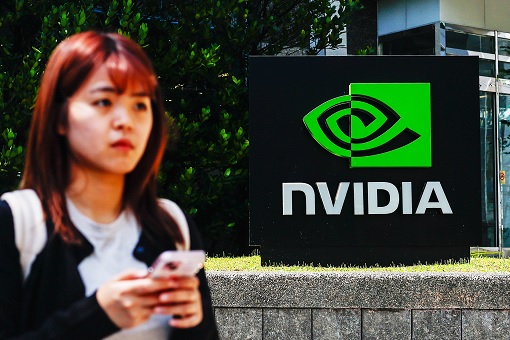
On Wednesday (September 17), Beijing officially banned domestic tech companies from buying NVIDIA AI chips. Tech giants including ByteDance and Alibaba were ordered to immediately stop testing and ordering NVIDIA’s RTX Pro 6000D server, a product designed specifically for the Chinese market. Essentially, Nvidia has been shut down in China.
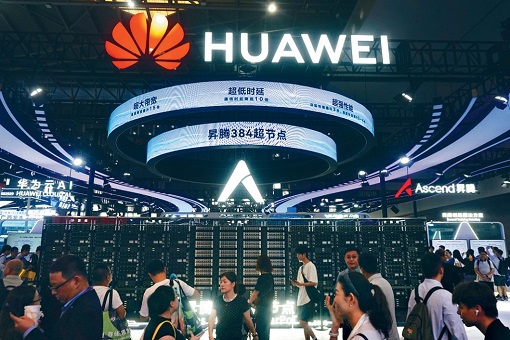
The next day – Thursday (September 18) – Huawei announced new computing systems for powering artificial intelligence with its in-house Ascend chip – “Atlas 950 SuperCluster” – to be launched as soon as next year. It also would roll out three new versions of its Ascend chips through the end of 2028, with the aim to “double compute” capabilities with each year’s release.
In layman’s terms, the Shenzhen-based telecoms equipment giant said it had developed the “world’s most powerful” supernode computing cluster using local chipmaking processes, providing a boost to the country’s self-reliance in AI computing without using Nvidia’s chips. This breakthrough could potentially free the supply choke-point that constrains China’s aspirations in Artificial Intelligence.
Supernode refers to a high-performance cluster unit that aggregates a group of AI accelerators using ultra-fast interconnects. The new Atlas 950 supernode would support 8,192 Ascend chips, whilst the Atlas 950 SuperCluster would use more than 500,000 chips. A more advanced Atlas 960 version, scheduled for launch in 2027, would support 15,488 Ascend chips per node.
The full supercluster would have more than 1 million Ascend chip – making them the “largest AI compute clusters” in the world. Crucially, Atlas 950 supernode would deliver 6.7 times more computing power than Nvidia’s NVL144 system, and 1.3 times the computing power of Elon Musk’s xAI Colossus supercomputer. It was only 2 years ago when Huawei announced its ancient Atlas 900 SuperCluster.
Even though some Western analysts think China’s move to ban sales of Nvidia’s RTX Pro 6000D was “political theatre” to either pressure the Trump administration or to create bargaining chips as part of the ongoing tariff war negotiation, it’s hard to believe Beijing is playing any game of brinkmanship with Washington if indeed China does not have any cards to play.
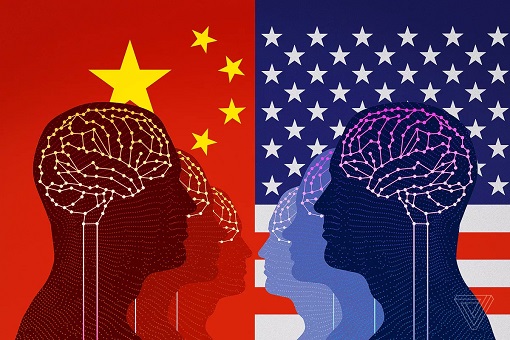
The stake was simply too great for China, currently competing fiercely with the U.S. in the Artificial Intelligence race, in case Trump calls Beijing’s bluff. China’s decision to ban Nvidia’s chips obviously was more than just a trade restriction – it could be Beijing’s declaration that the country’s semiconductor industry has reached a critical inflection point where it no longer needs American AI hardware to compete.
Research firm SemiAnalysis found in April that Huawei’s self-developed CloudMatrix system was able to perform better than Nvidia’s – despite each Ascend chip delivering only about one-third the performance of a Nvidia processor. Huawei built its advantage by having five times as many chips. As the U.S. cuts China off from the most advanced semiconductors for training AI models, the Chinese simply puts more chips together to achieve similar computing capabilities.
Clearly shocked with Beijing’s announcement, Nvidia’s CEO Jensen Huang said – “We can only be in service of a market if a country wants us to be. I’m disappointed with what I see but they have larger agendas to work out between China and the United States. And I’m patient about it. We’ll continue to be supportive of the Chinese government and Chinese companies as they wish.”

Chinese companies that had already ordered tens of thousands of NVIDIA’s chips are now scrambling to cancel their orders and halt all testing activities with NVIDIA’s suppliers. The RTX Pro 6000D isn’t exactly NVIDIA’s crown jewel. It’s a Blackwell-based workstation card with GDDR7 memory delivering about 1,100 GB/s of bandwidth – just shy of the 1.4 TB/s US export limit.
The latest ban goes beyond earlier guidance from Chinese regulators which focused on Nvidia’s other China-specific chip, H20. In early April, when the White House was preparing to cut off H20 sales, Huang attended a US$1 million-a-head dinner with Trump at Mar-a-Lago. He told the president that selling the chip in China wasn’t a threat to national security.
The H20 chip has played a critical role in filling sky-high demand for AI applications using open-source models such as Chinese-developed DeepSeek and Alibaba’s Qwen. While the H20 can’t be used for creating large AI models, such as the ones powering ChatGPT and other chatbots, engineers say the chip is still good at “inference” – the ability of AI programs to tap their training to answer user questions.

Jensen Huang, CEO of chip designer Nvidia, had been working tirelessly for months behind the scenes in both Washington and Beijing for the sake of billions of dollars in future revenue from the ongoing U.S.-China trade war. After all, China is a huge market. Nvidia generated US$17 billion in revenue from China in the fiscal year ending January 26 – representing 13% of total sales.
Billionaire Huang visited China at least “three times” this year alone to reassure Chinese tech executives and government officials that Nvidia was committed to the market. But U.S. President Donald Trump made things difficult when he bragged that Nvidia sells only “old and obsolete” chips to China, allowing the U.S. to make tonnes of money from the sucker Chinese.
The American technology company was set to make US$20 billion in revenue from China in its 2026 fiscal year. Huang told Trump that restrictions on U.S. chip sales to China would backfire by pushing Chinese technology champions to achieve self-reliance. He advised the president to keep China hooked on American tech. He convinced Trump to keep selling to the Chinese to make money.
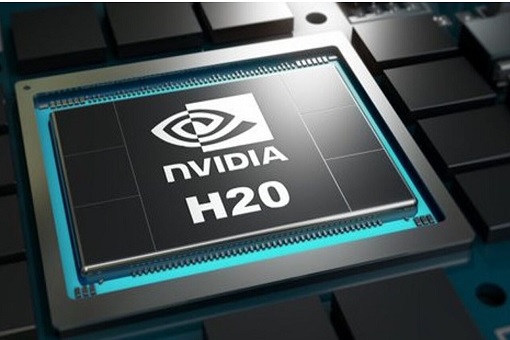
The Taiwanese-American businessman, whose net worth hits close to US$160 billion, struck a deal with dealmaker Trump using a brilliant reverse psychology, and a little bit of mind games. Finally, the U.S. president reversed his prior ban and allowed Nvidia to export H20 AI (Artificial Intelligence) chips to China, pushing its market capitalization further above the record US$4 trillion mark.
The trade-off was that the Chinese-version H20 chip had been tweaked as a less powerful chip specially designed for China. Trump also made one more demand – Nvidia to give the U.S. government 20% of its chip sales to China in exchange for issuing the export licenses. Facing a choice of paying for long-term access to a market vital to his company or walking away, Jensen Huang countered with 15%.
But it was too little too late. China’s cybersecurity regulator summoned Nvidia and grilled it about security risks of the H20 chips, citing comments by U.S. lawmakers about the need for a bill to require tracking capabilities for advanced chips sold abroad. On August 12, Beijing stunningly told local companies to avoid using Nvidia’s H20 processors, particularly for government-related purposes.
On the same day, Nvidia rejected Chinese accusations that its AI chips include a hardware function or “backdoor” that could remotely deactivate the chips, also known as a “kill switch.” However, Beijing’s mouthpiece People’s Daily said Nvidia must produce “convincing security proofs” to eliminate Chinese users’ worries over security risks in its chips and regain market trust.
The U.S. is tasting its own medicine. Trump previously had accused Huawei 5G equipment of having backdoors intended for use by law enforcement. Now, Beijing has turned the tables, using Trump’s playbook to accuse Nvidia of doing the same. More importantly, the U.S. tech war to prevent China from overtaking U.S. dominance in AI and supercomputing has instead forced the Chinese to achieve self-reliance.
For years, Washington tries to restrict what chips could go to China – first blocking the high-end H100 and A100, then their watered-down replacements, and most recently playing an on-again, off-again game with export licenses that left everyone confused. Now Beijing is telling the U.S. to go fly kites. Homegrown AI chip makers, like Huawei and Cambricon, now produce chips that have comparable performance to NVIDIA’s China-only products.
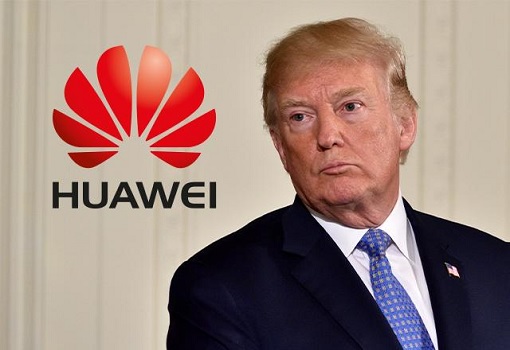
The latest twist in the tech war between the U.S. and China suggests that Beijing was extremely confident with domestic chipmakers’ capabilities. Chinese regulators concluded their processors now match or even exceed the downgraded NVIDIA products allowed into the country. True, individual Chinese chips don’t match Nvidia’s most advanced offerings.
But China does not need to “kowtow” to the U.S. if Nvidia is disallowed to sell its best chips to China, while at the same Huawei has the product or solution to match Nvidia’s chip tailored for the Chinese market. Exactly why should the U.S. company be allowed to make money, not to mention the insult, in the Chinese market despite selling lower quality chips?
The country’s AI research community has increasingly focused on efficiency rather than raw computing power – developing techniques that extract more performance from available hardware rather than requiring the most advanced chips. This is how DeepSeek R1 was born, and this is how a model was created with a fraction of the investment costs compared to western AI behemoths like OpenAI, Google, or Anthropic.

The ban on Nvidia’s chips must be incredibly hurtful to the U.S. when Republican House Speaker Mike Johnson called China an “adversary” of the U.S. following Beijing’s latest move. At the same time, it was both hilarious and entertaining that the U.S. was upset with the Chinese ban when it was the American lawmakers who had earlier tried to stop exports of AI chips to China.
In truth, China’s researchers published 23,695 AI-related publications in 2024, topping the combined output of the United States (6,378), the United Kingdom (2,747), and the European Union (10,055). This certainly does not look like the Chinese have been stealing the U.S. intellectual property as accused by Johnson and Trump.
In the same breath, China’s massive AI research output has created a foundation for rapid iteration and improvement. Chinese universities like Tsinghua and Peking have emerged as global AI research powerhouses, with Tsinghua ranking eighth globally in AI research output ahead of institutions like Facebook AI Research and Princeton.

Other Articles That May Interest You …
- From Robot Wolves To Satellite Killer – How China’s Military Parade Sends A Message That Annoys Trump
- Trump’s Bluffing Again – Give Me Magnets, Or Risk 200% Tariff On China
- Give Him Something To Brag About – Apple CEO Tim Cook Shows How To Scam Trump To Avoid Tariffs
- Trump Has Already Lost His Trade War Against China – But He Can’t Find Ways To Climb Down And Save Face
- China Suspends Critical Rare Earth Exports To Everyone – Chinese “Peasants” Have Enough Cards To Cripple The U.S.
- Pawns Europe & Ukraine Got Played – The Hidden Message Behind US-Russia Talks In Saudi Without Allies
- Highest Salary Of 20-Million Yuan – But China Still Facing AI Talent Shortage Of 4 Million By 2030
- US$1 Trillion Wipeout – How China’s DeepSeek AI Creates Havoc And Spooks U.S. Financial Markets
- Trump’s Executive Order To TikTok To Surrender 50% Stake – But Condemned As Daylight Robbery In China
- China Secretly Hiding Tonnes Of Gold – The Buying Spree In Preparation Of Trade War, Sanctions Or Even Invasion Of Taiwan
- From Trade War To Tech War – After 5G Technology, The US Aims To Cripple China’s Artificial Intelligence

|
|
September 19th, 2025 by financetwitter
|


|

|

|

|

|

|

















Comments
Add your comment now.
Leave a Reply