



Wall Street’s massive data edge is evaporating. The elite technology that once required a multi-million-dollar quantitative setup, dedicated server rooms, and teams of PhD mathematicians is now sitting on consumer laptops. This isn’t about magical market forecasting or finding a flawless crystal ball—it’s about basic survival in an absolute ocean of data. Individual investors are weaponizing math. Deploying systems like AI market analysis for retail is turning raw numbers into actionable trade ideas before human analysts can even open an Excel spreadsheet or finish reading a single headline.
But let’s cut through the aggressive marketing noise. Technology does not eliminate risk, and it never offers a guaranteed blueprint for wealth. Instead, it completely reshapes how independent participants analyze the market, shifting the focus from manual tracking to strategic decision-making.
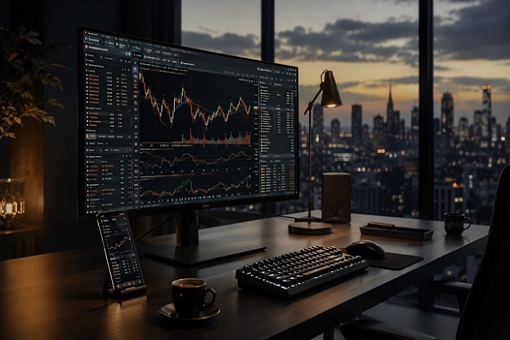
The Reality Behind AI market analysis and Massive Data Processing
Every single trading session is a relentless firehose of information. Thousands of corporate earnings releases, regulatory filings, central bank statements, macroeconomic indicators, and social media trends hit the wires simultaneously. If you try to read, categorize, and interpret all of it manually, you’ve already lost your execution window. The sheer scale of modern data processing has simply evolved past human capabilities.
This is where machine learning shifts the balance. Instead of a human analyst scrolling through endless PDF filings or corporate disclosures, specialized algorithms parse unstructured text in milliseconds. They don’t just search for basic keywords; they read between the lines of corporate guidance, compare today’s CEO tone with transcripts from three quarters ago, and instantly spot structural shifts in corporate communication.
It’s a matter of scale, not magic. By deploying natural language processing, modern software detects hidden patterns across the entire stock trading universe. It flags unusual relationships—like a sudden drop in shipping volume correlating with a future drop in retail earnings—that humans miss because they cannot monitor 5,000 different stocks at the exact same time.
But don’t mistake rapid data ingestion for absolute fortune-telling. A solid predictive market analysis framework gives you mathematical probabilities, never certainties. If the underlying data quality is flawed or delayed, the output becomes actively dangerous to your capital. The system maps out historical tendencies and statistical setups, but navigating real-time volatility still forces you to make the final executive call.
Where AI trading Actually Protects Your Capital
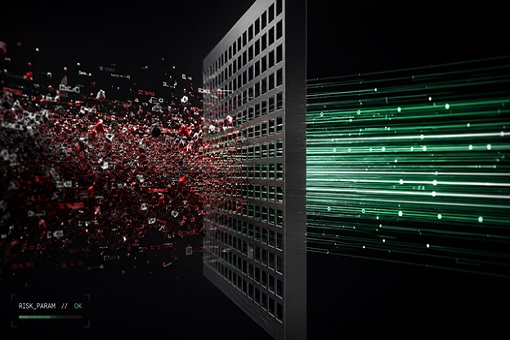
Let’s be completely blunt: raw speed matters, but emotional control matters far more. Institutional hedge funds have known this for decades, using heavy algorithmic trading infrastructure to reduce emotional decision-making during execution. Some retail traders now use automated bots to strip that same panic out of their execution and maintain strict portfolio discipline during high-stress market regimes.
When you deploy AI for trading, you aren’t turning over your life savings to an autonomous sci-fi computer. You are building a highly sophisticated analytical filter. Smart trading systems focus heavily on identifying anomalies, managing risk exposures, and tracking fast-changing market conditions:
- Spotting early momentum trends and volume spikes before they show up on basic technical charts.
- Running massive sentiment analysis across forums, news outlets, and financial reports to gauge shifting consumer behavior.
- Isolating statistical flaws, pricing mismatches, and arbitrage opportunities across heavily correlated assets.
- Generating mechanical trading signals based strictly on hard numbers, entirely ignoring fear and FOMO.
- Monitoring multiple global financial markets 24/7 without the exhaustion that ruins human judgment.
Then there’s the inevitable breaking point. When an extreme market event hits, standard historical models break down entirely. Think of the famous 2010 flash crash. On May 6, 2010, major U.S. equity indexes plummeted nearly 1,000 points within minutes, wiping out a trillion dollars in market value before recovering just as fast. Subsequent investigations found that chaotic interactions between automated execution algorithms and high-frequency trading setups accelerated the panic sell-off instead of stabilizing it.
Look also at early 2021, when the historic GameStop short squeeze broke traditional risk management metrics completely. While advanced artificial intelligence tools could identify the surge in online discussion long before it was reflected in traditional market indicators, the subsequent price action quickly moved beyond anything historical models had been trained to interpret. If a market move is driven by raw human mania, internet memes, or sudden regulatory interventions, an algorithm trained purely on peaceful historical data gets blindsided.
Evaluating Trading Tools Without the Marketing Hype
The retail sector is currently flooded with platforms promising impossible win rates, effortless wealth, and secret algorithms. Ignore the noise. The best retail trading tools don’t shout about artificial intelligence on their landing pages; they just solve specific operational friction points for the user.
If you are looking for a reliable analytical platform, look past the marketing buzzwords and audit these core operational traits:
First, verify data quality. If the underlying feed has gaps, bad prints, or latency, your strategy is useless from the start. Second, demand total transparency. You must know exactly why an algorithm flags an asset or generates a specific recommendation. Blindly trusting an unverified black box leads directly to catastrophic financial loss. Third, ensure the underlying model can dynamically adapt to changing volatility rather than relying on outdated parameters from a completely different economic regime.
Serious market participants want structural efficiency. They look for solutions that plug straight into their primary CFD trading platform, creating a single, clean workflow instead of forcing them to split their attention across multiple disconnected interfaces. Innovation means nothing if you can’t integrate it into everyday decision-making. The ultimate goal is to automate data processing while keeping final execution under human control.
Why Prediction Software Fails in Extreme Market Conditions

No matter how advanced an algorithm becomes, it remains a prisoner of its historical training data. This creates a severe structural vulnerability known as overfitting—the ultimate trap for automated strategies.
A developer can easily build a strategy that looks absolutely flawless on historical charts. It fits past data perfectly, producing a beautiful upward curve in backtests. But the moment it hits live, unpredictable financial markets, it crumbles. Why? Because the system memorized a specific historical regime instead of learning how to handle dynamic, live environments.
The stock market isn’t a closed game with fixed rules like chess. Consumer behavior shifts constantly, regulators rewrite frameworks overnight, and macroeconomic shocks occur unpredictably. Consider a model trained entirely during a ten-year bull market with near-zero interest rates; it will fail completely when central banks rapidly hike rates to combat sudden inflation. A rigid model executes catastrophic mistakes because it cannot apply human judgment to an unprecedented setup.
Automation without strict human oversight is an absolute liability. High-frequency setups and blind automation can amplify market stress rather than absorb it. The math gives you a clear statistical edge over thousands of trades, but human experience remains the ultimate circuit breaker when conditions turn chaotic.
The Modern Hybrid Workflow: Human vs Machine
To succeed in modern financial services, you need a disciplined, dual-layer framework. The machine handles the data processing grunt work; the human handles the strategic risk management.
The optimized workflow looks like this:
- Phase 1: Deep Screening. Let the software scan thousands of global assets simultaneously for volume anomalies, volatility breakouts, or sharp sentiment shifts.
- Phase 2: Automated Summaries. Use natural language processing tools to compress complex quarterly filings and economic reports into clear, scannable data points.
- Phase 3: Technical and Fundamental Verification. The trader steps in to manually check macroeconomic conditions, structural chart levels, and overall portfolio risk alignment.
- Phase 4: Disciplined Execution. The final order goes through standard software like MetaTrader 5, allowing traders to implement predefined position sizing and stop-loss rules.
This hybrid approach keeps your investment strategy grounded in reality. The technology can uncover hidden patterns and optimize your portfolio research, but it cannot evaluate your personal risk tolerance, capital constraints, or long-term financial goals. As technology continues to evolve, the objective isn’t to replace human decision-making—it’s to remove the manual friction from it.
Artificial intelligence is changing how traders collect, filter, and interpret data, but it doesn’t change the underlying reality of risk. Lasting advantages come from combining fast data processing with a disciplined trading strategy and independent human judgment.

|
|
August 25th, 2026 by financetwitter
|


|

|

|

|

|

|




















Comments
Add your comment now.
Leave a Reply