



Donald Trump used to believe that trade wars were easy to win, despite warnings from his own American economists and analysts that it will result in higher prices, lower growth, lost jobs and disrupted supply chains. Worse, trade war could spark inflation and recession. But Trump believes he has the formula to prevent an economic downturn – slashing interest rates to offset inflation.
Now, in his second term, much to Trump’s annoyance, not only the Federal Reserve Chairman Jerome Powell has stubbornly refused to cut rates, but Mr Trump has also discovered that China isn’t that easy to bully after all. Against China, the world’s second largest economy, the U.S. president suddenly found that trade wars are difficult to win. In fact, it’s extremely hard to win.
About 3 weeks after the United States and China agreed on May 12, 2025 to pause for 90 days the skyrocketing “reciprocal” tariffs that both countries had slapped on each other’s goods in an endless trade war that started on April 2 (the day which Trump celebrated as the Liberation Day), the fragile trade truce – which Trump hailed as a “total reset” – is now on the brink of a collapse.

From the beginning, the 90-day pause was never meant to be working simply because there were too much distrust, hostility and conflict in the first place. The crack started when the U.S. accused China of violating the Geneva trade agreement, a meeting between U.S. Treasury Secretary Scott Bessent and his Chinese counterpart He Lifeng in Switzerland.
In response, China accused the U.S. of breaching deal terms instead. This was after the Trump administration has ratcheted up export restrictions on semiconductor design software to China, while also announced it would revoke visas for Chinese students. The U.S. is believed to have taken the steps because China has kept a firm grip on its rare earths exports.
While Bessent did not reveal the details of the talks in Geneva that had led to the 90 days tariffs suspension, it’s now crystal clear that the White House had expected the Chinese rare earths to be freely exported to the U.S. While China controls 70% of the world’s rare earths mining, it also controls 90% of the chemical processing of global rare earths.
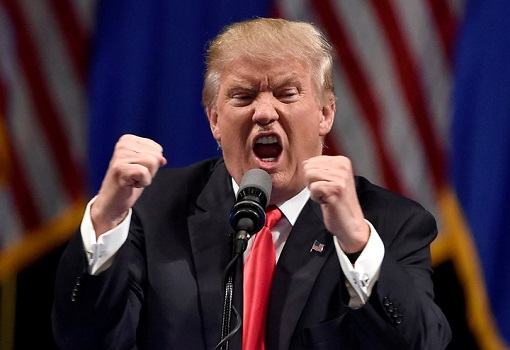
Last Friday, accusing China of violating its preliminary trade agreement with the U.S., Donald Trump complained in social media – “China, perhaps not surprisingly to some, HAS TOTALLY VIOLATED ITS AGREEMENT WITH US. So much for being Mr. NICE GUY!” Initially, nobody knew what the president was whining and babbling about, till Bessent spilled the beans.
On Sunday, Scott Bessent, said – “What China is doing is they are holding back products that are essential for the industrial supply chains of India, of Europe. And that is not what a reliable partner does.” Apparently, India and Europe auto industry have expressed their panic since supplies have not resumed as China’s commerce ministry has still not given its approval.
India’s electric vehicle industry is facing a potential supply chain crisis, triggered by a shortage of vital component – rare earth magnets. Likewise, the damage from China’s restrictions on critical mineral exports has also hit some European auto parts plants. Of the hundreds of requests for export licenses made by auto suppliers since early April, only a quarter have been granted so far.

From automakers General Motors to BMW, and from airbags and seatbelts maker Autoliv to motors developer BorgWarner, everyone appears to be at the mercy of China. Beijing’s decision in April to suspend exports of a wide range of rare earths and magnets has affected the supply chains of not only automakers, but also aerospace manufacturers, semiconductor companies and military contractors around the world.
China has deliberately tightened export controls on magnets as part of its strategic counter to US-led trade pressure. The move was seen as a leverage by China in its trade war with U.S. President Donald Trump. But if the White House thinks it could threaten Beijing by restricting exports of semiconductor design software and revoking student visas, it is making a big mistake.
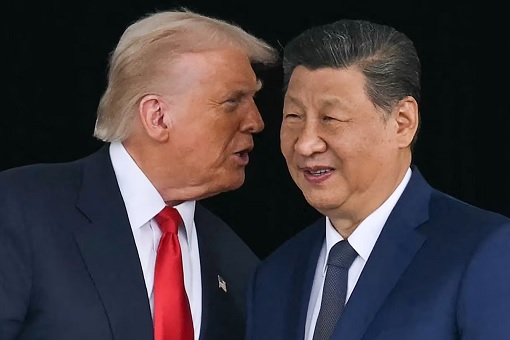
The 90-day truce has deteriorated to the extent that after Bessent said that the U.S.-China trade talks were stalling, Trump stunningly expressed his frustration on Wednesday (June 4) – “I like President Xi of China, always have, and always will, but he is VERY TOUGH, AND EXTREMELY HARD TO MAKE A DEAL WITH.” Now, the White House said any progress is only possible if both Donald Trump and Xi Jinping talk.
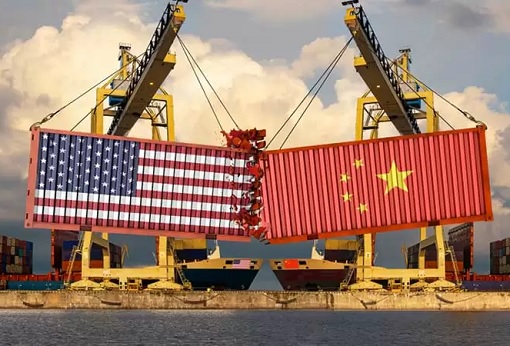
At best, President Trump purposely violates the temporary trade truce to pressure President Xi to call him so that he could save face after being laughed at for lying that he had rounds of talks with the Chinese leaders. At worst, the U.S. president is running around like a headless chicken as Beijing’s stranglehold on rare-earth magnets is creating chaos in the U.S.
The shortage of rare earth minerals, which the U.S. had initially tried to play down but is rearing its ugly head now, has seen at least four American automakers racing against time to find workarounds to China’s ban on exports of rare-earth magnets. With limited supplies in their inventories, the automakers could be forced to shut down car production within weeks.
In fact, the shortage has become so bad that several conventional and electric-vehicle makers are considering shifting some auto-parts manufacturing to the Middle Kingdom to avoid factory shutdowns. The ideas involved producing electric motors in Chinese factories or shipping Made-in-America motors to China to have magnets installed due to export controls on rare-earth magnets.
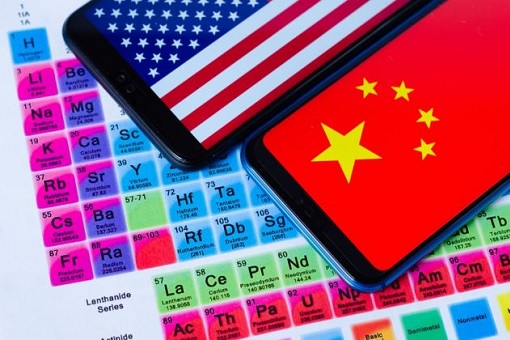
Suddenly, China’s rules in April requiring companies to apply for permission to export magnets made with rare-earth metals, including dysprosium and terbium, look like a brilliant tactical move. And it’s absolutely hilarious considering Trump’s “Trade War 2.0” with China is to bring manufacturing jobs back to the U.S. after accusing the Chinese of stealing millions of jobs and ripping off America for decades.
Without the Chinese magnets to operate at high temperatures, the U.S. also can’t produce smartphones and F-35 fighter jets. Beijing did not actually stop the export controls on rare-earth magnets entirely, but is merely dragging its feet in license approvals. As exports of magnets have virtually ground to a halt, carmakers can’t decide whether they can continue to keep some plants operating.
It was already silly to ship an unfinished Made-in-USA part half-way across the world just to have a tiny magnet installed. It will add extra cost and time to manufacture the cars, not to mention the additional tariffs as cars travelled from American soil to Chinese soil, and return to the U.S. thanks to Donald Trump, who overplayed a weak hand in his obsession over tariff war with China.

Restricting exports of semiconductor design software and revoking student visas was just cheap tactics to create additional bargaining chips for the U.S. in trade negotiations. Beijing knew the U.S. will use it to threaten China again if it surrenders. Therefore, China will be forced to expand export controls on rare earth elements or impose additional tariffs on U.S. goods.
The burning question is why China cannot restrict exports of rare earths to the U.S., but the U.S. can ban the exports of advanced chips to China? The simple fact that Trump and his band of idiot advisers didn’t anticipate the weaponization of Chinese rare earths is telling and embarrassing. To now claim Xi Jinping is hard to make a deal with is indeed laughable.
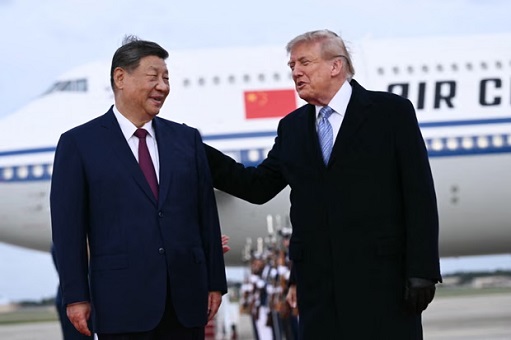
The White House, including the arrogant Bessent, appears to be desperate for President Trump to get a call from President Xi – hinting that the two countries’ leaders could speak directly as early as this week. However, while the U.S. side seems very keen on a Trump-Xi meeting or phone call, largely because Mr. Trump’s desire to be seen as the master dealmaker, Beijing isn’t rushing for such talks.

Other Articles That May Interest You …
- China Too Strong For U.S. – Why Europe In Trouble As Trump Shifts Target To Bully EU With 50% Tariff Threats
- U.S. Debt Problems Getting Worse – Moody’s Downgrades Credit Rating And Trump Demands Walmart To “Eat The Tariffs”
- Art Of War vs. Art Of Deal – China Laughs All The Way To The Bank As Trump Slashes Tariffs From 145% To 30%
- US Economy Shrank 0.3% Thanks To Tariffs – Why “Pissed” Trump Orders Amazon To Hide Tariff Costs
- Empty Store Shelves In 2 Weeks – Here’s Why Trump’s Damage Control Is Too Little Too Late, And It Will Be Ugly
- Trump Has Already Lost His Trade War Against China – But He Can’t Find Ways To Climb Down And Save Face
- White House Privately Begging Xi To Call Trump First – But China Slapped 125% Tariff Instead
- Beijing Raises Tariffs To 125% – American Goods No Longer Marketable In China
- Recession 2025 – Why You Should Prepare For A Historic Crash As Massive Correction Builds
- From Terminating Trade Deal To Cancelling $1.1 Trillion Debt Owed To China – Here’re Some Of Trump’s Crazy & Dirty Ideas
- Watch Out Trump!! – China May Weaponize “Rare Earth” To Retaliate Against U.S.’ Ban On Huawei

|
|
June 5th, 2025 by financetwitter
|


|

|

|

|

|

|














Comments
Add your comment now.
Leave a Reply