



China’s highest-ranking general has been fired for not only selling information about the country’s nuclear-weapons program to the U.S. but also for accepting bribes, including the promotion of an officer to defense minister, said people familiar with a high-level briefing on the allegations. China’s defence ministry has opened an investigation into the country’s senior-most general over “grave violations of discipline and the law”.
The briefing – attended on Saturday morning by some of the military’s highest-ranking officers – came just before China’s Ministry of National Defense made the bombshell announcement of an investigation into General Zhang Youxia, once considered Chinese leader Xi Jinping’s most-trusted military ally. Zhang is one of few PLA generals with combat experience, having served in the 1979 Sino-Vietnamese War.
But the people familiar with the briefing – which hasn’t been reported until now – said Zhang is under investigation for allegedly forming political cliques, a phrase describing efforts to build networks of influence that undermine party unity, and abusing his authority within the Communist Party’s top military decision-making body, known as the Central Military Commission. In short, he could be plotting to overthrow President Xi.
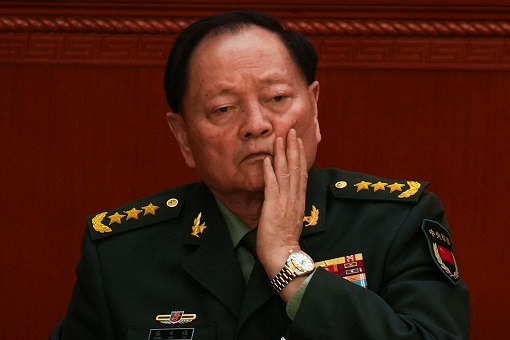
Authorities are also scrutinizing his oversight of a powerful agency responsible for the research, development and procurement of military hardware. Those familiar with the briefing said Zhang was alleged to have accepted huge sums of money in exchange for official promotions in this big-budget procurement system. This means not only Zhang has been accused of corruption, but also treason.
The most shocking allegation disclosed during the closed-door briefing was that Zhang had leaked core technical dataon China’s nuclear weapons to enemy United States. Zhang is a vice-chairman of the Central Military Commission (CMC) – the Communist Party group headed by President Xi which controls the armed forces. Zhang also sits on the party’s top decision-making body, the 24-person Politburo.
Some evidence against Zhang came from Gu Jun, the former general manager of the China National Nuclear Corp., a state-owned company that oversees all aspects of China’s civilian and military nuclear programs, said the people familiar with the briefing. Beijing announced an investigation into Gu last Monday for suspected severe violations of party discipline and state laws.
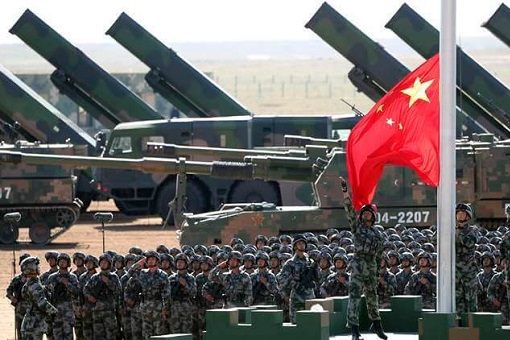
During Saturday’s briefing, authorities revealed that the probe into Gu has linked Zhang to a security breach within China’s nuclear sector. Details on the breach weren’t disclosed during the briefing. In a statement to The Wall Street Journal, Liu Pengyu, a spokesman at the Chinese Embassy in Washington, said the party’s decision to investigate Zhang underscores that the leadership maintains “a full-coverage, zero-tolerance approach to combating corruption.”
Some analysts say Xi’s latest crackdown on corruption and disloyalty in the armed forces marks the most aggressive dismantling of China’s military leadership since the Mao Zedong era. “This move is unprecedented in the history of the Chinese military and represents the total annihilation of the high command,” – said Christopher Johnson, head of China Strategies Group, a political-risk consulting firm.
Since coming to power, President Xi has launched waves of anti-corruption drives through various departments and this campaign has recently focused heavily on the military. He has called corruption “the biggest threat” to the Communist Party and said the fight against it “remains grave and complex”. While some say the policy promotes good governance, others believe it has been used as a tool to purge political rivals.

Like President Xi Jinping, 75-year-old Zhang, a member of the party’s elite Politburo, is one of China’s “princelings,” as the descendants of revolutionary elders and high-ranking party officials are known. Zhang’s father fought alongside Xi’s father during the Chinese civil war that led to Mao’s Communist forces seizing power in 1949, and both men later rose to senior roles.
Saturday’s internal briefing also linked Zhang’s downfall to his promotion of former Defense Minister Li Shangfu. Zhang allegedly helped elevate Li in exchange for large bribes, said the people. Li’s own downfall began in 2023, when he disappeared from public view and was later removed as defense minister. The party expelled him the following year for corruption. Li couldn’t be reached for comment.
In a sign of the depth of the current probe, Xi has commissioned a task force to conduct a deep-dive investigation into Zhang’s tenure as commander of the Shenyang Military Region, which spanned five years from 2007 to 2012. The team has now arrived in the northeastern city of Shenyang, they said, notably choosing to stay in local hotels rather than military bases, where Zhang would have a network of support.
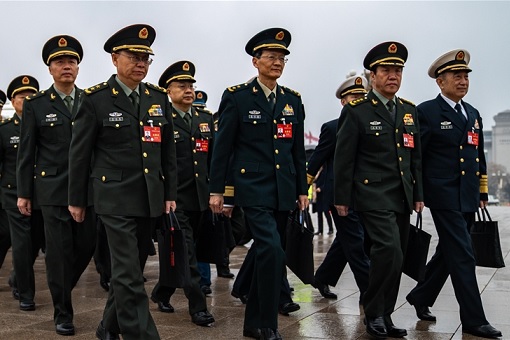
Authorities have already seized mobile devices from officers who rose through the ranks with Zhang and General Liu Zhenli, chief of the Joint Staff Department, whose investigation was also announced Saturday, as thousands of officers with ties to the men become potential targets. The downfall of Zhang and Liu expands Xi’s years-long push to clear out officers deemed corrupt and politically unreliable.
The purging of even one of Xi’s personal friends, Zhang, who joined the army in 1968 and whose father was one of the founding generals of the Chinese Communist Party, shows that there now are no limits to Xi’s antigraft zeal, said Johnson, the China Strategies Group head who served at the Central Intelligence Agency for two decades, including as a top China analyst.
“Xi sought to avoid a wholesale cashiering of the top brass in the early years of the anticorruption campaign” by not targeting active-duty senior generals and key parts of the military such as the strategic-missile force, Johnson said. “He later realized that was impossible, and this move is the denouement of that process.”
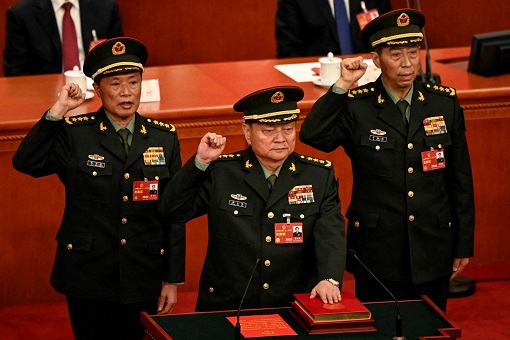
Analysts say the opacity of China’s political system makes it difficult to ascertain Xi’s precise motivations for liquidating a longtime ally in the Chinese military, known as the People’s Liberation Army, or PLA. Internal explanations provided to the party elite – such as those in Saturday’s briefing – don’t always reflect the complete or true motivation behind Xi’s decisions.
Even so, a Saturday editorial by the PLA Daily, the military’s flagship newspaper, indicated the importance of political factors in the case against Zhang, whom the newspaper accused of having “severely trampled on and undermined” the institutional basis of the CMC chairman’s authority. This suggests that “Zhang had too much power outside of Xi himself,” – said Lyle Morris, senior fellow for foreign policy and national security at the Asia Society Policy Institute.
The party has emphasized that Xi, as CMC chairman, has ultimate authority over the military and represents the party’s command of the armed forces, Morris said. “So, highlighting such a violation suggests that Zhang was out of step with Xi’s chain of command.” Regardless of the reasons, Xi’s decision to cast out Zhang shows he “is confident in his consolidation of power over the military,” Morris said. “It’s not a sign of weakness, but of strength, for Xi.”

By decapitating the command structure, said some of the people familiar with the briefing, Xi is signaling that rampant corruption, entrenched patronage networks and the compromise of state secrets are existential threats to his goal of gaining control over Taiwan, the democratically self-ruled island that Beijing claims as its territory.
However, some analysts say the resulting hollowing out of the senior ranks is likely to affect combat effectiveness and could lower the immediate risk of a cross-strait invasion as Xi pivots to a more calculated strategy. Beijing appears to be looking first to make a deal with President Trump on Taiwan as the two superpowers prepare for high-stakes negotiations on trade and security matters this year. Any wavering by Trump on Taiwan’s security could shake Taipei’s confidence in American resolve.
Since the summer of 2023, the party has unseated top officers in China’s army, air force, navy, strategic-missile force and paramilitary police, as well as major theater commands – including the one focused on Taiwan. More than 50 senior military officers and defense-industry executives have been placed under investigation or removed from office in the past 2½ years.
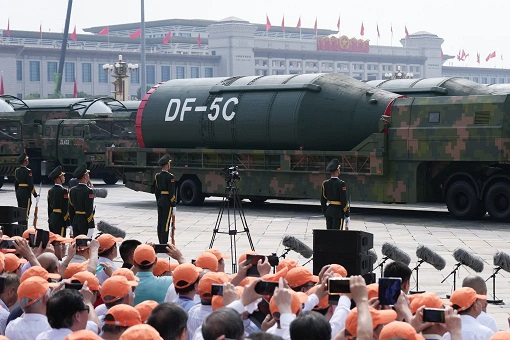
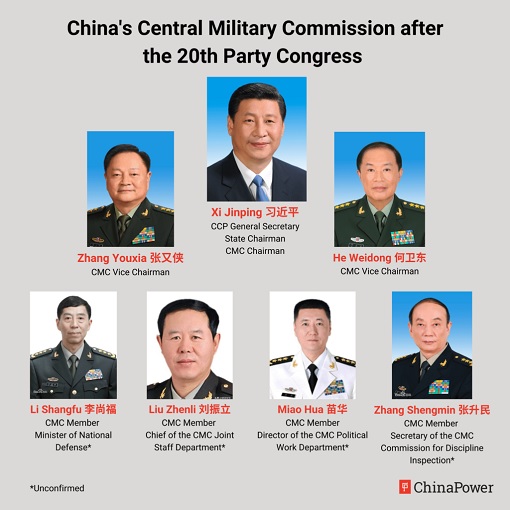
The Central Military Commission had six professional military members when its current term started in 2022. Now it has just one active uniformed officer, Gen. Zhang Shengmin, who was promoted to vice chairman only in October after the purge of another general who held that role. Unlike Zhang Youxia and Liu Zhenli, who are combat veterans, Zhang Shengmin has served as a political officer and discipline inspector for the bulk of his career, responsible for enforcing loyalty and boosting morale.
“Given the size and complexity of overseeing any large and sophisticated military organization, this vacuum at the top is untenable,” – said M. Taylor Fravel, director of the Security Studies Program at the Massachusetts Institute of Technology. He added that it was “bound to have an impact on the PLA’s current readiness to undertake major, complex military operations in the short to medium term.”
The fact that General Zhang was kept in office beyond the customary retirement age for China’s military, suggesting President Xi’s confidence in him until now. With the probe into Zhang and Liu, the CMC is now down from the original seven members to just two – Xi, who is the chairman, and Zhang Shengmin, who is responsible for the military’s disciplinary affairs.
Other Articles That May Interest You …
- Harvard Drops To No. 3 – Chinese Universities Surge In Global Rankings
- Tariffs Fail – China’s Trade Surplus Hit Record $1 Trillion
- The Long Game – How China Overtook U.S. As Top Rare Earths Producer
- How Xi Lets Trump Claim Victory, While China Emerges Stronger
- Learning Soviet’s Failures – How Xi Jinping Spent Decades Preparing For A Cold War Today With The U.S.
- China Weaponise Rare-Earths Magnet – Why Trump Goes Crazy & Complains Xi Very Tough To Make Deal With
- Tariffs War 2025 Begins – Why Canada & Mexico Are More Upset & Angrier Than China With Trump’s Trade War
- President Xi Warns China Will Never Be Bullied – The U.S. Not Impressed China Is Building 120 Nuclear Missile Silos
- Western Brands Under Attack! – Here’s Why Chinese Consumers Suddenly Boycott H&M And Nike Over Xinjiang Cotton
- Humiliation! – Obama Missed Red Carpet, Forced To Exit Of The “Ass” Of Air Force One

|
|
January 26th, 2026 by financetwitter
|


|

|

|

|

|

|
















Corruption? Likely. Selling nuclear secrets? Unlikely.