



For as long as one can remember, Harvard, one of the eight prestigious, private universities that comprise the Ivy League, an elite group known for academic excellence, selective admissions, and rich history, was the most productive research university in the world – until now. The Harvard University’s position is under threat, and the trend is troubling.
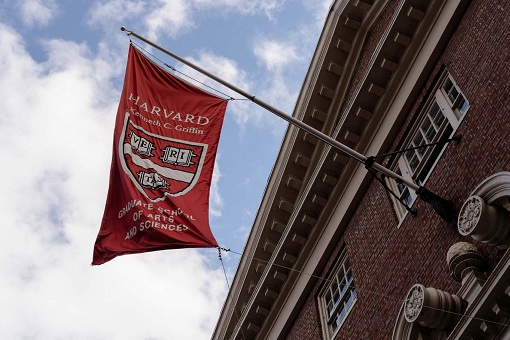
The prestigious Harvard University has slipped to third place in the CWTS Leiden Ranking 2025 in the Science category. Long regarded as a global academic powerhouse, the school’s plunge is raising concerns about the future of America’s global academic leadership. Worse, racing up the list are not Harvard’s American peers, but Chinese universities.
Yes, Harvard did not lose to American peers like Princeton or Cornell, but schools from China that have been steadily climbing in rankings that emphasize the volume and quality of research they produce. Educators and experts say the shift is a problem not just for American universities, but also for the nation as a whole. And it’s not hard to understand why.
The academia landscape reordering – even tsunami – could easily be blamed on the Trump administration’s aggressive slashing of research funding to American schools that depend heavily on the federal government to pay for scientific endeavours. But President Donald Trump’s policies alone did not start the American universities’ relative decline, which began years ago.
“There is a big shift coming, a bit of a new world order in global dominance of higher education and research,” – said Phil Baty, chief global affairs officer for Times Higher Education. “There is a risk of the trend continuing and potential decline. I use the word ‘decline’ very carefully. It’s not as if U.S. schools are getting demonstrably worse, it’s just the global competition: Other nations are making more rapid progress,” – said Mr. Baty.
Back in the early 2000s, a global university ranking based on scientific output, such as published journal articles, would be very different. Seven American schools would be among the top 10, led by Harvard University at No. 1. Nobody paid any attention to China as the perception was that the Chinese universities were inferior and simply no match to any Western schools.
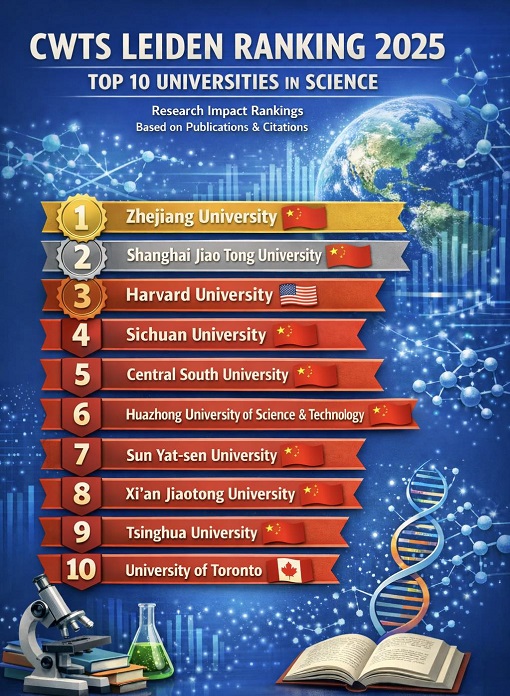
In fact, only one Chinese school, Zhejiang University, would even make the top 25. Today, Zhejiang is ranked first on that list, the Leiden Rankings, from the Centre for Science and Technology Studies at Leiden University in the Netherlands. But that was just the appetizer. Besides Zhejiang, seven other Chinese schools are also in the top 10.
Make no mistake – Harvard produces significantly more research now than it did two decades ago. But it has nonetheless fallen to third. Rubbing salt in the wound, it is the only American university still near the top of the list. The consolation – Harvard is still first in the Leiden rankings for highly-cited scientific publications. The issue at top American universities is not falling production.
Six prominent American schools that were in the top 10 in the first decade of the 2000s – University of Michigan, University of California, Los Angeles, Johns Hopkins, University of Washington-Seattle, University of Pennsylvania, and Stanford University – are producing more research than they did two decades ago, according to the Leiden tallies. But production by the Chinese schools has risen far more.
According to Mark Neijssel, director of services for the Centre for Science and Technology Studies, the Leiden rankings take into account papers and citations contained in the Web of Science, a database set of academic publications which is owned by Clarivate, a data and analytics company. Thousands of academic journals are represented in the databases, many of which are highly specialized.
Chinese state media has proudly celebrated the ranking rise of the country’s universities. “China is really building a lot of research capacity,” – Mr. Neijssel said. At the same time, he said, Chinese researchers are putting more emphasis on publishing in English-language journals that are more widely read – and cited – around the world.
Some may argue that China might have tricked and gamed the ranking system by churning out truckloads of “easy research papers”. However, Rafael Reif, a former president of the Massachusetts Institute of Technology (MIT), said on a podcast last year that “the number of papers and the quality of the papers coming from China are outstanding” and are “dwarfing what we’re doing in the U.S.”
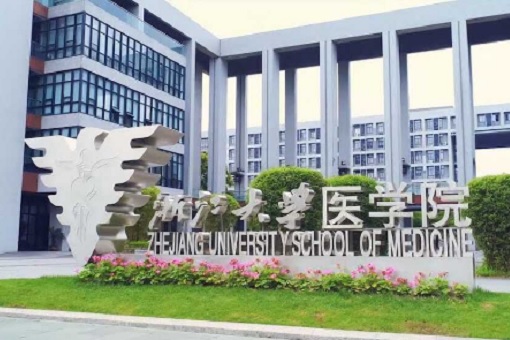
Institutions in other countries around the world, by contrast, are watching the global rankings, seeing them as a measure both of academic prowess and of their progress in overtaking the United States. Zhejiang University displays its rankings prominently on its web page, and lists among the milestones in its history when it broke into the top 100 globally in 2017.
President Xi Jinping, in a speech in 2024, praised his country’s advances in fields such as quantum technology and space science. He cited a breakthrough by researchers at Tianjin Institute of Industrial Biotechnology, who developed a method to synthesize starch from carbon dioxide in the lab, which could possibly lead to industries making food from the air, without needing acres of plants dependent on land, irrigation and harvesting.
The center at Leiden has begun producing an alternative ranking that is based on a different academic database, called OpenAlex. Harvard is No. 1 in that ranking, but the trend is the same: 12 of the next 13 schools on the alternative list are Chinese. Other ranking systems that are weighted toward scientific output reflect a similar shift toward Chinese institutions.

Harvard is No. 1 globally in the University Ranking by Academic Performance, compiled by the Informatics Institute of Middle East Technical University in Ankara, Turkey. But Stanford University was the only other U.S. school in the top 10, which includes four Chinese universities. Another ranking, the Nature Index, placed Harvard first, followed by 10 Chinese schools.
Harvard and other leading U.S. universities suffer from the Trump administration’s cuts to science grants, as well as from travel bans and an anti-immigration crackdown that has swept up international students and academics. The number of international students arriving in the U.S. in August 2025 was 19% lower than the year before, a trend that could further hurt the prestige and rankings of American schools if the world’s best minds choose to study and work elsewhere.
On the other hand, China has been pouring billions of dollars into its universities and aggressively working to make them attractive to foreign researchers. “China has a boatload of money in higher education that it didn’t have 20 years ago,” – said Alex Usher, president of Higher Education Strategy Associates, a Toronto education consulting company. But splashing money was not the only carrot.
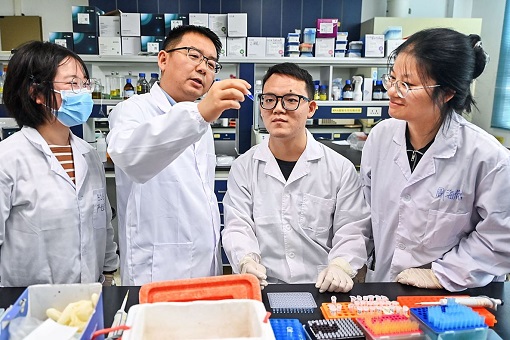
In the fall, Beijing began offering a visa specifically for graduates of top universities in science and technology to travel to China to study or do business. Chinese President Xi has made the reasons for China’s investments explicit, arguing that a nation’s global power depends on its scientific dominance. “The scientific and technological revolution is intertwined with the game between superpowers,” he said in a speech in 2024.
President Trump’s administration has taken the opposite tack, aiming to cut billions of dollars in research grants for U.S. universities. Trump officials have argued that the cuts are meant to eliminate waste and reorient research away from themes of diversity and other topics that they see as too political.
A White House spokeswoman, Liz Huston, has said in the past that “the best science can’t thrive in institutions that have abandoned merit, free inquiry, and the pursuit of truth.” University leaders in the United States warned throughout 2025 that reductions in federal research grants could have devastating effects.
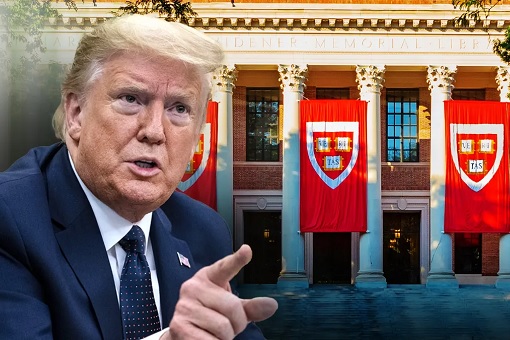
Harvard established a web page to catalog the types of scientific and medical research that would be interrupted by grant cuts. The group’s president, Todd Wolfson, warned that research cuts would “stunt the development of the next generation of scientists.” Nevertheless, a federal judge has since ordered the federal government to resume funding for Harvard.
The prestige and global standing of many other U.S. universities are also in jeopardy. Fewer and smaller federal grants means less research, and by extension, potentially fewer discoveries to be written up and published in academic articles and papers, which will affect how schools fare in future rankings. Research universities make it part of their mission to pursue discoveries and develop new knowledge.
Faculty members are often under pressure to produce results, summed up in the phrase “publish or perish.” Schools that do not aspire to produce reams of academic research papers, such as many liberal arts colleges, would not figure on production-based rankings. Mr. Neijssel said the Leiden rankings “do not pretend to say anything” about the quality of teaching at a university.
Top U.S. schools have fared much better in ranking systems whose criteria are broader than just academic output. Some give weight to factors such as a school’s reputation, finances, and how badly students want to enroll, as reflected in its application acceptance rate. Some even take into account the number of Nobel Prize winners on the faculty.
These broader rankings may be slower to change, experts say, though they still show signs of the erosion of American supremacy in higher education. American schools held seven of the top 10 spots in the 2026 ranking. But farther down the list, American universities are slipping. Sixty-two U.S. schools were ranked lower than last year, while only 19 rose.
Other ranking agencies might lean towards Western schools. For 2026, and for the 10th year in a row, Times Higher Education in Britain ranked Oxford University the No. 1 university in the world. The rest of the organization’s top five included the same schools as last year: M.I.T., Princeton, the University of Cambridge, and then Harvard, tied with Stanford.
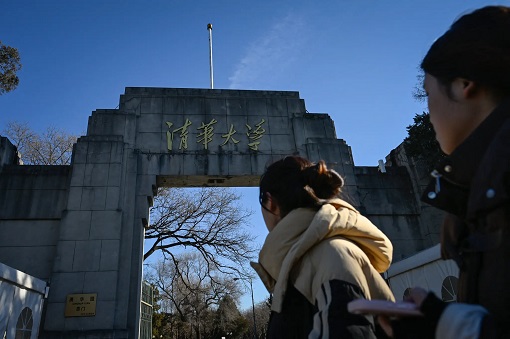
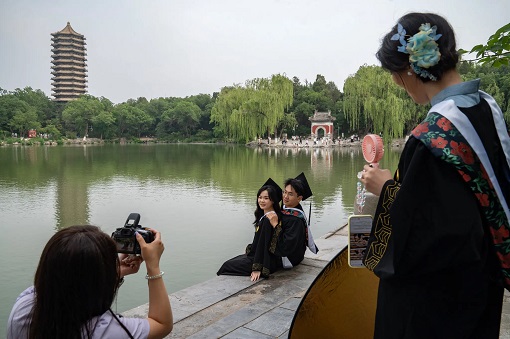
Still, the invasion of China’s universities has been furious. Ten years ago, two prominent Beijing schools – Peking University and Tsinghua University – were ranked 42nd and 47th in Times Higher Education’s list. Now they are just below the top 10 – Tsinghua was ranked 12th, and Peking 13th. Six schools in Hong Kong are now in the top 200; South Korea placed four in the top 100.
While some foreign schools have risen, some well-known American schools have slipped. Duke University, for instance, was ranked 20th in 2021, and now is ranked 28th. Over that same time span, Emory University dropped to 102nd from 85th. Ten years ago, Notre Dame ranked 108th; now it is No. 194.
The pressures that could reduce Harvard’s research output, like federal grant reductions and cuts to the school’s Ph.D. programs, are unlikely to show up immediately in rankings, said Mr. Usher, the higher education consultant. “If you’re looking at how many articles end up in ‘Nature’ or ‘Science’ from that institution, that is based on research that started four or five years ago,” – he said. “There is a pretty serious time lag. I wouldn’t expect that to have a big impact in the next few years.”

While China is thriving in disciplines like chemistry and environmental sciences, the United States and Europe remain dominant in others, like general biology and medical sciences. And a study has suggested that Chinese researchers have been boosting their citation rankings by citing one another more often than Western researchers tend to cite other Westerners.
University rankings are an old phenomenon, dating back to the early 20th Century. Students often use rankings to help them decide where to apply, and academics use them as guides to where to work and conduct research. Some governments use them in doling out research money, and some employers see them as a tool for quickly sorting large numbers of entry-level job candidates.
Beyond marketing, rankings matter because the quality of universities matter, according to Paul Musgrave, a professor of government at Georgetown University’s campus in Doha, Qatar. It can be difficult to draw a direct line between good universities and national power, he said, but “on the other hand, we all know that when the Germans wrecked their universities in the 1930s it probably hurt them in a lot of ways.”

Other Articles That May Interest You …
- How Anti-Chinese PM Anwar Rejects UEC Without Rejecting It
- A More Competitive Vietnam – Making English Compulsory 2nd Language In Schools By 2035
- Chaos & Confusion As Trump Slaps $100,000 Fee On H-1B Visa
- New Huawei AI System Now Challenges Nvidia After China Ban
- Highest Salary Of 20-Million Yuan – But China Still Facing AI Talent Shortage Of 4 Million By 2030
- All SPM 10 A’s Students Guaranteed Matrics Slot – The Gimmick Formula & Trick The Government Doesn’t Want You To Know
- Apartheid UiTM – UMNO Malays Can Keep The Racist University, But Show Dignity By Not Using Non-Malays’ Tax Money
- Police Station Attack And Palace Intrusion – Congrats To Government For Breeding & Harbouring Terrorists
- Reject All Letters Not In Malay Language – PM Anwar’s Dumb Order Will See Foreign Investors Reject Malaysia Instead
- Even Brother Indonesia Looks Down On “Bahasa Melayu” – When You Step Out Of The Country, Malay Language Is Useless
- U.S.’ Colleges Need Cash – Chinese Students Are Welcomed Back Amid Covid Pandemic & Hate Crimes Against Asians

|
|
January 20th, 2026 by financetwitter
|


|

|

|

|

|

|
Comments
Okay, this is interesting! Seeing Harvard slide to number three on a major global ranking list really pulls you in — especially because we’ve all long assumed the Ivy League giant was untouchable. But here’s the twist: it’s not just about one university slipping; it’s about how aggressively Chinese universities have been climbing. They’re not showing up in the rankings for the sake of it — they’re grabbing top spots, pushing research output, and turning heads in global academia.
It feels like we’re watching a broader shift in the world of higher ed. For decades, the narrative has been U.S. and U.K. dominance at the very top, but now we’re seeing that narrative bend. China’s decades‑long investment in research and talent development seems to be paying off, and the global leaderboard is responding
















It is a no-brainer for China watchers to work out that in time the Chinese would achieve something this spectacular, get its universities to the top of world rankings. For the Chinese that time taken has been short, very short. Malaisesia, as a nation of no-brainers should have expected Ketuanan Cina to make such amazing achievement for it’s education. Congratulations, China!
To be fair, braindead, and dumb, Malaisesians haven’t done all that bad altogether. It was Malaisesians who told the world that their Malays taught them ancient Romans how to build boats that could attack rough seas, sail round the world. Without the Malays the Romans would have been stuck with slurping their spaghetti instead of mee, bihun, and eating tauhu.
It was the Roman flying circus’ high flying silat warriors of Hang Tuah and Hang Glider that conquered a huge chunk of the world for their empire. Without the Malays the Romans would be speaking English and eating saveloy and faggot.
What is it with our half-baked supremacy we had a massive head start on the Chinese in everything including education but ended up cleaning the toilets for Ketuanan Cina? And while China keeps climbing higher and higher in education in world rankings and everything else, we keep dropping further and further down the fcuking drain in anything and everything else, wtf! We’ve certainly been sold down the drain by our half-baked heroes of half-baked ketuananism!
Our utter garbage Ketuanan Inc is a time proven lost cause and so embarrassing. Our only hope is to copy China. Right now we are definitely following the worst of India and as expected, get nowhere. Instead of a guaranteed success copying China, our garbage chickenshit supremacy wants to be brilliant inventors of the wheel, wtf! If you have got a bit of that, imagine what it would have been like if our Chinese saviour uncles had not come to save our hopeless Proton?
So, to save ourselves from ourselves, or better, our Ketuanan, the best thing to do is to copy China and to do that we should make urgent effort to learn from the Chinese. Short of letting the Chinese Uncles run our country (a great idea!), we should urgently invite Chinese educators to educate us. There’s nothing wrong with that. Not all that long ago we had armies of Indian teachers taught in our schools. That’s why right up to these days we still have our monkeys speak English like Indians, Allah Almighty!
To be realistic, to have the Chinese Uncles run our show, it won’t be an overnight success. Our dumb monkeys still need to get off from lazing under the coconut trees and work hard. That means they have to stop being fcuking lazy. Oh! That’s going to be be tough to the extent of being impossible.
Maybe you monkeys had better go back to sleep under them coconut trees, Alhamdullilah!