



When BYD sneezes, the entire car industry catches a cold. Already the world’s largest Electric Vehicle (EV) maker, the Chinese “Build Your Dream” dropped a bombshell this week when it announced a sweeping price cut of up to 34%. The move sent shock waves not only in China, but also the world. Stock prices of Chinese automakers, including BYD itself, plunged.
BYD slashed the price tag of its Seagull hatchback by 20% to 55,800 Yuan (US$7,780), while that of the Seal dual-motor hybrid sedan was cut by 34% to 102,800 Yuan. Overall, it offered discounts on 22 of its electric and plug-in hybrid models until the end of June 2025. The stock levels at dealerships last month reached 3.5 million cars, or 57 inventory days – the highest since December 2023.
Having sold more electric vehicles than Elon Musk’s Tesla in the last three months of 2023, BYD continued its dominance and overtook Tesla for the first time in Europe last month. The latest limited time discount announced on May 23 has forced BYD competitors – from Geely to IM Motors and Leapmotor – to follow suit with steep discount to retain market share.

This fierce competition in China is the reason Tesla had lost to BYD, and why the U.S. and Europe are so terrified of the Chinese EV manufacturers. In China, the average car retail price has fallen by about 19% over the past two years to around 165,000 Yuan (US$22,900). In contrast, the average price of a new car in the U.S. was US$48,699 in April – up nearly 1% from two years ago.
Price cuts were far steeper for hybrid or range-extension vehicles, at 27% over the last two years, while battery-only cars saw prices slashed by 21% in China. Imagine what will happen to Tesla in the U.S. if Chinese EV makers are allowed to invade America. This is why the U.S. was forced to impose duties of 100% on China-made electric cars, whilst the European Union had slapped up to 38.1% tariff.
Thanks to over-production, Great Wall Motors Chairman Wei Jianjun has warned of an “Evergrande” bubble in China’s auto industry, comparing the fast-growing EV industry to the country’s bloated real estate sector. But slashing price isn’t the only strategy that has made the industry nervous, where the market share of new energy vehicles has eaten up about half of new passenger cars sold in China.
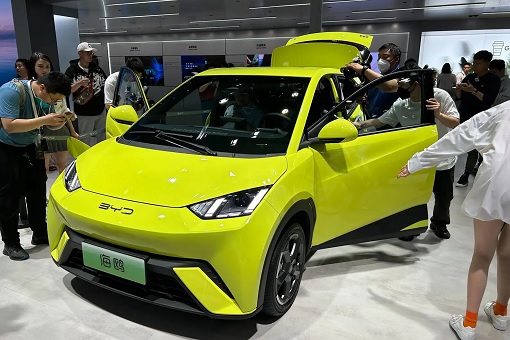
Imagine you’re looking for an used car, but was surprised to find rows of shiny new EVs at your local used car dealer. Equally stunning was the two-digit miles on the odometer when you check the dashboard. When you inspect it a bit closer, you see that the seats still have plastic on them and it even has that new car smell when you open the door. Did you hit the jackpot?
Welcome to China’s newest automotive industry marvel beyond offering discounts – the “zero-mile” used car. Even the Chinese government was shocked, so much so that regulators have summoned automakers like BYD and Dongfeng to understand exactly what’s going on and to get the real picture of how so many of cars are being found in the used market.
The tactic is not new, and here’s how it works. In order to boost monthly sales figures, an automaker “sells” brand new cars to a dealer or second-hand market. They slap registration plates on the cars, taking advantage of whatever government credits or subsidies and quietly funnel the car into the used market where it gets listed as pre-registered or pre-owned even though it’s shining new.
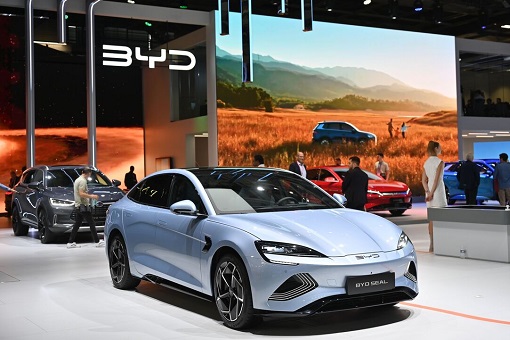
In short, instead of struggling to sell to consumers, giant car manufacturers would push batches of new cars to finance companies and used car dealers to create an impression of huge sales. The “zero-kilometer” used cars will then go on sale on online platforms with promotions like how online shopping – Taobao, Shopee, Lazada, Temu – works.
Great Wall Motor chairman Wei Jianjun said in an interview with Sina Finance last week that the phenomenon known as “zero-mileage used cars” has emerged in the Chinese market as a result of years of price wars in the auto industry. He also revealed there are at least 3,000 to 4,000 sellers on China’s used car platforms selling such vehicles.
The sales tactic seems legal and perfectly fine, and everyone wins – automakers get higher sales figures, whilst consumers get cheaper cars. Because the cars have already been registered with number plates, despite clocking zero-kilometre on the odometers, the so-called second-hand cars theoretically have lower resale value – as much as 30% cheaper than brand new cars.
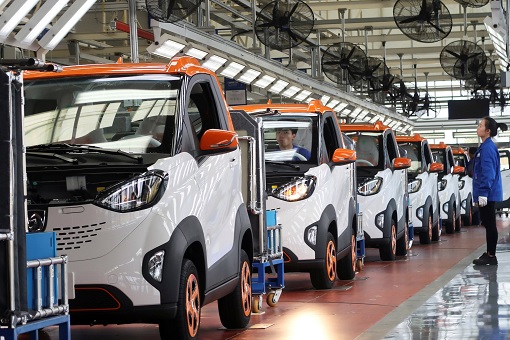
So, besides not being able to choose your own number plate, what could be the problem? The practice of artificially boosting new car sales figures to meet tough sales targets would flood the market with thousands of unsold new vehicles recorded as sold even though they are not. It does not transparently reflect the actual consumption, but taking advantage of a market inefficiency.
Vehicles typically lose 15%-20% of their value when moving from the 0-10,000 km to 10,000-20,000 km mileage bracket. By registering vehicles as “used” without actually driving them, dealers can potentially avoid the steepest depreciation curve while technically fulfilling new car sales targets. Buyers, often spooked by mileage thresholds, can comfortably buy low-mileage used cars sold at 70%-80% of their original sticker price.
Whether the regulators choose to close one-eye to ensure the saturated market in China continues to grow is another matter. It’s easy to outlaw the practice, but the consequences of bursting the bubble could see the loss of thousands of jobs. At best, it creates affordability. At worst, companies’ profitability is reduced, and government subsidies are diverted to the second-hand market.

Interestingly, such practice happens in the West too such as in Canada, Germany and the United Kingdom. Where dealer markups are forbidden, the dealers would simply sell them to create a title change, buy them back so it becomes a used car, and then mark them up as usual. In Germany, car dealers can just register the car and sell it as used to qualify them to give a steeper discount.
In the UK, an “ex-demonstrator” car (also known as an “ex-demo” or “demo car”) is a vehicle that has been used by a dealership for display and test drives. These cars are usually in excellent, nearly new condition and offer a lower price point than a brand-new equivalent. The same concept applies in Malaysia, where pre-owned car used for demonstration purposes would be sold at a lower price.
One way to solve the over-capacity of “zero-mileage used cars” in China is to export them to countries where the gray market categorizes them as re-conditioned or second-hand cars which could fetch a good price, especially with spiking tariffs for new cars. More importantly, consumers get the best deal as Chinese automakers slaughter each other to maintain market share.

Other Articles That May Interest You …
- Birkin Bag For $1,400, Lululemon For $6 – Chinese Factory Owners Joining Trade War, Selling Directly To Consumers
- Europe’s Tariffs On China’s EV Backfires – Volkswagen Closing Factories Before Even Trade War Begins
- From Kingdom Of Bicycles To Automaker Giant – Why Western Automakers Are In Trouble As China Shows Them The Exit
- BYD Beats Tesla Again – How The U.S. Carmaker Lost Its Crown As World’s Top Electric Vehicles Manufacturer
- Sodium-Ion Battery – How China Supercharge Rechargeable Batteries To Dominate The Next Big Technology
- Electric Car As Cheap As $11,000 – How China Beats The U.S. In Electric Vehicles & Leaves Global Brands In The Dust
- Learn From China – Mahathir Has To Dismantle Discrimination & Racist Economic Policy First
- If Proton Has The Quality Of Volkswagen Or Toyota, People Will Not Dump The National Cars
- Third National Car, The Unfinished Business – Why Mahathir Should Wake Up & Stop Hallucinating
- China Geely Introduces Meritocracy – But Handicapped Proton “Bumiputeras” Aren’t Happy
- 80% Cheaper To Take Robo-Taxi – The Next Car You Buy Could Be Your Last

|
|
May 29th, 2025 by financetwitter
|


|

|

|

|

|

|


















Comments
Add your comment now.
Leave a Reply