



Hours after Hamas terrorists crossed from Gaza into Israel on October 7, 2023, a video surfaced of an Israeli woman screaming – “Don’t kill me” – as she was hauled away on a motorcycle, sandwiched between two kidnappers. The young woman, who was among those assaulted at a desert music festival, reached helplessly for her boyfriend, who was restrained by Gazan men.
The video was one of the first of many terrifying images from the attack by Hamas on southern Israel that ended with 1,200 dead and around 250 hostages taken, including the couple. Noa Argamani, who was seized less than a week before her 26th birthday, spent 245 days captive in Gaza. After her release, two men seen in the video holding back Argamani’s boyfriend were tracked down by Israeli intelligence officials and killed in separate airstrikes.
The men were crossed off a list of thousands of names kept by an Israeli task force specially created for one job – to kill or capture all who planned or joined in the October 7 attack, said current and former Israeli officials. Hundreds have been struck from the list, in one of the most personal and highly technical targeting campaigns in the history of warfare. In fact, the campaign continues amid the demands of the war with Iran and a cease-fire agreement in Gaza.

As far as the Jewish state is concerned, no participant of the October 7 attack is deemed too insignificant – down to the man who drove a tractor through a border fence that day. Nearly two years after he breached the border, the tractor driver was identified, located and blown up in an airstrike as he walked a narrow urban street in Gaza, according to footage released by Israel’s military.
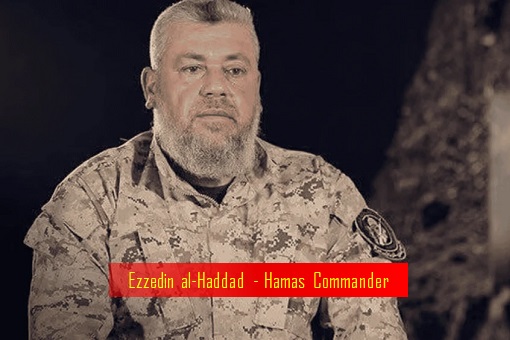
The “retribution campaign” spans the rank-and-file to Hamas’s top leaders. On Friday (May 15), Israel killed Ezzedin al-Haddad, one of the last living senior militants from the group’s military leadership that planned the attacks. Eliminated in an airstrike, he led Hamas’s Gaza City Brigade during the October 7 onslaught and had been Hamas’s military commander in Gaza since 2025.
“The IDF will continue to pursue our enemies, strike them and hold accountable everyone who took part in the October 7th massacre,” – Israel’s military chief Eyal Zamir said on Saturday after Haddad’s killing was confirmed. Militants who videotaped their Oct. 7 exploits on phones or GoPro cameras to share on social media, or those who phoned home to brag, learned too late the degree of Israel’s surveillance capability and hunger for retribution.
Security forces mark men for death without trial if they find at least two pieces of evidence showing they took part in crimes during the October 7 attacks, according to current and former Israeli security officials. Agents from military intelligence and Shin Bet, Israel’s internal security service, pore over militants’ videos posted on social media, these officials said.
Agents run the images through facial recognition programs to sift for names and comb through intercepted phone calls. They view location data from cell tower logs and interrogate Gazan detainees to uncover who did what. Despite the October cease-fire with Hamas and release of the last surviving hostages, names continue to be crossed off the list. Israel says it kills targets who allegedly pose a threat, such as approaching the front lines or planning an attack.
On April 12, it was Ali Sami Mohammad Shakra’s turn, a Hamas platoon commander whom Israel’s military alleges joined the deadly assault on the Nova music festival and helped capture four hostages, including American-Israeli Hersh Goldberg-Polin. After Shakra was killed, the military released a screenshot from an Oct. 7 video showing his head poking out of the window of a car near the scene of the abduction.
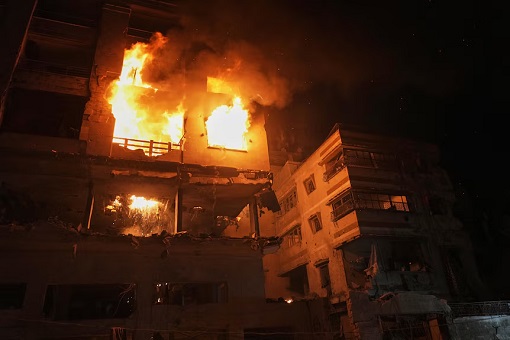
Three days earlier, the Israel Defense Forces (IDF) said it killed Islamic Jihad militant Abd al-Rahman Ammar Hassan Khudari in an airstrike for his role in the attack on Kibbutz Nir Oz, where at least a quarter of its residents were killed or kidnapped. But a Hamas official said the Israeli campaign was “nothing but an extension of the policy of extrajudicial executions and systematic killing that Israel has practiced against the Palestinian people for decades.”
Hundreds of Gazans charged with participating in the October 7 attacks are in Israel’s custody awaiting trial. The parliament recently passed a bill to establish a special military tribunal for their hearings. “In the Middle East, revenge is an important part of the discourse. It is about how serious anyone in your environment sees you,” – said Michael Milstein, a former senior Israeli military intelligence officer on Palestinian affairs. “Unfortunately this is the language of this neighbourhood.”
Argamani’s father, Yacov Argamani, said his only wish was for his daughter to be freed by Hamas in time to see her terminally ill mother one more time. “The Almighty fulfilled our wish,” he said. Noa Argamani was released on her father’s birthday, and she and her mother had three weeks together.

Yacov Argamani praised Israeli forces for fighting what he called a war for survival of the Jewish people. He said he hadn’t been told about the killing of the two men who aided his daughter’s kidnapping. “Revenge, I don’t know what it adds,” he said about it. “I’m telling you honestly, I don’t know what it adds.”
{ Munich Murders }
Israeli agents, after failing to prevent the October 7 attack, approached the head of Shin Bet and Mossad units to set up a highly specialized task force – NILI – to track and assassinate members involved in the massacre. It is a Hebrew acronym for the words, “The Eternal One of Israel Doesn’t Lie.” The name, first used by a band of World War I-era Jewish spies, signified that no one identified in the attack would be forgotten, let alone forgiven.
Although NILI is centered in Gaza, it has also struck Hamas leaders outside of Gaza such as in Lebanon and Iran. It echoes Israel’s assassinations of dozens of Palestinians responsible for killing 11 of its athletes at the Munich Olympics in 1972. The top targets for the unit include Marwan Issa and Yahya Sinwar, who are suspected of orchestrating the 7 October 2023 attacks.

“The clear message to all future enemies is to think again about the price of a terrorist operation like that,” – said Shalom Ben Hanan, a former senior official in Shin Bet. Since the October cease-fire, the task force has been reduced to a handful of operatives who track targets and pass along information to the military command responsible for operations in Gaza.
Some Israeli security officials say the killings deter Palestinians from joining militant groups. Others say the campaign could instead motivate some to join armed groups, especially without a political path to resolve the underlying issue of Palestinian statehood, said Tahani Mustafa, a visiting fellow at the European Council on Foreign Relations.
Mustafa said Hamas’s recruitment numbers have risen during the war. “It had nothing to do with dogma and everything to do with necessity,” she said. “It’s either resist or die.” Militaries at war can lawfully kill combatants, including members of nonstate groups such as Hamas, even under a cease-fire, said Rachel VanLandingham, a national-security-law expert and former judge advocate in the U.S. Air Force.

“There’s nothing inherently wrong with prioritizing people on a target list as long as they’re belligerents,” VanLandingham said. Israel’s campaign “feels retributive,” she said, “but the law doesn’t disallow that.” Israel’s military said international law allows it to attack civilians who participate in hostilities. Determining who belongs on the list can take days, months or years, depending on the case.
While there are few legal limits for killing belligerents in wartime, she said, civilians suspected of crimes should be captured and prosecuted. The extrajudicial killing of civilians is a war crime, she said, and the challenge is determining who counts as a combatant or a civilian.
Before the current cease-fire, members of Shin Bet, the military and the air force gathered in a war room to identify, find and strike targets. The task force tracked the daily comings and goings of a militant’s friends and family, hoping they would meet with targeted men in hiding. “It’s really, really hard work to locate those people,” said Guy Chen, a former Shin Bet official. “You have to know at the exact second where this guy is located.”

One of the first big targets was Saleh al-Arouri, Hamas’s top operative in Lebanon. He returned from a trip to Turkey on New Year’s Day 2024 to the office in Beirut that he had abandoned after the October 7 attacks. Members of the Lebanese militia Hezbollah had warned Arouri to lay low and steer clear of cellphones, which can be hacked to track locations.
Instead, Arouri, a Palestinian politician and senior leader of Hamas who served as deputy chairman of the Hamas Political Bureau, ignored the warnings and instead convened a meeting with six Hamas officials. Israeli aircraft fired guided missiles that slammed into the office, killing all seven men. Lebanese investigators found they were carrying phones and a laptop, all connected to the internet.
Six months later, Israel killed Hamas chief Ismail Haniyeh with a bomb hidden in his room at an Islamic Revolutionary Guard Corps guesthouse in Tehran. “It will take time, just as it did after Munich,” – said Mossad director David Barnea in 2024 at the funeral of Zvi Zamir, who led the Israeli espionage agency at the time of the Munich killings. “But our hands will reach them, wherever they are.”

In the following months, the NILI task force killed Hamas fighters who paraglided into Israel on October 7, others who raided border communities, and those who participated in the killing of hundreds of revelers at the Nova music festival, where Argamani and her boyfriend were kidnapped. A security official said the Shin Bet gave priority to targets with families who could be consoled by the killing, in what the intelligence service described as “treatment for the soul.”
{ 13 bombs }
Since the cease-fire, which was brokered by U.S. President Donald Trump, the two sides have continued to exchange fire. When Hamas shoots at Israeli troops, the military sometimes responds with strikes against the men on the list. Hamas has refused to disarm as required in the cease-fire agreement and reasserted its authority throughout Gaza.
Both sides are gearing up for a return to the fighting, as Israel continues to pare names from the list. Early on February 4, Israeli troops came under fire while patrolling the yellow line that divides them from Hamas-controlled territory – an action in violation of the cease-fire. Later that day, Hamas operative Muhammed Issam Hassan al-Habil was traveling in a car through the wreckage of northwest Gaza.
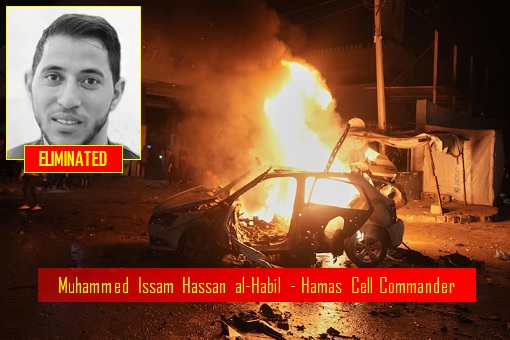
The Israeli military and Shin Bet said they learned through interrogations that Habil was responsible for the death of Noa Marciano, a female soldier taken hostage from a base near Gaza and killed in captivity. A drone fired a missile at the car ferrying Habil before he reached his destination.
On Friday, three Israeli jet fighters dropped 13 bombs on a Gaza City apartment and a car trying to leave. The strikes killed Haddad, the Hamas military commander, his wife, his daughter and a number of civilians. Israel said he was working to rebuild Hamas’s military capabilities. Haddad helped keep hostages, according to those held, and his killing was celebrated by some of the freed captives.
“He planned the 7th, murdered my friends, many other dear people, planned my kidnapping, and held me in Hamas’s tunnels,” – Emily Damiri said in an Instagram post Friday. The 29-year-old dual Israeli-British citizen was kidnapped from her home and held nearly 500 days in the underground tunnel system Hamas dug under Gaza. “This is a very very very important closing of the circle for many people,” she wrote.

Aviva Siegal, 64, was kidnapped with her husband on Oct. 7 and spent 51 days in captivity. Despite her ordeal at the hands of Hamas – she also waited nearly 500 days for her husband to be freed – Siegal said she opposed any more killing. “I’m alive,” she said, “and that’s enough for me.”
Dov Lieber – Wall Street Journal
Other Articles That May Interest You …
- No More Safe Havens – Israel’s Airstrike In Qatar Sends New Message To Countries Harbouring Hamas Terrorist
- Paying The Price For Hamas Attacks – How Trump Misled Iran Before Israel Sends 200 Jets To Attack
- Ran Out Of Luck And Place To Hide – Here’s How Israel Trainee Squad Accidentally Killed Hamas Mastermind Sinwar
- Live By The Sword, Die By The Sword – Anwar Madly Angry After BFF Hamas Terrorist Leader Haniyeh Assassinated
- Playing A Dangerous Game – Here’s Why Facebook Removes News Of PM Anwar Meeting With Hamas Terrorists
- Hamas Is Game Over – How The Terror Group Miscalculated, Betrayed, Abandoned And Made More Mistakes
- Careful What You Wish For – U.S. May Slap Economic Sanction On Malaysia For Supporting & Training Hamas Terrorists
- Human Shields – How Hamas Cleverly Wins Propaganda War, But Was Stunned By “Fire Power” Unleashed By Israel
- Told You So!! – Congrats To Anwar For Radicalizing School Kids As Potential Hamas Terrorists Playing With Guns
- An Eye For An Eye!!! – No One Can Stop Israel From Reducing Gaza To Rubble And Erase Hamas Terrorists

|
|
May 21st, 2026 by financetwitter
|


|

|

|

|

|

|
























Comments
Add your comment now.
Leave a Reply