



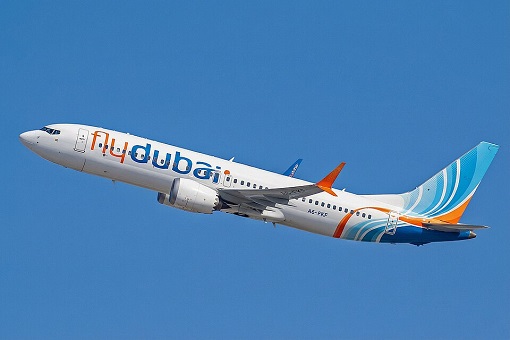
Flydubai’s flight FZ1073 took off from Dubai International Airport in the UAE at 03:05 GMT (07:05 local time), en route to Ben Gurion Airport. Two hours into its journey on Wednesday (September 30), the Boeing 737 MAX 8 carrying 174 people – mostly Israeli passengers – plunged more than 17,000ft (5,200m). Unlike other attempted hijacking, this time a violent fight broke out in the cockpit.
Almog Italie was flying home from a vacation in Japan with his wife and two teenagers, casually snapping pictures of irrigated circles of farmland in the desert below, when the plane suddenly went into a steep nosedive. “It started dropping as if there was turbulence, but crazy. Twenty, 30 seconds of a crazy free fall. It then stabilized and then again started falling,” – said Italie, an Israeli e-commerce worker.
What Italie couldn’t see from his seat in Row 20 on Flight 1073 was a desperate fight unfolding in the cockpit. The co-pilot had stabbed the plane’s captain, who fought back and opened the cockpit door. Seeing a commotion, a small group of passengers and crew members rushed to the front to regain control of the plane.
One passenger, Yaniv Hayun, described how he and another man found the door was unlocked but blocked by the fallen pilot, so they shoved it open. Inside, he saw the injured captain on the ground as the attacking pilot hovered over the controls. Hayun put the attacker, who was trying to disable the plane, in a chokehold before other passengers helped pin him down.
Hayoun said he then grabbed the plane’s controls to help bring it back under control, admitting his move was inspired by watching a TV show which reconstructs real-life air disasters. “I watch Air Crash Investigation, Mr. Prime Minister – really. The plane started to level out a bit, and then the pilot told me he was taking over the controls from there,” Hayoun told Israeli PM Netanyahu.
Afterward, the two pilots lay on the floor of the kitchen area receiving medical care, blood smearing their uniforms and the walls. One passenger looked on in shock, a rivulet of blood running down the middle of his forehead. “They attacked us right now, in this plane,” – he said in a video posted on social media. “They tried to murder the pilot, and we took over.”
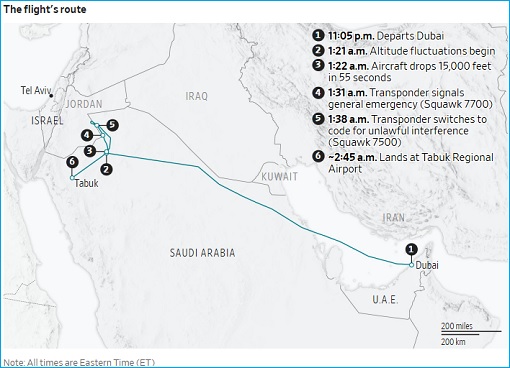
Two other pilots who were aboard to operate the next flight assumed control of the plane. Flight data shows they fought for five minutes to stabilize the jet as it pitched up and down amid the unsettled situation aboard and the damage done by a rapid dive during which the plane lost 15,000 feet of altitude in less than a minute.
Once they had it under control, they issued a Squawk 7700, a radio signal indicating a general emergency. Seven minutes later, they changed the alert to a code signaling unlawful interference – used to describe attempts to jeopardize the safety of the airplane, like hijacking or hostage taking. The pilots then steered the plane to an emergency landing in the Saudi city of Tabuk.
The attacker, reportedly an “Omani” co-pilot, was arrested in Saudi Arabia and is expected to be transferred to the United Arab Emirates (UAE), where the plane took off from. The stabbed pilot, Indian national Captain Smit Machchhar, is in hospital in a stable condition, and has been hailed a “true hero” by Israeli Prime Minister Benjamin Netanyahu and India’s leader Narendra Modi.
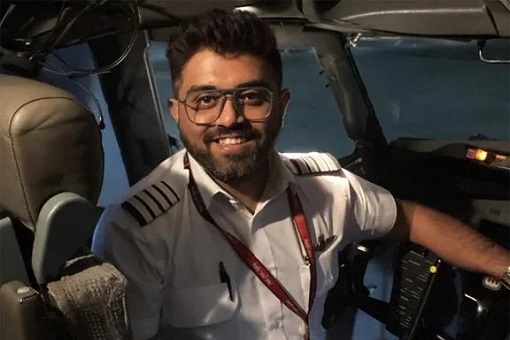
“Despite being stabbed and seriously injured, he fought back, resisted, opened the cockpit door, and enabled passengers and crew to overpower the attacker – preventing a catastrophic mid-air disaster,” – Netanyahu wrote on X. Modi praised the pilot’s actions, writing on X – “In the face of the gravest danger and despite being seriously injured, he showed immense courage and an unwavering resolve to protect the lives of others.”
Netanyahu told CNN Israel did not have any warning or advance intelligence about the incident on the plane, which was flying 174 people to Israel. However, preliminary findings from a separate Israeli investigation suggest that the attacker intended to crash the plane. The source said the investigation – led by Israel’s intelligence agency Mossad – interviewed passengers after they arrived in Tel Aviv to establish what had happened on the plane.
Israeli Defence Minister Israel Katz called it an “attempted jihadist terror attack“, and praised the Indian captain – “There was a huge miracle and huge bravery and we are grateful to the Indian pilot who was such a hero.” Meanwhile, U.S. President Donald Trump said he had spoken with Netanyahu, and said it seemed as though the attacker was “perhaps a terrorist” or there were other reasons behind the attack.
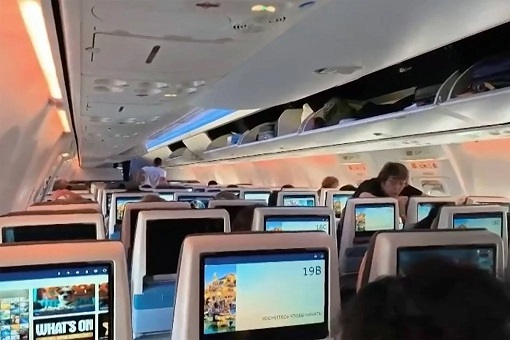
Saudi authorities had the first crack at interviewing the passengers and crew. They initially assessed that the co-pilot tried to deliberately crash the plane. But they said they don’t yet have a theory about a motive or whether others might have been involved. FlyDubai said it would suspend flights to and from Israel while the investigation into the incident continues.
Interestingly, Oman and Israel do not have formal diplomatic relations, and it is not yet clear how the Omani pilot would have obtained clearance to fly to Israel. Foreign airlines must obtain approval from Israel’s Aviation Security Operation Center before they can operate to and from the country’s airports. Israel’s internal security agency, Shin Bet, is supposed to vet all airlines’ personnel flying into Israel from the UAE.
Israel enforces some of the strictest aviation security protocols in the world, after facing a history of hijackings and terminal attacks. Departing passengers are required to undergo pre-screening and questioning, in addition to multiple passport checks, advanced baggage scanning, and, sometimes, full-body screening.

Benjamin Netanyahu said he sees two possible ways in which the attacker in the Flydubai attempted plane hijacking may have obtained the weapon used to attack the pilot. The co-pilot may not have been required to pass through a metal detector before boarding the plane. “Passengers go through a metal detector but I’m not sure that pilots always do. Then he could have carried a knife, or an axe,” – he said.
Alternatively, he may have used an axe that was already on the aircraft. “He might have gotten an axe from the equipment that might be standard on this aeroplane,” – Netanyahu said. He added, “We’re looking into that, we can’t draw conclusions yet.” The Israeli PM said it has been established that the attacker “underwent Islamist radical indoctrination.”
Netanyahu added that it was clear the attacker had been suicidal. After being pinned down by passengers including a plumber who intervened to thwart the co-pilot’s alleged attempts to jam the plane’s instruments, he called out “kill me,” according to Netanyahu. The Omani national had only been working for Flydubai for eight months before carrying out the attack.
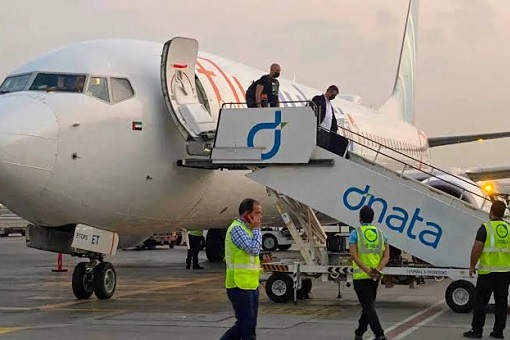
The incident hit one of the most robust links between Israel and the outside world. While many Western carriers have repeatedly cut flights to Israel during the years of conflict, the U.A.E., which signed a diplomatic accord with Israel in 2020, has provided steady connections, with several flights each day between Tel Aviv and the international aviation hub of Dubai.
The scenario echoed other air disasters like the crashes of EgyptAir Flight 990 into the Atlantic in 1999 and Germanwings Flight 9525 into the French Alps in 2015, which some regulators attributed to actions by their first officers. The latter led to requirements that two crew members be in the cockpit at all times.
“The protocols to try to stop these things from happening in general work very efficiently. But when insiders are involved, inherently, the risk of bypassing protocols is there,” – said Matthew Borie, chief intelligence officer and co-founder of Osprey Flight Solutions. “The vast majority of these post-9/11 security measures in the aviation industry are meant to deal with passengers – to stop people from being able to access the cockpit.”

Other Articles That May Interest You …
- Oil Hits $100 – But Iran’s Economy Hit Hard As Oil Dollars Dries Up
- Calm Before The Storm – Iran’s Secret Plan To Escalate The War
- Trump, Truck & Decoy Plane – The Ruse To Evade Iran Threat
- Why Iran Thinks It Has All The Cards To Check-Mate Trump
- No More Safe Havens – Israel’s Airstrike In Qatar Sends New Message To Countries Harbouring Hamas Terrorist
- Paying The Price For Hamas Attacks – How Trump Misled Iran Before Israel Sends 200 Jets To Attack
- Ran Out Of Luck And Place To Hide – Here’s How Israel Trainee Squad Accidentally Killed Hamas Mastermind Sinwar
- Playing A Dangerous Game – Here’s Why Facebook Removes News Of PM Anwar Meeting With Hamas Terrorists
- Hamas Is Game Over – How The Terror Group Miscalculated, Betrayed, Abandoned And Made More Mistakes
- Human Shields – How Hamas Cleverly Wins Propaganda War, But Was Stunned By “Fire Power” Unleashed By Israel
- An Eye For An Eye!!! – No One Can Stop Israel From Reducing Gaza To Rubble And Erase Hamas Terrorists

|
|
October 1st, 2026 by financetwitter
|


|

|

|

|

|

|
























Comments
Add your comment now.
Leave a Reply