



On May 1, 2026, the U.S. Department of the Treasury’s Office of Foreign Assets Control (OFAC) – under Executive Order (E.O.) 13902 – designated three Iranian foreign currency exchange houses and their associated front companies as part of Economic Fury and Treasury’s ongoing efforts to disrupt the Iranian regime’s financial lifelines that sustain its war effort.
“Iran is the head of the snake for global terrorism, and under President Trump’s leadership, Treasury is moving aggressively, through Economic Fury, to sever the Iranian military’s financial lifelines,” – said Secretary of the Treasury Scott Bessent. “We will relentlessly target the regime’s ability to generate, move, and repatriate funds, and pursue anyone enabling Tehran’s attempts to evade sanctions.”
These designations build on OFAC’s previous actions targeting Iran’s shadow banking mechanisms, including exchange houses, Iranian bank rahbar companies, and digital asset exchanges used to evade sanctions. But it was too little too late to disrupt the Iranian regime’s mechanisms for receiving payments for oil and other commodities.
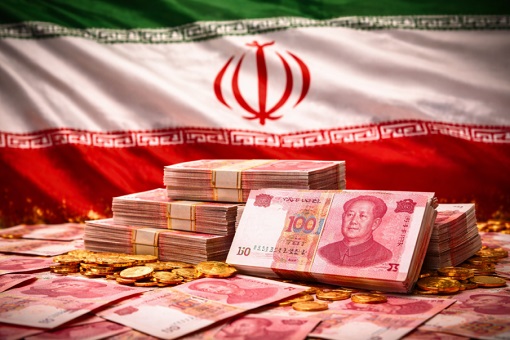
Donald Trump’s MOU (memorandum of understanding), even though not a final deal, is seen as a “declaration of U.S. defeat”, at least that was what Tehran has been trumpeting since the U.S. president chickened out from the war he had started. While Trump is defending the newly signed MOU as a diplomatic victory, some Iran experts said Tehran has won a big victory.
Today, the White House has entered talks with Iran over a new nuclear deal, relying on a traditional strength – the promise of sanctions relief and access to some of roughly US$100 billion in frozen assets. Yet, that leverage is waning. Tehran has blunted the U.S. sanctions campaign in recent years by successfully using China’s financial architecture – built on the Chinese Yuan – that operates beyond Washington’s reach.
The shift was evident in late April when the U.S. escalated its “Economic Fury” campaign against Iran, sanctioning a major Chinese refinery it said bought billions of dollars’ worth of Iranian oil. The refiner, Hengli Petrochemical, said its supplier had guaranteed the oil wasn’t Iranian. But it also put the U.S. on notice.
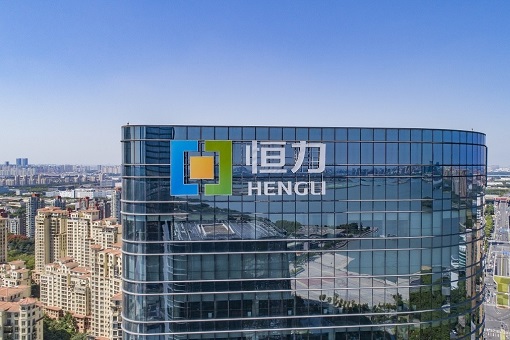
Future oil purchases, Hengli said, would be settled in yuan instead of U.S. dollars, the energy market’s main currency – making it harder for outsiders to track the flows. It was the latest sign of a troubling new development for Washington. More of the world’s illicit activity to evade sanctions is being handled in yuan, as China builds an alternative financial system aimed at weakening Washington’s power to dictate world affairs.
The dominance of the U.S. dollar, currently used in roughly 80% of international trade finance, has historically given Washington a big advantage in policing global business. Most international transactions denominated in U.S. dollars must be settled by American banks, giving Washington the ability to monitor them – and cut off users’ dollars if necessary, crippling their operations.
But when U.S. adversaries use yuan to run their businesses, the transactions don’t enter the U.S.-led banking system, neutering Washington’s powers. Tehran uses the sales of oil paid in yuan to buy Chinese car parts, solar panels and other goods and services, as well as dual-use inputs – materials purportedly for civilian use that could also be used for weapons – all beyond U.S. jurisdiction.
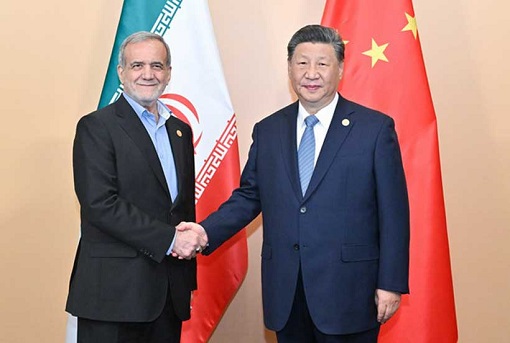
The U.S. has cleared the way for Iran to resume its oil sales, and even be paid in dollars, during the negotiation period. But even under U.S. sanctions meant to block the sales, Iran earned up to US$43 billion in oil revenue in 2024, before accounting for unspecified discounts (which averaged about 13%), according to the U.S. Energy Information Administration.
Boats seeking safe passage through the Strait of Hormuz during the conflict were told to pay Tehran in yuan or cryptocurrencies, which are also hard for Washington to control. Iranian and Chinese partners have set up secretive intermediaries and front companies in Hong Kong and elsewhere to help facilitate more trade in yuan, Treasury officials say.
Some of the transactions are settled on China’s Cross-Border Interbank Payment System, or CIPS, a yuan-denominated alternative to the Swift messaging network. It was set up by China in 2015 and can’t easily be monitored by Washington. And CIPS was established specifically to protect China’s economy and its partners from potential Western financial sanctions.

Although still small, volume on the network jumped after the U.S.-Iran conflict started. It has averaged roughly 790 billion yuan, or around US$115 billion, a day in the three months since the end of February, according to the Atlantic Council think tank, compared with a daily average of 680 billion yuan, or around US$100 billion, last year.
The Belgium-based SWIFT messaging network is immensely larger, facilitating an estimated more than US$5 trillion a day, including some messages that move across CIPS. But the fast expansion of CIPS activity means it is becoming a more-global cross-border payments system, the Atlantic Council says.
A similar pattern played out with Russia when its war in Ukraine started in February 2022. After the U.S. tightened sanctions, more Russian oil exports and other trade with China were settled in yuan. Total daily transactions on CIPS have doubled and the number of financial institutions operating on the platform has more than doubled from the beginning of the war to mid-2025, according to Chinese central bank data and CIPS.
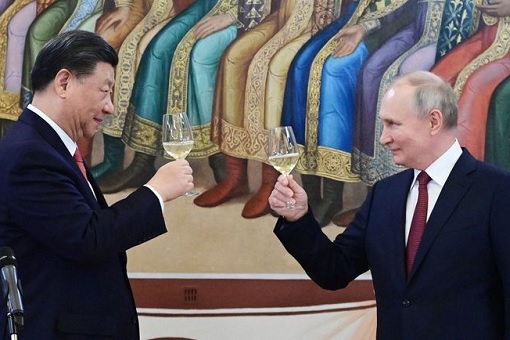
Today, Russian officials say more than 90% of trade between Russia and China is settled in yuan and Russian rubles. A total prewar figure couldn’t be determined, but for comparison, the yuan was used in 2% of Russian trade in February 2022, according to the Centre for Eastern Studies, a Polish think tank. Crucially, Russia appears to have survived without Swift.
Overall, the yuan’s share of global trade finance tripled over the past five years to 6% in April, according to data from Swift. It has been the second most-used currency in such financing for most of this year, ahead of the euro and behind the dollar. About half of China’s cross-border transactions are now denominated in its own currency, compared with almost nothing 15 years ago.
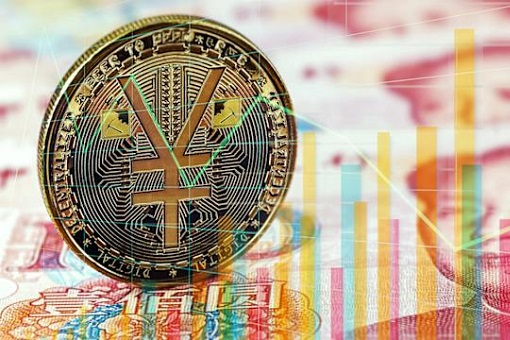
China also is rapidly expanding a program launched in 2021 called mBridge (officially Project mBridge), a platform backed by the People’s Bank of China (along with the central banks of Hong Kong, Thailand, the UAE, and Saudi Arabia) that uses digital versions of the yuan and other currencies to execute cross-border payments that are settled between central banks without the money passing through U.S. financial institutions.
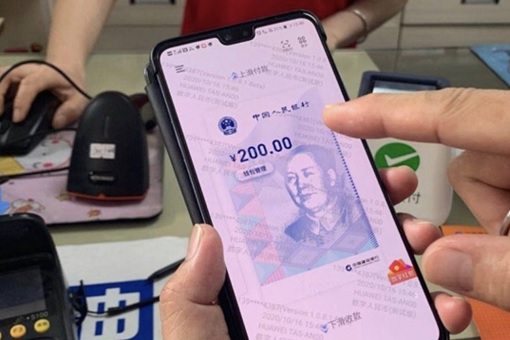
All the yuan-based systems “make it easier to work around U.S. sanctions,” – said Josh Lipsky, a former International Monetary Fund staffer now at the Atlantic Council. “They cloud the U.S. intelligence community’s ability to see financial flows.” By streamlining cross-border trade, mBridge helps reduce dependence on the U.S. dollar and brings Beijing closer to trading partners.
China’s Foreign Ministry in a statement said it was “unaware of the situation” regarding oil trade between China and Iran. The two countries’ relations “have always been conducted within the framework of international law,” – it said. China cooperates with countries around the world, including Russia, based on the “principles of equality and mutual benefit,” it added.
Make no mistake – China has no intention of fully replacing the dollar with the yuan worldwide. That’s because a more dramatic increase in global yuan adoption would require Beijing to make painful changes to its economy, such as giving up capital controls and allowing its currency to freely float, which could spark capital flight and destabilize the country.
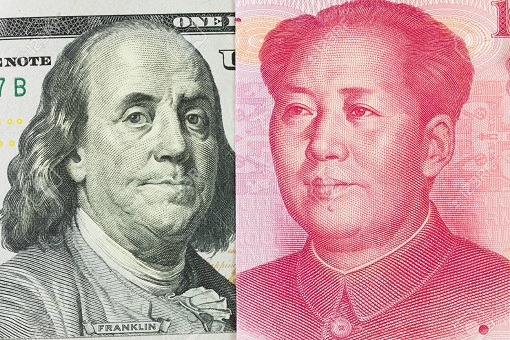
Beijing’s goal instead is to build up specific lanes of trade that work outside the U.S. dollar. The push is driven in part by Beijing’s desire to undermine U.S. authority and assist its allies. China says it rejects U.S. sanctions. Beijing also hopes to insulate China from the type of economic assault that the U.S. and other Western nations have launched on Iran and Russia, and would also likely unleash if Beijing ever made a move on Taiwan.
Global finance is evolving into a system where “a few sovereign currencies coexist and compete,” – said China’s central bank chief, Pan Gongsheng, in a speech last summer. Change from a dollar-centered world is required, because “in times of geopolitical tensions, national security concerns, or even wars, the global dominant currency tends to be instrumentalized or weaponized,” he said.
The U.S. is aware of the hole opening in its global sanctions regime. Since the war in Iran began, Treasury officials stepped up efforts to curtail Iranian oil sales to China and the money flowing through the Chinese financial system, including by issuing new sanctions on Hengli and other Chinese refiners. It also threatened penalties on Chinese banks servicing companies that are fronts for Iranian interests.
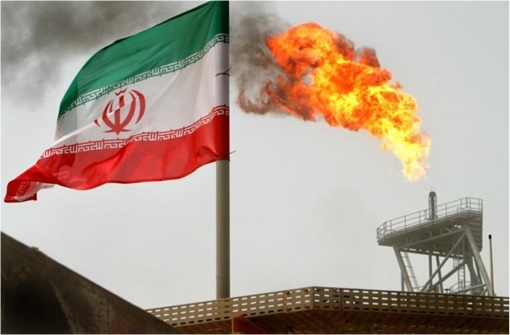
But sanctions still give the U.S. leverage over Tehran. The measures have increased the cost of selling Iranian oil and disrupted the regime’s access to those revenues. Iran’s economy has suffered under U.S. sanctions, and a long-term deal could free up billions in much-needed frozen assets for the Iranian regime.
The nuclear-deal talks have already proved bumpy, and the outcome is uncertain. Iran “has the ability to play for time, to obfuscate, to make trouble,” – said Steve Yates, a former White House national security official. But, “it has been profoundly degraded militarily, it has been profoundly degraded economically.”
{ Iran-China Pact }
Long before the Iran War, or before Israel was attacked by Hamas terrorist, or even before the first trade war unleashed during Trump’s first term, China already began taking steps to use the yuan for more international financial transactions after the 2008 global financial crisis. Beijing officially began the internationalization of its currency in 2010, when foreign companies were allowed to invest in mainland China using renminbi (RMB) instead of US dollars.

China’s years long trade surplus meant it had accumulated some US$2 trillion in foreign reserves, much of it in U.S. dollars. Beijing leaders were increasingly concerned that China’s savings were at the mercy of the U.S. government and Federal Reserve, whose decisions could weaken the value of China’s holdings or, in a crisis, cut the country off from dollars more broadly.
Beijing began using its excess dollars to make loans in the developing world, boosting its clout. It then began offering yuan-denominated swap lines via its central bank to indebted countries, effectively making China a lender of last resort to poorer nations. Then, Beijing introduced CIPS in 2015 to help internationalize the yuan. Three years later, it launched yuan-denominated oil contracts traded in Shanghai. That allowed China to settle oil it buys in yuan, rather than dollars.
China also successfully began encouraging global firms, including U.S. banks, to issue bonds in its currency. China’s yuan efforts were still young when the first Trump administration in 2018 launched a campaign to cut Iranian oil exports to zero and force Iran to negotiate over its nuclear program and its support for militias across the Middle East, such as Hezbollah.
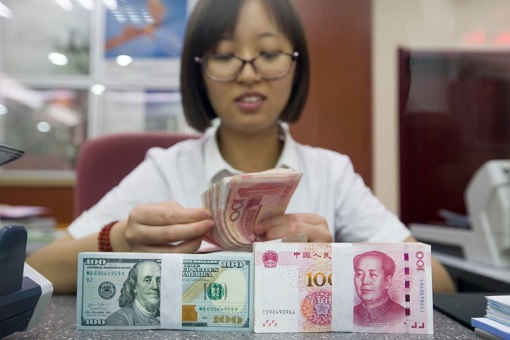
Iran’s sales collapsed as countries, fearful of U.S. penalties that could curtail their dollar access, stopped buying. Tehran turned to Beijing – signing a 25-year strategic pact in March 2021 to deepen economic and security ties. A draft published in Iranian media noted that Iran would trade oil for Chinese investments in ports, railroads and other infrastructure.
Still, Beijing was wary that buying Iranian oil exposed Chinese companies to the risk of being banned from the U.S.-dollar-led financial system. Iran worked with customers in China to set up a clandestine system for oil purchases, Treasury officials say, giving Beijing plausible deniability about its purchases of sanctioned oil.
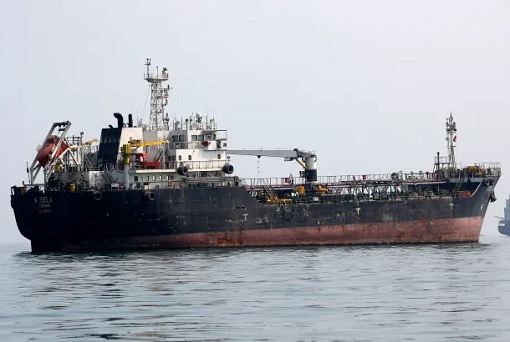
Iran’s military, including the Islamic Revolutionary Guard Corps, set up covert trading units, which in turn established hundreds of shell companies to work with middlemen to sell to Chinese refiners and disguise the origin of the crude. The effort included the expansion of a shadow fleet of tankers to move sanctioned oil between Iran and China in ways that disguise the oil’s origin, such as by switching off the ships’ location devices.
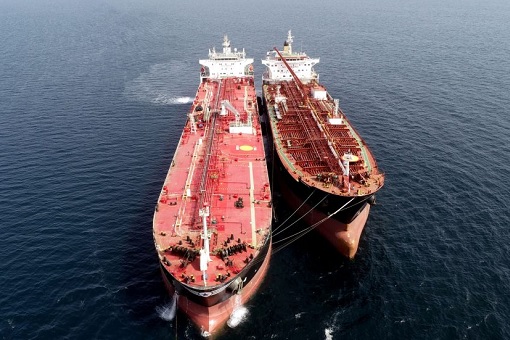
Although Iran priced its oil sales in dollars, Treasury officials say the transactions with Chinese buyers were mostly settled in yuan. By the end of 2022, China had become Tehran’s financial lifeline, buying more than 90% of its crude. China’s biggest state-owned oil majors steered clear of the trade because of the risk of international sanctions, but private companies such as Hengli, which runs a massive refinery in northeastern China, became major customers.
{ System to Move Yuan }
A new nuclear deal could allow Iran to re-enter the global financial system, but Tehran had already figured out a way to use its yuan earnings under sanctions. Instead of transferring yuan payments to Iran, Chinese oil buyers would park the money with an entity known as Chuxin. Chuxin would then deliver the funds to Chinese contractors that perform engineering work in Iran on projects such as airports and refineries.
Another way involved moving yuan-denominated payments from Chinese refiners through a special-purpose-vehicle to Chinese exporters, who then transport goods such as automotive parts to Iran. Two little-known trading companies representing Chinese and Iranian backers managed the special-purpose vehicle’s account balance.
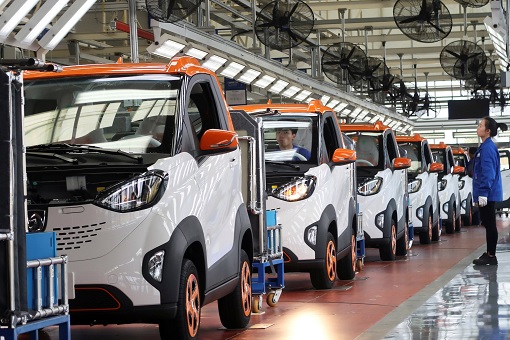
The nations have also experimented with direct barter. In 2021, the Chinese city of Ningbo successfully traded US$2 million worth of Chinese car parts for Iranian pistachios, bypassing the Swift network, according to Chinese media.
Some Iranian oil sales still involve dollars. Iran has established a network of exchange houses and quasi banks, known as “rahbars”, that control front companies in Hong Kong, the U.A.E. and Turkey. These companies set up accounts at Chinese banks to pay for goods in China and also to convert oil payments from yuan into dollars and euros, which Iran can use around the world.
Typically, the money moves through small Chinese financial institutions. That helps shield China’s larger banks from any penalties if the transactions raise red flags. Still, the amount involving dollars is small compared with the overall Iran-China oil trade. Treasury says that front companies linked to Iran moved nearly US$4 billion, or around 10% of Iran’s estimated 2024 oil sales, through the U.S. financial system in 2024 by using Chinese bank accounts in Hong Kong.

{ Rolling Out mBridge }
The yuan’s importance was underscored after the war in Iran began. In March, the containership Newvoyager, which is Chinese owned, paid a US$2 million fee to Tehran in yuan to ensure safe transit through the Strait of Hormuz. Other ships also paid fees in yuan, though it is unclear how they settled the funds.
Early in the conflict, brokers and shipowners said crews had to lower cash in boxes from the deck to the IRGC when they crossed near Larak Island in the northern part of the Strait of Hormuz. The U.S. blockade, imposed in mid-April, mostly halted similar traffic. The blockade was lifted last week as part of the U.S.-Iran negotiations. But Iran was not the only one using the Chinese yuan.
The U.A.E. is also a central player in China’s mBridge platform. Launched in 2021, mBridge began as a collaboration involving the Switzerland-based Bank for International Settlements, China, the U.A.E., Thailand, and Hong Kong. Saudi Arabia, China’s biggest oil-trading partner, later joined. The system employs some elements of cryptocurrencies but is controlled by governments.
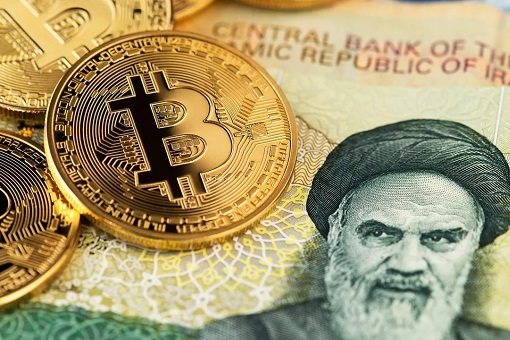
The platform, which uses blockchain technology for commercial banks to transfer digital versions of the yuan and other currencies for their customers, was initially designed as a way of settling international transactions instantly, which would be faster than the current Swift-based system. Rather than having banks settle payments between two companies or individuals, the central banks of the two countries settle the transaction using blockchain technology.
In a ceremony flying the flags of China and the U.A.E. at an Abu Dhabi palace in November, Sheikh Mansour bin Zayed Al Nahyan, the vice president of the Gulf state, which is a major U.S. defense partner, initiated the first ever government-to-government payment to Beijing on the platform. The digital yuan constituted 95% of the 4,000 cross-border payments on mBridge as of November.
To further promote its use, Beijing took a significant step in January by allowing digital yuan held in Chinese banks to earn interest, like regular yuan. This enables Chinese trading partners to be paid for goods in digital yuan, and then earn interest on that digital currency, mirroring how reserves of U.S. dollars earn interest as U.S. Treasury.
Other Articles That May Interest You …
- U.S.-Iran Deal – The Man Who’s Giving Trump Terrible Headache
- No More Safe Havens – Israel’s Airstrike In Qatar Sends New Message To Countries Harbouring Hamas Terrorist
- Paying The Price For Hamas Attacks – How Trump Misled Iran Before Israel Sends 200 Jets To Attack
- Ran Out Of Luck And Place To Hide – Here’s How Israel Trainee Squad Accidentally Killed Hamas Mastermind Sinwar
- Live By The Sword, Die By The Sword – Anwar Madly Angry After BFF Hamas Terrorist Leader Haniyeh Assassinated
- Playing A Dangerous Game – Here’s Why Facebook Removes News Of PM Anwar Meeting With Hamas Terrorists
- Hamas Is Game Over – How The Terror Group Miscalculated, Betrayed, Abandoned And Made More Mistakes
- Careful What You Wish For – U.S. May Slap Economic Sanction On Malaysia For Supporting & Training Hamas Terrorists
- Human Shields – How Hamas Cleverly Wins Propaganda War, But Was Stunned By “Fire Power” Unleashed By Israel
- Told You So!! – Congrats To Anwar For Radicalizing School Kids As Potential Hamas Terrorists Playing With Guns
- An Eye For An Eye!!! – No One Can Stop Israel From Reducing Gaza To Rubble And Erase Hamas Terrorists

|
|
June 25th, 2026 by financetwitter
|


|

|

|

|

|

|














Comments
Add your comment now.
Leave a Reply