



Kevin Warsh was not Donald Trump’s first choice. The U.S. president’s preferred candidate as the next chairman of the Federal Reserve was another Kevin – Kevin Hassett. But Hassett’s loyalty and close relationship with Trump ultimately morphed into his biggest liability. On Friday, Trump nominated Warsh, choosing a former Fed official who has aligned himself with the president’s criticism of the central bank.
Mr. Hassett appeared to be the front-runner to lead the Fed – till the political winds suddenly shifted when Mr. Powell revealed that he was under investigation by the Justice Department, an inquiry focused on a renovation of the Fed’s headquarters that the Trump administration long saw as wasteful. The inquiry set off bipartisan concern that Mr. Trump might jeopardize the integrity of the central bank.
Days later, Trump began to float the idea of keeping Hassett at the White House, where he could continue his public advocacy for the administration and its agenda. The president reaffirmed that belief on Friday, telling reporters shortly after announcing Mr. Warsh as his pick for the Fed, “I wanted to keep Kevin here.” On the same day, Kevin Hassett insisted that he already had a “dream job” at the White House.
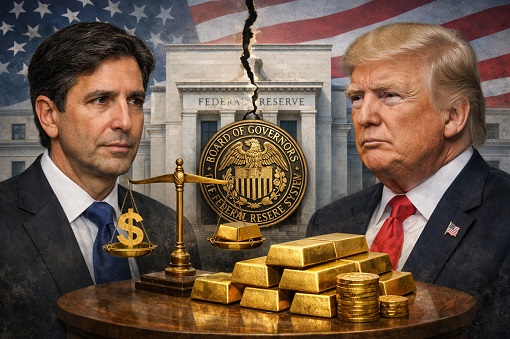
“I have known Kevin for a long period of time, and have no doubt that he will go down as one of the GREAT Fed Chairmen, maybe the best. On top of everything else, he is ‘central casting,’ and he will never let you down,” – Trump said in a post on his social-media account. No matter which of the Kevins Mr. Trump ultimately chose, his next pick is set to become a political lightning rod.
Warsh served on the Fed’s board of governors from 2006 to 2011, playing crucial behind-the-scenes roles in Washington’s rescue of Wall Street during the financial crisis. Crucially, Kevin Warsh has spent much of the last 15 years criticizing the Federal Reserve for getting too big, mismanaging inflation and compromising its independence. If confirmed by the Senate, he would succeed Jerome Powell, whose term as chair expires in mid-May.
Trump’s selection of Warsh would end a months-long internal deliberation among the president and his top advisers over who should lead the central bank. The Fed chair nomination was arguably the most important personnel decision Trump faced for the remainder of his term because the central bank serves as a first responder in financial crises and sets interest rates that affect every corner of the economy and markets.
Warsh will inherit a central bank divided over whether to cut interest rates further. Several Fed officials are uneasy about cutting when inflation remains above the central bank’s 2% target. Warsh gained a reputation for being an inflation “hawk” during and after leaving the Fed because he spent years warning that easy monetary policy would fuel rising prices. Recently, he has said the Fed should cut rates faster.
The new Fed chair faces three key tests. First, significantly shrink the Fed’s balance sheet without spooking financial markets. Second, push inflation down to 2% and keep it there. Third, pray and hope “dictator” Trump won’t interfere and compromise the Federal Reserve’s independence. It may sound simple, but in reality, tougher than they look.
Warsh will also have to satisfy a president who has made clear he expects rates to fall – and who has shown no patience for Fed chairs who disappoint him. Trump showered praise on Powell after nominating him in 2017, only to lash out regularly when the Fed bucked his demands for lower rates. “Anybody that disagrees with me will never be the Fed Chairman!” – Trump wrote on social media in December.
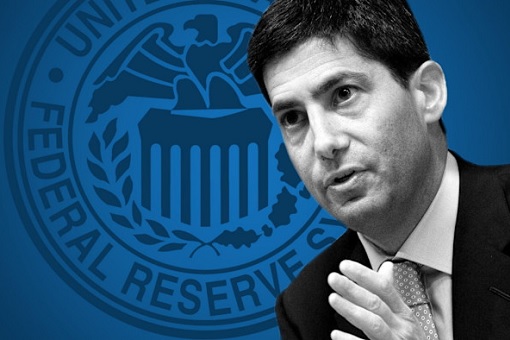
Still, Mr Warsh will have to be confirmed by the Senate, a process made complicated by a Justice Department probe of the central bank. Sen. Thom Tillis (R., N.C.), who sits on the Banking Committee that handles Fed nominations, wrote on social media Friday that Warsh is a “qualified nominee with a deep understanding of monetary policy.” But he said he would oppose the nomination until the investigation is resolved.
Beyond managing Trump’s unpredictable expectations, Warsh will face challenges with few modern precedents – managing any trade-offs from tariff-related price increases after several years of above-target inflation; assessing how artificial intelligence is reshaping productivity and labour markets; and responding to the rise of digital currencies that could disrupt the banking industry, which is regulated by the Fed.
The Fed cut interest rates three times last year (2025) under Powell to guard against the risk of a sharper-than-expected slowdown in the labour market, but the central bank held rates steady this week in a range between 3.5% and 3.75%. But Trump was still unsatisfied and has demanded rates go lower still and told The Wall Street Journal in December he thought rates should be at 1% or even lower.
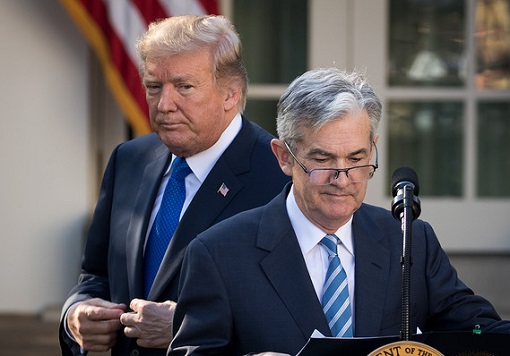
He lashed out at Powell after the Fed’s decision Wednesday to hold rates steady. “He is hurting our Country, and its National Security,” – Trump said on social media, referring to the chair as a “moron.” So, Kevin Warsh should be prepared to be mocked, ridiculed, and insulted the same way the president did it to Powell, lest he is willing to be labelled as Trump’s puppet.
As a Fed governor from 2006 to 2011, Warsh worked with then-chair Ben Bernanke to manage the global financial crisis. But he quit over Bernanke’s use of “quantitative easing,” the purchase of trillions of dollars of bonds, paid for by issuing reserves (electronic money) to banks. Between 2008 and 2022 the Fed’s assets grew from US$900 billion to US$9 trillion. They have since declined to US$6.6 trillion.
Quantitative easing was aimed to hold down long-term rates after the financial crisis – and later, after the Covid outbreak – and to ensure banks had enough reserves to fund themselves and keep markets functioning. Warsh, however, blames Fed bond-buying for encouraging the federal government to run steep deficits, suppressing market signals and ultimately unleashing inflation.
After Warsh left the Fed 15 years ago, he has spent much of the time since cataloging how he thought the institution was going astray. His steady drumbeat of criticism of Powell kept his name in the conversation after the president’s return to the White House one year ago. With underlying inflation close to 3%, above the Fed’s 2% target, he must now articulate a credible plan to get it down and persuade the 12-member Federal Open Market Committee to agree.
Like Powell, Warsh’s background is law and finance, not economics. Some fear Warsh’s disdain for mainstream macroeconomics could lead to internal upheaval, pitting him against the Fed’s professional staff and other FOMC members. He has said – “What we need is regime change at the Fed, and that’s not just about the chairman, it’s about a range of people,”
Unlike Powell, Warsh is masterful at managing internal politics and reading people. To deliver a “revolution” in Fed governance requires people skills to bring along the FOMC, said Emil Henry, who worked with Warsh under President George W. Bush and now heads private-equity firm Tiger Infrastructure Partners. “Warsh brings epic high IQ and EQ to the Fed,” – Henry said.
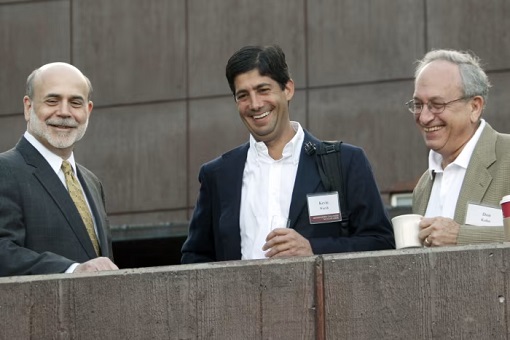
Former Fed Vice Chair Don Kohn, who worked with Warsh under Bernanke and is now at the Brookings Institution, said he disagreed with some of Warsh’s criticisms and agreed with others – but not “the caustic tone with which they have been delivered.” However, others think Warsh will be more open-minded and conciliatory than his rhetoric suggests.
Former colleagues say his rhetoric shouldn’t be mistaken for rigidity. “He’s not an ideologue,” – said Randall Kroszner, who served on the Fed’s board with Warsh from 2006 to 2009. “Since I’ve known him, he was someone who tried to get things done. His approach is, ‘Let’s articulate goals as clearly as we can, and then find the best path to get as close to those goals as we can.’”
Many on Wall Street backed Warsh, thinking he would be more independent than the runner-up, White House adviser Kevin Hassett. Yet he is being appointed by a president who doesn’t believe in Fed independence. Trump had a condition for his Fed chair nominee – promise to slash interest rates. Warsh obliged, declaring in October that “we can lower interest rates a lot, and in so doing get 30-year fixed-rate mortgages so they’re affordable.”
At the same time, many on Wall Street suspect Warsh said what Trump wanted to hear to get the job, and after a suitable interval in office, will be his own man – even goes against the president. Once he is confirmed for the job, it would be a headache for the White House to fire him. Trump seems to fear just that, declaring 10 days ago in Davos – “It’s amazing how people change once they have the job.”
Warsh’s political skills helped him land the job and might also help him manage the vengeful and unpredictable president. Trump isn’t likely to sit by if Warsh disappoints or disobeys him, judging by his treatment of Powell, whom he appointed in 2018. Angry that Powell hasn’t cut rates more, Trump has allowed a criminal investigation of the Fed chair while trying to fire another governor.
Still, there are still guardrails around the Federal Reserve independence. The Supreme Court appears ready to restrict Trump’s ability to remove governors, including the chair. Therefore, Warsh could still disagree with Trump. But Trump can still make Warsh’s life miserable by publicly attacking him. As Powell discovered, standing up to Trump is a lonely place in Washington.
In a sign that Trump does not fully trust his nominated candidate, the president joked during a speech on Saturday night (January 31) that he would sue Kevin Warsh, his nominee to chair the Federal Reserve, if he didn’t lower interest rates. It was a warning and a reminder to Warsh to become an obedient errand boy of the president.
Other Articles That May Interest You …
- Strategy Shift – Trump’s Decoupling Europe Rather Than China
- You’re Fired!!! – U.S. Federal Reserve Independence At Risk As Trump Tests Power By Sacking Lisa Cook
- Malaysia, Thailand, Cambodia Celebrate 19% Tariffs – The Art Of Sucking Up Trump & Surrendering Concessions
- US-EU Giant Trade Deal – Why Europe Pretends 15% Tariff “Bad Deal” Is A Good Deal
- Trump Threatens 100% Tariffs On Russia – But Here’s Why Russian Markets Jump In Celebration Instead
- Pawns Europe & Ukraine Got Played – The Hidden Message Behind US-Russia Talks In Saudi Without Allies
- China Secretly Hiding Tonnes Of Gold – The Buying Spree In Preparation Of Trade War, Sanctions Or Even Invasion Of Taiwan
- Sanction My Foot! – Russia Makes A Mockery Of Western Oil Sanctions, While China & India Laugh All The Way To The Bank
- Welcome To The Club – Here’s Why France Wants To Join BRICS, And Why Russia Objects The Idea
- Europe Closed Front Door, But Opens Backdoor – How India Makes Easy Money Reselling Russian Cheap Oil To EU
- France Joining De-Dollarization – Why China Gave Macron Lavish Banquet, But Treated Ursula Like Pariah

|
|
February 1st, 2026 by financetwitter
|


|

|

|

|

|

|









Warsh is a front wheel skid. Or a tea pot lid.
With the Orange Utan owned by the chosen tribe, it’s no wonder he made that choice, Alhamdullilah!
It’s almost like our chosen wans, you can’t choose but from them monkeys – who also like to choose themselves. But unlike those of the chosen ones, our top monkeys are fcuking useless and worthless but do comic kampong hero posturing and make a lot of noiss. And double fcuk up Bolehland.
Warsh is one of the versions of the other good book. There are at least seventeen versions of that. What?! You don’t know that or you can only do things by Hafs?
Oh dear! Your scholarship is very shallow.
As the good book teaches, all ye believers should go as far as China to learn from the Chinese. But that’s another cuppa cha which I might get into in another sermon.
Meanwhile, here’s something from yer blessed Chinese uncles that should thrill and rock you no end. It is in Indonesian, the real Malay language so even those of you with crap ability with English should understand:
https://m.youtube.com/watch?v=waCCg9OVLLA&pp=ygUgQW5jaWVudCBDaGluZXNlIGF6emFtICBJbmRvbmVzaWE%3D